
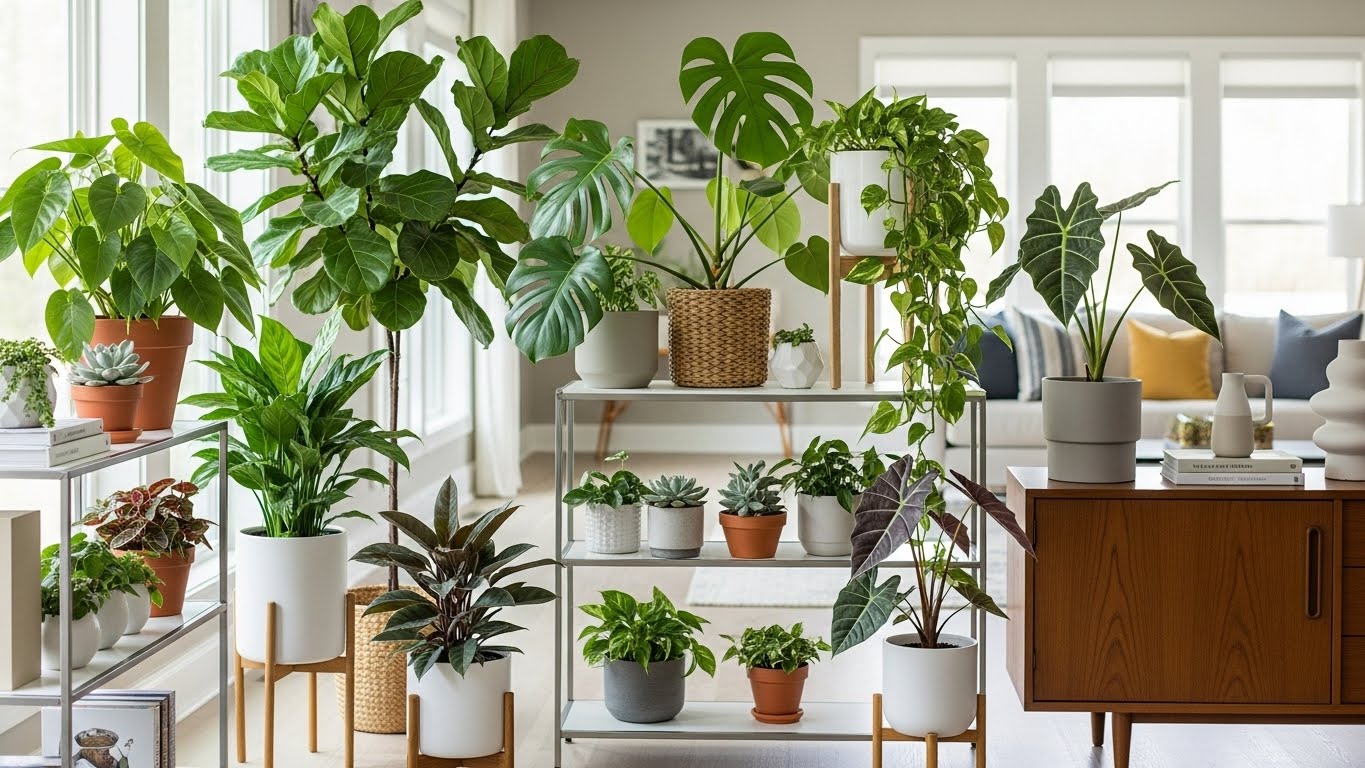
Welcome to Plant Parenthood: A Fear-Free Introduction
Embarking on the journey of indoor gardening can feel both exciting and daunting. Many aspiring plant parents are held back by a common fear: the dread of accidentally killing their new green companions. This anxiety is often rooted in the pervasive myth of the “green thumb”—the idea that some people are simply born with an innate ability to make plants flourish while others are not. It is time to dispel this notion. A “green thumb” is not a magical trait; it is a skill cultivated through observation, patience, and a little foundational knowledge. Plant care is not a pass/fail test but a rewarding learning process.
The secret to success, especially for beginners, lies in starting with the right plants. There exists a remarkable category of houseplants that are not just beautiful but also incredibly resilient and forgiving. These plants are nature’s perfect starter kit, designed to withstand a bit of neglect, inconsistent watering, and less-than-ideal lighting. They are hardy, adaptable, and thrive in typical indoor conditions, allowing novice owners to build confidence and learn the rhythms of plant care without the pressure of a fragile, demanding specimen.
Beyond their resilience, bringing plants into a home offers tangible benefits that enhance daily life. Houseplants are natural air purifiers, actively removing common household toxins like formaldehyde and benzene from the environment. Studies have also shown that the presence of indoor plants can reduce stress, boost mood, and even improve productivity and creativity. This guide is designed to be a comprehensive roadmap, transforming any apprehension into excitement and empowering every beginner to create a thriving indoor jungle.
The “Nearly Unkillable” Collection: Your First Three Houseplants
For the absolute beginner, the path to confidence starts with a guaranteed win. Instead of being overwhelmed by choice, it is best to begin with the undisputed champions of resilience. The following three plants are consistently celebrated for their ability to tolerate neglect and thrive in a wide range of conditions. They form a “starter pack” that is designed to be as close to foolproof as nature allows, providing a positive first experience that is critical for a long and happy journey in plant parenthood.
The Snake Plant: The Architectural Survivor
The Snake Plant, or Dracaena trifasciata (formerly Sansevieria trifasciata), is often called “mother-in-law’s tongue” for its sharp, upright leaves. With its striking architectural form and variegated patterns, it adds a touch of modern elegance to any space. It is hailed as a “nearly indestructible” plant, making it a perfect choice for first-time owners or those with busy lifestyles.
- Detailed Care Blueprint
- Light: The Snake Plant’s greatest advantage is its incredible adaptability to light. It thrives in medium to bright indirect light, which maintains the vibrancy of its leaf patterns, but it can also tolerate very low light conditions and even spaces with no natural light. It is best to avoid prolonged, intense direct sun, which can scorch the leaves.
- Water: This is the most critical rule for Snake Plant care: let the soil dry out completely between waterings. Hailing from the arid deserts of Africa and Asia, it stores water in its leaves and is extremely drought-tolerant. Overwatering is the single most common way to harm this plant, as it leads to root rot. In lower light, it will need even less frequent watering.
- Soil: As a succulent, the Snake Plant requires a loose, well-draining soil mix. Standard potting soil holds too much moisture. It is best to use a commercial cactus or succulent mix, or to create a blend of one part all-purpose potting soil and one part cactus mix to ensure excellent drainage and aeration for the roots.
- Key Benefits: The Snake Plant is a master air purifier. It is renowned for its ability to filter indoor air and remove toxins such as formaldehyde, benzene, and xylene.
- The Beginner’s Advantage: This plant’s resilience is legendary. Its desert origins mean it is built to handle neglect, making it the ultimate “pot it and forget it” houseplant. Its tolerance for a wide spectrum of lighting conditions and infrequent watering needs make it one of the most forgiving plants available.
- Crucial Pet-Safety Advisory: The Snake Plant is toxic to cats and dogs if ingested, which can cause nausea and vomiting. It should be kept out of reach of curious pets.
The ZZ Plant: The Apocalypse-Proof Gem
The ZZ Plant (Zamioculcas zamiifolia), also known as the Zanzibar Gem, is another champion of indestructibility. With its deep green, glossy leaves arranged on wand-like stems, it offers a lush, tropical look with minimal effort. Its reputation is so robust that some claim it would likely survive an apocalypse. It thrives in almost any indoor condition, making it an exceptional choice for beginners who worry about providing perfect care.
- Detailed Care Blueprint
- Light: The ZZ Plant is exceptionally tolerant of low light, making it ideal for offices, hallways, or corners far from a window. While it performs best in bright to medium indirect light, it can readily adapt to very low light and even spaces with only artificial lighting.
- Water: Similar to the Snake Plant, the ZZ Plant is highly susceptible to overwatering. It grows from underground rhizomes that store water, allowing it to tolerate long periods of drought. The soil should be allowed to dry out completely before watering again. Forgetting to water this plant is far less dangerous than watering it too often.
- Soil: Excellent drainage is non-negotiable. A well-draining potting mix, such as one designed for cacti and succulents, is ideal. A standard mix can be amended with perlite or sand to increase aeration and prevent waterlogging.
- Key Benefits: Beyond its stunning appearance, the ZZ Plant is known for its air-purifying qualities, capable of removing various contaminants from the air.
- The Beginner’s Advantage: The ZZ Plant’s “desert pedigree” makes it incredibly durable and hardy. Its ability to thrive on neglect, tolerate extremely low light, and go for weeks without water makes it nearly indestructible for a novice owner.
- Crucial Pet-Safety Advisory: All parts of the ZZ Plant are toxic to pets and humans if ingested. It is important to place it where children and pets cannot access it.
The Pothos: The Graceful and Prolific Vine
Pothos (Epipremnum aureum), often called Devil’s Ivy, is one of the most popular and forgiving houseplants in the world. Its heart-shaped leaves, which can be solid green or variegated with white, yellow, or silver, grow on trailing vines that can be trained to climb or allowed to cascade gracefully from shelves and hanging baskets. It is celebrated for its resilience and the rewarding experience it provides, as it constantly produces new growth with minimal care.
- Detailed Care Blueprint
- Light: Pothos is highly versatile when it comes to light. It can flourish in a wide range of conditions, from low light to bright, indirect light. While it can tolerate low light, its variegation will be more pronounced in brighter conditions. Direct sunlight should be avoided, as it can burn the leaves.
- Water: This plant is more forgiving of varied watering schedules than succulents. The general rule is to water when the top inch of soil feels dry. It is better to err on the side of underwatering, as the plant can recover from a brief dry spell but is susceptible to root rot in soggy soil.
- Soil: Pothos prefers a nutrient-rich, well-draining potting soil. A standard all-purpose indoor potting mix is usually sufficient. To enhance drainage and aeration, which is crucial for root health, the mix can be improved by adding perlite or orchid bark. The ideal soil pH is slightly acidic to neutral, between 6.0 and 7.0.
- Key Benefits: Pothos is an excellent air purifier, effectively removing toxins like formaldehyde, benzene, and xylene from the air. Its fast-growing, trailing nature also makes it a visually rewarding and versatile decorative plant.
- The Beginner’s Advantage: Pothos is the quintessential easy-care trailing plant. Its tolerance for different light levels and its clear watering cues make it incredibly easy to manage. It grows quickly, providing beginners with the satisfying feedback of new leaves, which builds confidence and makes plant care feel rewarding.
- Crucial Pet-Safety Advisory: Pothos is toxic to cats and dogs. Ingestion can cause oral irritation, vomiting, and difficulty swallowing. It is best displayed in hanging baskets or on high shelves, out of reach of pets.
Expanding Your Indoor Jungle: 12 More Easy-Care Houseplants
Once a beginner has built confidence with the “nearly unkillable” trio, they are ready to explore a wider variety of low-maintenance houseplants. The plants in this section are all considered beginner-friendly, but some introduce slightly more nuanced care concepts, such as a preference for higher humidity or more specific light needs. This creates a gentle learning curve, allowing a new plant parent to expand their skills while still enjoying a high probability of success.
Spider Plant (Chlorophytum comosum)
Known for its arching, grass-like leaves and the charming “spiderettes” or baby plantlets that dangle from long stems, the Spider Plant is a classic and popular choice for beginners.
- Detailed Care Blueprint
- Light: Prefers bright, indirect light but is highly adaptable and can tolerate lower light conditions. Direct sun can scorch its leaves.
- Water: Keep the soil consistently moist but not soggy during the growing season (spring and summer). Allow the top inch of soil to dry out between waterings. It is forgiving of occasional neglect.
- Soil: A standard, all-purpose indoor potting mix works well. It is not particularly fussy about soil type, as long as the pot has good drainage.
- Key Benefits: The Spider Plant is an excellent air purifier and is famously easy to propagate from its plantlets, allowing owners to easily create new plants to share.
- The Beginner’s Advantage: Its adaptability to various conditions and its clear growth signals make it one of the easiest plants to grow. The production of spiderettes is a rewarding sign of a happy plant.
- Crucial Pet-Safety Advisory: The Spider Plant is non-toxic and safe for cats and dogs, making it an excellent choice for pet owners. Cats may be attracted to its dangling leaves.
Peace Lily (Spathiphyllum)
The Peace Lily is beloved for its elegant, glossy dark green leaves and beautiful white spathes, which resemble flowers. It is a graceful plant that brings a sense of calm to any room.
- Detailed Care Blueprint
- Light: It thrives in low to bright indirect light, making it suitable for shadier spots in a home. It will produce more of its white “flowers” in brighter light but can tolerate low light well.
- Water: The Peace Lily prefers consistently moist soil but is very sensitive to overwatering. A great feature for beginners is that it visibly droops when it needs water, providing a clear and unmistakable signal. It will quickly revive after a thorough watering.
- Soil: Use a well-draining, all-purpose potting mix rich in organic matter to mimic a forest floor environment.
- Key Benefits: The Peace Lily is a powerhouse air purifier, known for removing ammonia, formaldehyde, and benzene from the air.
- The Beginner’s Advantage: Its dramatic drooping is a perfect visual cue for watering, removing the guesswork that often plagues beginners. Its tolerance for low light also makes it highly versatile.
- Crucial Pet-Safety Advisory: The Peace Lily is toxic to cats and dogs. It contains calcium oxalate crystals that can cause intense oral irritation, drooling, and vomiting if ingested.
Cast Iron Plant (Aspidistra elatior)
True to its name, the Cast Iron Plant is virtually indestructible. With its deep green, lance-shaped leaves, it can withstand conditions that would be fatal to most other houseplants, including deep shade, heat, and dust.
- Detailed Care Blueprint
- Light: This plant is a champion of low light. It thrives in shady corners where other plants cannot survive and should be kept out of direct sunlight, which can scorch its leaves.
- Water: It is extremely drought-tolerant. Allow the soil to dry out completely between waterings to avoid root rot. It thrives on neglect.
- Soil: It tolerates a wide range of soil conditions but prefers a well-draining potting mix. A standard indoor mix or even a cactus mix will work well.
- Key Benefits: Its primary benefit is its extreme hardiness, bringing lush greenery to the darkest parts of a home.
- The Beginner’s Advantage: This plant’s ability to endure low light, infrequent watering, and general neglect is unparalleled, making it an excellent choice for beginners or for challenging, low-light locations.
- Crucial Pet-Safety Advisory: The Cast Iron Plant is non-toxic and safe for pets, making it a worry-free option for households with animals.
Philodendron (Philodendron hederaceum)
The Heartleaf Philodendron is a classic trailing plant that closely resembles Pothos, with lush, heart-shaped leaves. It is incredibly easy to care for and grows quickly, offering a jungle-like vibe.
- Detailed Care Blueprint
- Light: It is very adaptable, growing well in low to bright indirect light. Variegated varieties may prefer slightly more light.
- Water: Water when the top inch of soil is dry. It is more tolerant of underwatering than overwatering. Drooping leaves can be a sign of both, so checking the soil is key.
- Soil: A standard, all-purpose potting mix that is well-draining is perfect. The soil should be rich in organic matter, such as peat moss, to provide nutrients and improve aeration.
- Key Benefits: Like its cousin the Pothos, it is an effective air purifier and its fast-growing vines are rewarding for new plant owners.
- The Beginner’s Advantage: Its resilience and adaptability to various light conditions make it very low-maintenance. It is also extremely easy to propagate from stem cuttings.
- Crucial Pet-Safety Advisory: Philodendrons are toxic to cats and dogs due to calcium oxalate crystals.
Chinese Evergreen (Aglaonema commutatum)
The Chinese Evergreen is a durable and stylish plant that comes in a stunning array of colors and patterns, from deep greens to silvers, pinks, and reds. It is known for living a long and healthy life with minimal care.
- Detailed Care Blueprint
- Light: It grows best in medium to bright indirect light but is very tolerant of low-light conditions. Varieties with more color and variegation generally prefer brighter light.
- Water: Water thoroughly when the top 1-2 inches of soil become dry. It is best to avoid letting the soil dry out completely but also to prevent it from becoming waterlogged.
- Soil: A well-draining, slightly acidic potting mix is ideal. A combination of peat moss, perlite, and a little sand provides the right balance of moisture retention and drainage.
- Key Benefits: In its native lands, it is considered a good luck charm believed to bring prosperity. Its colorful foliage can brighten up low-light areas of a home.
- The Beginner’s Advantage: Its tolerance for low light and its relatively slow-growing, compact nature make it an easy and manageable plant for beginners.
- Crucial Pet-Safety Advisory: The Chinese Evergreen is toxic to pets if ingested.
Monstera Deliciosa (Monstera deliciosa)
Often called the Swiss Cheese Plant, the Monstera deliciosa is an iconic houseplant known for its large, glossy leaves that develop characteristic splits or holes (fenestrations) as they mature. Despite its exotic and impressive appearance, it is surprisingly easy to care for.
- Detailed Care Blueprint
- Light: It thrives in bright, indirect light. It can adapt to medium light, but low light may result in smaller leaves without fenestrations. Avoid direct sun, which can burn the leaves.
- Water: Water when the top 1-2 inches of soil are dry. It is forgiving if watering is occasionally forgotten but does not like to sit in soggy soil.
- Soil: A well-draining, peat-based potting mix is ideal. It prefers a dense, nutrient-rich soil but one that does not contain a high concentration of bark or compost, which can retain too much moisture.
- Key Benefits: The Monstera is a statement plant that adds a dramatic, tropical flair to any room. It also helps to purify the air.
- The Beginner’s Advantage: For a plant with such a stunning appearance, it is remarkably low-maintenance and forgiving, making beginners feel like expert growers.
- Crucial Pet-Safety Advisory: Monstera is toxic to cats and dogs.
Rubber Plant (Ficus elastica)
The Rubber Plant is a popular houseplant with an upright growth habit and large, thick, glossy leaves that can be dark green, burgundy, or variegated. It is a sturdy and relatively easy-care member of the ficus family.
- Detailed Care Blueprint
- Light: Prefers medium to bright, indirect light. It needs plenty of light to thrive but should be protected from harsh, direct sun.
- Water: Water when the top inch of soil is dry. It prefers evenly moist soil but is susceptible to root rot if overwatered.
- Soil: A fast-draining, slightly acidic potting mix is best. A mix containing peat moss, pine bark, and perlite will provide the right balance of moisture retention and aeration.
- Key Benefits: Its bold foliage makes it a beautiful focal point, and it is effective at removing airborne toxins.
- The Beginner’s Advantage: It is less fussy than its cousin, the Fiddle Leaf Fig. Once it finds a happy spot, it is a steady and reliable grower.
- Crucial Pet-Safety Advisory: The milky sap of the Rubber Plant is toxic to pets and can be a skin irritant for humans.
Aloe Vera (Aloe vera)
A classic succulent known for both its architectural beauty and its medicinal properties. Aloe Vera has fleshy, spear-like leaves that are often serrated and contain a soothing gel.
- Detailed Care Blueprint
- Light: Requires bright, indirect light, and can benefit from a few hours of direct morning sun. A sunny windowsill is an ideal location.
- Water: As a succulent native to arid regions, it is extremely drought-tolerant. Water deeply but infrequently, allowing the soil to dry out completely between waterings.
- Soil: Requires a loose, rocky, well-draining soil. A cactus or succulent potting mix is essential to prevent root rot. Avoid standard potting soils.
- Key Benefits: The gel inside the leaves can be used to soothe minor burns and skin irritations.
- The Beginner’s Advantage: Its succulent nature makes it very forgiving of forgetful waterers. It clearly communicates its needs and is very low-maintenance.
- Crucial Pet-Safety Advisory: Aloe Vera is toxic to cats and dogs if ingested.
Jade Plant (Crassula ovata)
The Jade Plant, or Money Plant, is a popular succulent with thick, woody stems and fleshy, oval-shaped leaves. It is considered a symbol of good luck and is incredibly long-lived and easy to care for.
- Detailed Care Blueprint
- Light: Needs plenty of bright light to thrive, including several hours of direct sun each day. A south- or west-facing window is a good spot.
- Water: Like other succulents, it stores water in its leaves and is prone to root rot if overwatered. Allow the soil to dry out completely before watering.
- Soil: A gritty, sandy mix with excellent drainage is crucial. Use a commercial cactus/succulent mix or create a blend with potting soil, coarse sand, and perlite.
- Key Benefits: It is a slow-growing, long-lived plant that can become a beautiful, tree-like specimen over time.
- The Beginner’s Advantage: Its needs are simple and clear: lots of light and very little water. This straightforward care makes it an excellent choice for a sunny spot.
- Crucial Pet-Safety Advisory: The Jade Plant is toxic to pets.
Ponytail Palm (Beaucarnea recurvata)
Despite its name, the Ponytail Palm is not a true palm but a member of the succulent family. It features a swollen, bulbous trunk that stores water and a cascade of long, curly leaves that resemble a ponytail.
- Detailed care blueprint
- Light: It thrives in bright, direct sunlight but can also adapt to bright, indirect light. A south- or west-facing window is ideal.
- Water: Its water-storing trunk makes it exceptionally drought-tolerant. Water sparingly, allowing the soil to dry out completely between waterings. Overwatering is its main vulnerability.
- Soil: A fast-draining cactus or succulent mix is essential to prevent the bulbous base from rotting.
- Key Benefits: Its unique, sculptural appearance makes it a fun and eye-catching addition to a room.
- The Beginner’s Advantage: This plant thrives on neglect. Its ability to store water for long periods makes it perfect for beginners who might forget to water or who travel often.
- Crucial Pet-Safety Advisory: The Ponytail Palm is non-toxic and safe for cats and dogs.
Hoya (Hoya carnosa)
Hoyas, also known as Wax Plants, are beautiful trailing plants with thick, waxy leaves. They are surprisingly low-effort and can reward their owners with clusters of fragrant, star-shaped flowers.
- Detailed Care Blueprint
- Light: Prefers bright, indirect light. More light will encourage flowering, but direct sun can scorch the leaves.
- Water: Allow the soil to dry out between waterings. Hoyas are semi-succulent and do not like to sit in wet soil, which can lead to root rot.
- Soil: A sharply draining, well-aerated mix is key. A mix of orchid bark, potting compost, and perlite is ideal. Cactus compost with added perlite also works well.
- Key Benefits: When mature and happy, Hoyas produce stunning and often fragrant blooms.
- The Beginner’s Advantage: Hoyas are resilient and thrive when left alone. They prefer to be slightly root-bound and don’t require frequent repotting, making them very low-maintenance.
- Crucial Pet-Safety Advisory: All Hoya varieties are non-toxic and safe for pets.
Prayer Plant (Maranta leuconeura)
The Prayer Plant is a fascinating plant named for the way its leaves fold up at night, resembling praying hands. Its oval leaves feature striking patterns in various shades of green, cream, and red.
- Detailed Care Blueprint
- Light: Thrives in low to medium indirect light. Direct sunlight will fade the leaf colors and can burn the foliage.
- Water: This plant prefers its soil to be kept consistently moist but not waterlogged. Water when the top of the soil becomes dry. It can be sensitive to tap water, so using filtered or distilled water is beneficial.
- Soil: A standard potting mix with good drainage is suitable. To create an ideal mix, combine peat moss, loam soil, and perlite or coarse sand.
- Key Benefits: The daily movement of its leaves (nyctinasty) provides a unique and engaging display of nature’s rhythms.
- The Beginner’s Advantage: While it requires more consistent moisture and humidity than other plants on this list, it serves as a gentle introduction to the needs of more tropical plants. It is still considered easy to grow in the right conditions.
- Crucial Pet-Safety Advisory: The Prayer Plant is non-toxic and safe for pets.
The Beginner’s Cheat Sheet: Plant Care at a Glance
Choosing a first plant is about matching its needs to the environment of a home. This quick reference table is designed to simplify that decision. It highlights the three most critical factors for a beginner: the light a plant needs, how often it needs water, and whether it is safe for pets.
Plant Name | Light Requirement | Watering Frequency | Pet Safe? |
Snake Plant | Low to Bright Indirect | Let soil dry out completely | No |
ZZ Plant | Low to Bright Indirect | Let soil dry out completely | No |
Pothos | Low to Bright Indirect | Let top inch of soil dry | No |
Spider Plant | Bright Indirect | Keep soil consistently moist | Yes |
Peace Lily | Low to Bright Indirect | Keep soil consistently moist | No |
Cast Iron Plant | Low Light / Deep Shade | Let soil dry out completely | Yes |
Philodendron | Low to Bright Indirect | Let top inch of soil dry | No |
Chinese Evergreen | Low to Bright Indirect | Let top 1-2 inches dry | No |
Monstera Deliciosa | Bright Indirect | Let top 1-2 inches dry | No |
Rubber Plant | Medium to Bright Indirect | Let top inch of soil dry | No |
Aloe Vera | Bright Indirect / Direct Sun | Let soil dry out completely | No |
Jade Plant | Bright Indirect / Direct Sun | Let soil dry out completely | No |
Ponytail Palm | Bright Indirect / Direct Sun | Let soil dry out completely | Yes |
Hoya | Bright Indirect | Let soil dry out completely | Yes |
Prayer Plant | Low to Medium Indirect | Keep soil consistently moist | Yes |
The Savvy Plant Shopper’s Handbook
The journey to successful plant parenthood begins at the point of purchase. Starting with a healthy, robust plant significantly increases the chances of success and minimizes frustration. Whether shopping at a local nursery or online, a few key inspection techniques can help ensure the chosen plant is set up for a long and healthy life.
Inspecting Plants at a Local Store or Nursery
Buying a plant in person allows for a thorough health check. It is best to take a moment to become an informed consumer and inspect potential candidates carefully.
- Examine the Foliage: Healthy leaves should have a bright, even color and feel firm. Avoid plants with a significant number of yellowing, pale, or wilted leaves, as these are signs of stress from which a plant may not recover. Brown, crispy tips can indicate underwatering, while soft, mushy spots might suggest overwatering or disease.
- Check for Pests: Pests often hide on the undersides of leaves and at the joints where leaves meet the stem. Look closely for common culprits like spider mites (indicated by fine, white webbing), mealybugs (small, white, cotton-like clusters), and aphids (tiny insects clustered on new growth). If one plant has pests, it is wise to be cautious about others on the same bench.
- Inspect the Roots and Soil: The root system is the plant’s foundation. If possible, gently check the drainage holes at the bottom of the pot. A few visible roots are fine, but a dense mat of roots growing out of the holes means the plant is “root-bound” and likely stressed. Conversely, if the plant lifts out too easily and has very few roots, it may be newly potted and not well-established. The soil should be free of mold or algae on the surface, which can indicate prolonged overwatering.
- Assess the Overall Shape: Look for a plant that is compact, bushy, and well-proportioned. Plants with unnaturally long, stretched-out stems and sparse leaves are described as “leggy” and have likely been struggling for adequate light.
Buying Plants Online
Shopping for plants online offers convenience and access to a wider variety, but it requires a different kind of diligence.
- Vet the Seller: Reputation is paramount. Only purchase from well-established online nurseries or sellers with a high volume of recent, positive reviews. Look for reviews that include customer photos, as they provide a realistic picture of the quality and size of the plants being shipped.
- Read the Fine Print: Understand what is being purchased. Is it a fully rooted plant in a pot, a bare-root plant, or an unrooted cutting? Check the seller’s shipping policies, especially concerning shipping during extreme weather (hot or cold). Reputable sellers will often offer options like heat packs for winter shipping.
- Manage Expectations: A plant that has been in a dark box for several days will be stressed. It is normal for it to arrive looking a little limp or to lose a leaf or two. It will not look exactly like the perfect specimen in the product photo.
- Care Upon Arrival: Unpack the plant immediately. Check for any shipping damage and assess its soil moisture. Give it a small drink of water if the soil is bone dry. Most importantly, allow the plant to acclimate to its new environment for at least one to two weeks before considering repotting, which is another stress event.
Proceed with Caution: 5 Popular Plants That Frustrate Beginners
A common pitfall for new plant owners is choosing a plant based on its aesthetic appeal without understanding its care requirements. Many popular and beautiful houseplants are notoriously difficult for beginners, leading to frustration and reinforcing the “no green thumb” myth. By knowing which plants to avoid at the start, a beginner can prevent this common mistake.
- Fiddle Leaf Fig (Ficus lyrata): This plant is an interior design icon, but it is famous for being a “diva.” It is extremely sensitive to changes in its environment. Moving it, drafts, or inconsistent watering can cause it to dramatically drop its large, beautiful leaves, making it a very frustrating experience for a novice.
- Calathea (Prayer Plant Family): While the Maranta leuconeura is beginner-friendly, many of its cousins in the Calathea genus are not. They are prized for their stunning, intricate foliage but are exceptionally fussy. They demand high humidity, consistent moisture, and are notoriously sensitive to the minerals in tap water, often requiring distilled or rainwater to prevent their leaf edges from turning brown and crispy.
- Maidenhair Fern (Adiantum): With its delicate, lacy fronds, the Maidenhair Fern is beautiful but unforgiving. It requires constant high humidity and consistently moist soil. If its soil is allowed to dry out even for a short period, its fronds will quickly crisp up and die, making it one of the thirstiest and most demanding houseplants.
- Croton (Codiaeum variegatum): Crotons are loved for their vibrant, multi-colored leaves. However, they are prone to two major issues for beginners. First, they are magnets for spider mites. Second, they react to the stress of being moved to a new environment by dropping their leaves, which can be very discouraging for a new owner who has just brought one home.
- Orchids (Phalaenopsis): Moth Orchids are sold everywhere and look deceptively simple. While some find them easy, their fundamental needs are very different from typical houseplants. Their epiphytic roots need air and are potted in bark, not soil, which confuses watering. Getting them to re-bloom after the initial flowers fade requires specific light and temperature cues that are often challenging for a beginner to provide.
Your Journey to a Greener Home
Becoming a successful plant parent is a journey of learning and discovery, not an innate talent. Success begins with choosing a plant that matches both the environment of a home and the lifestyle of its owner. By starting with the resilient and forgiving varieties detailed in this guide, any beginner can build the skills and confidence needed to cultivate a lush indoor oasis. The key is to start simple, pay attention to the plant’s visual cues, and be patient. Each new leaf is a sign of success and an invitation to continue growing.
Your First Plant Questions, Answered (FAQ)
How do I know exactly when to water my new plant?
The biggest mistake new plant owners make is watering on a fixed schedule (e.g., “every Sunday”). A plant’s water needs change based on light, temperature, humidity, and time of year. Instead of a schedule, it is best to check the soil. There are three reliable methods:
- The Finger Test: This is the most common and effective method. Stick a finger about one to two inches into the soil. If the soil feels dry at that depth, it is time to water. If it feels moist, it is best to wait a few more days.
- The Pot Weight Method: Get a feel for how heavy the pot is right after a thorough watering. Over time, it will become noticeably lighter as the soil dries out. This weight difference can be a clear indicator that the plant is ready for another drink.
- The Chopstick Method: A simple wooden chopstick can act as a moisture meter. Insert it deep into the soil and leave it for a minute. If it comes out clean and dry, the soil is dry. If it comes out with moist soil clinging to it, the plant still has enough water.
What are the signs I’m overwatering vs. underwatering?
The symptoms can sometimes look confusingly similar (like wilting leaves), but the key difference lies in the texture of the leaves and the condition of the soil.
- Signs of Overwatering: The soil will be consistently soggy or wet. Leaves often turn yellow, especially lower leaves first, and feel soft and limp. The base of the stem may become mushy or black, and the soil might develop a foul, swampy odor, which is a sign of root rot.
- Signs of Underwatering: The soil will be dry, hard, and may pull away from the sides of the pot. Leaves will droop or wilt but will feel dry and brittle to the touch. The edges of the leaves often turn brown and crispy.
How can I tell if my plant is getting enough light?
Plants are very expressive and will provide clear visual cues when they are not receiving adequate light. The most common signs of insufficient light include:
- “Leggy” Growth: Stems will become unusually long and stretched out, with large gaps between the leaves. The plant is literally reaching for a light source.
- Leaning: The entire plant will physically lean or bend in the direction of the nearest window or light source. Rotating the plant regularly can help, but it is a sign that it needs a brighter spot.
- Loss of Variegation: On plants with patterned or multi-colored leaves (like a Marble Queen Pothos), the colorful markings may fade, and the leaves may revert to solid green. This is the plant’s attempt to produce more chlorophyll to compensate for the lack of light.
- Small New Leaves: If new leaves are consistently much smaller than the older, more established leaves, it is often a sign that the plant lacks the energy from light to support larger growth.
Is it safe to have plants around my pets?
This is a critical question for any pet owner. Many common and popular houseplants are toxic to cats and dogs if ingested, and the effects can range from mild irritation to severe illness. It is never safe to assume a plant is harmless. Before bringing any new plant into a home with pets, it is essential to verify its toxicity. The “Pet Safe?” column in the reference table above is a starting point, and the detailed profiles provide specific warnings. For a comprehensive resource, it is always recommended to check the American Society for the Prevention of Cruelty to Animals (ASPCA) toxic and non-toxic plants list. Choosing a confirmed pet-safe plant ensures a healthy and worry-free environment for every member of the household.


