
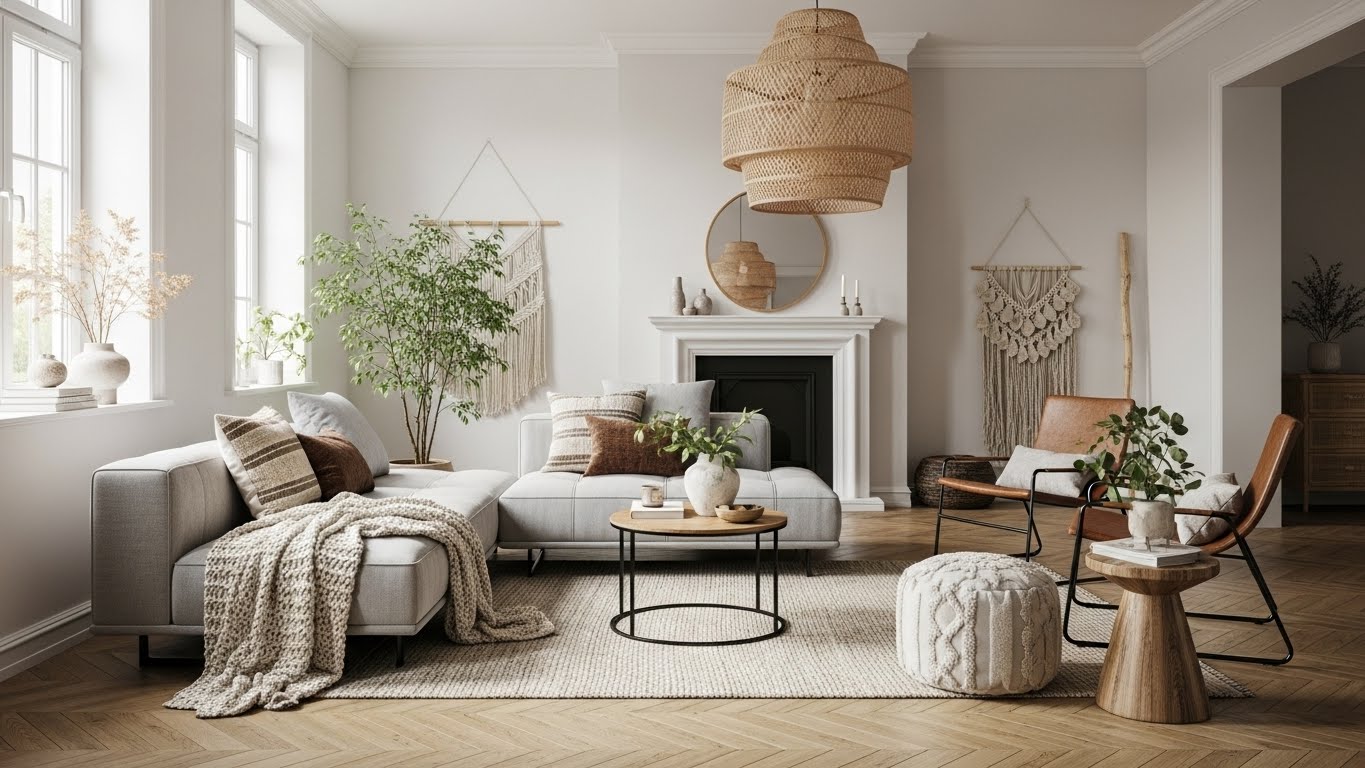
The Foundation of a Flourishing Living Room
Introduction: Beyond Decor, Towards Living Art
💡 Understanding where to place your indoor plants can transform your living space.
➜ Master the art of plant placement
In the theater of the home, the living room serves as the main stage—a space for respite, connection, and self-expression. While furniture, textiles, and art form the essential backdrop, the introduction of houseplants transforms the set into a vibrant, breathing ecosystem. These are not static objects of decor; they are living sculptures, dynamic elements that introduce energy, texture, and a tangible connection to the natural world into our most personal spaces. They soften hard edges, purify the air, and have been shown to positively affect our mental and physical well-being.
However, the art of incorporating plants successfully is a delicate balance of science and style. The most common pitfall in houseplant ownership arises from a “style-first, environment-second” approach. An architecturally stunning Fiddle Leaf Fig chosen for its modern appeal will quickly become an eyesore if placed in a dim corner where it cannot thrive. The ultimate success of any plant as a design element is therefore predetermined by a correct environmental match. This guide is built upon that foundational principle: to empower you first as a curator of your home’s unique environment, and then as a stylist for your chosen aesthetic. By understanding the non-negotiable needs of your space, you can select plants that will not only survive but flourish, becoming the true works of living art they are meant to be.
Decoding Your Space: The Three Pillars of Plant Selection
Before a single pot is chosen or a design style is considered, a successful plant parent must become a keen observer of their own home. A thriving plant is the most beautiful plant, and its health is contingent on three fundamental pillars: light, space, and the invisible atmosphere of your room. Mastering these elements is the first and most crucial step toward cultivating a verdant living room.
Pillar 1: Light as the Architect
Light is the primary source of energy for plants, and its availability is the single most important factor in determining which species will succeed in your living room. The quality and duration of light can vary dramatically from one corner to another and will shift with the seasons. Understanding how to assess your light is a diagnostic skill that unlocks the potential of your space.
- Bright, Direct Light (Full Sun): This is the most intense form of light, characterized by at least four to six hours of direct, unfiltered sun rays hitting a specific spot. It is typically found in rooms with south- or west-facing windows that have no obstructions like trees or buildings outside. This environment can be harsh and may scorch the leaves of many tropical plants.
- Bright, Indirect Light (Partial Shade): This is the gold standard for a vast majority of popular houseplants. It refers to a space that is brightly illuminated for most of the day, but where the sun’s rays do not fall directly on the plant’s foliage. This condition is often found a few feet away from a south- or west-facing window, or directly in the path of an east-facing window which receives gentler morning sun. Sheer curtains can also be used to diffuse direct sunlight, transforming it into bright, indirect light.
- Medium, Indirect Light: This describes an area that receives less intense, filtered light, often further back from an east- or west-facing window, or in a room with a north-facing window. While many plants can tolerate medium light, their growth may be slower and less robust than in brighter conditions.
- Low, Indirect Light: These are the shadiest spots in a home, such as corners far from any window, hallways, or rooms with small, north-facing windows. Only a select group of hardy plants can tolerate these conditions long-term. It’s important to note that domestic lighting is generally insufficient for plant growth, though specialized grow lamps can supplement natural light if needed.
To apply this knowledge, take a day to map the light in your living room. Observe where the sun falls in the morning, at midday, and in the afternoon. Note how the intensity changes. This simple act of observation is the most powerful tool in your plant selection arsenal, ensuring you choose a plant whose needs align perfectly with what your home can provide.
Pillar 2: Space, Scale, and Flow
A plant must be proportional to the room and its furnishings to feel integrated and intentional. The physical dimensions of your living room will dictate whether you should be looking for a towering statement tree or a collection of smaller specimens.
- For Small Living Rooms: In compact spaces, floor space is a premium commodity. The key is to think vertically. Utilize hanging planters to draw the eye upward, place trailing plants on high shelves to create cascading curtains of green, or select plants with a narrow, upright growth habit that add height without a wide footprint. A well-placed plant on a windowsill or a multi-tiered plant stand can introduce significant greenery without cluttering the layout.
- For Large Living Rooms: Spacious rooms can handle—and often require—large, statement-making plants to feel balanced and complete. An oversized floor plant, such as a Fiddle Leaf Fig or a large palm, can serve as a stunning focal point, anchoring an empty corner, framing a sofa, or creating a natural division between zones. In a large room, small plants placed directly on the floor can get lost; they are better grouped on tables or elevated on stands to give them presence.
Regardless of room size, a crucial rule of thumb is to ensure proper airflow. A common mistake is to squeeze plants into tight spaces between furniture and walls. A plant should have at least six inches of clearance from surrounding objects to allow for air circulation, which helps with temperature regulation and disease prevention. Furthermore, when selecting a large plant, consider its mature height; it should ideally remain at least three feet below the ceiling to avoid a cramped appearance.
Pillar 3: The Invisible Atmosphere
The ambient conditions of your living room—its temperature and humidity—are invisible but powerful forces in a plant’s life. Most common houseplants are of tropical origin and thrive in warm, humid conditions that are often at odds with modern climate-controlled homes.
- Temperature: Most houseplants are comfortable in the same temperature range as humans, typically between 65°F and 85°F (18°C and 29°C). The greater danger comes from sudden fluctuations and drafts. Avoid placing plants near exterior doors that are frequently opened in winter, or in the direct path of heating or air conditioning vents, as these can cause stress and leaf drop.
- Humidity: Central heating and air conditioning systems are highly effective at drying out the air, creating an arid environment that is stressful for tropical plants like ferns and Calatheas. Signs of low humidity often include brown, crispy leaf tips. To combat this, you can increase the ambient moisture in several ways: group plants together to create a humid microclimate, place pots on a tray of pebbles and water (ensuring the pot sits on the pebbles, not in the water), or use a room humidifier. Rooms that are naturally more humid, such as kitchens or bathrooms, can be excellent homes for humidity-loving species.
By first diagnosing your living room through the lens of these three pillars, you build a foundation for success. This understanding transforms plant selection from a game of chance into an intentional act of curation, ensuring that the greenery you bring into your home is destined to flourish.
The Modern Living Room: Sculptural Forms and Clean Lines
Defining the Modern Aesthetic: Plants as Architecture
The modern design ethos is rooted in the principles of clean lines, geometric forms, natural materials, and a deliberate lack of ornamentation. It is a style that values structure and purpose, where every element in a room should feel both beautiful and essential. Within this framework, houseplants transcend their role as simple accessories and are elevated to the status of living architecture. The ideal modern plant possesses a strong, distinct silhouette—a sculptural quality that allows it to stand as a piece of art in its own right. It is used to provide a bold, organic counterpoint to the rigid geometry of furniture or to introduce a natural focal point that breaks the uniformity of a neutral palette without creating clutter.
The Modern Plant Portfolio
The following plants are celebrated in modern interiors for their powerful forms and architectural presence. Each one makes a distinct statement, embodying the principles of structure, simplicity, and natural beauty.
1. Fiddle Leaf Fig (Ficus lyrata)
- Why It Works: The Fiddle Leaf Fig is arguably the icon of the modern houseplant movement. Its commanding, tree-like stature and enormous, violin-shaped leaves provide a dramatic vertical element that is unmatched. In a modern living room with high ceilings and large windows, a mature Ficus lyrata acts as a living sculpture, its bold organic form creating a powerful contrast against clean, neutral walls.
- Comprehensive Care Guide: This plant’s beauty comes with a reputation for being finicky, demanding specific conditions to thrive.
- Light: It requires a great deal of bright, indirect light. An ideal placement is directly in front of or near a south- or west-facing window, though an east-facing window can also work if the space is very bright. It does not tolerate low light.
- Water: Consistency is key. Water thoroughly only when the top two inches of soil have dried out. Both overwatering and underwatering can cause its most infamous trait: leaf drop. Ensure the pot has excellent drainage to prevent root rot.
- Atmosphere: As a native of tropical rainforests, it appreciates a warm, humid environment. Keep it away from drafts from windows, doors, or A/C and heating vents, as sudden temperature changes can cause stress. Increasing humidity with a humidifier or pebble tray is beneficial.
- Toxicity: This plant’s sap is mildly toxic to pets and humans if ingested, and can cause skin irritation.
2. Monstera Deliciosa (Swiss Cheese Plant)
- Why It Works: The Monstera deliciosa brings a touch of untamed, tropical modernism into the home. Its iconic leaves, which develop dramatic splits and holes (fenestrations) as they mature, are a masterclass in natural graphic design. This sprawling, dynamic energy provides a perfect organic contrast to the straight lines and hard angles of modern furniture. For a particularly striking modern statement, the variegated ‘Thai Constellation’ cultivar, with its cream-splashed foliage, is a highly sought-after choice.
- Comprehensive Care Guide: While exotic in appearance, the Monstera is surprisingly forgiving and a vigorous grower.
- Light: It thrives in medium to bright indirect light. While it can tolerate lower light, this may result in slower, “leggy” growth and leaves that do not develop fenestrations. Avoid direct sun, which can burn the leaves.
- Water: Water thoroughly once the top 2 to 4 inches of soil are dry. As an epiphyte in its natural habitat, it is sensitive to overwatering and should never be left in soggy soil.
- Support: In nature, Monsteras are climbers. Providing a moss pole or trellis for it to climb will encourage more mature, vertical growth and larger, more fenestrated leaves. Its aerial roots can be gently guided into the soil or onto the pole.
- Toxicity: All parts of the plant contain insoluble calcium oxalate crystals, making it toxic to cats and dogs.
3. Snake Plant (Dracaena trifasciata)
- Why It Works: The Snake Plant, also known as Mother-in-Law’s Tongue, is a cornerstone of modern and contemporary interiors for one primary reason: its uncompromisingly clean and architectural form. Its stiff, sword-like leaves grow vertically, providing a strong columnar structure that adds height and graphic interest without consuming horizontal space. This makes it exceptionally versatile, perfect for adding a decorative accent to a small doorway, lining a console table, or standing as a sleek sculpture in a corner.
- Comprehensive Care Guide: This plant is renowned for its hardiness and is an excellent choice for beginners or those with busy schedules.
- Light: It is remarkably adaptable, thriving in almost any light condition from low, indirect light to bright, indirect light. Brighter light will encourage faster growth and more vibrant coloration.
- Water: This is a succulent plant that stores water in its leaves, making it extremely drought-tolerant. The single most common mistake is overwatering. Allow the soil to dry out completely between waterings to prevent root rot. Water even less frequently in the winter.
- Atmosphere: It prefers warm temperatures and dry conditions, making average household humidity perfectly suitable. Avoid placing it in a bathroom where humidity is high.
- Toxicity: It contains saponins and is considered toxic to cats and dogs if ingested.
4. Rubber Tree (Ficus elastica)
- Why It Works: The Rubber Tree offers a softer, yet equally bold, take on modern greenery. Its large, thick, glossy leaves provide a substantial presence. The popular burgundy or nearly black varieties, like ‘Black Prince,’ introduce a deep, moody color that contrasts beautifully with the light wood, metal, and neutral tones common in modern decor. It can grow into a tall, impressive tree, making it an excellent choice for filling vertical space in rooms with high ceilings.
- Comprehensive Care Guide: A sturdy and relatively easy-to-care-for member of the Ficus family.
- Light: It prefers plenty of bright, indirect light. It can tolerate some gentle morning sun but should be protected from harsh, direct afternoon sun. While it can survive in lower light, its growth will be slower and it may become leggy.
- Water: Water every 1-2 weeks, allowing the soil to dry out between sessions. Yellowing leaves are often a sign of overwatering.
- Maintenance: The large leaves can accumulate dust, which can inhibit photosynthesis. Wipe them down with a damp cloth periodically to keep them clean and glossy. Pruning the top of the main stem can encourage a bushier, more branched form.
- Toxicity: The milky white sap is toxic to pets and humans if ingested.
Styling the Modern Greenery: A Study in Restraint
Styling plants in a modern living room is an exercise in intentionality and restraint. The goal is to enhance the room’s clean, architectural feel, not to overwhelm it with a chaotic jungle.
- Containers as Complements: The vessel is a critical component of the modern aesthetic. Opt for planters with simple, clean lines and a lack of ornamentation. Neutral-colored ceramic pots in shades of white, black, grey, or charcoal are ideal choices. Materials like matte metal, concrete, or unadorned terracotta also work well. The pot should act as a quiet, elegant base that allows the plant’s sculptural form to be the star.
- Placement as Punctuation: In modern design, plants are used to create deliberate focal points. A single, large Fiddle Leaf Fig or Monstera placed in an empty, well-lit corner serves as a powerful statement piece, drawing the eye and adding life to an otherwise static space. A row of identical Snake Plants in matching planters can create a low, living screen that defines an area without closing it off. The key is to honor the principle of negative space; allow the plant room to breathe visually, preventing a cluttered feel.
- Grouping with Geometry: If you choose to group plants, do so with a sense of order and cohesion. A popular design technique is to group items in odd numbers, such as a cluster of three. For a modern look, select three plants of varying heights—perhaps a tall Snake Plant, a medium Rubber Tree, and a smaller ZZ Plant—and place them in identical or tonally similar pots. This creates a layered, dynamic display that still feels curated and controlled.
The Minimalist Living Room: Intentional Greenery
Defining the Minimalist Aesthetic: The Power of the Singular
While Minimalism shares a visual language with Modernism—both champion simplicity and clean lines—it is fundamentally an ethos of greater restraint. Minimalism is about extreme intentionality. Every object in a space must earn its place, serving a purpose either functionally or by bringing a profound sense of calm and joy. The goal is to create a serene, uncluttered environment that is a sanctuary for the mind and eye. In this context, a plant is not just a decorative object; it is a carefully chosen piece of living art, selected for its ability to provide maximum impact with minimal visual “noise” and maintenance. A contemporary evolution of this style, “Warm Minimalism,” softens the often-stark aesthetic by incorporating organic shapes, natural textures, and earthy tones, for which plants are a perfect vehicle.
A crucial distinction for this aesthetic is that a truly minimalist plant is defined not only by its initial appearance but by its long-term behavior. Plants that grow aggressively, require constant pruning, or have a messy, sprawling habit can introduce a form of visual and psychological clutter, running counter to the core principles of a minimalist lifestyle. The ideal minimalist plant is one that is visually clean, structurally contained, and functionally simple to care for.
The Minimalist Plant Portfolio
The following plants are perfectly suited to the minimalist ethos, offering striking forms, contained growth habits, and a level of self-sufficiency that aligns with a life of simplicity.
💡 Learn how to showcase your favorite plants without overwhelming your space.
➜ Discover how to style statement plants
1. Snake Plant (Dracaena trifasciata)
- Why It Works: The Snake Plant is the undisputed champion of minimalist greenery. Its sleek, vertical leaves create a streamlined silhouette, adding architectural height and a graphic element without consuming valuable horizontal space or creating visual busyness. Its form is elegant and contained, making it a perfect visual anchor that breaks up the horizontal lines of furniture without demanding attention.
- Comprehensive Care Guide: Its care routine is the epitome of minimalism. The plant thrives on neglect and is an ideal choice for those who want the benefit of greenery without a demanding care schedule. As detailed previously, it tolerates a vast range of light conditions and requires watering only when the soil has completely dried out, making it one of the hardiest houseplants available.
- Toxicity: Toxic to cats and dogs if ingested.
2. ZZ Plant (Zamioculcas zamiifolia)
- Why It Works: The ZZ Plant offers a beautiful organic shape that is both structured and soft, making it an excellent choice for “Warm Minimalism.” Its gracefully arching stems are lined with deep green, glossy leaflets, creating a pattern that is visually interesting without being distracting. It is a slow-grower that maintains its tidy form over time, and its reputation for being nearly indestructible aligns perfectly with the low-effort ethos.
- Comprehensive Care Guide: The ZZ Plant is exceptionally low-maintenance. It is highly drought-tolerant due to the water-storing rhizomes at its base and can thrive in very low light conditions, making it suitable for almost any corner of a minimalist home. Water sparingly, only every 2-3 weeks or when the soil is completely dry to the touch.
- Toxicity: Mildly toxic to pets and humans. The sap contains calcium oxalate crystals which can cause skin irritation and gastrointestinal upset if ingested.
3. Bird of Paradise (Strelitzia nicolai)
- Why It Works: For the minimalist who desires a single, breathtaking statement piece, the Bird of Paradise is an unparalleled choice. Its enormous, paddle-shaped leaves evoke the feeling of a tropical oasis while maintaining a simple, elegant form. A single, well-placed Strelitzia can serve as the primary piece of living art in a room, its grand scale and sculptural silhouette commanding attention and filling vertical space with dramatic flair.
- Comprehensive Care Guide: This plant’s dramatic look requires more specific care than the Snake or ZZ Plant.
- Light: It needs a great deal of bright light to thrive, including at least four hours of direct sunlight from a southern or western exposure. It will not flourish in low light.
- Water: It is a thirsty plant and prefers consistently moist (but not soggy) soil. Water deeply when the top 2-3 inches of soil feel dry.
- Atmosphere: It loves warmth and high humidity. Misting or using a humidifier is beneficial. It is normal for its large leaves to split along the veins; this is a natural adaptation to allow wind to pass through and is not a sign of poor health.
- Toxicity: Toxic to dogs, cats, and horses, with the fruit and seeds being the primary cause of gastrointestinal upset.
4. A Single Large Cactus or Curated Succulents
- Why It Works: Cacti and succulents are the embodiment of minimalist principles in the plant world. Their forms are often stark, geometric, and sculptural, making them living objects of design. A single, tall columnar cactus, like a Prickly Pear (Opuntia), can stand against a clean wall as a powerful, architectural statement that breaks up straight lines. Alternatively, a small, intentionally arranged cluster of three assorted succulents, such as an Echeveria and a Haworthia, in simple, identical pots on a clean surface perfectly captures the minimalist ethos of curated beauty. Their ability to thrive on neglect is the ultimate nod to a simplified lifestyle.
- Comprehensive Care Guide: The primary needs for most cacti and succulents are straightforward but non-negotiable.
- Light: They require a high amount of bright, direct sunlight to maintain their compact shape and vibrant color. A south- or west-facing window is essential.
- Water: This is where most owners fail. They are adapted to arid environments and are extremely susceptible to root rot. Water very infrequently—perhaps only once a month—and ensure the soil dries out completely and stays dry for a period between waterings.
- Toxicity: Toxicity varies widely among species. While many are non-toxic, some, like the Jade Plant (Crassula ovata) and Pencil Cactus (Euphorbia tirucalli), are toxic to pets. Always verify the specific species.
Styling with Restraint: The Art of Placement
In a minimalist living room, plant styling is an act of precision. The placement of a single plant can define an entire space.
💡 Bohemian style thrives on creativity and layering; discover how to arrange your plants to achieve this aesthetic.
➜ Explore boho plant arrangement techniques
- The Single Statement: The most powerful minimalist strategy is often to choose one large, exceptional plant and give it a place of honor, rather than scattering many smaller plants throughout the room. This approach avoids any sense of clutter and allows the plant’s form to be fully appreciated. A tall Bird of Paradise next to a reading chair or a large Snake Plant on a low media console can provide all the greenery a room needs.
- Intentional Containers: The planter is a critical design element that must align with the minimalist aesthetic. Choose high-quality, understated containers made from natural materials like matte ceramic, terracotta, concrete, or sleek metal. The form should be simple—a cylinder, a cube, a simple bowl. The color should be neutral. The container’s role is to disappear, allowing the plant’s natural form to be the undisputed focal point.
- The Beauty of Negative Space: Minimalist design is as much about the empty space as it is about the objects within it. When placing a plant, consider the negative space around it. Position it against a clean, uncluttered wall or in a corner where its silhouette can be clearly seen and appreciated. This breathing room is essential; it elevates the plant from a simple possession to a deliberate piece of art.
The Boho Living Room: A Lush and Layered Sanctuary
Defining the Boho Aesthetic: The Collected Urban Jungle
The Bohemian, or “Boho,” design style is a celebration of the free-spirited, the eclectic, and the deeply personal. It is an aesthetic that rejects rigid rules in favor of a warm, layered, and comfortable atmosphere. At its heart, Boho design is inspired by nature, global travels, and artistry, weaving together a rich tapestry of textures, patterns, and natural materials. In this context, plants are not just an element of the design—they are the very soul of it. The Boho living room embraces a “more is more” philosophy when it comes to greenery, aiming to create a lush, cozy, “urban jungle” vibe that feels like a personal sanctuary.
Unlike the Modern or Minimalist focus on the singular, sculptural plant, the Boho aesthetic treats the collective of plants as a single, immersive design feature. The goal is to create a layered, textured environment where a diversity of plant forms, sizes, and growth habits interplay to evoke the feeling of a verdant, life-filled oasis.
The Boho Plant Portfolio
The ideal Boho plant collection is a diverse menagerie of textures, patterns, and forms. The following plants are staples of the style, each contributing a unique element to the lush, layered look.
1. Pothos (Epipremnum aureum)
- Why It Works: Often called Devil’s Ivy, the Pothos is the quintessential Boho plant and the perfect starting point for any urban jungle. Its fast-growing, heart-shaped leaves on cascading vines are incredibly versatile. They are ideal for spilling out of macrame hangers, trailing from the tops of bookshelves, or softening the hard edges of furniture. Its resilience and ease of propagation align with the abundant, creative spirit of the Boho style—one plant can easily become many to share or spread throughout the home. As one source notes, “the more Pothos, the more bohemian your decor will look”.
- Comprehensive Care Guide: This plant is famously easy to care for, making it perfect for beginners. It is highly adaptable, thriving in a wide spectrum of light conditions, from low to bright indirect light. Water it when the top one to two inches of soil feel dry, and be careful not to overwater. It appreciates a humid environment but is tolerant of average household conditions.
- Toxicity: Toxic to cats and dogs due to insoluble calcium oxalate crystals.
2. Ferns (Boston, Staghorn, Maidenhair)
- Why It Works: Ferns are essential for adding layers of delicate, feathery texture to the Boho jungle, evoking a sense of a lush, ancient forest floor. The classic Boston Fern (Nephrolepis exaltata) with its arching, voluminous fronds is perfect for placing on a pedestal or in a hanging basket to create a full, cascading effect. The Staghorn Fern (Platycerium bifurcatum) offers a unique, sculptural element; as an epiphyte, it can be mounted on a piece of wood and hung on the wall like a piece of living art. The more delicate Maidenhair Fern (Adiantum raddianum) adds a touch of ethereal elegance, though it requires more attentive care.
- Comprehensive Care Guide: Ferns generally require specific conditions to thrive indoors. They prefer high humidity and consistently moist (but never soggy) soil, which makes them excellent candidates for grouping with other plants or for placing in naturally humid rooms like a bathroom or kitchen. They need bright, indirect light; direct sun will scorch their delicate fronds.
- Toxicity: Most true ferns, including the Boston Fern and Staghorn Fern, are non-toxic to pets, making them a safe choice for a pet-friendly jungle.
3. Calathea (Prayer Plant)
- Why It Works: Calatheas, and their close relatives in the Marantaceae family, are the artists of the plant world. Their foliage is often adorned with intricate, painted-like patterns in stunning combinations of green, pink, cream, and deep purple. These vibrant and patterned leaves perfectly complement the eclectic, colorful, and artistic nature of Boho decor, adding a layer of visual complexity and a pop of unexpected color.
- Comprehensive Care Guide: These beauties are known for being somewhat demanding. They require high humidity to prevent their leaf edges from turning brown and crispy. They thrive in medium to bright indirect light; direct sunlight will cause their beautiful patterns to fade. Their soil should be kept consistently moist but not waterlogged. They can also be sensitive to the minerals in tap water, so using filtered, distilled, or rainwater is often recommended.
- Toxicity: Calatheas are non-toxic to cats and dogs, making them a wonderfully safe option for adding pattern and color to a home with pets.
4. Palms (Areca, Kentia)
- Why It Works: No urban jungle is complete without the grand, sweeping fronds of a palm tree. Large palms are foundational to the Boho aesthetic, providing the height and lush backdrop necessary to create an immersive, tropical feel. The Areca Palm (Dypsis lutescens), also known as the Butterfly Palm, is a popular choice for its graceful, feathery, arching fronds that add an airy elegance. They fill vertical space beautifully and pair exceptionally well with the natural textures of rattan and wicker furniture. The Kentia Palm (Howea forsteriana) is another excellent choice, prized for its classic, elegant shape and durability.
- Comprehensive Care Guide: Palms generally prefer bright, indirect light. They like their soil to be kept evenly moist, but are susceptible to root rot if overwatered. They also appreciate higher humidity levels to mimic their native tropical environments.
- Toxicity: Both the Areca Palm and the Kentia Palm are non-toxic to pets, making them safe, large-scale choices for a Boho home.
5. Trailing Succulents (String of Pearls, String of Hearts)
- Why It Works: Trailing succulents add a delicate, whimsical, and unexpected layer to the Boho tapestry. The String of Pearls (Curio rowleyanus), with its unique, bead-like leaves, and the String of Hearts (Ceropegia woodii), with its dainty, heart-shaped leaves on long, thin vines, are perfect for this role. When hung from a high shelf or a macrame planter, their cascading stems create a curtain-like effect, adding intricate detail and drawing the eye through the different vertical layers of the room.
- Comprehensive Care Guide: As succulents, their care needs differ from the tropicals. They require plenty of bright light, and can even handle some direct morning sun. Their most critical need is infrequent but thorough watering. The soil must be allowed to dry out completely between waterings, as they are highly susceptible to rot in soggy conditions.
- Toxicity: The String of Pearls is toxic to cats and dogs. The String of Hearts is generally considered non-toxic.
Styling the Urban Jungle: More is More
Styling plants in a Boho living room is an intuitive and creative process that embraces abundance and personality.
- The Art of Layering: This is the foundational principle of Boho plant styling. The goal is to create visual depth by mixing plants of different heights, shapes, and textures. Place a large palm in a corner, arrange a mid-sized Calathea on a plant stand next to it, and tuck a smaller fern at its base. Use shelves, side tables, benches, and even sturdy stacks of books to create multiple levels of greenery, mimicking the rich, varied landscape of a natural jungle.
- Eclectic and Earthy Containers: Forget uniformity. Boho styling celebrates a collected, mix-and-match approach to planters. Combine pots made from natural materials like terracotta, woven wicker or seagrass baskets, and patterned or vintage ceramics. Macrame plant hangers are a non-negotiable staple of the style, perfect for suspending Pothos, ferns, and trailing succulents to fill the upper regions of the room with life.
- Abundant Placement: In a Boho living room, there is no such thing as too many plants. Fill empty corners with large floor plants to create lush backdrops. Draw the eye upward by suspending multiple hanging plants from the ceiling or curtain rods. Sprinkle smaller plants and succulents on every available surface—coffee tables, bookshelves, windowsills, and the fireplace mantle—to create a pervasive sense of verdant, joyful abundance.
The Practical Gardener: Essential Considerations for a Harmonious Home
A Pet-Lover’s Guide to Houseplants: Beauty Without the Worry
For a significant number of households, the “best” plant is not only one that suits the decor but also one that poses no threat to curious furry family members. The safety of pets is a paramount concern that can and should override aesthetic preferences. Understanding the potential risks and knowing which plants are safe is essential for creating a truly harmonious home. Many common houseplants contain toxins that can cause reactions ranging from mild discomfort to severe illness if ingested.
The most common toxins found in popular houseplants include insoluble calcium oxalate crystals and saponins. Insoluble calcium oxalates are tiny, needle-like crystals that cause immediate and painful irritation to the mouth, lips, and tongue upon being chewed, leading to symptoms like intense burning, excessive drooling, vomiting, and difficulty swallowing. Saponins are chemical compounds that can cause gastrointestinal distress, including nausea, vomiting, and diarrhea. While ingestion of most of these plants is rarely fatal, it can cause significant discomfort and may require veterinary intervention.
To aid in safe and responsible plant selection, the following table consolidates toxicity information from the American Society for the Prevention of Cruelty to Animals (ASPCA) and other veterinary sources for every plant recommended in this guide.
Pet Safety Reference Guide
Plant Common Name | Scientific Name | Style(s) Recommended For | Toxicity to Cats | Toxicity to Dogs | Key Symptoms & Notes |
Fiddle Leaf Fig | Ficus lyrata | Modern | Toxic | Toxic | Oral irritation, vomiting, diarrhea. Sap can irritate skin. |
Monstera Deliciosa | Monstera deliciosa | Modern, Boho | Toxic | Toxic | Contains calcium oxalate crystals. Oral irritation, drooling, vomiting, difficulty swallowing. |
Snake Plant | Dracaena trifasciata | Modern, Minimalist, Boho | Toxic | Toxic | Contains saponins. Nausea, vomiting, diarrhea. Mild to moderate toxicity. |
Rubber Tree | Ficus elastica | Modern | Toxic | Toxic | Milky sap is toxic if consumed, causing GI upset. Note: Peperomia obtusifolia, also called Baby Rubber Plant, is NON-toxic. |
Areca Palm | Dypsis lutescens | Modern, Boho | Non-Toxic | Non-Toxic | A safe alternative for a tropical look. |
ZZ Plant | Zamioculcas zamiifolia | Minimalist | Toxic | Toxic | Mildly toxic. Contains calcium oxalate. Can cause skin irritation, vomiting, diarrhea if ingested. |
Bird of Paradise | Strelitzia nicolai/reginae | Minimalist | Toxic | Toxic | Fruit and seeds are main culprits. Mild nausea, vomiting, drowsiness. |
Pothos | Epipremnum aureum | Boho | Toxic | Toxic | Contains calcium oxalate crystals. Oral irritation, vomiting, drooling. |
Boston Fern | Nephrolepis exaltata | Boho | Non-Toxic | Non-Toxic | A safe choice for a lush, feathery look. |
Staghorn Fern | Platycerium bifurcatum | Boho | Non-Toxic | Non-Toxic | Safe and unique wall-mounted option. |
Calathea | Calathea/Goeppertia spp. | Boho | Non-Toxic | Non-Toxic | A beautiful and pet-safe choice for pattern lovers. |
String of Pearls | Curio rowleyanus | Boho | Toxic | Toxic | Can cause vomiting, drooling, diarrhea, lethargy. |
Spider Plant | Chlorophytum comosum | Boho | Non-Toxic | Non-Toxic | Safe, easy to care for, and great for hanging. |
Olive Tree | Olea europaea | Non-Toxic | Non-Toxic | Leaves and branches are safe. | |
Kentia Palm | Howea forsteriana | Boho | Non-Toxic | Non-Toxic | An elegant and pet-safe palm. |
Chinese Money Plant | Pilea peperomioides | Non-Toxic | Non-Toxic | A safe and trendy option. |
If you choose to keep toxic plants in a home with pets, placement is critical. Utilize high shelves, hanging planters, or rooms that are inaccessible to your pets to prevent accidental ingestion.
Placement and Safety: Navigating Your Living Room’s Hot Spots
Beyond the general principles of light and space, certain features common to living rooms present specific challenges and hazards for houseplants that require careful consideration.
Near Heat Sources (Fireplaces & Radiators)
The cozy ambiance of a fireplace or the warmth of a radiator can create a hostile environment for most plants. The intense, dry heat emitted from these sources can rapidly dehydrate a plant, scorching its leaves and stressing its system, which can be fatal.
- The Three-Foot Rule: A critical safety guideline, recommended by organizations like the U.S. Fire Administration, is to keep anything that can burn at least three feet away from a fireplace or wood stove. This rule should be strictly applied to houseplants.
- Radiators and Vents: Similarly, avoid placing plants directly on top of radiator covers or in the direct path of a forced-air heating vent. The constant stream of hot, dry air will damage the foliage. If plants must be in the general vicinity of a heat source, you will need to take extra measures to counteract the arid conditions, such as running a humidifier nearby or frequently checking the soil for dryness.
Around Electronics (TVs & Computers)
Placing plants near electronic equipment like televisions, stereos, or computers introduces a two-way risk that requires careful management.
- Water and Electronics Don’t Mix: The most obvious danger is the risk of water spilling during watering and damaging expensive electronics. To mitigate this, always move plants to a sink or bathtub for watering, and allow them to drain completely before returning them to their spot. Alternatively, practice bottom-watering, where the plant sits in a saucer of water to absorb moisture from below, which is a less messy method.
- Heat from Devices: Electronic devices generate a surprising amount of heat, which can create a micro-environment that is warmer and drier than the rest of the room. This can cause the soil of a nearby plant to dry out much faster than expected. If you place a plant near electronics, be sure to monitor its soil moisture more frequently and consider choosing a more drought-tolerant species, like a Snake Plant or ZZ Plant, that is less sensitive to drying out.
Conclusion: Cultivating Your Personal Oasis
The journey of bringing plants into your living room is one of the most rewarding ways to shape and personalize your home. It is a process that blends the tangible science of horticulture with the intangible art of interior design. As this guide has detailed, the path to a flourishing indoor garden begins not with a trend or a photograph, but with a quiet and careful understanding of your own space—its light, its dimensions, and its unique atmosphere. By honoring these foundational needs, you set the stage for success.
From there, the possibilities for expression are boundless. Whether you are drawn to the clean, architectural lines of the Modern aesthetic, the serene intentionality of Minimalism, or the lush, layered sanctuary of the Boho style, there is a perfect plant waiting to play its part. Each choice—from the sculptural form of a Monstera to the cascading vines of a Pothos—is an opportunity to infuse your living room with personality and life.
Remember that cultivating this green space is a dynamic process, not a static one. Plants grow and change, and your relationship with them will evolve. Start slowly, perhaps with one or two plants that are well-suited to your environment and lifestyle. Enjoy the simple, rewarding act of nurturing them, and allow your creativity to guide you as you arrange and style them. Ultimately, the goal is to create more than just a well-decorated room; it is to cultivate a personal oasis—a warm, welcoming, and living space that reflects your connection to the natural world and brings you a sense of calm and joy each day.
💡 Transform your living space by using plants to create natural boundaries and enhance privacy.
➜ See how to use plants as room dividers


