
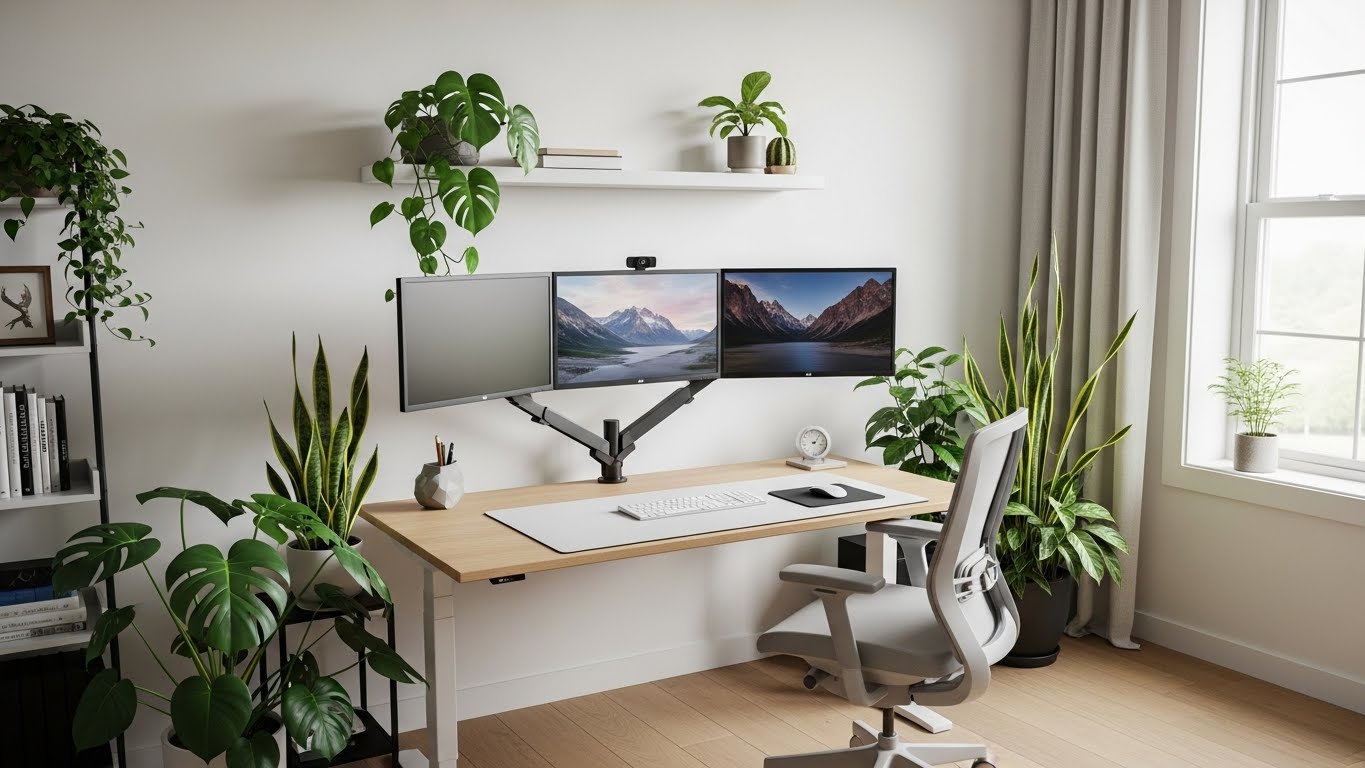
The Biophilic Blueprint for Productivity
In the modern pursuit of peak performance, professionals meticulously optimize every facet of their workspace, from ergonomic chairs to high-resolution monitors. Yet, one of the most potent and scientifically validated tools for enhancing cognitive function, reducing stress, and boosting output is often overlooked: the humble indoor plant. The integration of plants into our work environments is not merely a decorative trend but a strategic implementation of an evidence-based design philosophy known as biophilia. This section will establish the scientific framework that underpins the profound impact of greenery on our professional lives, moving beyond aesthetics to explore the deep-seated psychological and physiological mechanisms at play.
💡 If you’re looking to enhance your home office with the best air purifying plants, this guide is a must-read.
➜ Discover the top air purifying plants
The Innate Human-Nature Connection (Biophilia)
The concept of biophilic design is rooted in the “biophilia hypothesis,” which posits that humans possess an innate, genetically determined tendency to seek connections with nature and other forms of life. This is not a learned preference but a fundamental aspect of our evolutionary heritage. For millennia, the presence of lush greenery was a primary indicator of a life-sustaining environment—one with water, food, shelter, and security. A subconscious, positive response to plants is therefore hardwired into our neurobiology. In the context of a sterile, artificial home office environment, a living plant serves as a powerful, restorative signal to our primal brain. It introduces a piece of a “restorative environment” that works at a subconscious level to relieve the cognitive burdens of modern work, re-setting a feeling of calm and security that is essential for high-level thinking. By consciously designing our workspaces to include these natural elements, we are not just decorating; we are satisfying a deep-seated biological need, creating an environment that is more aligned with our inherent nature and, consequently, more conducive to well-being and productivity.
Quantifying the Productivity Boost
The translation of this biophilic connection into tangible workplace performance is not a matter of conjecture; it has been rigorously quantified by numerous scientific studies. Research from institutions such as Cardiff University’s School of Psychology and the University of Exeter has consistently demonstrated that enriching an office space with plants can increase productivity by a remarkable 15%. This figure represents more than just an increase in the speed of task completion; it reflects a deeper level of engagement with the work itself. Studies comparing “green” offices (decorated with plants) to “lean” offices (stripped of decorations) found that the presence of greenery resulted in higher workplace satisfaction, increased concentration, and enhanced employee engagement, defined as a worker’s physical, cognitive, and emotional involvement in their tasks.
It is crucial to understand the causal pathway here. The 15% productivity increase is not a direct result of the visual stimulus of a plant. Rather, it is a second-order effect, a consequence of the plant’s primary role in mitigating the very factors that inhibit performance. Negative mood states are well-documented productivity killers, and chronic stress can lead to serious illness and burnout. By systematically reducing these negative psychological states, plants create the necessary mental and emotional conditions for an individual to perform at their best. Therefore, incorporating a plant into a home office is not a simple tweak for better output; it is a strategic intervention to cultivate a healthier mental state, which in turn enables superior performance.
The Science of Stress Reduction
Perhaps the most significant and well-documented benefit of indoor plants is their profound impact on stress and mental well-being. The modern work environment, with its constant deadlines, digital notifications, and high-pressure demands, can often feel like a “pressure cooker”. Plants act as a powerful, passive antidote to this chronic stress. Groundbreaking research from the University of Technology Sydney (UTS) provided strong evidence of this effect. Over a three-month period, staff in offices where plants were introduced showed dramatic reductions in stress levels and negative feelings, ranging from 30% to 60%. In stark contrast, the control group with no plants recorded increases in stress and negativity of 20% to 40% over the same period.
The study’s detailed findings, measured using the Profile of Mood States (POMS) questionnaire, are even more compelling. The presence of plants was associated with a 37% reduction in tension and anxiety, a 58% reduction in depression and dejection, a 44% reduction in anger and hostility, and a 38% reduction in fatigue. Simply being in proximity to living greenery can lower blood pressure and create a tangible sense of calm. This powerful psychological effect has a very low barrier to entry. The UTS study concluded that “just one plant per workspace can provide a very large lift to staff spirits, and so promote wellbeing and performance”. This finding is critical, as it democratizes the benefits of biophilic design. It is not necessary to create a dense indoor jungle to experience a significant reduction in stress; a single, well-chosen plant on a desk can be enough to create a meaningful positive impact. This makes the psychological benefits of plants one of the most accessible and cost-effective well-being interventions available to the home office professional.
Attention Restoration Theory in the Home Office
A key mechanism explaining the boost in focus and concentration is Attention Restoration Theory (ART). Our ability to concentrate on demanding tasks, known as directed attention, is a finite resource. Prolonged periods of focused work, common in any professional setting, lead to a state of “attention fatigue,” characterized by an inability to concentrate, increased irritability, and a higher propensity for errors. To recover from this fatigue, the brain needs to engage in activities that require “involuntary attention”—effortless fascination that allows our directed attention capabilities to rest and recharge.
This is precisely the role that indoor plants fulfill. As living, subtly dynamic natural objects, they capture our attention without effort. A brief, passing glance at a leaf or the gentle unfurling of new growth provides a “micro-restorative” experience. This process is largely subconscious; the plant acts as a feature in the environment that attracts attention without demanding it, evoking positive emotions and interrupting the stress process. This effortless engagement allows the brain’s capacity for directed attention to be renewed. In a study involving students, the presence of a real plant—as opposed to a fake plant, a photograph of a plant, or no plant at all—led to measurable improvements in focus and concentration. For the home office professional, a plant on the desk is not a distraction; it is a vital tool for combating mental fatigue and maintaining the high levels of focus required for complex, knowledge-based work.
Boosting Creativity and Problem-Solving
Beyond stress reduction and focus, the presence of plants has also been linked to enhanced creativity. Creative thinking often requires breaking free from established mental patterns and making novel connections. The sterile, monotonous environment of many offices can stifle this process. Plants serve as a catalyst for creativity by gently stimulating the senses. The vibrant colors, varied textures, and subtle, natural fragrances can awaken the senses and help free the mind from mental ruts, leading to greater imagination and innovation.
Research published in the Journal of Environmental Psychology found that the presence of plants in a workspace can enhance creativity by as much as 15%. A green environment encourages a more peaceful and open state of mind, which is conducive to clearer thoughts and the generation of innovative ideas. Furthermore, some specific plants may have unique effects. The simple act of gazing at an African violet, for example, has been suggested to trigger a release of adrenaline, which can boost energy levels and increase the flow of oxygen to the brain, resulting in a state of relaxed alertness. For professionals whose work depends on problem-solving and creative ideation, incorporating plants is a simple yet effective strategy for cultivating an environment that fosters inspiration.
The Air We Breathe: A Nuanced Look at Plants as Purifiers
One of the most widely cited benefits of indoor plants is their ability to purify the air. This claim, while rooted in legitimate scientific research, has become a subject of considerable debate in recent years. For the discerning professional seeking evidence-based solutions, it is essential to understand both the origin of this idea and the modern context that qualifies it. A balanced and nuanced examination reveals that while plants are not a panacea for indoor air pollution, their role—both physiological and psychological—is more complex and interesting than often portrayed. This section will deconstruct the air purification narrative, establishing a credible perspective that builds trust and provides a clear understanding of what plants can and cannot do for the air in a home office.
The Origin Story: The NASA Clean Air Study
The genesis of the “air-purifying plant” phenomenon is a landmark 1989 study conducted by NASA. In their research to find ways to maintain clean air in sealed space stations, NASA scientists investigated the ability of common houseplants to remove airborne pollutants. The study placed various plants inside small, airtight chambers and injected common volatile organic compounds (VOCs)—such as benzene, formaldehyde, and trichloroethylene—into the sealed environment. These VOCs are ubiquitous indoors, off-gassed from synthetic materials, furnishings, cleaning products, and electronics, and are linked to a range of health issues from headaches and respiratory problems to cancer.
The results of the NASA study were remarkable. It found that many common houseplants could significantly reduce the concentration of these VOCs in the sealed chambers over a 24-hour period, with some plants removing up to 87% of air toxins. The research also revealed that the air-cleaning process was a symbiotic effort between the plant’s leaves and the microorganisms residing in the potting soil, which appeared to adapt over time to become more efficient at breaking down pollutants. This study provided the foundational evidence for the claim that plants can act as natural air purifiers and has been the basis for countless articles and recommendations ever since.
The Scalability Problem: From Lab Chamber to Living Room
The critical issue with applying the NASA study’s findings directly to a home or office environment is one of scale and context. The experiments were conducted in small, hermetically sealed chambers, a condition that bears little resemblance to a typical room with doors, windows, and natural air exchange. Real-world indoor environments are significantly larger and more dynamic.
Subsequent analysis by other scientists, including a 1992 memo from the U.S. Environmental Protection Agency (EPA), highlighted this discrepancy. The EPA reviewer calculated that to achieve the same pollutant removal rate observed in the NASA chamber study, one would need to place approximately 680 plants in a typical house. More recent reviews have come to similar conclusions, with one study published in the Journal of Exposure Science & Environmental Epidemiology finding that you would need between 10 and 1,000 plants per square meter of floor space to compete with the air-cleaning capacity of a standard building’s ventilation system. The sheer number of plants required to make a physiologically significant impact on a room’s overall air quality is, for most people, entirely impractical. Therefore, relying on a few houseplants to be the primary solution for indoor air pollution is not supported by the current scientific consensus.
A Balanced Conclusion: Perception vs. Reality
So, where does this leave the role of plants in air quality? The conclusion is nuanced. While a handful of plants will not transform a poorly ventilated office into a pristine atmospheric environment, this does not mean they have zero effect. They do absorb some VOCs, and this effect may be more pronounced in a new office space with fresh paint or new furniture that is actively off-gassing. However, the most effective strategies for improving indoor air remain source control (reducing the use of products that emit VOCs) and ventilation (opening windows or using air purifiers).
Perhaps more importantly, the psychological impact of plants on perceived air quality may be more potent than their actual physiological impact. A study that compared “green” and “lean” offices found that employees in spaces with plants reported “improved perceived air quality”. This perception, whether objectively measurable or not, contributed directly to higher workplace satisfaction and concentration. The human brain associates greenery with fresh, clean, natural environments. The presence of a healthy plant can therefore act as a powerful psychological cue, making us feel as though we are in a healthier space. This feeling can reduce anxiety and improve mood, which, as established in the previous section, is a primary driver of productivity. The benefit is real, but the mechanism is likely more psychological than chemical. The plant’s presence makes the workspace feel healthier, and that feeling fosters a more positive and productive mindset.
Potential Downsides
To maintain a complete and credible perspective, it is also important to acknowledge that plants can, under certain circumstances, negatively impact indoor air quality. These issues are almost always related to improper care and are easily avoidable.
- Mold: Overwatering plants can lead to waterlogged soil, creating a perfect breeding ground for mold. Airborne mold spores can trigger allergies and asthma symptoms.
- Dust: Plant leaves can accumulate dust, which can become airborne. Dust can cause respiratory irritation and may carry other toxic pollutants.
- Pests: Unhealthy or newly introduced plants can harbor pests like spider mites or mealybugs. While their direct impact on air quality is not well-researched, their waste products could potentially become airborne irritants.
- Pollen and Fragrance: Certain flowering plants, such as chrysanthemums or some lilies, can release pollen or strong fragrances that may cause allergic reactions in sensitive individuals.
These potential downsides underscore the importance of choosing the right plant and practicing proper care, which will be covered in detail in the subsequent sections. By addressing the air purification controversy head-on and presenting a balanced, evidence-based view, we can move forward with confidence in the well-established psychological benefits that form the true foundation of the plant-productivity connection.
The Productivity Portfolio: Top 12 Plants for the Modern Home Office
Selecting the right plant for a home office is a strategic decision that hinges on the specific environmental conditions of the workspace and the lifestyle of the professional. The ideal office plant is not just aesthetically pleasing but also resilient, low-maintenance, and aligned with the user’s needs regarding light, space, and care capacity. This section presents a curated portfolio of 12 top-performing plants, chosen for their proven ability to thrive in typical indoor settings.
The selection is organized into four distinct categories to help professionals identify the perfect green companion for their unique situation: The Indestructibles for those new to plant care or with limited time; The Versatile Performers that balance beauty with ease; The Aesthetic Achievers for making a visual statement; and The Compact Companions perfect for desktop placement.
To facilitate an efficient and informed decision, the following master comparison guide provides a high-level overview of each plant’s key characteristics. This allows for a quick assessment of suitability before delving into the detailed profiles.
Table 1: Home Office Plant Master Comparison Guide
Plant Name | Scientific Name | Light Tolerance | Watering Needs | Key Feature | Pet Safe? | Allergen Risk |
Snake Plant | Dracaena trifasciata | Low to Bright Indirect | Low | Nearly Indestructible | No | Low |
ZZ Plant | Zamioculcas zamiifolia | Low to Medium | Low | Thrives on Neglect | No | Low |
Cast Iron Plant | Aspidistra elatior | Low | Low to Medium | Extremely Hardy | Yes | Low |
Pothos | Epipremnum aureum | Low to Bright Indirect | Medium | Easy & Communicative | No | Low |
Peace Lily | Spathiphyllum | Low to Medium | Medium to High | Elegant & Communicative | No | Medium |
Chinese Evergreen | Aglaonema | Low to Medium | Medium | Colorful & Resilient | No | Low |
Dracaena ‘Janet Craig’ | Dracaena deremensis | Low to Medium | Medium | Robust & Upright | No | Low |
Rubber Plant | Ficus elastica | Medium to Bright Indirect | Medium | Modern & Bold | No (Mildly Toxic) | Low |
Lady Palm | Rhapis excelsa | Low to Medium | Medium | Elegant & Shade-Tolerant | Yes | Low |
Parlor Palm | Chamaedorea elegans | Low to Medium | Medium | Classic & Pet-Friendly | Yes | Low |
Spider Plant | Chlorophytum comosum | Low to Bright Indirect | Medium | Easy to Propagate | Yes | Low |
Peperomia | Peperomia obtusifolia | Medium to Bright Indirect | Low to Medium | Compact & Pet-Friendly | Yes | Low |
Category 1: The Indestructibles (For the Beginner or Time-Poor Professional)
The greatest barrier for many aspiring plant owners is not cost or space, but “plant-care anxiety”—the fear of inadvertently killing their new green companion. This category features plants renowned for their extraordinary resilience. They are defined by their forgiveness of common errors, particularly inconsistent watering and low light, making them the perfect “no-fail” starting point. Success with these plants builds the confidence needed to cultivate a thriving green workspace.
1. Snake Plant (Dracaena trifasciata)
Often hailed as the ultimate survivor, the Snake Plant is the epitome of a low-maintenance office companion. Its stiff, upright, sword-like leaves create a strong architectural statement, fitting seamlessly into modern and minimalist aesthetics. Its most valuable trait is its incredible tolerance for a wide spectrum of conditions. It can thrive in the low light of a dim corner or in the bright, indirect light near a window, and it is exceptionally drought-tolerant, preferring its soil to dry out completely between waterings. This makes it ideal for busy professionals or frequent travelers. Uniquely, Snake Plants perform most of their oxygen release at night, making them an excellent choice for a space that doubles as both an office and a bedroom.
- Light: Tolerates low light but prefers medium to bright indirect light.
- Water: Water every 2-6 weeks, allowing the soil to dry out completely. Extremely susceptible to root rot from overwatering.
- Pet Safety: Toxic to cats and dogs if ingested, causing gastrointestinal upset.
- Allergen Risk: Very low. It is a non-flowering foliage plant with low pollen risk.
2. ZZ Plant (Zamioculcas zamiifolia)
The ZZ Plant is another champion of neglect, so resilient that it is often found in commercial spaces with minimal care. It is perfectly content in low-light environments and can even subsist on artificial fluorescent lighting alone, making it a prime candidate for windowless offices or interior cubicles. Its deep green, waxy leaves are not only attractive but also reflect ambient light, which can help brighten a dim space. The ZZ Plant stores water in its underground rhizomes, giving it extreme drought tolerance; it is far more likely to suffer from too much water than too little.
- Light: Thrives in low to medium indirect light. Avoid direct sun, which can scorch the leaves.
- Water: Water only when the soil is completely dry, roughly every 2-3 weeks or even less in low light.
- Pet Safety: Toxic to pets and humans if ingested, containing calcium oxalate crystals that cause oral irritation.
- Allergen Risk: Low. It rarely flowers indoors and produces no significant pollen.
3. Cast Iron Plant (Aspidistra elatior)
True to its name, the Cast Iron Plant is exceptionally hardy and can withstand conditions that would prove fatal to most other houseplants. It is celebrated for its ability to thrive in deep shade, making it one of the best choices for the darkest corners of an office. It also tolerates irregular watering, temperature fluctuations, and low humidity. Its lush, dark green, lance-shaped leaves provide a classic and elegant aesthetic. As a slow-grower, it will not quickly outgrow its designated space, requiring minimal long-term maintenance.
- Light: Prefers low to moderate indirect light. Direct sun will burn the leaves.
- Water: Allow the top 1-2 inches of soil to dry out between waterings. It is highly drought-tolerant.
- Pet Safety: Non-toxic and safe for cats and dogs, making it an excellent choice for pet-friendly homes.
- Allergen Risk: Low. Its flowers are inconspicuous and bloom at the base of the plant, posing no significant allergy risk.
Category 2: The Versatile Performers (Balancing Aesthetics and Ease)
This category features plants that offer stunning visual appeal while remaining relatively easy to care for. They are adaptable to a range of common office conditions and, in some cases, provide clear visual cues when they need attention, reducing the cognitive load on their owner. These plants act as low-maintenance partners rather than dependent chores.
4. Pothos (Epipremnum aureum)
Pothos, also known as Devil’s Ivy, is a beloved and ubiquitous houseplant for good reason. Its trailing vines, adorned with heart-shaped leaves (often variegated with yellow, white, or cream), can be placed on a shelf to cascade down or trained to climb, adding a dynamic layer of greenery to any office. It is incredibly adaptable, thriving in a wide range of lighting conditions from low light to bright, indirect light, and it is perfectly happy under standard office fluorescent lights. One of its most user-friendly features is its “communicative” nature; the leaves will visibly droop when the plant is thirsty, providing a clear, unmistakable signal that it’s time to water. It perks back up within hours of being watered.
- Light: Tolerates low light, but variegation will be more pronounced in medium to bright indirect light.
- Water: Water thoroughly when the top half of the soil is dry, or when the leaves begin to droop. Prone to root rot if overwatered.
- Pet Safety: Toxic to cats and dogs.
- Allergen Risk: Low. It is a foliage plant that rarely flowers indoors.
5. Peace Lily (Spathiphyllum)
The Peace Lily is a symbol of elegance and tranquility, known for its glossy, dark green leaves and striking white spathes that resemble flowers. It is frequently cited for its air-purifying capabilities in laboratory settings. Like the Pothos, the Peace Lily is highly communicative. Its leaves will dramatically droop when it needs water, eliminating any guesswork from the watering schedule. It is an excellent low-light performer, though it will produce more of its signature white blooms in brighter, indirect light.
- Light: Prefers medium, indirect light but tolerates low-light conditions well.
- Water: Keep soil consistently moist but not waterlogged. Water thoroughly when the top inch of soil is dry or when the plant droops.
- Pet Safety: Toxic to cats and dogs. Ingestion of the calcium oxalate crystals can cause significant oral irritation, drooling, and vomiting.
- Allergen Risk: Medium. The flowers produce a small amount of pollen that can be an irritant for highly sensitive individuals.
6. Chinese Evergreen (Aglaonema)
The Chinese Evergreen is a durable and highly adaptable plant prized for its beautiful, often variegated foliage. Varieties come in a stunning array of colors, from deep greens to silvers, pinks, and reds, adding a splash of color to a dreary desk. They are exceptionally tolerant of low-light conditions, making them a staple in office environments. They also tolerate infrequent watering and average indoor humidity, requiring very little fuss to look their best.
- Light: Prefers bright, indirect light to maintain vibrant coloration but is highly tolerant of low light.
- Water: Water when the top inch of soil feels dry. Allow the soil to dry out more between waterings in the winter.
- Pet Safety: Toxic to cats and dogs due to insoluble calcium oxalates.
- Allergen Risk: Low. It is a low-pollen foliage plant.
7. Dracaena ‘Janet Craig’ (Dracaena deremensis ‘Janet Craig’)
A popular choice for office spaces, the ‘Janet Craig’ Dracaena is a robust plant with a strong, upright form and deep green, glossy leaves. It is well-regarded for its ability to adapt to low-light conditions and was one of the plants noted for its air-purifying properties in the NASA study. It is a relatively slow-growing plant that adds vertical interest without demanding much attention. It is, however, sensitive to fluoride and other salts often found in tap water, which can cause brown leaf tips.
💡 Understanding the effectiveness of air purifying plants is crucial for your home office setup.
➜ Uncover the truth about air purifying plants
- Light: Prefers bright, indirect light but adapts well to low light.
- Water: Water when the top 75% of the soil volume is dry. Using distilled or rainwater can prevent brown leaf tips.
- Pet Safety: Toxic to cats and dogs if ingested.
- Allergen Risk: Low. It is a non-flowering foliage plant with a low allergy profile.
Category 3: The Aesthetic Achievers (For Visual Impact)
For those looking to make a strong design statement, this category includes plants with bold forms and striking foliage. While they may require slightly more specific conditions than the “Indestructibles,” they reward their owners with significant visual impact, transforming a simple workspace into a curated, stylish environment.
💡 Peace Lilies are a popular choice for home offices, and knowing how to care for them can ensure they thrive.
➜ Master the care of Peace Lilies
8. Rubber Plant (Ficus elastica)
The Rubber Plant is a modern classic, featuring large, thick, glossy leaves that can range in color from deep burgundy to variegated green and cream. Its bold foliage makes it a powerful focal point in any room. It is relatively low-maintenance but does appreciate consistent conditions. To thrive and maintain its vibrant color, it prefers a spot with plenty of bright, indirect sunlight. It can acclimate to medium light, but its growth may become leggy in lower light conditions.
- Light: Thrives in bright, indirect light. Avoid direct sun, which can scorch the leaves.
- Water: Water when the top inch or two of soil is dry, approximately every 1-2 weeks. Reduce watering in winter.
- Pet Safety: Mildly toxic to pets and humans. The milky sap can cause skin irritation and gastrointestinal upset if ingested.
- Allergen Risk: Low.
9. Lady Palm (Rhapis excelsa)
The Lady Palm is one of the most elegant and refined indoor palms. It features broad, fan-shaped, glossy leaves that grow in dense clumps, creating a lush, tropical feel. What sets it apart from many other palms is its exceptional tolerance for low-light conditions, making it uniquely suited for indoor and office environments. It is a slow-growing plant that is relatively easy to care for, requiring consistent moisture and average humidity. Its sophisticated appearance makes it an excellent choice for adding a touch of class to a reception area or a corner office.
- Light: Thrives in bright, indirect light but is very tolerant of shaded, lower-light areas.
- Water: Water when the top inch of soil feels dry. More drought-tolerant in the winter.
- Pet Safety: Non-toxic and safe for pets.
- Allergen Risk: Low.
10. Parlor Palm (Chamaedorea elegans)
A timeless favorite since the Victorian era, the Parlor Palm is cherished for its graceful, arching fronds and its ability to thrive in less-than-ideal indoor conditions. It is an excellent choice for adding a touch of feathery, tropical texture to a workspace. Unlike many palms that require high light, the Parlor Palm is content in lower light and average humidity, making it much more adaptable to home office life. It is a slow grower and remains relatively compact, making it suitable for both floor and tabletop placement.
- Light: Prefers low to medium indirect light. Avoid direct sunlight.
- Water: Water when the top inch of soil feels dry. Does not tolerate heavy watering or sitting in soggy soil.
- Pet Safety: Non-toxic and safe for cats and dogs, a key advantage over many other popular plants.
- Allergen Risk: Low.
Category 4: The Compact Companions (Perfect for the Desk)
These plants are perfectly scaled for desktop placement, bringing the benefits of greenery into the immediate workspace without occupying valuable real estate. They are generally easy to care for and offer a wide variety of textures and colors to personalize a desk.
11. Spider Plant (Chlorophytum comosum)
The Spider Plant is a resilient and cheerful plant, easily recognized by its arching, grass-like leaves, which are often striped with white. It is incredibly easy to care for, tolerating a range of light conditions and some neglect in watering. One of its most charming features is its method of propagation: it sends out long stems with small “spiderettes” or plantlets at the end, which can be easily snipped off and potted to create new plants. This makes it a fun and rewarding desk companion.
- Light: Prefers bright, indirect light but will tolerate low light conditions.
- Water: Water once the soil has dried out to prevent root rot. More frequent watering is needed in brighter light.
- Pet Safety: Non-toxic and safe for pets.
- Allergen Risk: Low.
12. Peperomia (Peperomia obtusifolia)
The Peperomia genus contains over a thousand species of compact, often colorful plants, making them perfect for small spaces like a desk or bookshelf. We highlight the Baby Rubber Plant (Peperomia obtusifolia) as a prime example due to its thick, succulent-like, glossy green leaves and easy-going nature. Peperomias generally have minimal watering needs, storing water in their fleshy leaves, and prefer bright, indirect light. Their small stature and vast variety in leaf shape, color, and texture allow for endless personalization of a workspace.
- Light: Prefers medium to bright indirect light. Can tolerate lower light, but growth may be slow.
- Water: Allow the top 1-2 inches of soil to dry out between waterings. They are susceptible to overwatering.
- Pet Safety: The entire Peperomia genus is considered non-toxic and safe for pets.
- Allergen Risk: Low.
Curating Your Green Workspace: Safety, Health, and Harmony
Transitioning from general recommendations to practical application requires a personalized approach. A home office is a unique ecosystem where professional needs intersect with personal life. Two critical considerations in this intersection are the safety of household pets and the health of individuals with allergies. The presence of a plant should be a source of calm and focus, not a new source of anxiety or physical discomfort. Choosing a plant that is toxic to a beloved pet can introduce a constant, low-grade stressor that directly counteracts the intended psychological benefits of biophilia. Similarly, a plant that triggers allergies can turn a sanctuary of productivity into a source of irritation. Therefore, a thoughtful curation of the green workspace is not just a practical matter of safety; it is an essential step in protecting and maximizing the very well-being and productivity benefits that plant ownership provides.
The Pet-Friendly Office: A Guide to a Safe Workspace
Many of the most popular and visually striking houseplants, including several recommended in the previous section for their resilience, are unfortunately toxic to cats and dogs. Ingestion can lead to a range of symptoms, from mild oral irritation and gastrointestinal distress to more severe reactions requiring veterinary intervention. For a home office shared with curious pets, prioritizing non-toxic plants is non-negotiable.
The “Safe” List: Non-Toxic Plants for Peace of Mind
This list comprises plants that are confirmed by organizations like the ASPCA to be non-toxic to cats and dogs. Choosing from this list ensures that the home office remains a safe environment for all its inhabitants.
- Spider Plant (Chlorophytum comosum): A classic, easy-care choice that is completely safe for pets.
- Parlor Palm (Chamaedorea elegans): This elegant palm adds a tropical touch without posing a threat to animals.
- Lady Palm (Rhapis excelsa): A sophisticated, low-light tolerant palm that is also pet-friendly.
- Areca Palm (Dypsis lutescens): A larger palm with feathery fronds that is safe for homes with pets.
- Boston Fern (Nephrolepis exaltata): This lush, feathery fern is non-toxic, though its dangling fronds can be tempting for cats to play with.
- Bird’s Nest Fern (Asplenium nidus): With its unique, wavy fronds, this fern is both visually interesting and safe for pets.
- Calathea (Prayer Plants): The entire Calathea genus, known for its stunningly patterned and often colorful leaves, is non-toxic.
- Peperomia: This large family of compact plants, including the Watermelon Peperomia and Baby Rubber Plant, is entirely pet-safe.
- Hoya (Wax Plant): Hoyas are a beautiful family of trailing plants, often with waxy leaves and fragrant flowers, that are non-toxic to pets.
- African Violet (Saintpaulia): These charming, flowering plants with fuzzy leaves are a safe way to add a pop of color to a desk.
- Cast Iron Plant (Aspidistra elatior): An incredibly hardy and pet-safe option for low-light spaces.
- Moth Orchid (Phalaenopsis): These elegant and long-blooming orchids are non-toxic to cats and dogs.
The “Avoid” List: Common but Toxic Office Plants
Professionals with pets should exercise caution or altogether avoid the following common office plants. The primary toxic principle in many of these is insoluble calcium oxalate crystals, which cause intense pain and irritation to the mouth, tongue, and lips, as well as excessive drooling, vomiting, and difficulty swallowing upon ingestion.
- Snake Plant (Dracaena trifasciata): Toxic to cats and dogs.
- ZZ Plant (Zamioculcas zamiifolia): Toxic to pets and humans.
- Pothos (Epipremnum aureum): Toxic to cats and dogs.
- Peace Lily (Spathiphyllum): Toxic to cats and dogs.
- Chinese Evergreen (Aglaonema): Toxic to cats and dogs.
- Dracaena (All varieties, including ‘Janet Craig’): All plants in the Dracaena genus are considered toxic to pets.
- Rubber Plant (Ficus elastica): Mildly toxic; the sap can be an irritant.
Mitigation Strategies
For households where a mildly toxic plant is already present or highly desired, physical separation is the only reliable strategy. Placing plants on high, inaccessible shelves or using hanging planters can keep them safely out of the reach of most dogs and some cats. However, for determined cats that climb, the safest course of action is always to choose a non-toxic species.
The Allergy-Conscious Workspace: Breathe Easy with Low-Allergen Plants
While plants can contribute to a feeling of fresh air, they can also be a source of allergens for sensitive individuals. These triggers can come from several sources: airborne pollen from flowering varieties, mold spores from overly damp soil, or dust that accumulates on leaf surfaces and harbors common household allergens. Proper plant selection and maintenance are key to creating a workspace that is both green and sneeze-free. This process of care should be viewed not just as horticulture, but as a form of proactive health hygiene for the indoor environment.
Recommended Low-Allergen Plants
The best plants for allergy sufferers are typically foliage-focused species that produce little to no pollen and have no strong fragrance. Their large, smooth leaves are also easy to wipe clean of dust.
- Snake Plant (Dracaena trifasciata): An excellent choice for allergy sufferers. It rarely flowers indoors and its smooth, upright leaves do not trap much dust and are easy to clean.
- Dracaena ‘Janet Craig’ (Dracaena deremensis ‘Janet Craig’): Like other dracaenas, it is prized for its low allergy potential.
- Chinese Evergreen (Aglaonema): A hardy, low-pollen plant that is well-suited for those with sensitivities.
- Golden Pothos (Epipremnum aureum): This trailing foliage plant rarely blooms indoors, making it a safe bet for avoiding pollen.
- Rubber Plant (Ficus elastica): Its large, smooth leaves are particularly easy to wipe down, preventing dust buildup.
- Succulents: These plants have very low pollen counts and are generally a safe choice for those with allergies.
Plants to Approach with Caution
- Flowering Plants: Species known for heavy pollen production, such as chrysanthemums or daisies, should generally be avoided in an enclosed office space. While beautiful, their potential to trigger allergies outweighs their benefits in a work environment.
- Peace Lily (Spathiphyllum): While often recommended, its flowers do produce some pollen. Most people are unaffected, but highly sensitive individuals may experience a reaction.
- Ferns: Some ferns, including the Weeping Fig, can release spores that may irritate allergies in some people.
- Plants with Strong Fragrance: Plants like lavender or jasmine, while known for their calming scents, can be overwhelming in a small space and may trigger sensitivities or headaches.
Maintenance for Allergen Reduction
Proper plant care is a critical component of managing indoor allergens. It is a form of environmental hygiene that directly impacts personal health.
- Wipe Leaves Regularly: The simple act of wiping down plant leaves with a damp cloth once a week removes accumulated dust and the allergens it can harbor. This also improves the plant’s ability to photosynthesize.
- Avoid Overwatering: The most common cause of mold in potted plants is waterlogged soil. By allowing the soil to dry appropriately between waterings, one can prevent the growth of mold and the release of its allergenic spores.
- Ensure Good Drainage: Using pots with drainage holes is essential to prevent water from stagnating at the bottom of the planter, which can also lead to mold and root rot.
By making informed choices based on pet safety and allergen potential, a professional can curate a home office environment that is truly restorative, ensuring their green additions contribute exclusively to well-being and productivity, without introducing unintended risks or discomforts.
The Ergonomic Ecosystem: Strategic Placement and Office Integration
The successful integration of plants into a home office extends beyond simple placement on a desk or in a corner. To truly maximize their benefits without compromising functionality, plants must be considered as part of a holistic, ergonomic ecosystem. A poorly placed plant can introduce screen glare, cast disruptive shadows, or create a risk of water damage to expensive equipment. Conversely, a strategically placed plant can actively enhance the ergonomic quality of the workspace, diffusing harsh light and even serving as a physical guide for better posture and equipment setup. This section provides advanced, practical guidance on weaving greenery into the physical workspace in a way that is symbiotic with the principles of productivity and physical well-being.
Light, Glare, and Greenery: A Symbiotic Relationship
Proper lighting is a cornerstone of office ergonomics. The goal is to create a visually comfortable environment that minimizes eye strain and headaches. Key principles include maintaining a well-distributed, diffuse ambient light level of 300-500 lux and using focused task lighting for reading or writing. The most critical challenge in a modern office is managing glare—excessive brightness from light sources or reflections on a computer screen. Glare forces the eyes to work harder, leading to eye fatigue and is a primary cause of Computer Vision Syndrome (CVS), which affects up to 90% of computer workers. Plants can be a powerful ally in creating an ergonomically sound lighting environment.
Strategic Plant Placement Rules:
- Rule 1: Position Perpendicular to Windows: The single most effective way to reduce screen glare is to position the monitor at a right angle (perpendicular) to the primary window. A tall, slender plant, such as a Lady Palm or a Snake Plant, can be placed next to the window to act as a natural light filter, softening the intensity of the incoming light without blocking it entirely. This arrangement allows natural light to fill the room without shining directly into the user’s eyes or onto the screen.
- Rule 2: Use Plants as Natural Diffusers: In rooms with harsh overhead lighting or strong directional light from a window, large, leafy plants can act as natural diffusers. Placing a plant like a Rubber Plant or a Monstera in a corner can help break up and scatter light, reducing the harsh shadows and high contrast that contribute to eye fatigue.
- Rule 3: Avoid Creating Shadows on Key Task Areas: While diffusing ambient light is beneficial, creating shadows on the primary work surface is not. A plant should never be placed where it blocks the light from a desk lamp and casts a shadow over the keyboard or notepad. Task lighting should be positioned to the side of the user, illuminating the work area without creating reflections on the screen or being obstructed by a plant.
- Rule 4: Align Placement with Plant Needs: The plant’s own light requirements must be respected. Low-light tolerant species like the ZZ Plant, Cast Iron Plant, or Parlor Palm are ideal for placement in darker areas of the room, away from the immediate vicinity of windows, where they can add greenery without interfering with the primary light source. Plants requiring brighter, indirect light, like a Ficus or a Croton, should be placed closer to a north or east-facing window, where their position can be optimized to avoid creating glare.
By considering plants as active components of the lighting scheme, one can create a workspace that is not only more beautiful but also healthier and more comfortable for long hours of focused work. A plant can even serve as an “ergonomic anchor,” a physical object that subconsciously nudges the user toward better habits. For instance, a medium-sized plant on the corner of a desk can create a natural boundary that helps maintain the optimal viewing distance from the monitor.
The Low-Maintenance, High-Productivity Setup
For a plant to enhance productivity, its care must not become a source of distraction or stress. This means creating a setup that is both low-maintenance and safe for the surrounding work environment. Protecting electronics, documents, and furniture from water damage is paramount, as is establishing a watering routine that is sustainable for a busy professional.
Spill-Proofing Your Workspace
Water spills are a significant risk in an office filled with electronics and important paperwork. The solution lies in selecting appropriate pots and saucers.
- Choose Pots with Drainage: Always use pots with drainage holes at the bottom. This is crucial for the plant’s health, as it prevents water from stagnating and causing root rot.
- Invest in High-Quality Saucers: A plant saucer or drip tray is not an accessory; it is a necessity. It catches the excess water that drains from the pot. For an office environment, select a saucer that is deep enough to hold a reasonable amount of overflow without risk of spilling. Heavy-duty plastic or ceramic saucers are durable and effective. For a more aesthetic approach, decorative saucers shaped like leaves or made from materials like cork can complement the office decor while protecting surfaces. Ensure the saucer is slightly wider than the base of the pot for maximum protection.
Automating Your Watering
For professionals who are frequently busy, travel often, or simply wish to minimize the cognitive load of plant care, self-watering systems are a productivity tool, not just a convenience. By automating the watering process, these systems eliminate the mental clutter of remembering schedules and the risk of human error, ensuring plants receive consistent moisture. This is an investment in one’s own focus and mental bandwidth.
- Passive Systems (Ideal for 1-3 Plants):
- Self-Watering Pots: These planters feature a built-in reservoir at the bottom that holds a supply of water. A wicking system, often a piece of string or a porous material, draws water up from the reservoir into the soil as needed. The user simply needs to fill the reservoir every one to four weeks, depending on the plant and pot size. This is the simplest and most elegant solution for individual desk plants.
- Watering Wicks: A simple DIY method involves placing one end of a cotton string into the plant’s soil and the other end into a container of water (e.g., a jar or bottle) placed slightly higher than the plant pot. Capillary action will draw water along the string into the soil.
- Watering Spikes/Globes: These decorative tools, often made of glass or clay, are filled with water and inserted into the soil. They slowly release water as the soil dries out.
- Active Systems (Ideal for Multiple Plants):
- Smart Drip Irrigation Kits: For the professional with a more extensive office plant collection, a smart drip irrigation system offers the ultimate in control and convenience. These kits typically include a small pump that sits in a large water container, tubing that runs to each plant, and adjustable drippers to control the flow rate. The system is controlled via a smartphone app, allowing the user to set precise watering schedules—defining frequency, duration, and even intermittent cycles—for up to 20 plants simultaneously. These systems often include features like low-water alerts and anti-backflow valves to ensure reliability and longevity.
By implementing these ergonomic and low-maintenance strategies, a professional can create a green workspace that is truly synergistic, where the plants and the work environment mutually support a state of health, focus, and high performance.
The Two-Minute Green Routine: A Weekly Checklist for Thriving Plants
The long-term success of an office jungle, and the sustained productivity benefits it provides, depends on consistent care. However, for a busy professional, this care routine must be efficient, simple, and seamlessly integrated into the work week. The “Two-Minute Green Routine” is designed to be just that. It is not a chore to be dreaded, but rather a productive micro-break—a moment of mindfulness that encourages stepping away from the screen, engaging the senses, and reconnecting with the natural world. This brief, structured interaction is not a cost of plant ownership; it is an additional benefit, a ritual that can help reset focus and punctuate the work week.
The most effective way to ensure this routine is adopted is through “habit-stacking”—linking this new, two-minute habit to a pre-existing weekly ritual. For example, one might decide: “After I send my final email on Friday afternoon, I will perform my Two-Minute Green Routine.” This anchors the new behavior to an established cue, making it far more likely to become an automatic and sustainable practice. It serves as a perfect ritual to signal the transition from the work week to the weekend, ensuring the office oasis is healthy and ready for the week ahead.
The Weekly Checklist
This checklist breaks down essential plant care into five quick, manageable steps that can be completed in approximately two minutes for a small collection of office plants.
1. Check Moisture (30 seconds)
The most common mistake in plant care is improper watering. The “finger test” is the most reliable method for determining a plant’s needs. Gently insert a clean finger about one inch into the potting soil.
- If it feels dry at that depth, it’s time to water.
- If it feels damp, wait a few more days and check again.
When watering, do so thoroughly. Slowly pour room-temperature water over the soil until it begins to run out of the drainage holes at the bottom of the pot. This ensures the entire root ball is hydrated. After a few minutes, discard any excess water that has collected in the saucer. Allowing a plant to sit in standing water is a primary cause of root rot.
2. Rotate (15 seconds)
Plants are phototropic, meaning they grow towards their light source. To ensure even, upright growth and prevent a plant from becoming lopsided, give each pot a simple quarter-turn (90 degrees) each week. This small action ensures that all sides of the plant receive adequate light exposure over time, promoting a fuller, healthier appearance.
3. Inspect (30 seconds)
Early detection is the key to managing pests and diseases before they become a serious problem. Take a moment to look closely at the plant.
- Examine the tops and undersides of a few leaves for any signs of common houseplant pests like tiny webs (spider mites), white cottony masses (mealybugs), or small bumps (scale).
- Check the stems and the point where leaves join the stem, as pests often hide in these areas.
- Look for any unusual spots, discoloration, or mushy stems that might indicate a fungal issue.
4. Prune & Tidy (30 seconds)
Regular grooming keeps a plant looking its best and directs its energy toward healthy new growth.
- Using clean scissors or small pruners, snip off any leaves that are fully yellow or brown at the base of their stem.
- Remove any dead leaves or spent blooms that have fallen onto the surface of the soil. This prevents the buildup of decaying material that can attract pests and promote mold.
5. Wipe Dust (15 seconds per plant)
For plants with large, smooth leaves (like the Rubber Plant, Peace Lily, or ZZ Plant), dust can accumulate quickly. This layer of dust can reduce the amount of light the leaves receive, hindering photosynthesis.
- Quickly wipe down the top surface of the largest leaves with a soft, damp cloth. This not only improves the plant’s health but also removes potential allergens and restores the foliage’s natural shine. For plants with fuzzy leaves like African violets, use a soft brush instead.
Monthly and Seasonal Tasks
While the weekly routine covers the most critical aspects of care, a few less frequent tasks will keep plants thriving in the long term.
- Fertilize (Monthly during Growth Season): Most houseplants benefit from being fed during their active growing season, typically spring and summer. Once a month, use a balanced liquid fertilizer formulated for houseplants, usually diluted to half-strength. Always water the plant first before fertilizing to avoid burning the roots.
- Adjust for Seasons (Seasonally): Plants naturally require less water during the fall and winter when light levels are lower and growth slows down. Be prepared to reduce watering frequency during these dormant months.
By adopting this simple, ritualized approach, any professional can maintain a vibrant and healthy collection of office plants, transforming plant care from a potential source of stress into a structured, beneficial, and productive habit.
💡 If you share your home office with furry friends, you’ll want to choose plants that are safe for them.
➜ Find pet-friendly air purifying plants


