
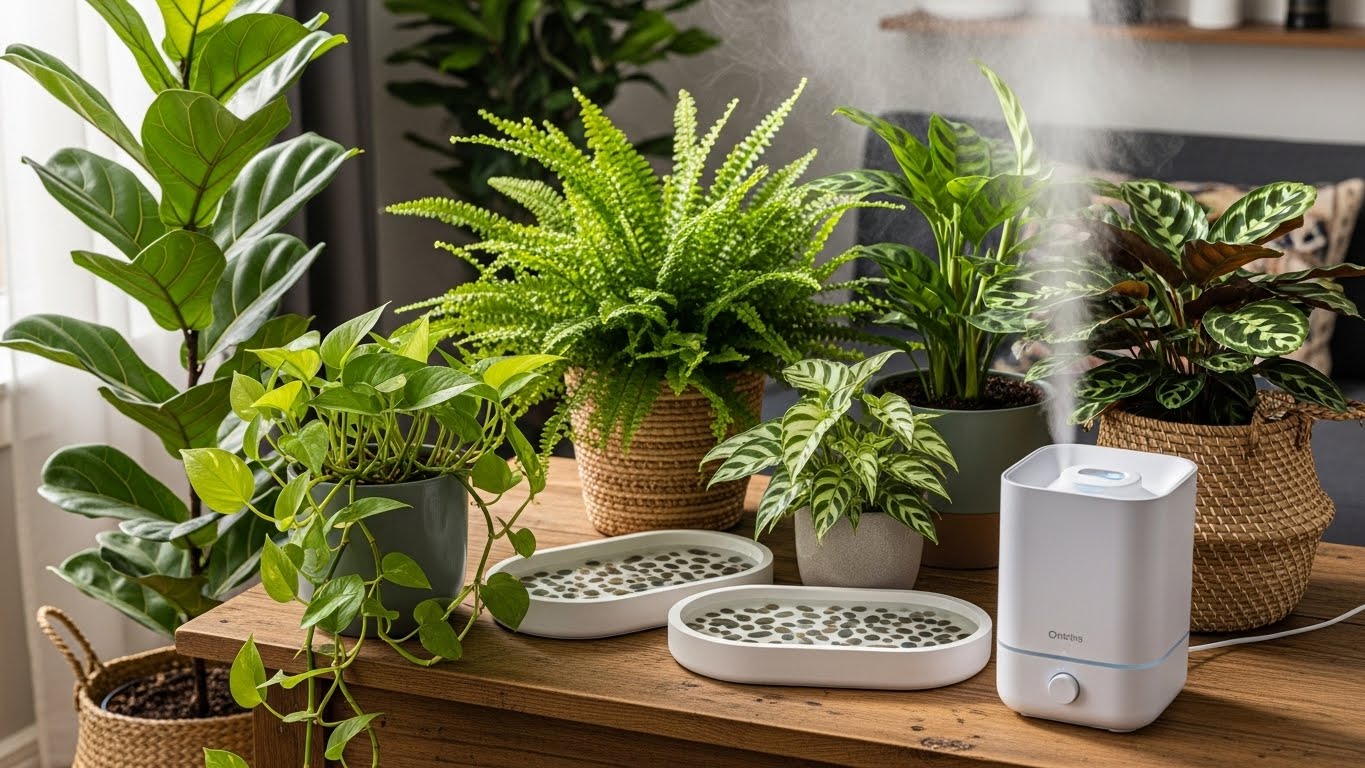
Humidity is key for keeping your houseplants happy and healthy! It affects their growth, so you want to maintain levels between 40% and 70%. Tropicals love higher humidity, while succulents prefer it drier. If you see brown tips or wilting leaves, your plants might be feeling too dry. You can boost humidity by using humidifiers, misting, or grouping plants together. To keep your green pals thriving, check out more tips on how to create the perfect environment!
Understanding Humidity and Its Importance for Houseplants
💡 Understanding the role of humidity can significantly enhance your houseplant care.
➜ Discover why humidity is crucial
When you think about caring for your houseplants, humidity might not be the first thing that comes to mind, but it plays an essential role in their health and growth. Humidity effects can be significant; too little moisture in the air can lead to dry, crispy leaves, while too much can encourage mold and pests. You’ll want to keep your plants happy by understanding humidity sources around your home. Simple solutions like placing a tray of water near your plants or using a humidifier can make a world of difference. You can even group your plants together! By creating a mini-ecosystem, you’ll boost humidity levels naturally. Remember, a little extra moisture goes a long way in nurturing your green friends.
Types of Humidity: Absolute vs. Relative
Humidity is more than just a measure of how damp or dry the air feels; it can be broken down into two main types: absolute humidity and relative humidity. Understanding these can help you care for your plants better!
Humidity impacts plant health significantly; knowing absolute and relative humidity can enhance your plant care skills.
- Absolute Humidity: This measures the actual amount of water vapor in the air, expressed in grams per cubic meter.
- Relative Humidity: This is a percentage that tells you how much moisture the air holds compared to its maximum capacity at a given temperature.
- Temperature Influence: Relative humidity changes with temperature, while absolute humidity remains constant.
- Practical Use: Knowing these types helps you create the best environment for your houseplants, ensuring they thrive in the right moisture levels!
How Humidity Affects Plant Growth
Plants thrive in environments that suit their specific needs, and humidity plays an important role in their growth. You might be surprised to learn that humidity affects plant respiration, which is how plants take in carbon dioxide and release oxygen. When humidity levels are just right, your plants can breathe easier, leading to healthier growth. On the flip side, low humidity can stress your plants, making it harder for them to perform essential functions. High humidity helps them retain moisture, reducing water loss and allowing them to flourish. So, if you want your leafy friends to thrive, keeping an eye on humidity effects is significant. Your plants will thank you with lush leaves and vibrant blooms!
Signs of Low Humidity in Houseplants
Noticing your houseplants struggling? Low humidity can be a sneaky culprit! Here are some signs to look for:
- Leaf Curling: If the edges of the leaves start to curl inward, your plant’s feeling parched.
- Brown Leaf Tips: Dry, crispy tips are a telltale sign that humidity levels aren’t quite right.
- Soil Dryness: Check the top inch of soil; if it feels dry, your plant might be thirsty for moisture.
- Wilting: Even if the soil is damp, low humidity can cause wilting, as plants lose water faster than they can absorb it.
Keep an eye on these signs, and your green friends will thank you!
Ideal Humidity Levels for Common Houseplants
Finding the perfect humidity level for your houseplants can make all the difference in keeping them healthy and thriving. Tropical plants, like ferns and orchids, often prefer humidity levels between 50% and 70%. They thrive in moist air, which mimics their natural rainforest homes. On the other hand, succulent care requires a different approach; these hardy plants enjoy lower humidity, ideally around 30% to 40%. It’s essential to understand each plant’s humidity requirements and adjust your environment accordingly. By meeting their humidity preferences, you’ll encourage lush growth and vibrant leaves. Remember, a little misting or placing a humidity tray can go a long way in creating a happy habitat for your leafy friends!
Tools for Measuring Humidity
To keep your houseplants happy, you’ll need to measure humidity accurately, and that’s where hygrometers come in. These handy tools come in both digital and analog versions, each with their own perks, so you can choose what suits you best. Plus, knowing the right placement for your hygrometer is essential to get the most accurate readings for your plant buddies!
Hygrometers: Essential Tools
When it comes to keeping your houseplants happy and healthy, hygrometers are your trusty sidekicks! These handy tools help you monitor humidity levels, guaranteeing your plants thrive. To make the most out of your hygrometer, consider these essential tips:
- Choose the Right Hygrometer: Look for reliable models that use accurate humidity sensors.
- Regular Calibration: Don’t forget hygrometer calibration! This guarantees your readings are precise.
- Placement Matters: Position your hygrometer where it reflects the actual environment of your plants.
- Check Often: Make it a habit to check humidity levels regularly, adjusting your care routine as needed.
With a hygrometer by your side, you’re well on your way to creating a perfect oasis for your beloved plants!
Digital vs. Analog
Choosing between digital and analog tools for measuring humidity can feel like a big decision, but it doesn’t have to be! Digital hygrometers offer precise readings, often displaying humidity levels instantly on an easy-to-read screen. They’re great for tech-savvy plant lovers who want quick updates. On the other hand, analog hygrometers, with their classic dials, provide a charming, old-school vibe. While they might not be as exact, they can still give you a solid idea of your home’s humidity. Think about your preferences: do you enjoy the simplicity of dials, or do you prefer the convenience of digital displays? Ultimately, both types can help you keep your houseplants happy and thriving!
Placement for Accuracy
Placement of your hygrometer is essential for getting accurate humidity readings. To guarantee it reflects the true conditions for your plants, consider these tips on positioning:
💡 If you’re struggling with humidity levels, this guide can help you choose the right plants.
➜ Explore plants that thrive in low humidity
- Near Your Plants: Place the hygrometer close to your plant placement to capture their specific humidity zones.
- Away from Drafts: Don’t put it near windows or doors, as drafts can skew your readings.
- At Plant Height: Position it at the same level as your plants to provide the most relevant data.
- Avoid Direct Sunlight: Keep it out of direct sunlight, which can artificially raise temperature readings and mislead you about humidity.
Ways to Increase Humidity in Your Home
To keep your houseplants thriving, boosting the humidity in your home can make all the difference. You can start by misting plants regularly, which adds moisture to the air. Another great option is to use pebble trays filled with water; just place your pots on the pebbles, and as the water evaporates, it raises humidity. Consider adding indoor fountains or small water features, which not only look beautiful but also increase moisture in the environment. If you want to go the extra mile, humidity domes can create a mini greenhouse effect for your plants. Finally, think about strategic plant placement—grouping plants together can help create a humid microclimate, benefiting them all. Enjoy nurturing your green friends!
💡 Humidity plays a vital role in preventing root rot in houseplants. This article offers essential tips.
➜ Learn how to prevent root rot
Humidity and Watering: Finding the Right Balance
Finding the right balance between humidity and watering is essential for your houseplants’ health. Ideally, your plants thrive in humidity levels of 40-60%, but watering techniques also play a key role in keeping them happy and hydrated. Let’s explore how to adjust your watering habits based on the humidity in your home, ensuring your green friends get just what they need!
Ideal Humidity Levels
When it comes to keeping your houseplants happy and healthy, one key factor is humidity, and many plants thrive best in environments with humidity levels between 40% and 70%. Understanding your plants’ humidity preferences can prevent stress from sudden humidity fluctuations. Here’s a quick guide to ideal humidity levels:
- Low Humidity (below 30%): Most tropical plants struggle; leaves may brown.
- Moderate Humidity (40-50%): Many common houseplants thrive here; growth is steady.
- High Humidity (60-70%): Ideal for ferns and orchids; lush foliage develops.
- Excessive Humidity (above 80%): Risk of mold and pests; watch for signs of distress.
Adjusting your home environment can make a world of difference for your green companions!
Watering Techniques Explained
Watering houseplants might seem straightforward, but it can be a bit tricky, especially when you consider the role humidity plays in the process. To keep your plants happy, you’ll need to find the right watering frequency. If the air is too dry, your plants may drink up moisture quickly, leading to thirsty leaves. On the other hand, higher humidity can help with moisture retention, allowing you to water less often.
To get it just right, check the soil before watering. If the top inch feels dry, it’s time to hydrate. Remember, it’s always better to underwater than overwater! By paying attention to both humidity and your plant’s needs, you’ll create a thriving green space that you can truly enjoy.
Grouping Plants for Increased Humidity
One of the easiest ways to boost humidity for your houseplants is by grouping them together, since they can create a mini-ecosystem that benefits everyone involved. When you place your plant companions close, they share moisture through transpiration, which raises humidity zones around them. Here’s how to do it effectively:
- Choose plants with similar light needs: This way, they thrive together.
- Mix different leaf sizes: Larger leaves release more moisture, helping smaller ones.
- Avoid overcrowding: Confirm each plant has enough space to breathe.
- Rotate occasionally: This helps all plants receive equal light and moisture.
Using Humidifiers for Plant Care
How can you create the perfect environment for your houseplants? Using humidifiers can be a game-changer for humidity maintenance, ensuring your plants thrive. There are various humidifier types, and each serves a unique purpose. Here’s a quick comparison to help you choose the right one:
Humidifier Type | Pros | Cons |
|---|---|---|
Cool Mist | Energy-efficient | Can create condensation |
Warm Mist | Warms the air | Uses more electricity |
Ultrasonic | Quiet operation | Requires regular cleaning |
Evaporative | Self-regulating | Needs frequent refilling |
Pick a humidifier that fits your space and plants. It’ll keep the moisture levels just right, allowing your leafy friends to flourish, and you’ll feel like a plant care pro!
Natural Methods to Boost Humidity
While humidifiers are a fantastic way to maintain moisture levels for your houseplants, you don’t have to rely solely on them. Here are some natural methods to boost humidity that you can easily try at home:
- Misting Techniques: Lightly mist your plants with water, especially in the mornings, to keep them happy and hydrated.
- Pebble Trays: Fill a shallow tray with pebbles and water, then place your plant pots on top. This creates a humid microclimate around your plants.
- Grouping Plants: Cluster your houseplants together; they’ll create their own humidity with transpiration.
- Bathroom Placement: If you have space, move humidity-loving plants to the bathroom, where steam can benefit them.
These simple tricks can make a world of difference for your leafy friends!
Seasonal Considerations for Plant Humidity Needs
As the seasons change, so do the humidity needs of your houseplants, making it crucial to pay attention to their environment throughout the year. In winter, when indoor air gets dry, your plants might feel parched, so consider using a humidifier or grouping them together. Spring brings a delightful increase in moisture, which your plants will appreciate. As summer arrives, watch for those humidity variations; some plants may thrive in the warm, humid air, while others might need a little extra help. Fall signals a shift again, often reducing humidity levels. Keep a close eye on your plants, adjusting their care based on these seasonal changes, and you’ll guarantee they stay happy and healthy all year long!
Conclusion
To sum up, keeping your houseplants happy and healthy is all about understanding humidity. Just think of humidity as a cozy blanket that your plants need to thrive. By monitoring humidity levels, using techniques like grouping plants or adding a humidifier, you can create the perfect environment for them to flourish. So, don’t let your plants suffer from dryness—embrace these tips, and watch your green companions thrive like never before! Happy planting!
💡 Proper watering is essential for maintathisng humidity levels. This guide will help you avoid common mistakes.
➜ Get the step-by-step watering guide


