

Anthurium leaf problems like curling, yellowing, and spots can signal several issues. Curling often means you’re either overwatering or underwatering, so check your soil moisture. Yellowing leaves might indicate nutrient deficiencies or stress from pests. If you spot dark spots, they’re likely due to fungal infections, needing immediate attention. Keep your plant in high humidity and inspect for pesky insects. Want to know more about keeping your anthurium healthy? There’s plenty more to explore!
💡 Many misconceptions can lead to problems like leaf curling or yellowing. Understanding the truth behind Anthurium care is vital for your plant’s health.
➜ Explore advanced methods
Key Takeaways
💡 Understanding the common myths surrounding Anthurium care can significantly improve your plant’s health.
➜ Discover proven techniques
- Curling leaves may indicate insufficient or overwatering; check soil moisture regularly to maintain balance.
- Yellowing leaves often result from nutrient deficiencies, poor soil quality, or stress from over/underwatering.
- Leaf spots can signal fungal infections; maintain proper humidity and air circulation to prevent them.
- Regularly inspect for pests like aphids and spider mites, which can cause leaf curling and yellowing.
- Water thoroughly, allowing excess to drain, and adjust your routine based on your anthurium’s specific needs.
Understanding Anthurium Leaf Curling
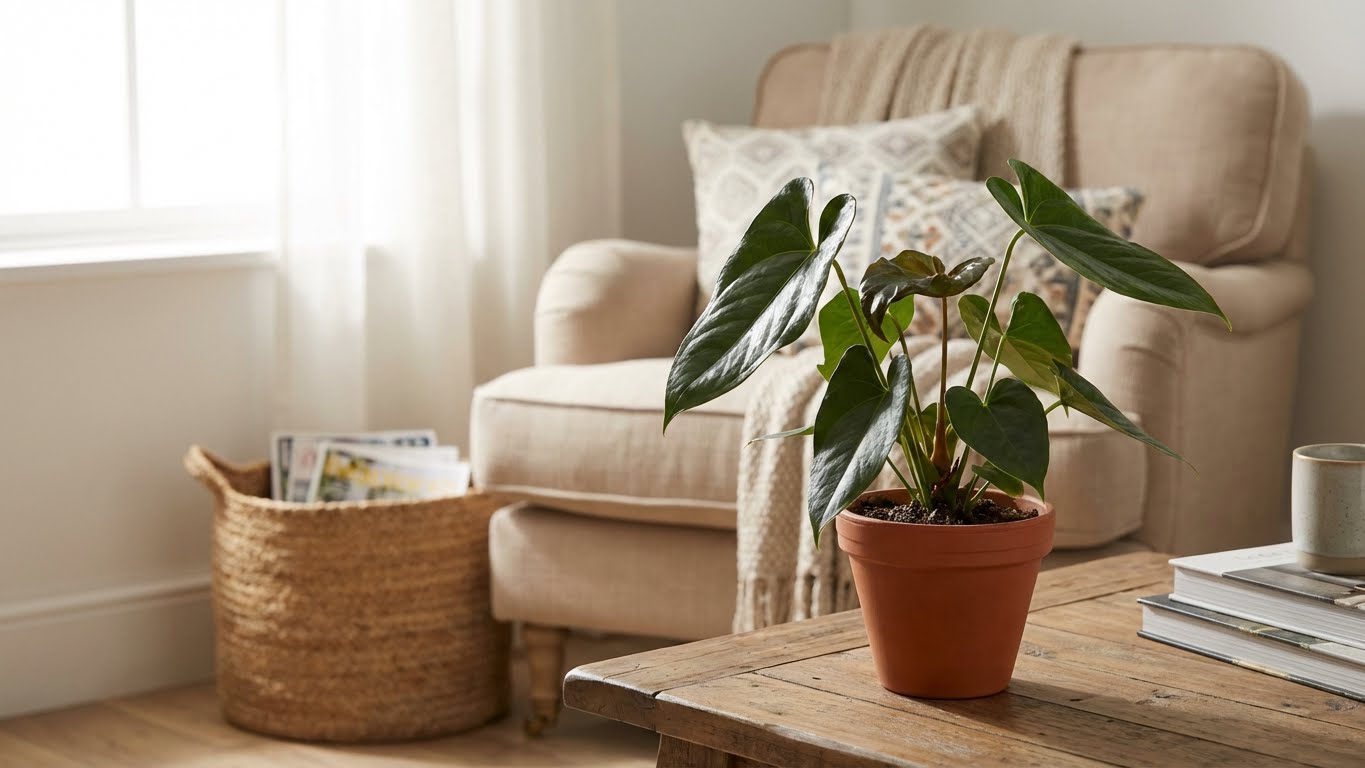
When you notice your anthurium’s leaves curling, you might wonder what’s causing this puzzling change. The leaf structure of your plant is delicate, and curling can signal various issues. One common culprit is insufficient water; if the soil dries out too much, your anthurium’s leaves may react by curling inward. On the flip side, overwatering can also lead to curling, as the roots struggle to absorb oxygen. Pests or diseases might be lurking too, causing stress that results in curled leaves. To help your beloved plant thrive, keep an eye on its watering routine and check for any signs of trouble. Understanding these curling causes is the first step to restoring your anthurium’s beauty! Additionally, ensuring high humidity levels is crucial for keeping your anthurium’s leaves healthy and preventing curling.
Causes of Yellowing Leaves in Anthuriums
Yellowing leaves in anthuriums can be a puzzling issue, and understanding the causes can help you keep your plant healthy and vibrant. Often, this problem relates to nutrient deficiencies or poor soil quality. Let’s break it down!
Cause | Description | Solution |
|---|---|---|
Nutrient Deficiencies | Lacking essential nutrients like nitrogen, magnesium, or iron. | Fertilize with a balanced mix. |
Poor Soil Quality | Soil that drains poorly or is too compacted. | Use well-draining potting mix. |
Overwatering | Excess moisture can lead to root rot. | Allow soil to dry out between waterings. |
Underwatering | Not enough water can stress the plant. | Water when the top inch of soil is dry. |
Pest Infestation | Pests can cause stress, leading to yellowing. | Inspect regularly and treat as needed. |
Identifying and Treating Leaf Spots
Have you ever noticed unsightly leaf spots on your anthurium and wondered what’s causing them? These leaf discolorations can be a sign of fungal infections, often triggered by high humidity or poor air circulation. To tackle this problem, start by inspecting your plant closely. If you see dark, water-soaked spots, it’s likely a fungus at work.
To treat these spots, gently wipe affected leaves with a damp cloth and remove any heavily infected leaves. You might also consider using a fungicide, following the instructions carefully. Remember, keeping your anthurium in a well-ventilated area and avoiding overhead watering can help prevent future leaf spots. With a little care, your plant will thrive beautifully!
The Role of Watering in Leaf Health
Watering plays a significant role in maintaining the vibrant health of your anthurium leaves. To keep your plant thriving, pay attention to the watering frequency. Overwatering can lead to root rot, while underwatering can cause droopy, sad leaves. Checking the soil moisture is essential; ideally, the top inch of soil should be dry before you water again. When you water, do it thoroughly, allowing excess to drain out. This practice guarantees that your plant’s roots get the hydration they need. Remember, each anthurium is unique, so adjust your routine based on its specific needs. By mastering proper watering techniques, you’ll help your anthurium flourish, showcasing those beautiful, glossy leaves that bring joy to any space.
Environmental Factors Affecting Anthurium Leaves
Environmental factors play an essential role in the health of your anthurium leaves, so understanding them can help you keep your plant happy and vibrant. First, consider light exposure. Anthuriums thrive in bright, indirect light, so placing them near a window is a great idea. Too much direct sunlight can scorch their leaves, while too little can stunt their growth.
💡 Proper watering is crucial for preventing leaf issues like curling and yellowing.
➜ Get the step-by-step guide
💡 If you’re facing issues like curling or yellowing leaves, it might be time to consider repotting your Anthurium.
➜ Discover proven techniques
Next, humidity levels are vital. These tropical beauties love humidity, ideally around 60 to 80 percent. If your home is dry, especially in winter, misting the leaves or using a humidifier can make a big difference. By paying attention to these environmental factors, you’ll create a thriving space for your anthurium, ensuring its leaves stay lush and beautiful!
Pest Management for Healthy Anthuriums
💡 Leaf curling and yellowing can often be signs of improper watering. It’s essential to know how to assess your Anthurium’s moisture levels.
➜ Get the step-by-step guide
💡 Repotting can alleviate stress on your Anthurium, helping to resolve leaf curling and discoloration.
➜ Master this approach
When it comes to keeping your anthuriums healthy, managing pests is key to their success. You’ll want to recognize common pests like aphids and spider mites, and then use effective prevention strategies to keep them at bay. With the right treatment options in your toolkit, you can guarantee your beautiful plants thrive and look their best!
Common Anthurium Pests
Have you ever noticed tiny critters hiding on the leaves of your beautiful anthurium? These pests can harm your plant, so let’s get to know some common offenders.
- Aphids: These small, soft-bodied insects can cause aphid infestations, sucking sap and leaving your leaves curled or yellowed.
- Mealybugs: These white, cottony bugs cling to stems and leaves, making mealybug control essential to keep your anthurium healthy.
- Spider Mites: Tiny and hard to spot, they create webbing and cause damage by feeding on plant juices.
- Scale Insects: These pests look like small bumps on leaves, and they can weaken your plant considerably.
Stay vigilant, and your anthurium will flourish!
Prevention Strategies
To keep your anthurium thriving and pest-free, it’s important to implement effective prevention strategies that can stop infestations before they start. First, focus on leaf nutrition by providing a balanced fertilizer that supports healthy growth. Strong leaves are less likely to attract pests. Next, pay attention to soil quality; well-draining, nutrient-rich soil promotes strong root systems, which helps your plant withstand environmental stressors. Regularly inspect your anthurium for any signs of trouble, and maintain a clean growing environment—remove dead leaves and debris to deter pests. Ultimately, consider introducing beneficial insects like ladybugs, which can help control pest populations naturally. By taking these proactive steps, you’ll create a happy, healthy home for your anthurium.
Treatment Options
Dealing with pests on your anthurium can feel overwhelming, but with the right treatment options, you can restore your plant’s health and keep it thriving. Here are some effective strategies for pest management:
- Inspect Regularly: Check your plant often for any signs of insect activity.
- Natural Remedies: Use neem oil or insecticidal soap to target pests without harsh chemicals.
- Soil Amendments: Improve your soil with organic matter to enhance its ability to support healthy roots, reducing stress and nutrient deficiencies.
- Quarantine New Plants: Always keep new additions away from your anthurium for a few weeks to prevent unwanted pests from spreading.
With these steps, you’ll nurture your plant back to its vibrant self in no time!
Conclusion
In the world of plants, “an ounce of prevention is worth a pound of cure,” especially for your Anthurium. By keeping an eye on watering, light, and potential pests, you can help your plant thrive and avoid common leaf problems like curling, yellowing, and spots. Remember, healthy leaves lead to a happy Anthurium! With a little care and attention, you’ll enjoy beautiful, vibrant foliage that brightens your space. So, get ready to nurture your plant and watch it flourish!
💡 Understanding flower health can provide insights into the overall well-being of your Anthurium.
➜ Explore advanced methods
💡 The right pot can significantly affect your Anthurium’s health, preventing issues like leaf curling and yellowing.
➜ Master this approach


