
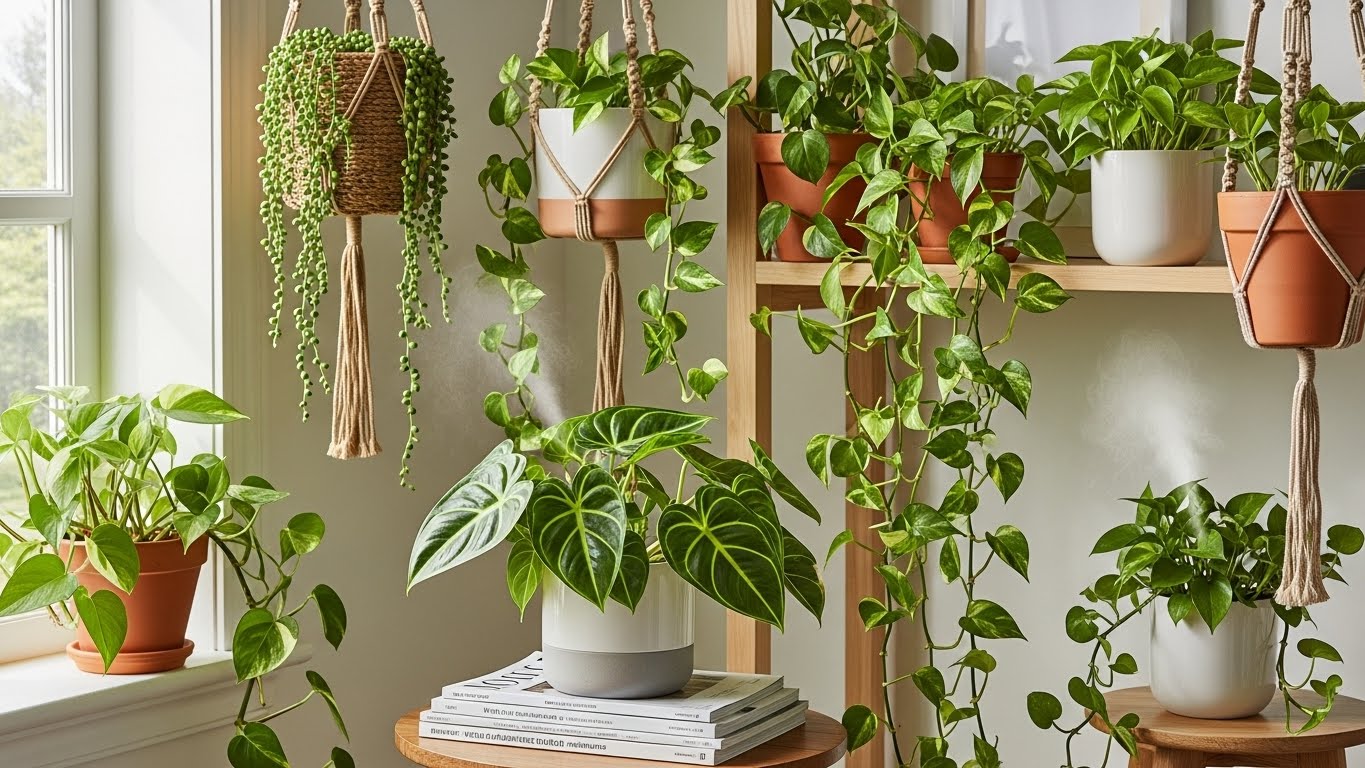
Vining indoor plants might seem tough to care for, but they’re actually quite manageable with some basic knowledge! These plants are fun to grow and can brighten up your space. They do need support like trellises, and you should keep an eye on their watering and light needs to avoid problems. With the right conditions, they thrive and improve your indoor air quality. Stick around, and you’ll discover even more tips for keeping these beauties happy!
Understanding Vining Indoor Plants
Vining indoor plants can be the perfect addition to your home, bringing life and color to any space. Their vining characteristics, like long stems and lush leaves, create a beautiful tapestry that can brighten up even the coziest corners. However, you may encounter some maintenance challenges along the way. For instance, these plants often need support as they grow, whether it’s a trellis or a simple shelf. They also thrive in bright, indirect light, so finding the right spot is essential. Watering can be tricky too; overwatering can lead to root rot, while underwatering may cause wilting. Knowing these essentials helps you nurture your vining plants, enhancing both your home and your gardening skills.
Common Vining Indoor Plant Varieties
When it comes to indoor gardening, there are plenty of common vining plant varieties that can transform your space into a green oasis. One popular choice is the pothos, known for its heart-shaped leaves and easy-going nature. Another favorite is the philodendron, which boasts lush foliage and can thrive in various light conditions. If you’re looking for something unique, consider the string of hearts, with its delicate, trailing vines and beautiful heart-shaped leaves. Each of these common varieties offers distinct plant characteristics, making them perfect for beginners and experienced gardeners alike. With proper care, these vining plants can bring life and charm to any room, creating a cozy atmosphere you’ll love.
Growth Requirements for Vining Plants
To help your vining plants thrive, you need to pay close attention to their growth requirements. They typically require bright, indirect light to flourish, so finding the right spot in your home is key. Additionally, knowing how often to water them will keep them healthy and happy, ensuring they grow strong and beautiful.
Light Conditions Needed
Light is the lifeblood of vining indoor plants, playing an essential role in their growth and overall health. To help your plants thrive, consider these key light conditions:
- Light Intensity: Vining plants generally prefer bright, indirect light. Direct sunlight can scorch their leaves.
- Light Duration: Aim for 12-14 hours of light exposure daily to mimic their natural environment.
- Seasonal Changes: Adjust light conditions with the seasons. In winter, they may need a bit more light.
- Spotting Signs: Watch for signs of distress; yellowing leaves may indicate insufficient light, while brown tips can signal too much.
Watering Frequency Essentials
Watering vining indoor plants can be just as important as providing them with the right light. You’ll want to master the art of watering techniques to keep your green friends thriving. Check the soil moisture regularly; sticking your finger about an inch into the soil can give you a good idea of its needs. If it feels dry, it’s time to water! However, overwatering can drown them, so aim for a balance. Generally, vining plants appreciate a good soak every 1-2 weeks, but this can vary depending on your home’s humidity and temperature. Remember, each plant has its quirks, so observing yours will help you develop that intimate connection, ensuring they flourish beautifully in your space!
Watering and Humidity Needs
While caring for your vining indoor plants, understanding their watering and humidity needs is essential to keeping them healthy and vibrant. Here are some key points to reflect on:
- Water Quality: Use filtered or distilled water to avoid chemicals that can harm your plants.
- Watering Schedule: Water your plants when the top inch of soil feels dry to the touch, ensuring you don’t overdo it.
- Humidity Levels: Aim for humidity levels between 40-60% to mimic their natural environment; contemplate using a humidifier if your home is dry.
- Signs of Distress: Watch for yellowing leaves or drooping stems, as these can indicate insufficient water or humidity.
Light Preferences for Vining Indoor Plants
When you’re nurturing vining indoor plants, understanding their light preferences is crucial for promoting healthy growth and lush foliage. These plants thrive in bright, indirect light, so position them near windows where they’ll receive plenty of natural light without the harsh rays burning their leaves. Pay attention to light intensity; too little can cause them to become leggy, while too much can scorch them. Aim for about 12 hours of light duration each day, ideally mixing natural light with artificial options if needed. Rotate your plants occasionally to guarantee even growth, as they’ll naturally lean toward the light source. By providing the right light conditions, you’ll help your vining plants flourish and bring beautiful greenery into your space!
Pruning and Training Vining Plants
Pruning and training your vining plants is essential not only for their health but also for creating a beautiful display in your home. By using effective pruning techniques and training methods, you can help your plants thrive. Here are some tips to get you started:
Pruning and training vining plants enhances their health and beauty, making your home inviting and vibrant.
- Remove dead or yellowing leaves to encourage new growth and keep your plant looking fresh.
- Pinch back stems regularly to promote bushy growth, making your plant fuller and more attractive.
- Use trellises or support structures to guide your vines, giving them a direction and enhancing their visual appeal.
- Train your plants to grow along walls or ceilings for a stunning, cascading effect that showcases their natural beauty.
With these steps, you’ll create an inviting atmosphere in your space.
Pest and Disease Management
Even with careful pruning and training, vining plants can still face challenges from pests and diseases that threaten their health and beauty. To keep your plants thriving, focus on pest identification and disease prevention.
Common Pests | Solutions |
|---|---|
Spider Mites | Increase humidity, use insecticidal soap |
Aphids | Spray with water or neem oil |
Mealybugs | Wipe with cotton soaked in alcohol |
Fungal Infections | Maintain good air circulation, avoid overwatering |
Benefits of Keeping Vining Indoor Plants
Keeping vining indoor plants can really brighten up your space, adding a touch of nature that makes any room feel more inviting. Not only do they look great, but these plants also help purify the air, making it healthier for you and your family. So, if you want to enhance your home’s vibe while boosting air quality, vining plants are a fantastic choice!
Aesthetic Appeal
When you bring vining indoor plants into your home, not only do you enhance your space, but you also create an inviting atmosphere that can uplift your mood. These plants add charm and warmth, making your room feel more alive. Here are some ways they contribute to your aesthetic design through creative displays:
- Vertical Growth: Vining plants can climb walls or trellises, creating beautiful vertical gardens.
- Hanging Baskets: They look stunning in hanging pots, drawing the eye upwards and saving space.
- Table Centerpieces: Trailing vines can cascade over shelves and tables, adding depth to your decor.
- Natural Dividers: Use them to separate areas in an open space, promoting a cozy vibe.
Embrace the beauty of vining plants to transform your home!
Air Purification Benefits
Vining indoor plants not only beautify your space, but they also play an essential role in purifying the air you breathe. These green companions help improve air quality by naturally removing toxins like formaldehyde and benzene, which can sneak into your home from everyday items. When you keep them around, you’re not just adding a touch of nature; you’re also creating a healthier atmosphere for yourself and your loved ones.
Their ability to filter the air means you can breathe easier and enjoy a more vibrant living space. Plus, caring for these plants can bring you joy and a sense of accomplishment. So, why not embrace their air purification benefits while enjoying their beauty? It’s a win-win!
Conclusion
To sum up, vining indoor plants can be a bit tricky to maintain, but with the right care, they thrive beautifully. By understanding their growth needs, providing adequate light, and keeping up with watering and humidity, you’ll see your plants flourish. Pruning and pest management are key to their health too. So, embrace the challenge, enjoy the process, and let your vining friends bring life and charm to your space, one leaf at a time!


