
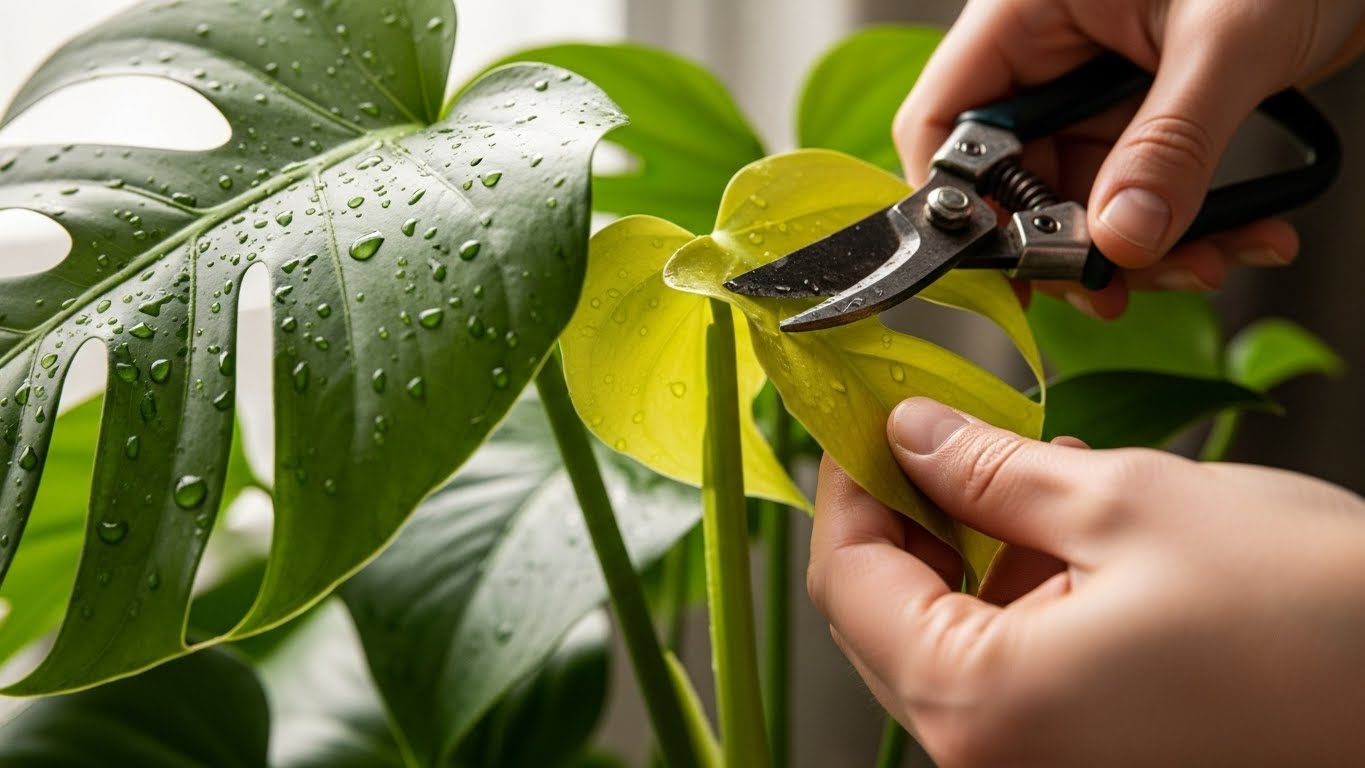
To prune your Monstera for shape and health, wait until spring or early summer. Use sharp, clean pruning shears and cut just above a node to encourage new growth. Focus on removing yellowing leaves, leggy stems, or any damaged parts. Avoid cutting too many leaves at once, as this can stress your plant. Remember, regular checks help catch issues early! Stick around to discover more tips for maintaining a thriving Monstera after pruning.
Key Takeaways
💡 If you’re looking to enhance your Monstera’s health and aesthetics, this guide is a must-read.
➜ Explore advanced methods
- Prune Monstera during the growing season (spring to early summer) to minimize stress and promote healthy growth.
- Cut just above a node to encourage new lateral growth and pinch back tips for bushier foliage.
- Regularly assess the plant for yellowing or overgrown stems to determine when pruning is necessary.
- Use clean, sharp tools and wear gloves to prevent disease spread and protect your hands during the process.
- Keep the soil slightly moist after pruning and avoid fertilizing for a month to support recovery.
Understanding the Growth Habit of Monstera
Understanding the growth habit of Monstera is key to keeping this popular houseplant healthy and thriving. Monstera plants grow in a unique way, often reaching impressive heights with their leafy vines. You’ll notice that they prefer bright, indirect light, which helps them develop those stunning leaves. In lower light conditions, their growth patterns can slow down, leading to smaller, less vibrant foliage. To keep your Monstera looking lush, make sure it receives ample light, but avoid harsh direct sunlight that can scorch those beautiful leaves. Regularly rotating your plant can also help it grow evenly, preventing it from leaning towards the light source. Embracing these growth habits allows you to nurture your Monstera and enjoy its beauty for years to come! Additionally, providing a support structure fulfills a biological need for stability, encouraging mature foliage growth.
When Is the Best Time to Prune Your Monstera?
When you’re thinking about pruning your Monstera, timing is everything! The best time to snip those leaves is during the growing season, which typically runs from spring to early summer. This is when your plant is most active, and it’ll bounce back quickly from any cuts you make. Seasonal considerations play a big role in your Monstera’s health. If you prune during its dormant winter months, it may struggle to recover. Also, keep an eye on environmental factors, like temperature and humidity, which can influence how well your plant responds to pruning. By choosing the right moment, you’ll encourage healthier growth and keep your Monstera looking fabulous! So, when in doubt, wait for those warmer months!
Tools You’ll Need for Pruning
To get your Monstera looking its best, having the right tools on hand is essential! Start with a sharp pair of pruning shears; they’ll make clean cuts, keeping your plant healthy. You’ll also want gloves to protect your hands from sap and sharp edges. A small saw can be handy for thicker stems, while a spray bottle filled with water can help mist the leaves during your pruning session. Consider using a clean cloth to wipe down tools before and after use to prevent the spread of disease. Remember, your pruning frequency will depend on your plant’s growth, but having the right tools will make your pruning techniques much more effective and enjoyable!
Identifying Which Parts to Prune
How can you tell which parts of your Monstera need a little snip-snip? Start by closely examining your plant. It’s all about identifying dead leaves and evaluating stem health. Look for signs that indicate it’s time for a trim.
Here are some clues to help you decide:
- Yellowing or browning leaves
- Leaves with holes or extensive damage
- Stems that are soft or mushy
- Overcrowded growth preventing light access
- Unruly stems growing in odd directions
Techniques for Pruning Monstera Leaves
When it comes to pruning your Monstera leaves, timing and the right tools make all the difference. You’ll want to know when to snip those leaves for the best results, plus having the proper equipment guarantees a clean cut. Let’s explore the essential techniques that will keep your Monstera healthy and thriving!
Timing for Pruning
Pruning your Monstera at the right time can make all the difference in promoting healthy growth and maintaining its striking appearance. Understanding seasonal considerations and the plant’s growth cycles is key to timing your pruning effectively. Here are some tips to help you decide when to prune:
- Spring: Ideal for major pruning as plants are waking up.
- Summer: Great for minor adjustments as growth peaks.
- Fall: Time for light pruning as growth slows down.
- Winter: Avoid pruning during dormancy, as it can stress the plant.
- Signs of Overgrowth: If leaves look crowded or unhealthy, it’s time to take action.
Tools Needed for Pruning
Before you plunge into the world of Monstera pruning, it’s essential to gather the right tools to make the task easier and more efficient. You’ll need sharp pruning shears for clean cuts, ensuring your plant heals quickly and thrives. A pair of gloves can protect your hands from any sharp edges or sap. A small spray bottle filled with water helps keep the plant hydrated before you prune, enhancing the pruning benefits. Finally, a sturdy drop cloth will catch any fallen leaves, making cleanup a breeze. Remember, how often you prune—your pruning frequency—can influence your Monstera’s shape and health, so having the right tools makes each session enjoyable and effective. Happy pruning!
How to Trim Monstera Stems
Trimming your Monstera stems is like giving your plant a fresh haircut—it helps it grow healthier and look its best! To guarantee your plant thrives, you’ll want to follow some simple trimming techniques that focus on stem health. Here’s how to get started:
- Identify dead or yellowing leaves to remove first.
- Cut just above a node to encourage new growth.
- Use clean, sharp scissors for a smooth cut.
- Trim stems that are too long to maintain balance.
- Avoid cutting too much at once; less is often more.
Dealing With Aerial Roots
Monstera plants often grow aerial roots, and these unique features can be both fascinating and a little tricky to manage. Aerial root maintenance is essential for your plant’s health, and understanding when to perform aerial root pruning can enhance its beauty.
Aerial Root Condition | Action Required |
|---|---|
Healthy and growing | Support with a moss pole |
Brown and shriveled | Trim back to healthy tissue |
Excessive and unruly | Prune for a cleaner look |
When you notice aerial roots, consider their purpose: they help your Monstera climb and gather moisture. Embrace these roots, but don’t hesitate to prune if they disrupt your plant’s overall appearance. Your Monstera will thank you!
Encouraging Bushier Growth
To encourage bushier growth in your Monstera, you’ll want to focus on a few key techniques. Start by pruning for lateral growth, which helps the plant fill out, and don’t forget to remove any leggy stems that can make it look sparse. Finally, pinching the growing tips will encourage your plant to branch out, creating that lush, full appearance you’re aiming for!
Prune for Lateral Growth
Encouraging bushier growth in your Monstera can be an exciting journey, and with the right pruning techniques, you’ll soon see more vibrant leaves sprouting from your plant. To promote lateral growth strategies that enhance plant aesthetics, try these simple steps:
- Cut just above a node to stimulate new growth.
- Remove any yellowing or unhealthy leaves to redirect energy.
- Pinch back the tips of longer stems to encourage side shoots.
- Prune during the growing season for the best results.
- Regularly assess your plant to identify areas needing attention.
Remove Leggy Stems
Leggy stems can make your Monstera look a bit sparse, but don’t worry—removing them is a straightforward way to encourage bushier growth! When you notice leggy growth, it’s time to grab your pruning shears. Start by identifying those long, spindly stems that just aren’t adding to your plant’s charm. Use sharp, clean pruning techniques to snip them back to a leaf node. This encourages your Monstera to grow new branches from the node, creating a fuller appearance. Don’t be shy; pruning is essential for keeping your plant healthy and vibrant. Remember, the goal is to foster a lush, thriving Monstera that fills your space with beauty. So, let’s get to snipping and watch your plant flourish!
Pinch Growing Tips
After you’ve tackled those leggy stems, you might be wondering what else you can do to boost your Monstera’s bushiness. One fantastic method is the pinching technique, which encourages growth stimulation. By pinching back the tips of stems, you’ll prompt your plant to branch out, creating a fuller appearance. Here are some tips to help you get started:
💡 Pruning is just one part of achieving the iconic split leaves of a Monstera. Discover how to encourage this unique feature.
➜ Master this approach
- Pinch just above a leaf node.
- Use clean, sharp scissors if you prefer.
- Aim to pinch during the growing season (spring and summer).
- Monitor your Monstera’s response and adjust as needed.
- Be patient; bushier growth takes time!
With these simple steps, you’ll soon enjoy a lush, vibrant Monstera that brings joy to any space!
Cleaning Up After Pruning
💡 Pruning can help maintain a Monstera’s shape, especially in smaller spaces. Check out these styling tips tailored for compact living.
➜ Get the step-by-step guide
Cleaning up after pruning your Monstera is just as important as the pruning itself, and it can make a big difference in the health of your plant and the tidiness of your space. Start by gathering your cleaning tools—scissors, gloves, and a trash bag for waste disposal. Carefully collect any fallen leaves and cuttings; letting them linger can attract pests or mold. Wipe down your tools with a disinfectant to prevent any disease spread to your plant. Finally, if you’ve got soil spills, use a small broom or vacuum to tidy up. Not only will this help keep your plant healthy, but it’ll also create a lovely, clean environment for your Monstera to thrive in.
Caring for Your Monstera Post-Pruning
Once you’ve tidied up after pruning, your attention should shift to caring for your Monstera as it adjusts to its new look. Effective post pruning care is essential for your plant’s recovery, ensuring it thrives in its fresh form. Here’s how you can support your Monstera during this change:
- Keep the soil slightly moist but not soggy.
- Provide bright, indirect sunlight to encourage healthy growth.
- Avoid fertilizing for a month to let it recover naturally.
- Monitor for pests regularly, as stress can attract them.
- Be patient and give it time to adjust; recovery takes a bit!
With these steps, your Monstera will bounce back beautifully, becoming a stunning centerpiece in your space once again!
Signs Your Monstera Needs Pruning
If your Monstera is showing yellowing or brown leaves, it might be time for a trim. Overgrown or leggy growth can also signal that your plant needs a little love, as well as any damaged or diseased stems that could be holding it back. By keeping an eye out for these signs, you can help your Monstera thrive and look its best!
Yellowing or Brown Leaves
When your Monstera’s leaves start turning yellow or brown, it’s often a sign that it needs some attention, and pruning can help restore its health and beauty. You’ll want to take a closer look at those yellowing leaves and brown leaves. Here are some common reasons for the change in color:
- Overwatering: Too much water can drown the roots.
- Underwatering: Not enough water can lead to stress.
- Nutrient Deficiency: Lack of essential nutrients affects growth.
- Pests: Insects can sap the plant’s energy.
- Lighting Issues: Too much or too little light can harm leaves.
Overgrown or Leggy Growth
Overgrown or leggy growth in your Monstera can be a clear indicator that it’s time for a pruning session. When you notice long, sparse stems with fewer leaves, it’s a sign your plant needs some attention. Pruning techniques can help reshape your Monstera, promoting healthier growth and a bushier appearance. Here’s a quick guide to help you identify leggy growth:
Sign | What to Look For | Pruning Action |
|---|---|---|
Sparse Leaves | Long stems, few leaves | Trim back to a node |
Uneven Growth | Lopsided appearance | Shape by cutting back stems |
Excessive Length | Stems reaching for light | Pinch back top growth |
Damaged or Diseased Stems
Damaged or diseased stems can be a sign that your Monstera needs some serious attention, as these issues can hinder your plant’s overall health. Keeping an eye on your plant’s stem health is essential. Look for these signs to determine if it’s time for some pruning techniques:
- Yellowing or browning leaves
- Soft, mushy stems
- Dark spots or mold on the stems
- Wilting leaves that don’t perk up
- Insects or pests hiding in the foliage
If you notice these problems, don’t hesitate to prune away the affected stems. This not only helps your Monstera recover but also encourages new growth. Remember, a little love and care can go a long way in keeping your plant vibrant and healthy!
Common Mistakes to Avoid When Pruning
Pruning your Monstera can be a rewarding experience, but it’s easy to make some common mistakes that could hinder your plant’s growth or health. One common misconception is that you should prune frequently; however, over-pruning can stress your plant. Instead, aim for a balanced pruning frequency—once or twice a year is often enough. Another mistake is using dull tools; always guarantee your scissors or shears are sharp to make clean cuts. Additionally, be careful not to remove too many leaves at once, as this can shock your plant. Finally, don’t forget to sanitize your tools before and after pruning to prevent disease. By avoiding these pitfalls, you’ll help your Monstera thrive beautifully!
Propagating Your Monstera Cuttings
Now that you’ve mastered pruning your Monstera, it’s time to turn those cuttings into new plants! You’ll want to focus on the best cutting techniques to guarantee your propagation efforts are successful. Plus, we’ll explore various rooting methods to help your Monstera thrive and grow into a beautiful new addition to your plant family.
Best Cutting Techniques
When it comes to propagating your Monstera cuttings, using the right cutting techniques can make all the difference. Avoiding common cutting mistakes helps guarantee your plant thrives. Remember, some pruning myths can lead you astray! Here are some tips to keep in mind:
- Use sharp, clean scissors for a precise cut.
- Take cuttings that include at least one node for growth.
- Cut at a 45-degree angle to maximize surface area.
- Trim any yellowing or damaged leaves before placing in water.
- Keep the cuttings in a warm, bright spot, but out of direct sunlight.
With these best practices, you’re set to grow healthy, beautiful Monstera plants! Happy propagating!
Rooting Methods Explained
Rooting your Monstera cuttings can be an exciting adventure, and there are several methods you can choose from to help your new plants thrive. One popular technique is water propagation, where you place your cutting in a jar of water, ensuring at least one node is submerged. Change the water weekly to keep it fresh. Alternatively, you can use soil propagation; simply plant your cutting in a well-draining potting mix. Both methods require patience, but with good care, roots will form! Remember, the key to success lies in your cutting techniques—make clean cuts and choose healthy stems. Follow these propagation tips, and soon you’ll have lush new Monstera plants to enjoy and share!
Maintaining a Healthy Monstera After Pruning
After you’ve pruned your Monstera, it’s essential to focus on its care to keep it thriving and looking its best. Here are some key aspects to pay attention to:
After pruning your Monstera, prioritize its care to ensure it remains healthy and vibrant.
- Fertilizing schedule: Feed your plant every 4-6 weeks during the growing season to promote healthy growth.
- Watering routine: Water when the top inch of soil feels dry, ensuring you don’t overwater.
- Light requirements: Give it bright, indirect light to support its vibrant leaves.
- Humidity levels: Aim for 60% humidity or higher; consider misting or using a humidifier.
- Pest management: Regularly check for pests and treat them promptly to avoid infestations.
Conclusion
Pruning your Monstera is like giving it a fresh haircut—it helps it grow strong and stay healthy! By knowing when and how to prune, along with keeping an eye on its needs, you can guarantee your plant thrives. Remember to use the right tools and techniques, and don’t be afraid to get your hands a little dirty. With a little care, your Monstera will flourish, bringing a touch of the tropics to your home. Happy pruning!
💡 Understanding the health of your Monstera is crucial for effective pruning. Learn how to identify and address yellowing leaves.
➜ Discover proven techniques


