

To care for your Areca Palm during winter in cold U.S. homes, keep it in temperatures between 65°F and 75°F, avoiding cold drafts. Place it near a window for bright, indirect light, and check humidity levels, aiming for around 50-60%. Water less frequently in winter, allowing the soil to dry out slightly between waterings. Prune any browning fronds and watch for pests to keep your palm healthy. With just a bit of attention, your palm will thrive this season! There’s even more to learn about keeping it in top shape.
Key Takeaways
💡 If you’re concerned about your Areca Palm’s light needs during winter, this article offers valuable insights.
➜ Discover proven techniques
- Keep the Areca Palm in temperatures between 65°F and 75°F, avoiding exposure to drafts or temperatures below 50°F.
- Ensure bright, indirect light while placing the palm away from direct sunlight to prevent leaf scorch.
- Reduce watering to every two to three weeks during winter, allowing soil to dry out slightly between waterings.
- Monitor humidity levels around 50-60% and use misting or humidity trays to maintain adequate moisture.
- Regularly check for signs of stress, such as yellowing leaves or drooping fronds, and address watering and light conditions promptly.
Understanding Areca Palm’s Temperature Needs
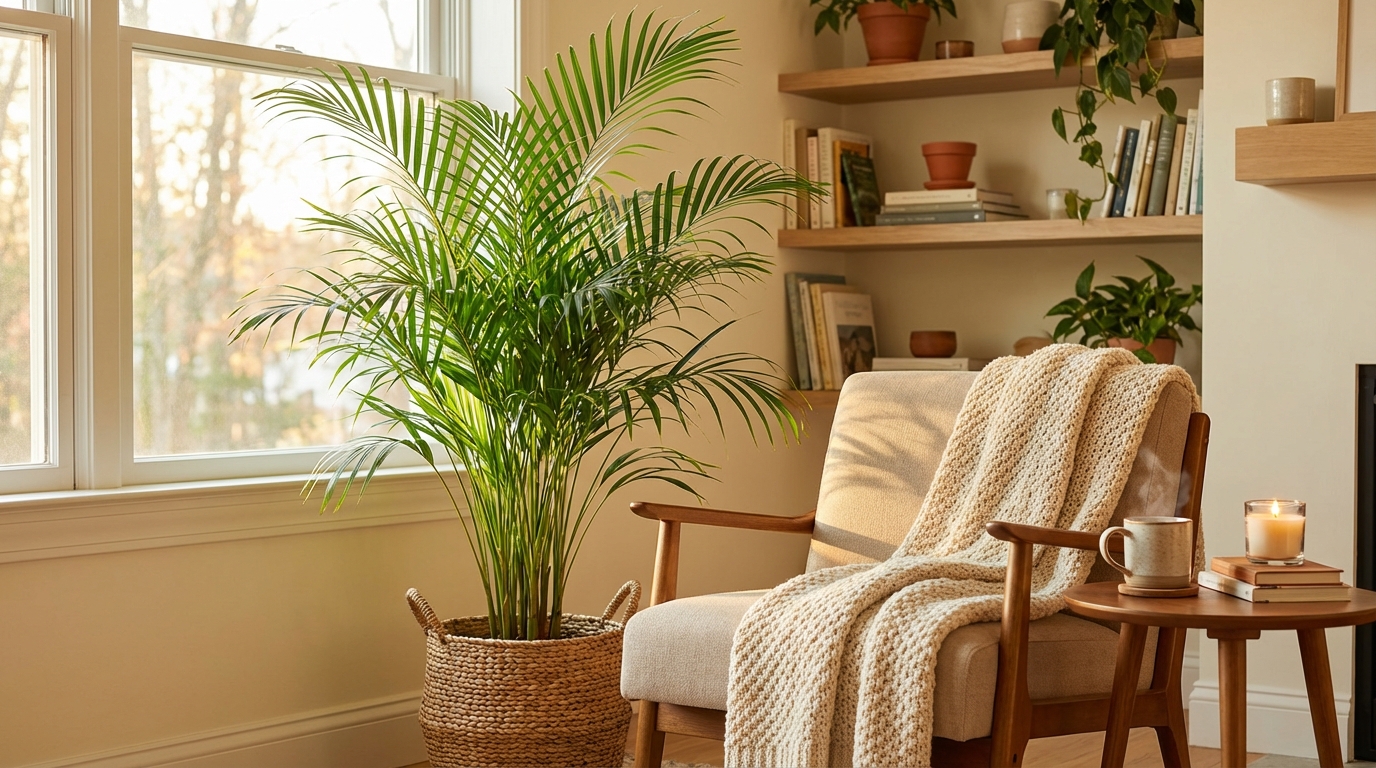
When it comes to taking care of your Areca Palm, understanding its temperature needs is vital for keeping this vibrant plant healthy. Your Areca prefers warm environments, thriving best in temperatures between 65°F and 75°F. It’s important to monitor these temperature requirements, as exposure to cold drafts or temperatures below 50°F can stress your plant and stunt its growth. While Areca Palms aren’t known for their cold tolerance, you can protect them during colder months by relocating them away from windows or doors that let in chilly air. Remember, a cozy spot helps maintain their lush, green appearance and guarantees they flourish, bringing a touch of the tropics into your home. Additionally, providing ideal humidity levels is crucial for preventing issues like brown leaf tips during winter months. Keep your Areca Palm warm and cozy!
Ideal Placement for Your Areca Palm in Winter
Finding the perfect spot for your Areca Palm during the winter months not only guarantees its health but also enhances the beauty of your indoor space. To thrive, your palm needs bright, indirect light, so placing it near a window is ideal. Confirm there’s good air circulation around your plant; avoiding cramped spaces helps prevent mold and other issues.
Here’s a simple guide to help you choose the best spot:
Light Requirements | Air Circulation | Ideal Location |
|---|---|---|
Bright, indirect | Good | Near a window |
Low | Moderate | Corner with airflow |
Moderate | Excellent | Open, airy spaces |
Direct | Poor | Away from drafts |
Varied | Average | Central room area |
Keep these tips in mind for a happy, healthy Areca Palm!
Adjusting Watering Habits During the Cold Months
As winter approaches, you’ll need to adjust how often you water your Areca palm. Since the cooler temperatures slow down its growth, you should reduce your watering frequency, keeping an eye on the soil moisture to avoid overwatering. Don’t forget to take into account humidity levels as well, since dry indoor air can impact your palm’s health during the colder months!
Reduced Watering Frequency
During the chilly winter months, you’ll want to adjust your watering habits for your Areca Palm to keep it healthy and thriving. With lower light and humidity, your plant doesn’t need as much water. Consider reducing your watering frequency to match the change in its needs. You can shift your watering schedule to every two to three weeks, allowing the soil to dry out slightly between waterings. This helps with moisture retention, preventing root rot and ensuring your palm stays vibrant. Remember, it’s better to underwater than overwater during this time. By keeping a close eye on your palm’s health, you’ll create a cozy environment for it to flourish even in the cold!
Monitor Soil Moisture
Monitoring soil moisture is a key part of adjusting your watering habits for your Areca Palm during the colder months. With reduced light and cooler temperatures, your plant’s water needs change. Regular soil testing can help you determine when to water, preventing overwatering and promoting moisture retention. Here’s a simple guide to help you:
Soil Condition | Action |
|---|---|
Dry (1-2 inches down) | Water thoroughly |
Slightly Moist | Wait a few days |
Moist | Check in a week |
Wet | Hold off on watering |
Saturated | Allow to dry out |
Humidity Considerations
When the temperatures drop, the humidity levels in your home can also take a nosedive, which can affect your Areca Palm’s well-being. To keep your palm thriving during the winter, you’ll want to adjust your watering habits. First, consider using misting techniques to gently increase humidity around your plant. A light mist every few days can work wonders! Additionally, humidity trays filled with water and pebbles can help maintain moisture in the air. Just place the tray beneath the pot, and as the water evaporates, it’ll create a cozy microclimate for your palm. By monitoring these humidity levels, your Areca Palm will stay happy and lush, even when winter’s chill settles in.
💡 Maintathisng humidity is essential for your Areca Palm’s health during the winter months.
➜ Get the step-by-step guide
Maintaining Humidity Levels for Optimal Growth
To help your Areca Palm thrive, maintaining the right humidity levels is essential, especially during the winter months when indoor air tends to be drier. You can achieve this by employing misting techniques, which involve lightly spraying water on your plant’s leaves a few times a week. This not only adds moisture to the air but also keeps your palm looking fresh and vibrant. Additionally, consider using humidity trays filled with water and pebbles beneath your pot. As the water evaporates, it will create a humid microclimate that your palm will love. Remember, keeping the humidity around 50-60% will help your Areca Palm flourish, even when the winter chill sets in. Your palm will thank you!
Fertilizing Your Areca Palm in Winter
Fertilizing your Areca Palm during winter can seem tricky, but it’s actually a straightforward process that can boost your plant’s health. During the colder months, you’ll want to choose a balanced, slow-release fertilizer. This type provides a steady supply of nutrients, which is ideal since your palm’s growth slows down in winter. Aim to fertilize every six to eight weeks, ensuring you’re mindful of nutrient timing. That way, your Areca Palm gets what it needs without being overwhelmed. Remember, too much fertilizer can harm your plant, so stick to the recommended amounts. With the right care, your Areca will thrive and stay vibrant, even when the temperatures drop outside. Happy fertilizing!
Signs of Stress and How to Revive Your Palm
Your Areca Palm can show signs of stress during winter, so it’s important to recognize what to look for. Common indicators include yellowing leaves and drooping fronds, which signal that your palm needs some extra care. Don’t worry—reviving your palm and keeping it healthy is easier than you might think, and we’ll cover the best techniques and preventative tips to help you out!
Common Stress Indicators
When an Areca palm starts showing signs of stress, it can be a bit alarming, especially if you’ve nurtured it with care. Common stress indicators include palm leaf discoloration and root rot, which can signal that something’s not quite right. Here’s a handy table to help you identify these signs:
Stress Indicator | What to Look For | Possible Cause |
|---|---|---|
Palm Leaf Discoloration | Yellowing or browning leaves | Overwatering, nutrient deficiency |
Root Rot | Wilting leaves and mushy roots | Excess moisture, poor drainage |
Dropping Leaves | Leaves falling off unexpectedly | Stress from temperature changes |
Stunted Growth | Slow or no new growth | Insufficient light |
Leaf Tip Browning | Brown tips on leaves | Low humidity |
Reviving Techniques Explained
Reviving an Areca palm that’s showing signs of stress can feel like a challenging mission, but with the right techniques, you can bring it back to its vibrant self. Start by evaluating its condition and implementing these revival techniques for effective palm rejuvenation:
- Adjust Watering: Confirm you’re not overwatering or underwatering. The soil should be slightly moist but never soggy.
- Enhance Light Exposure: Move your palm to a brighter location, but avoid direct sunlight that can scorch its leaves.
- Prune Damaged Leaves: Trim any brown or yellow fronds to encourage new growth and improve airflow.
With patience and care, your Areca palm can flourish again, reminding you of the beauty it brings into your home.
Preventative Care Tips
To keep your Areca palm thriving and prevent stress, it’s essential to recognize the early signs of trouble and take action before the situation worsens. Look for yellowing leaves or drooping fronds, which often indicate issues like poor light exposure or inadequate watering. Don’t forget about pest management; check your palm regularly for pests, as they can quickly become a problem if left unchecked. Make sure your palm receives bright, indirect light, as this helps maintain its health. If you notice any signs of stress, adjust its environment promptly—maybe move it to a brighter spot or treat it for pests. By being proactive, you’ll keep your Areca palm happy and growing strong all winter long!
Conclusion
In winter, caring for your areca palm is like wrapping it in a cozy blanket; it needs warmth, moisture, and the right attention to thrive. By understanding its temperature needs, adjusting your watering habits, and maintaining humidity, you’ll help your palm flourish even in the cold. Keep an eye out for signs of stress, and you’ll be ready to revive it if needed. With these tips, your areca palm will stand tall and vibrant, no matter the weather outside!
💡 Proper watering is critical during winter to prevent root rot and ensure your Areca Palm stays healthy.
➜ Master this approach


