
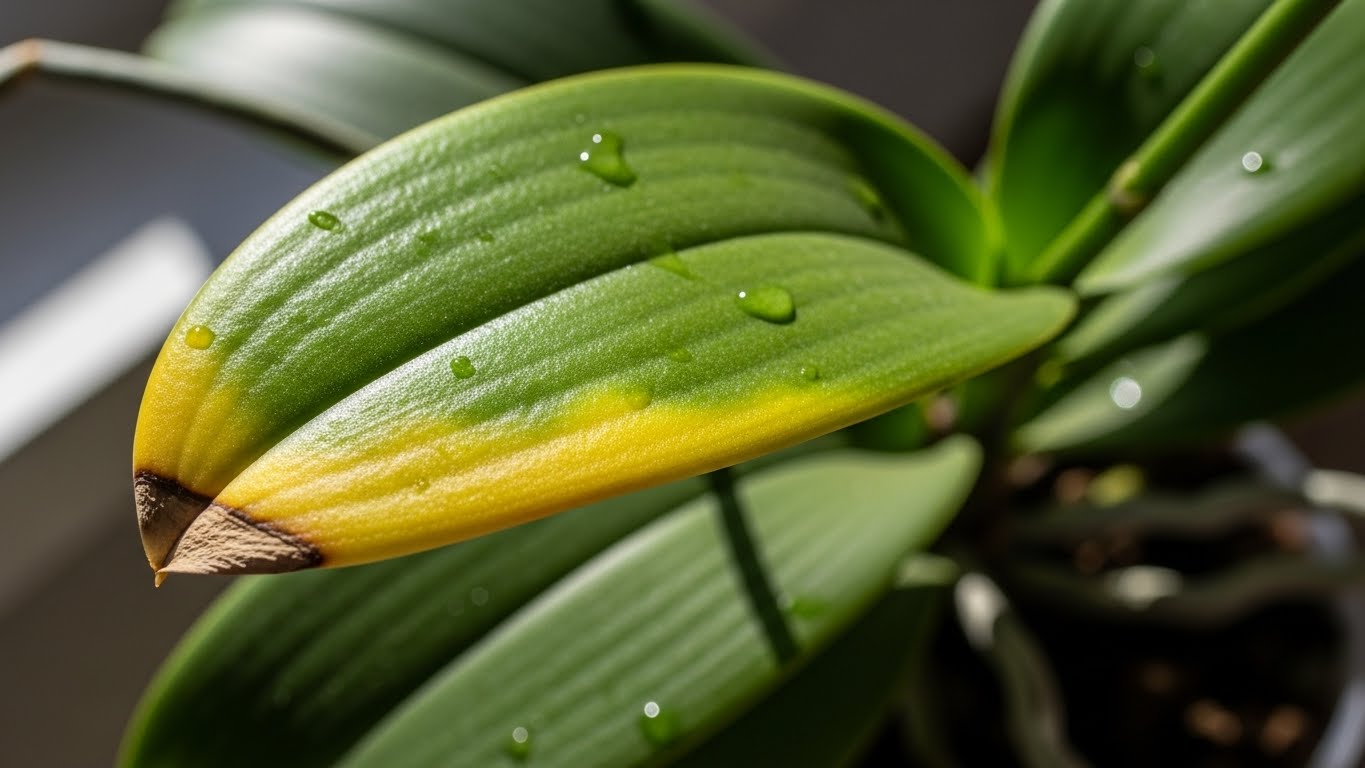
If your orchid leaves are turning yellow, don’t panic! This can happen due to pests, overwatering, underwatering, or nutrient deficiencies. Check for bugs like aphids, and adjust your watering schedule—make sure the soil dries out in between. Also, your orchid needs the right mix of nutrients and a balanced light and humidity environment to thrive. Pruning those yellow leaves can boost new growth, too. Keep exploring to uncover more tips for a healthy, happy orchid!
Key Takeaways
- Inspect for pests like aphids or scale insects, as they can drain energy from the orchid, leading to yellowing leaves.
- Assess watering practices: overwatering causes mushy roots, while underwatering results in dry, shriveled roots; adjust accordingly.
- Check for nutrient deficiencies; a lack of nitrogen or potassium can cause yellowing; use balanced fertilizers to replenish nutrients.
- Ensure proper environmental conditions: maintain humidity between 50-70%, provide bright indirect light, and ensure good air circulation.
- Prune yellowing leaves to promote new growth and allow adequate sunlight to reach healthy parts of the plant.
Common Causes of Yellowing Orchid Leaves

When you notice your orchid’s leaves turning yellow, it can be a bit alarming, but don’t worry—understanding the common causes can help you restore your plant’s health! One major culprit might be pest infestations, like aphids or scale insects, which suck the life out of your orchid. Check for tiny pests hiding on the leaves or in the crevices. Another reason could be fungal infections, often caused by excess moisture or poor air circulation. Look for dark spots or fuzzy growth on the leaves, as these can signal trouble. By addressing these issues promptly, you can help your orchid thrive again. Remember, a healthy plant starts with attentive care, so keep an eye on those yellowing leaves! Additionally, proper environmental factors like light and humidity levels play a crucial role in preventing yellowing leaves.
Identifying Overwatering and Underwatering Issues
Identifying whether your orchid is suffering from overwatering or underwatering can be tricky, but it’s vital for keeping your plant healthy. If your orchid’s leaves are turning yellow, check the roots. Overwatered orchids often have mushy, dark roots due to excess water retention, while underwatered ones might show dry, shriveled roots.
To fix overwatering, verify you have proper drainage solutions in place, like a well-draining potting mix and pots with holes. For underwatering, give your orchid a good soak, allowing it to absorb moisture. Remember, it’s all about balance! Keep an eye on the watering schedule, and your orchid will thrive, showing off its vibrant, green leaves in no time.
Nutrient Deficiencies and Their Impact
Nutrient deficiencies can sneak up on your orchid just as easily as overwatering or underwatering can. When your orchid’s leaves turn yellow, it might be signaling a lack of essential nutrients. Keeping a good nutrient balance is key to healthy growth. For instance, nitrogen promotes lush green leaves, while potassium helps with overall flower development. If your soil quality isn’t up to par, it can limit the nutrients your orchid absorbs. Regularly checking the soil for its nutrient content is a smart move. You might want to contemplate using a balanced fertilizer, ensuring it meets your orchid’s needs. By giving your orchid the right nutrients, you’ll help it thrive and maintain those stunning green leaves you adore.
Environmental Factors Affecting Orchid Health
While you might focus on watering and feeding your orchid, it’s essential to reflect on the environmental factors that can impact its overall health. Two critical elements to take into account are light exposure and humidity levels. Orchids thrive in bright, indirect light, and too much or too little can cause stress. Similarly, the right humidity levels, typically between 50-70%, keep your orchid happy and healthy. Below is a table outlining these factors:
Environmental Factor | Ideal Condition |
|---|---|
Light Exposure | Bright, Indirect Light |
Humidity Levels | 50-70% Humidity |
Temperature | 65-75°F (Day) |
Air Circulation | Good, Moderate |
Watering Frequency | Weekly or Biweekly |
Take into account these factors to guarantee your orchid thrives!
Tips for Reviving Your Yellowing Orchids
Noticing your orchid’s leaves turning yellow can be alarming, but don’t worry—there are steps you can take to bring your plant back to life! First, check for pests like aphids or mealybugs. If you spot any, use pest control methods like insecticidal soap to eliminate them. Next, consider your watering routine. Overwatering is a common culprit, so let the soil dry out between waterings. You might also want to employ some pruning techniques; trim away the yellow leaves to encourage new growth. Finally, make sure your orchid gets enough indirect sunlight. With these simple steps, you’ll be well on your way to reviving your beautiful plant and enjoying its vibrant blooms once again!
Conclusion
In conclusion, if your orchid’s leaves are turning yellow, don’t fret—there’s hope! By understanding the common causes, like watering issues, nutrient deficiencies, and environmental factors, you can take charge of your plant’s health. Remember, a little TLC goes a long way in reviving those vibrant greens. So, adjust your care routine, keep a watchful eye, and soon enough, your orchids will be back to their beautiful selves, dancing in the sunlight once again!


