
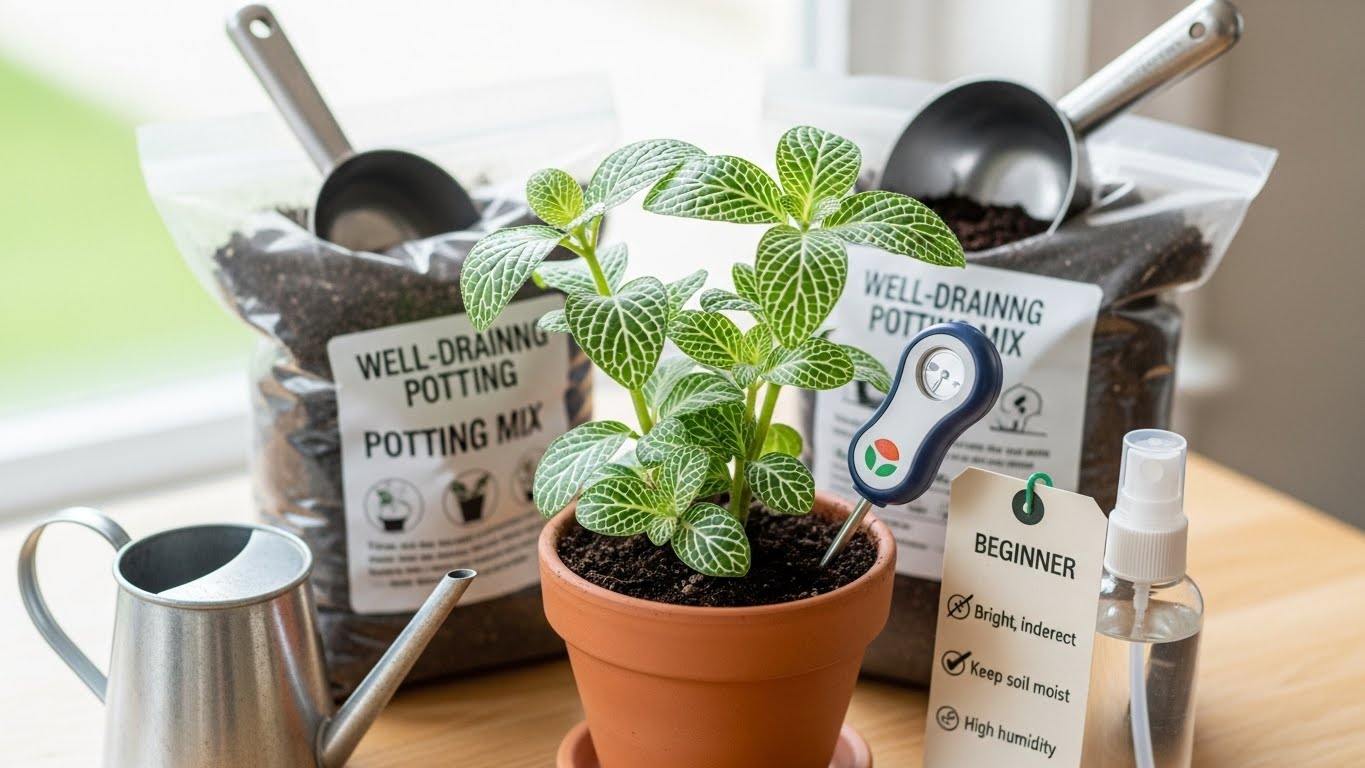
To keep your Fittonia thriving, focus on bright, indirect light for about 10 to 12 hours daily. Avoid direct sunlight, as it can scorch the leaves. For watering, check the soil—water every 5-7 days if it’s dry, and every 7-10 days if it’s slightly moist. Keep humidity levels around 60% or higher by using humidifiers or pebble trays. With proper care, your Fittonia will be vibrant and healthy, and there’s more to explore about its needs!
💡 Understanding the basics of Fittonia care is crucial for any beginner.
➜ Master the essential care techniques
Key Takeaways
💡 To ensure your Fittonia thrives, understanding the basics of light, water, and soil is crucial.
➜ Master this approach
- Place your Fittonia in bright, indirect sunlight, mimicking dappled rays to prevent leaf scorching.
- Water every 5-7 days when the soil is dry; adjust based on moisture levels.
- Maintain humidity levels around 60% or higher using humidifiers or pebble trays.
- Check soil moisture regularly to avoid overwatering or underwatering; look for droopy leaves or yellowing.
- Prune your Fittonia regularly for healthy growth and inspect for pests to prevent infestations.
Understanding Fittonia’s Natural Habitat
When you think about Fittonia, also known as the nerve plant, it’s fascinating to contemplate where it comes from. This lovely little plant thrives in the tropical rainforests of South America, particularly in countries like Peru. In its natural environment, Fittonia enjoys warm temperatures and high humidity, making it vital to mimic these habitat conditions for your indoor plant. The dense forest floor provides filtered light, so it’s important to guarantee your Fittonia feels cozy in a similar setting at home. By understanding its natural habitat, you can create a nurturing space that allows your Fittonia to flourish, showcasing its stunning, colorful veins. Additionally, maintaining ideal humidity levels around 50% or higher will help replicate its rainforest origins. Embrace this knowledge, and watch your plant thrive with love and attention!
Optimal Light Conditions for Your Fittonia
To guarantee your Fittonia thrives, it’s essential to provide the right light conditions, as this plant prefers bright, indirect sunlight. Aim for a light intensity that mimics its natural habitat, where it enjoys dappled rays filtering through leaves. Direct sunlight can scorch its delicate leaves, so keep it in a spot where it receives soft light.
When it comes to light duration, your Fittonia will flourish with around 10 to 12 hours of light each day. If you notice its vibrant colors fading or leaves drooping, it might be time to adjust the light conditions. By giving your Fittonia the right light, you’re creating a cozy environment for it to grow and show off its stunning foliage.
Watering Guidelines for a Thriving Fittonia
Watering your Fittonia correctly is key to keeping it healthy and vibrant! You’ll want to find the right frequency for watering, as too little or too much can lead to trouble. Keep an eye out for signs of overwatering, like yellowing leaves, to make sure your plant stays thriving and beautiful.
Frequency of Watering
Keeping your Fittonia happy and healthy hinges on a consistent watering routine. Establishing a watering schedule based on the moisture levels in the soil is key. You’ll want to check the soil regularly—if it feels dry an inch down, it’s time to water.
Here’s a simple guide to help you:
Soil Condition | Watering Frequency |
|---|---|
Dry | Water every 5-7 days |
Slightly Moist | Water every 7-10 days |
Wet | Water every 10-14 days |
Adjust your routine as needed, especially during different seasons. Remember, a little attention goes a long way in keeping your Fittonia vibrant and thriving!
Signs of Overwatering
Recognizing the signs of overwatering is essential for your Fittonia’s health, and there are a few key indicators to watch for. First, if you notice yellowing leaves, it’s a strong hint that your plant is getting too much water. Another sign is wilting, even though the soil feels soggy. This happens because overwatering can lead to root rot, a serious condition that can harm your plant. Make sure you have proper soil drainage to avoid these issues. If the soil stays wet for too long, the roots can’t breathe, and that’s not good! Remember, a thriving Fittonia loves moisture but hates sitting in water. Keep an eye out for these signs, and your plant will thank you!
💡 Watering is a key aspect of Fittonia care, and knowing the right frequency can make all the difference.
➜ Get the step-by-step guide
💡 Watering is a key aspect of Fittonia care that can make or break your plant’s health.
➜ Discover proven watering techniques
Signs of Overwatering and Underwatering
Recognizing the signs of overwatering and underwatering is key to keeping your Fittonia healthy and vibrant. If you notice yellowing leaves or mushy stems, you might be giving it too much water, while crispy, brown leaf edges can signal it’s thirsty. Let’s explore these symptoms and discover some recovery tips to help your plant bounce back!
💡 Choosing the right soil mix is essential for your Fittonia’s growth and health.
➜ Get the step-by-step soil guide
💡 The right soil mix can significantly impact your Fittonia’s health and growth.
➜ Discover proven techniques
Overwatering Symptoms
When you care for a Fittonia, it’s essential to pay attention to how much water it gets, as both overwatering and underwatering can lead to problems. Overwatering causes roots to sit in soggy soil, leading to root rot. You might notice yellowing leaves that feel mushy. If the edges start browning and curling, that’s another sign. The plant might also droop, losing its vibrant charm. These overwatering effects can be heartbreaking, especially when you’ve put so much love into your Fittonia. To keep your plant healthy and thriving, check the soil regularly. If it feels wet, hold off on watering until it dries out a bit. Your Fittonia will thank you with lush, beautiful leaves!
Underwatering Indicators
Have you ever noticed your Fittonia looking a bit droopy or sad? If so, it might just be thirsty! One key sign of underwatering is leaf droop; those vibrant leaves can start to hang limply, begging for a drink. Another indicator is soil dryness. When you poke your finger into the potting mix and it feels dry, that’s a clear signal your plant needs some water. Keep an eye out for these signs, as they can happen quickly! To keep your Fittonia happy and thriving, make sure to check its moisture levels regularly. Remember, a little love goes a long way, so don’t hesitate to give it a good soak when those leaves start to droop.
Recovery Tips
Understanding the signs of overwatering and underwatering is essential for nursing your Fittonia back to health! Both conditions can hinder your plant’s resilience, but with a little attention, you can guarantee a successful fittonia recovery. Here are some signs to watch for:
- Overwatering: Yellowing leaves, mushy stems, and a sour smell from the soil.
- Underwatering: Wilting leaves, brown leaf edges, and soil that pulls away from the pot’s sides.
- General Signs: Stunted growth or dropped leaves can indicate trouble.
- Quick Fixes: Adjust your watering schedule, improve drainage, or relocate to a brighter spot.
Humidity Needs for Your Fittonia
Fittonias, often known as nerve plants, thrive in humid environments, and providing the right amount of moisture is key to their health. These lovely plants flourish best with humidity levels around 60% or higher. You can create the perfect atmosphere for your Fittonia by utilizing several humidity sources.
Consider placing a humidifier nearby, grouping your plants together, or setting your Fittonia on a pebble tray filled with water. Misting the leaves can also help, but don’t overdo it! Just remember, the more humidity you can provide, the happier your Fittonia will be. By ensuring that your plant gets the moisture it craves, you’re setting it up for a vibrant, healthy life.
Tips for Pruning and Maintaining Fittonia Health
When you want your Fittonia to thrive, regular pruning and maintenance are essential, as these actions not only promote healthy growth but also encourage the plant to develop a fuller shape. Here are some helpful tips to keep your Fittonia looking its best:
- Use sharp scissors for clean cuts when pruning; this minimizes stress on the plant.
- Remove yellowing or damaged leaves promptly to enhance overall leaf care.
- Pinch back the tips of stems to encourage bushier growth, improving its shape.
- Inspect regularly for pests and take action immediately to prevent infestations.
Conclusion
By understanding your Fittonia’s fundamental needs—like light, water, and humidity—you’ll foster a flourishing, fabulous plant! Remember, consistency is key; keep an eye out for signs of stress, and don’t be afraid to trim your plant to promote healthy growth. With a little love and attention, your Fittonia will thrive and brighten up your space. So, plunge into the delightful world of Fittonia care, and watch your green companion grow gloriously!
💡 Even with the best care, issues can arise. Being prepared can save your plant from distress.
➜ Explore advanced methods
💡 Even with the best care, issues can arise. Knowing how to tackle them is vital.
➜ Explore advanced problem-solving methods


