
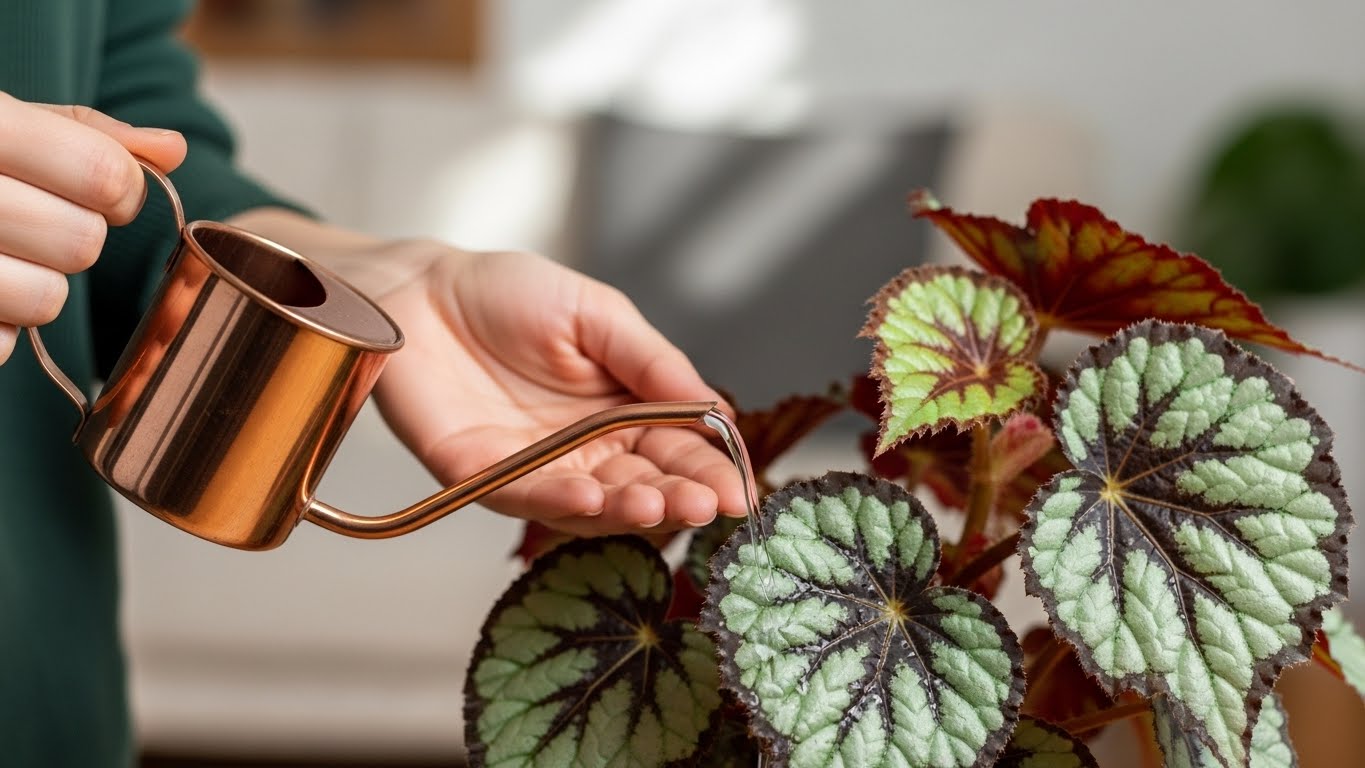
Indoor begonias are beautiful plants that thrive with just the right care! Start by picking a variety that suits your space, like Rex or Wax begonias. Use a potting mix with good drainage and humidity levels between 50-70%. Water them when the top inch of soil feels dry, and keep temperatures around 65°F to 75°F. Watch for pests like aphids and keep an eye out for diseases like powdery mildew. Stick with us to discover more tips for your begonias!
Key Takeaways
- Choose the right begonia variety based on your space and lighting conditions to ensure optimal growth.
- Use a well-draining potting mix with peat moss, perlite, and compost for healthy roots.
- Water when the top inch of soil is dry, typically once a week, and avoid soggy roots.
- Maintain humidity levels between 50-70% and temperatures between 65°F and 75°F for ideal growth conditions.
- Regularly inspect for pests and diseases, and take prompt action to protect your begonias.
Selecting the Right Begonia Variety
When you think about adding a begonia to your indoor plant collection, how do you choose the right variety? Start by considering your space and the lighting conditions. Some begonias thrive in bright, indirect light, while others prefer lower light levels. Next, think about the care you’re willing to provide. Choosing begonia types like the Rex or Wax begonia can influence your seasonal begonia care routine. Rex begonias, with their stunning foliage, may need more humidity, while Wax begonias are more forgiving. Finally, don’t forget about size! Smaller varieties fit perfectly on shelves, while larger ones can become striking centerpieces. Whichever you choose, each begonia will bring a unique touch of beauty to your home. Additionally, keeping humidity levels in mind is crucial for the health of your begonias, as many thrive in environments with 50–70% humidity.
Ideal Potting Mix for Begonias
When it comes to growing healthy begonias, the potting mix you choose plays a vital role in their success. You’ll want a blend that offers good drainage while still retaining some moisture, so your plants thrive without getting waterlogged. Let’s explore the best components for your begonia potting mix and why proper drainage is essential for these beautiful plants!
Components of Potting Mix
To create the ideal potting mix for your begonias, you’ll want to focus on a blend that promotes good drainage while retaining enough moisture for these beautiful plants. The right potting mix ingredients can make all the difference, so consider the following components:
- Peat moss: This helps retain moisture while allowing air circulation.
- Perlite or vermiculite: These improve drainage and aeration, ensuring your begonias don’t sit in soggy soil.
- Compost: It adds nutrients and can help balance soil acidity, creating a healthy environment for growth.
Mix these together for a delightful concoction that supports your begonias’ needs. Remember, the right balance in your potting mix not only nourishes your plants but also enhances their overall beauty and health!
Drainage Requirements Explained
Good drainage is essential for the health of your begonias, and understanding their needs can make all the difference in keeping these vibrant plants thriving. To guarantee your begonias flourish, choose a pot size that allows for some room to grow while still giving you good drainage solutions. A pot with drainage holes is a must!
When potting, use a light, well-aerated mix that drains well, like a blend of potting soil, perlite, and orchid bark. This mix helps prevent root rot by allowing excess water to escape while retaining enough moisture for your begonias. Remember, it’s all about finding that perfect balance—your begonias will thank you with lush, colorful leaves and blooms!
Understanding Light Requirements
How can you guarantee your indoor begonia gets the right amount of light? Understanding its light requirements is key to keeping your plant thriving. Begonias love bright, indirect natural light, but they can also adapt to artificial light if needed. Here’s what you should remember:
- Location matters: Place your begonia near a window with filtered sunlight, avoiding harsh direct rays.
- Watch for signs: If leaves turn yellow or drop, it might be getting too much light. Conversely, if they’re leggy, it may need more.
- Rotate regularly: Move your plant every few weeks to confirm all sides get equal light exposure.
Watering Guidelines for Healthy Growth
Watering your indoor begonia is just as important as providing the right light, and getting it right can make all the difference in keeping your plant healthy and vibrant. To guarantee your begonia thrives, aim for a consistent watering frequency. Water the plant when the top inch of soil feels dry to the touch, usually about once a week. Remember, begonias love moisture retention, but they don’t like soggy roots. To achieve this balance, make certain your pot has drainage holes, allowing excess water to escape. During warmer months, you might need to increase your watering frequency, while winter calls for less. Observing your begonia’s leaves will help; droopy leaves often signal it’s time for a drink.
Humidity and Temperature Preferences
When it comes to keeping your indoor begonia happy, humidity and temperature play vital roles. These plants thrive in a warm environment with humidity levels around 50-70%, so you’ll want to create a cozy atmosphere for them. Aim to keep temperatures between 65°F and 75°F during the day, ensuring your begonia stays healthy and vibrant!
💡 Understanding the right fertilization schedule is crucial for the health of your begonias.
➜ Master the fertilization schedule
Ideal Humidity Levels
To keep your indoor begonias thriving, you’ll want to pay close attention to their ideal humidity levels, which can make all the difference in their growth and overall health. Begonias love humidity, so aim for levels between 50% and 70%. You can create this cozy environment with a few simple strategies:
💡 Humidity plays a vital role in the health of your indoor begonias.
➜ Explore advanced humidity-boosting techniques
- Use humidity monitors to track levels in your space.
- Add humidity sources like pebble trays filled with water or mist your plants regularly.
- Group your begonias together to create a microclimate that boosts moisture.
Temperature Range Requirements
Temperature is just as essential for your indoor begonias as humidity, since these vibrant plants thrive in a warm environment. Ideally, they love temperatures between 65°F and 75°F. Keep in mind that while begonias have some heat tolerance, extreme heat can stress them, so avoid placing them near heat vents. As seasons change, be ready to make those seasonal adjustments; in winter, they prefer slightly cooler air, around 60°F, to rest. Remember, too much cold can lead to wilting or drop-off of leaves. You’ll want to provide consistent warmth, avoiding sudden temperature shifts, to keep your begonias happy and healthy. With the right care, these beauties will flourish and bring joy to your indoor space!
Fertilizing Your Begonias
Fertilizing your begonias is essential for keeping them healthy and vibrant, especially since these beautiful plants thrive on nutrients to support their lush foliage and stunning blooms. You’ll want to choose the right fertilizer types, like balanced liquid fertilizers or slow-release granules. Applying it at the right frequency is vital—generally, every 4-6 weeks during the growing season works wonders.
Fertilizing begonias is key to vibrant growth; choose balanced fertilizers and apply every 4-6 weeks for best results.
Here’s a simple guide to get you started:
- Choose a balanced fertilizer: Look for a formula with equal parts nitrogen, phosphorus, and potassium.
- Follow the label instructions: Don’t over-fertilize; it can harm your plant.
- Adjust based on growth: If your begonias are growing quickly, you may need to fertilize more often.
Happy gardening!
Pruning and Propagating Begonias
Pruning and propagating begonias can seem a bit challenging, but with the right approach, you’ll find it rewarding and fun. Start by using proper pruning techniques; snip away dead leaves and spent flowers to encourage new growth. Aim to trim just above the node, where new leaves can sprout.
For propagation methods, consider leaf cuttings or division. Simply cut a healthy leaf into sections, place them in moist soil, and watch them grow roots. Alternatively, you can divide your plant by carefully separating the tubers during repotting. With a little patience and care, your begonias will flourish, and you’ll be proud of your gardening skills. Embrace the process, and enjoy the blossoming journey!
Common Pests and Diseases to Watch For
When you’re caring for your indoor begonias, it’s essential to keep an eye out for common pests and diseases that can sneak in and disrupt their growth. By focusing on pest identification and disease prevention, you’ll help your plants thrive. Here are a few troublemakers to watch for:
Keep a close watch on pests and diseases to ensure your indoor begonias flourish beautifully.
- Aphids: These tiny insects can cluster on new growth, sucking sap and causing leaves to curl.
- Powdery Mildew: A white, powdery substance that appears on leaves, indicating high humidity or poor air circulation.
- Mealybugs: Cotton-like insects that hide in leaf joints, leading to yellowing leaves and stunted growth.
Stay vigilant, and your begonias will reward you with their beautiful blooms!
Conclusion
Caring for indoor begonias might seem tricky, but once you get the hang of it, you’ll find it’s a rewarding hobby! Remember, even if you’ve struggled with plants before, begonias are forgiving and adaptable. With the right light, watering, and a little attention, your begonias will thrive and brighten your space. So don’t hesitate—dive into the colorful world of begonias, and enjoy the beauty they bring to your home! Happy gardening!
💡 Choosing the right variety can enhance your indoor space significantly.
➜ Discover the most vibrant varieties


