
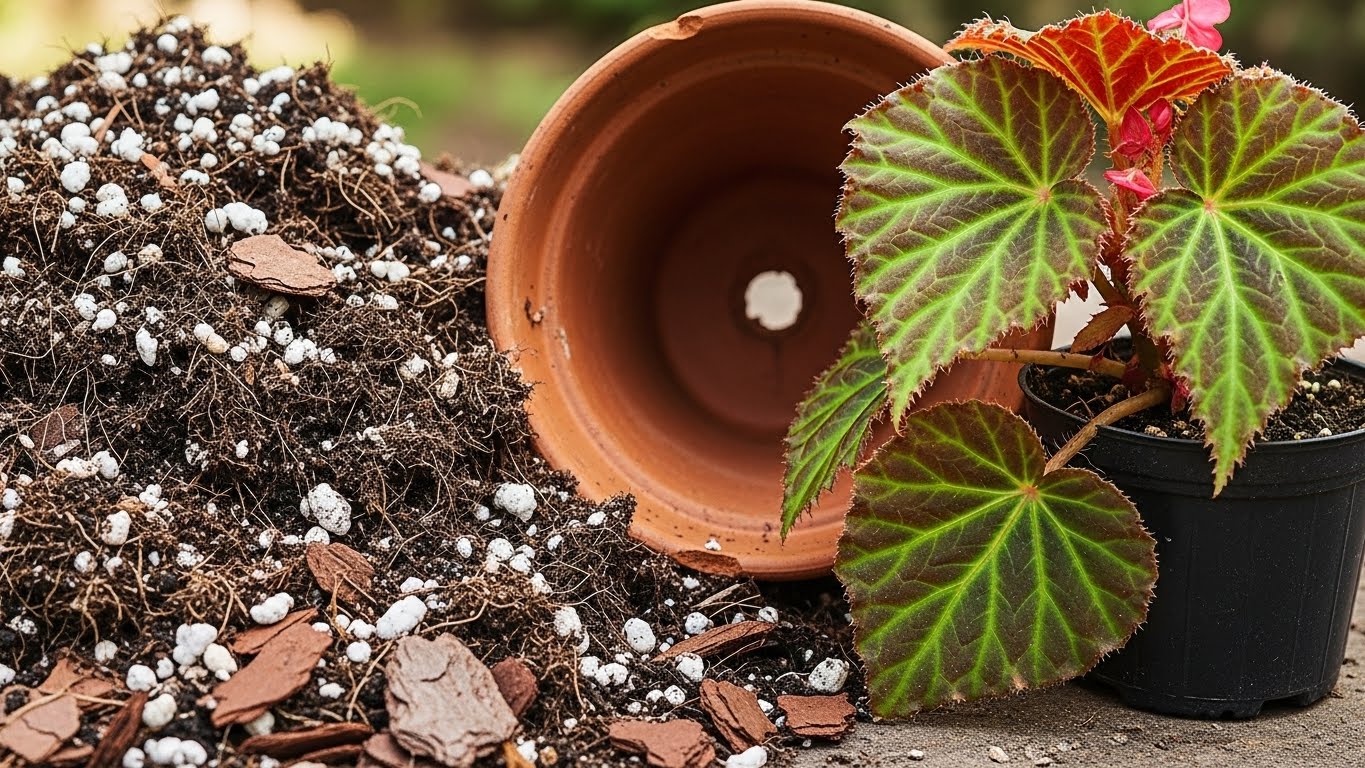
To create the best soil mix for potted begonias, combine 40% peat moss, 30% perlite, and 30% compost. This blend retains moisture while allowing for proper drainage, keeping your begonias happy and healthy. Make sure your container has drainage holes to prevent root rot. You’ll also want to monitor your soil’s pH, aiming for a range of 5.5 to 6.5. Want to discover more secrets about potting and caring for your begonias?
Key Takeaways
💡 If you’re looking to enhance your indoor space with stunning colors, this article is a must-read.
➜ Explore the vibrant options
- A well-draining soil mix for begonias should consist of 40% peat moss, 30% perlite, and 30% compost for optimal growth.
- Peat moss retains moisture, while perlite enhances aeration, preventing soil compaction and promoting healthy root development.
- Compost provides essential nutrients, enriching the soil for strong begonia growth and vibrant leaf color.
- Maintain a pH level between 5.5 and 6.5 in the soil to ensure a suitable environment for begonias.
- Regularly add compost and adjust the soil mix components to maintain soil health and nutrient availability over time.
Understanding Begonia Needs
When you think about growing potted begonias, it’s essential to understand their unique needs to help them thrive. These lovely plants come in various begonia varieties, each with its own charm and specific light requirements. Some prefer bright, indirect light, while others can tolerate shadier spots. Finding the right balance is vital; too much direct sunlight can scorch their leaves, while too little can stunt their growth. As you explore their needs, consider where you plan to place your begonias. By knowing which variety fits your space best, you’ll be well on your way to nurturing a vibrant, healthy collection that brings joy to your home. Proper watering is equally important, as overwatering can lead to root rot. Embrace the adventure, and watch your begonias flourish!
Essential Soil Components
Creating the perfect soil mix for your potted begonias is like crafting a cozy home for your plants; the right components can make all the difference in their growth and health. To start, focus on soil texture. You need a mix that’s well-draining yet retains some moisture. Incorporating organic matter, like compost or peat moss, enriches the soil with nutrients while improving its structure. This balance enhances aeration, allowing roots to breathe and grow strong. Don’t forget to add perlite or vermiculite, which helps prevent compaction, ensuring your begonias thrive. By thoughtfully combining these essential components, you create a nurturing environment that encourages your plants to flourish, bringing vibrant beauty to your space. Happy planting!
Recommended Soil Ratios
When it comes to growing healthy begonias, getting the soil ratios just right is key. You’ll want to focus on ideal pH levels, essential nutrient components, and how well your mix drains and breathes. By balancing these elements, you can create a vibrant environment for your begonias to thrive!
Ideal Ph Levels
To grow healthy potted begonias, you’ll want to pay close attention to the soil’s pH levels, as they play an essential role in how well your plants thrive. The ideal pH range for begonias is between 5.5 and 6.5. Regular pH testing helps you guarantee your soil stays in that sweet spot, and if it’s off, you can use soil amendments to correct it. Here are some tips to maintain the right pH levels:
- Use peat moss or coconut coir for acidity
- Add compost for nutrients
- Mix in perlite for aeration
- Test your soil regularly
- Adjust with lime or sulfur as needed
With the right pH levels, your begonias will flourish beautifully!
Essential Nutrient Components
Finding the right soil mix for your potted begonias is crucial, as it directly influences their growth and overall health. To achieve a perfect nutrient balance, aim for a mix of 40% peat moss, 30% perlite, and 30% compost. Peat moss offers moisture retention while enhancing soil texture, creating a cozy home for your begonias. Perlite provides aeration and keeps the soil light, preventing compaction. Compost feeds your plants with essential nutrients, ensuring they thrive. When you blend these components, you’ll create a nurturing environment that promotes vibrant growth and stunning blooms. Remember, your begonias appreciate a well-balanced mix, so pay attention to these ratios, and watch them flourish with joy in your care!
Drainage and Aeration
Proper drainage and aeration are essential for the health of your potted begonias, as they help prevent root rot and promote strong growth. Achieving the right balance in your soil mix is key. Here’s how to create an ideal blend:
- 60% potting soil for water retention
- 20% perlite to enhance drainage
- 10% orchid bark for aeration
- 5% peat moss to retain moisture without causing soil compaction
- 5% compost for added nutrients
With this mix, your begonias will thrive, enjoying just the right amount of moisture without the risk of soggy roots. Remember, too much compaction can suffocate your plants, so keep it airy and well-draining. Happy planting!
Importance of Drainage
When it comes to potted begonias, proper drainage is absolutely essential. It helps prevent root rot, which can quickly ruin your beautiful plants, and promotes healthy growth by allowing excess water to escape. So, let’s explore how to create a soil mix that keeps your begonias thriving!
💡 Choosing the right pot is crucial for your begonias’ health and growth.
➜ Get the essential potting guide
Prevent Root Rot
Ensuring your potted begonias thrive means you can’t overlook the importance of drainage to prevent root rot. Proper root care and moisture management are essential, so keep these tips in mind:
💡 Proper fertilization is key to ensuring your begonias thrive after repotting.
➜ Master your fertilization strategy
- Choose a well-draining pot: Terracotta or ceramic pots help wick away excess water.
- Use a chunky soil mix: Incorporate perlite or orchid bark for better aeration.
- Avoid overwatering: Water only when the top inch of soil feels dry.
- Check drainage holes: Make sure they’re clear to allow water to escape.
- Rotate your pots: This encourages even moisture distribution and prevents soggy spots.
Promote Healthy Growth
To kick off healthy growth for your begonias, it’s essential to focus on drainage. Good drainage helps guarantee that your plants don’t sit in water, preventing root rot while promoting vibrant growth. Consider mixing in perlite or coarse sand into your soil; this enhances aeration and encourages proper moisture retention. Remember, nutrient timing is key! When your begonias are well-drained, they can absorb nutrients more efficiently, allowing them to flourish. You’ll notice their leaves getting lush and their blooms becoming brighter. So, as you nurture your begonias, pay close attention to how water flows through the soil. This simple step can make a world of difference in keeping your potted beauties thriving and happy!
Enhancing Aeration
While you might think that all soil is created equal, the truth is that enhancing aeration in your potting mix can make a world of difference for your begonias. Good aeration allows roots to breathe, leading to healthier plants. You can achieve this with a few effective aeration techniques and soil additives:
- Perlite: Increases drainage and airflow.
- Coconut coir: Retains moisture while promoting aeration.
- Pumice: Lightweight and creates space for air pockets.
- Bark chips: Breaks up dense soil and enhances texture.
- Sand: Improves drainage and prevents compacting.
Nutrient Requirements for Begonias
When you’ve set up a well-aerated potting mix for your begonias, the next step is to focus on their nutrient requirements. Begonias thrive on balanced nutrition, so using the right begonia fertilizers is key. These fertilizers should be rich in nitrogen, phosphorus, and potassium, which support healthy growth and vibrant blooms. Pay attention to your plants; if you notice yellowing leaves or stunted growth, you might be facing a nutrient deficiency. To keep your begonias happy, consider feeding them every four to six weeks during the growing season. Remember, over-fertilizing can harm your plants, so always follow package instructions. With the right care, your begonias will flourish, bringing beauty and joy to your space!
How to Mix Your Soil
Creating the perfect soil mix for your begonias is essential for their health and growth, and it’s easier than you might think! To achieve the right soil texture and water retention, follow these simple steps:
- Start with a base of high-quality potting soil.
- Add perlite or vermiculite to improve drainage.
- Mix in peat moss for moisture retention.
- Consider adding compost for extra nutrients.
- Finally, blend everything thoroughly to guarantee even consistency.
Potting Techniques for Begonias
Potting begonias properly is essential for their success, so it’s important to pay attention to a few key techniques that will help your plants thrive. Start by choosing the right container; it should have drainage holes to prevent waterlogging. When potting, gently loosen the roots and place them in fresh soil, making sure not to bury the crown. Water thoroughly after potting to help settle the soil. Here’s a quick reference table to guide you:
Step | Action | Tips |
|---|---|---|
Container Selection | Choose a pot with holes | Size should be 1-2 inches |
Soil Placement | Loosen roots, position | Don’t cover the crown |
Watering | Water well after potting | Guarantee even moisture |
Following these potting techniques will set your begonias on the path to flourishing!
Maintaining Soil Health
Maintaining healthy soil is essential for the vibrant growth of your begonias, as the right mix can make all the difference in their overall health. To keep your soil thriving, consider using these soil rejuvenation techniques and organic amendments:
- Add compost to enrich nutrients.
- Mix in peat moss for better moisture retention.
- Incorporate perlite to improve drainage.
- Use mulch to prevent soil erosion and retain moisture.
- Rotate plants to avoid nutrient depletion.
Conclusion
In summary, choosing the right soil mix for your potted begonias is essential for their growth and vibrancy. Did you know that healthy begonias can produce up to 30 colorful blooms at once? By understanding their needs, from drainage to nutrient balance, you’ll create a thriving environment. So, gather your materials, mix your soil with care, and watch your begonias flourish like a beautiful garden in full bloom. Happy potting!
💡 Healthy begonias start with the right care and prevention strategyes.
➜ Learn how to prevent common issues


