
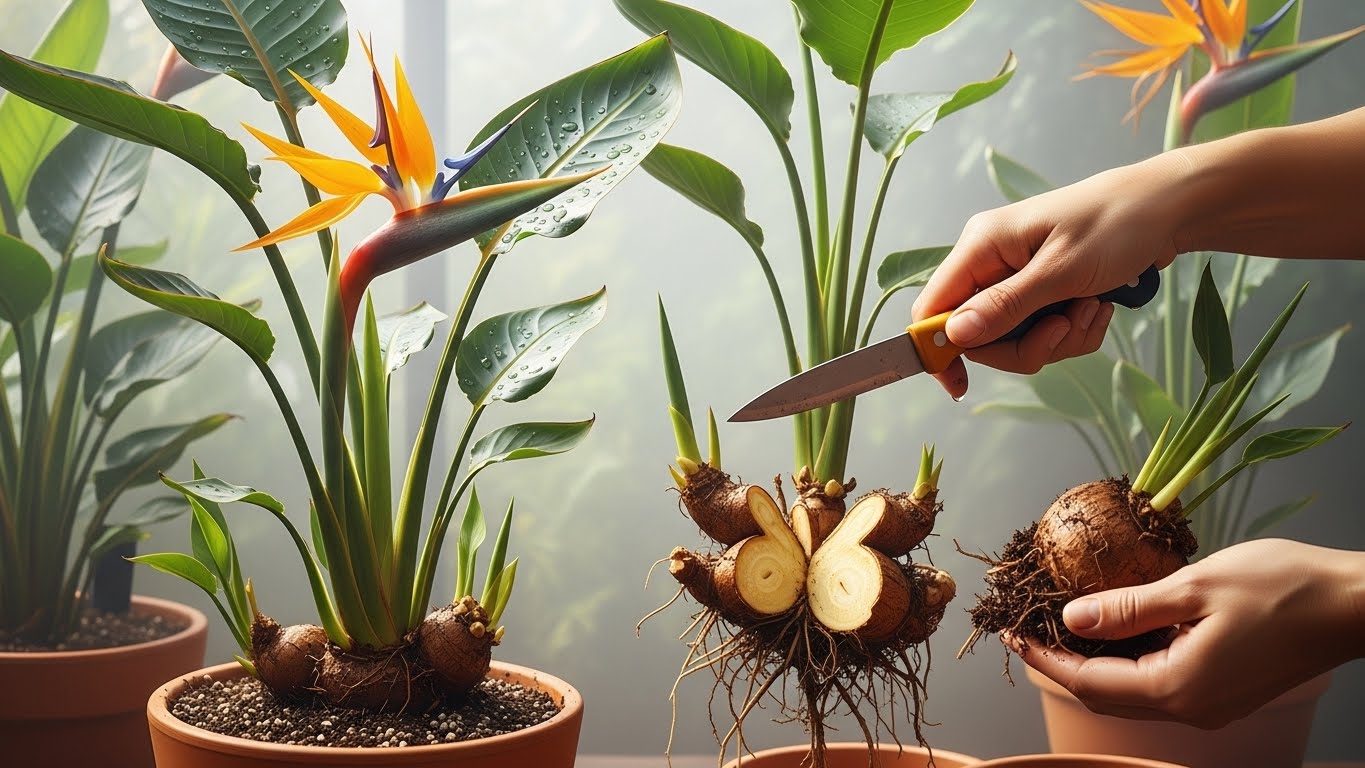
To propagate a Bird of Paradise plant, you can choose between seeds or division. Start seeds by soaking them for 24 hours before planting in well-draining soil. For division, pick a healthy plant with several stems. Provide warmth, humidity, and bright, indirect sunlight for success. Keep the soil moist, but avoid overwatering to prevent root rot. With patience, you can enjoy vibrant blooms in a few years! Want to explore more tips and tricks?
Key Takeaways
💡 If you’re considering propagation, understanding how to grow Bird of Paradise from seed can be a game-changer.
➜ Discover proven techniques
- Propagate Bird of Paradise through division or offsets, choosing the method that suits your comfort level and the plant’s health.
- For seed propagation, start with fresh seeds, pre-soaking them for 24 hours and using a well-draining mix for optimal growth.
- Maintain a temperature range of 65°F to 70°F during the day and humidity levels between 50% and 70% for successful propagation.
- Monitor for pests like spider mites or aphids, and ensure proper drainage to prevent root rot during propagation.
- Expect a flowering timeline of 3-4 years with blooms lasting 1-2 weeks, requiring consistent care and ideal growing conditions.
Understanding the Bird of Paradise Plant
The Bird of Paradise plant, with its striking flowers resembling exotic birds in flight, is a true gem in the world of tropical plants. You’ll love its vibrant colors and unique shape, making it a standout in any garden. This plant, reaching heights of up to 6 feet, boasts broad, banana-like leaves that create a lush, tropical feel.
For the best results, keep in mind a few care tips. It thrives in well-draining soil and loves bright, indirect sunlight. Water it regularly, but don’t let the roots sit in water—drainage is key. Fertilize during the growing season to encourage those stunning blooms. With a little love and attention, your Bird of Paradise will flourish beautifully! Additionally, it is essential to provide high humidity to maintain the health of your Bird of Paradise plant.
Ideal Conditions for Propagation
To successfully propagate your Bird of Paradise, you’ll need to create the right environment for it to thrive. This means paying attention to temperature and humidity levels, ensuring proper soil composition and drainage, and providing the ideal amount of light. By meeting these conditions, you’ll set the stage for healthy growth and vibrant blooms!
Temperature and Humidity Levels
When you’re ready to propagate your Bird of Paradise, creating the perfect environment is key, especially regarding temperature and humidity. These plants thrive in specific conditions, so keeping their needs in mind will help you succeed.
Here are some ideal temperature and humidity levels to aim for:
- Temperature Ranges: Keep your space between 65°F and 70°F (18°C to 21°C) during the day.
- Nighttime Coolness: Allow temperatures to drop to around 55°F (13°C) at night.
- Humidity Preferences: Aim for humidity levels of 50% to 70% to mimic their tropical origins.
- Mist Regularly: Mist the leaves regularly to maintain that lovely humidity.
Soil Composition and Drainage
Creating the right soil composition and ensuring proper drainage is essential for successfully propagating your Bird of Paradise. Aim for a soil pH between 6.0 and 7.0 for ideal growth. A well-balanced mix of organic matter, sand, and perlite can provide the perfect nutrient balance. Good drainage prevents waterlogging, which can harm your plant’s roots.
Here’s a quick guide to help you:
Aspect | Recommendation |
|---|---|
Soil Type | Loamy, well-draining |
pH Range | 6.0 – 7.0 |
Nutrient Sources | Compost, peat, perlite |
Drainage Tips | Use pots with holes |
Light Requirements for Growth
Light plays a pivotal role in the growth of your Bird of Paradise, influencing everything from its height to the vibrancy of its stunning flowers. To guarantee your plant thrives, focus on these key aspects of light:
- Light Intensity: Your Bird of Paradise loves bright, indirect sunlight. Too much direct light can scorch its leaves.
- Light Duration: Aim for 12-14 hours of light daily to mimic its natural habitat.
- Indoor vs. Outdoor: If indoors, place it near a sunny window. Outdoors, find a spot with filtered sunlight.
- Seasonal Changes: Be mindful of seasonal variations; adjust its placement as needed.
Choosing the Right Propagation Method
How do you decide which propagation method is best for your Bird of Paradise? Choosing the right technique can really impact your plant health. You’ve got a couple of popular options: division and offsets. If your plant’s thriving and has multiple stems, division’s a great choice. It allows you to share the beauty while ensuring each new plant gets a strong start. On the other hand, if you notice baby plants or offsets popping up around the base, you can gently separate those. This method’s usually easier and less stressful for the parent plant. Think about your comfort level with each technique, and don’t hesitate to experiment. Your journey with Bird of Paradise can be both rewarding and fun!
Propagating From Seeds
💡 Once you’ve propagated your Bird of Paradise, you’ll want to ensure it grows quickly and healthily.
➜ Get the step-by-step guide
While division and offsets are popular ways to propagate Bird of Paradise, growing these stunning plants from seeds can be an exciting adventure! To get started, you’ll want to focus on a few key steps for successful seed selection and germination techniques:
Growing Bird of Paradise from seeds is an exciting adventure that requires careful attention to seed selection and germination techniques.
💡 Choosing the right potting mix is essential for the successful propagation of your Bird of Paradise.
➜ Master this approach
- Choose Fresh Seeds: Look for seeds that are plump and healthy, as fresh seeds have a higher germination rate.
- Pre-soak Seeds: Soak your seeds in warm water for 24 hours to help soften the outer shell.
- Use a Seed-Starting Mix: Plant your seeds in a well-draining mix to prevent rot.
- Maintain Warmth and Moisture: Keep your seeds warm and moist, as they love that environment for sprouting.
With patience and care, you’ll soon see those beautiful plants emerge!
Propagating From Division
When you’re ready to propagate your Bird of Paradise through division, timing is everything! You’ll want to pick the right moment for this process to guarantee your plants thrive. After dividing, caring for your new plants properly will set them up for success, so let’s explore what you need to know!
Best Timing for Division
To guarantee your Bird of Paradise thrives after division, timing is everything. When you decide to divide your plant, follow these best practices for seasonal timing:
- Early Spring: This is when your plant starts to wake up, making it perfect for division.
- After Flowering: If you’ve enjoyed blooms, wait until the flowers have faded to give your plant time to recover.
- Before Hot Summer: Aim to divide before the hottest months kick in, so your plant can settle in comfortably.
- During Mild Weather: Choose a day when it’s neither too hot nor too cold, ensuring a smooth adjustment for your divided plants.
Care After Division
After you’ve divided your Bird of Paradise, taking special care of the new plants is essential for their successful establishment. Start with proper repotting techniques; choose pots that provide ample space and good drainage. Fill them with a well-draining potting mix to encourage healthy root growth. Next, focus on nutrient management. Since the plants are recovering from division, they’ll need a balanced fertilizer to support their growth. Apply it sparingly at first, as too much can be harmful. Keep the soil consistently moist, but not soggy, and place them in a warm, bright spot, avoiding direct sunlight initially. With your attentive care, your new Bird of Paradise will thrive and bring vibrant colors to your space!
Caring for New Plants
Caring for new Bird of Paradise plants can be an exciting adventure, especially since these vibrant beauties can transform any space into a tropical paradise. To help your plants thrive, follow these essential tips:
- Watering Techniques: Keep the soil evenly moist but not soggy; water when the top inch feels dry.
- Fertilization Schedule: Feed your plants every 4-6 weeks during the growing season with a balanced fertilizer.
- Light Requirements: Place them in bright, indirect sunlight for ideal growth.
- Temperature Control: Maintain a warm environment, ideally between 65°F and 70°F, to promote healthy development.
Common Challenges and Solutions
Even though Bird of Paradise plants are stunning additions to your home, they can present a few challenges that might catch you off guard. One common issue is pest management. You might notice unwanted visitors like spider mites or aphids. To tackle this, keep a close eye on your plants, and if you spot any pests, try washing them off with soapy water or using insecticidal soap. Another challenge is nutrient deficiencies, which can lead to yellowing leaves or stunted growth. To prevent this, make sure you’re using a balanced fertilizer during the growing season. Regularly check your soil and adjust your feeding schedule to keep your plants thriving. With a little attention, you can overcome these hurdles and enjoy your beautiful Birds of Paradise!
When to Expect Flowers
When you grow a Bird of Paradise, the anticipation of seeing those stunning flowers can be almost as exciting as watching the plant thrive. You’ll want to know when to expect those vibrant blooms, so here’s what to keep in mind:
- Age Matters: Your plant typically needs 3-4 years to start flowering.
- Flowering Frequency: Once it blooms, expect flowers annually during warm months.
- Bloom Duration: Each flower lasts about 1-2 weeks, so enjoy them while you can!
- Conditions Count: Proper sunlight, humidity, and watering encourage blooming.
With patience and care, you’ll soon be rewarded with the breathtaking beauty of your Bird of Paradise flowers, making every moment of waiting worth it!
Conclusion
To wrap it up, propagating your Bird of Paradise can be a rewarding adventure, and with the right care, you’ll be on your way to a vibrant display. Whether you choose seeds or division, just remember that patience is key—good things come to those who wait! By providing ideal conditions and nurturing your new plants, you’ll soon enjoy the stunning blooms that make this plant so special. So, roll up your sleeves and get started on this exciting gardening journey!
💡 After propagating your Bird of Paradise, consider how to style and care for it in different environments.
➜ Explore advanced methods


