
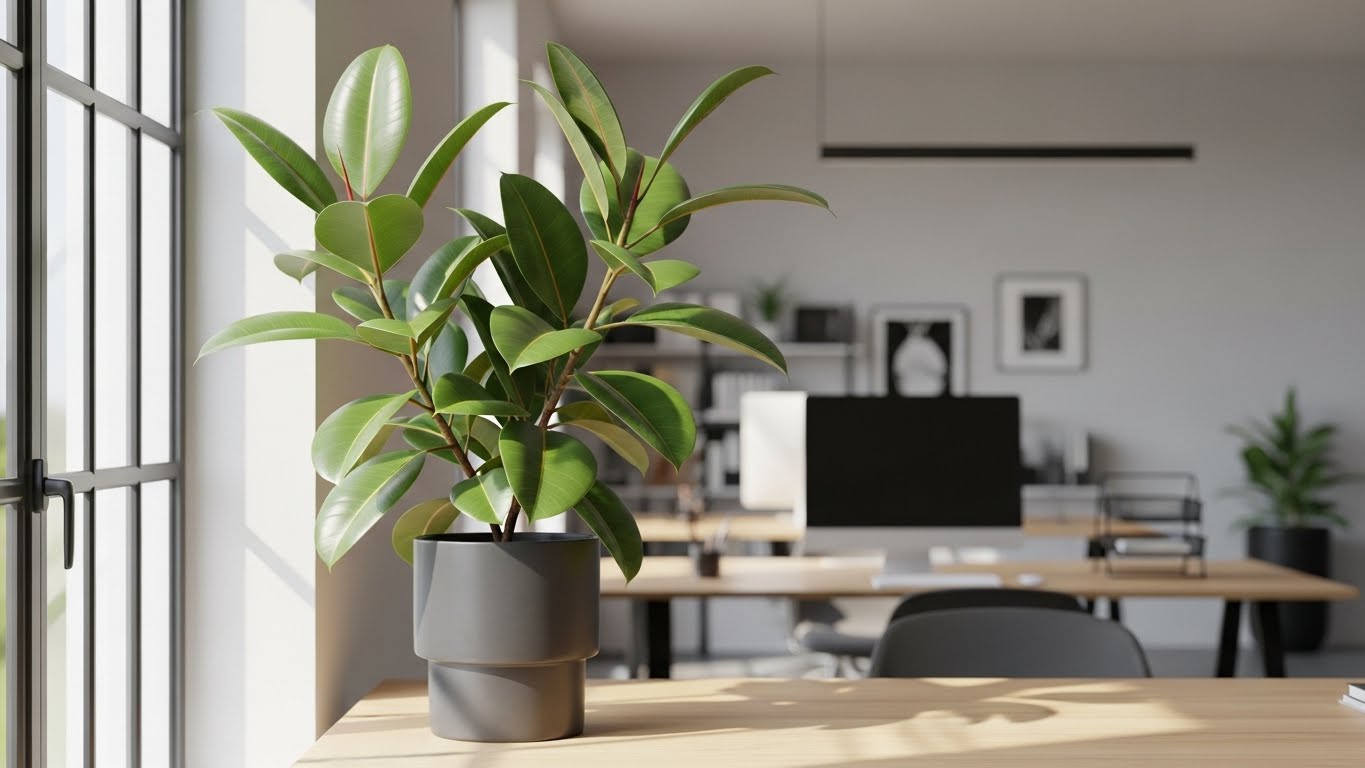
Rubber plants are perfect for offices because they’re low-maintenance, stylish, and boost morale! Their large leaves clean the air, making your workspace healthier. Plus, they add vibrant color and a calming vibe that can inspire creativity. Position them near windows or in cozy corners, and watch as your office transforms. With simple care like watering when the soil’s dry, these plants thrive effortlessly. Curious about more tips for care and placement? You’re in for a treat!
Key Takeaways
- Rubber plants enhance office aesthetics with their vibrant leaves and unique shapes, creating a welcoming atmosphere for employees.
- They require minimal care, thriving in low-light conditions and needing watering only when the topsoil is dry.
- Rubber plants purify the air by filtering toxins like formaldehyde, improving overall employee wellbeing and productivity.
- Grouping multiple rubber plants or using decorative pots adds visual interest and fosters a collaborative environment among team members.
- Regular monitoring for pests and maintaining proper humidity levels are key for keeping rubber plants healthy in office settings.
Benefits of Rubber Plants in the Office
When you think about bringing a bit of nature into your workspace, rubber plants might just be the perfect choice! These lovely plants offer numerous rubber plant benefits that can enhance your office wellness. First, they’re easy to care for, making them ideal for busy environments. You won’t have to fuss over them constantly! Their large, glossy leaves not only add beauty but also create a calming atmosphere, reducing stress and boosting your mood. Plus, rubber plants can inspire creativity, helping you think outside the box. By incorporating these green companions into your workspace, you’re not just decorating; you’re actively fostering a healthier, more vibrant environment that promotes productivity and well-being. Embrace the rubber plant revolution today! Additionally, understanding their light requirements ensures that these plants thrive in your office setup.
Enhancing Air Quality With Rubber Plants
Rubber plants do more than just brighten up your office; they also play a significant role in enhancing air quality! These beautiful plants are champions of air purification, helping to filter out harmful toxins like formaldehyde and benzene. By adding a rubber plant to your workspace, you’re not only creating a more inviting atmosphere but also taking steps toward healthier air.
Their thick, glossy leaves efficiently absorb these pollutants, promoting toxin removal and making your environment fresher. Plus, they’re relatively low-maintenance, so you can enjoy the benefits without too much hassle. Imagine breathing in cleaner air while you work, all thanks to your new green friend! With a rubber plant, you’re investing in both your space and your well-being.
Boosting Employee Morale Through Greenery
How can a few plants in your office truly uplift the mood of your team? Incorporating rubber plants can be a simple yet effective way to boost employee engagement. Research shows that greenery in the workplace helps reduce stress and creates a calming environment. This natural touch can greatly enhance workplace productivity, making employees feel more connected and motivated. When your team sees vibrant plants around them, it sparks a sense of well-being and happiness, encouraging collaboration and creativity. Plus, caring for plants together can foster teamwork, turning a mundane task into a fun, shared experience. So, why not bring some green into your office? It might just be the boost your team needs to thrive!
Aesthetic Appeal: The Visual Impact of Rubber Plants
Bringing a touch of nature indoors can transform an ordinary workspace into a vibrant and inviting environment, and rubber plants are an excellent choice for this. Their rich rubber plant colors, ranging from deep greens to striking variegated patterns, can add life to any room. The unique foliage shapes—broad, glossy leaves with a slightly wavy edge—create visual interest that captures attention and sparks conversation. You’ll find that rubber plants not only enhance the aesthetic appeal of your office but also contribute to a calming atmosphere. Placing them near windows or in corners can make your space feel more open and welcoming. So, if you’re looking to elevate your workspace, consider adding these stunning plants for a delightful visual impact.
Low Maintenance Requirements of Rubber Plants
Many people love the vibrant look of rubber plants, but what makes them even more appealing is how easy they are to care for. With their low maintenance requirements, you’ll find that these plants thrive with minimal effort. Rubber plants enjoy a little sunlight and only need watering when the topsoil feels dry, making them perfect for busy schedules. Their resilient growth means they can bounce back from occasional neglect, so you don’t have to stress if you forget to tend to them for a bit. Plus, they can adapt to different environments, making them a great fit for your office space. With just a bit of love, your rubber plant will flourish and bring joy to your workspace!
Ideal Lighting Conditions for Rubber Plants
When it comes to lighting, rubber plants thrive in bright, indirect sunlight, so you’ll want to place yours near a window that lets in plenty of light without exposing it to harsh rays. Too much direct sunlight can scorch their leaves, turning them brown and crispy, which isn’t the look you’re going for. Finding that perfect spot in your office where your rubber plant can soak in the light without getting burnt is key to keeping it healthy and happy!
Natural Light Preferences
Have you ever wondered what kind of light your rubber plant craves to thrive in your office? These lovely plants prefer bright, indirect light, which helps them flourish and develop strong growth patterns. While they can tolerate low light, their leaves might lose that vibrant shine you adore. Aim for a spot where light intensity is just right—too little light can stunt their growth, while too much can harm them. Think about placing your rubber plant near a bright window, but not directly in sunlight. This balance will keep your plant happy and healthy, showcasing its beautiful foliage while making your workspace feel more inviting. Just give it the right light, and watch it thrive!
Avoiding Direct Sunlight
To guarantee your rubber plant stays vibrant and healthy, it’s crucial to avoid direct sunlight, which can scorch its beautiful leaves and hinder its growth. Instead, aim for bright, indirect lighting. This kind of light mimics the plant’s natural habitat, allowing it to thrive without the risk of leaf damage. Position your rubber plant near a window, but use sheer curtains or place it a few feet away to ascertain it receives just the right amount of light. This setup not only provides the essential indirect lighting but also offers your plant the leaf protection it craves. With a little care and attention to its lighting needs, your rubber plant will flourish, bringing life to your office space!
Watering Guidelines for Optimal Growth
When it comes to caring for your rubber plant, watering is key to its growth and importance. You’ll want to pay attention to how often you water, the signs that you might be giving it too much, and the best methods to keep it happy. Let’s jump into these watering guidelines to guarantee your rubber plant thrives in your office space!
Frequency of Watering
Watering your rubber plant regularly is essential for its health and growth, and it’s often surprising how much a little attention can go a long way! To find the right watering frequency, check the soil moisture. Stick your finger about an inch into the soil; if it feels dry, it’s time to water. Typically, you’ll want to water your rubber plant every 1-2 weeks, but this can vary based on temperature and humidity levels in your office. During the warmer months, you might need to water more frequently, while in winter, you might extend the intervals. Remember, knowing your plant’s needs helps it thrive and keeps your workspace vibrant and lively!
Signs of Overwatering
Recognizing the signs of overwatering is just as important as knowing when to give your rubber plant a drink. If you notice yellowing leaves, that’s a classic overwatering symptom; they might even feel mushy. Another telltale sign is leaf drop—if your plant starts shedding leaves unexpectedly, it’s a cry for help. You might also see brown spots on the leaves, which can indicate drainage issues. Always check the soil; if it’s soggy and doesn’t dry out, your plant’s roots could be drowning. Remember, a happy rubber plant thrives in well-draining soil, so be mindful of your watering routine. By keeping an eye out for these signs, you can help your plant bounce back and flourish!
Ideal Watering Method
To guarantee your rubber plant thrives, it’s essential to follow a consistent watering schedule that promotes healthy growth. Start by checking the moisture levels in the soil; when the top inch feels dry, it’s time to water. Use techniques like the “soak and dry” method—water thoroughly until it drains from the bottom, then let the soil dry out before the next watering. This helps prevent overwatering and encourages strong roots. In the warmer months, you may need to water more often, while in winter, reduce frequency. Keep an eye on your plant’s leaves; they’ll let you know if something’s off. With these watering techniques, your rubber plant will flourish, bringing life and vibrancy to your office!
Soil Recommendations for Rubber Plants
Choosing the right soil for your rubber plant can make all the difference in its growth and health. You’ll want to select a well-draining mix that supports those vibrant leaves. Look for soil types that include peat moss, perlite, or vermiculite, as they help retain moisture while allowing excess water to escape. This balance is essential for preventing root rot, which can happen if your plant sits in soggy soil. A good rule of thumb is to guarantee your pot has drainage holes, enhancing soil drainage and keeping your rubber plant happy. Remember, the right soil not only nurtures your plant but also boosts its resilience, making your office a greener, more inviting space.
Temperature and Humidity Preferences
When it comes to keeping your rubber plant thriving in the office, temperature and humidity play crucial roles in its overall health. To create the perfect environment for your plant, consider these preferences:
- Temperature Preferences: Rubber plants enjoy temperatures between 60°F to 75°F (15°C to 24°C).
- Avoid Drafts: Keep your plant away from cold drafts or sudden temperature changes, which can stress it out.
- Humidity Levels: Aim for humidity levels around 40% to 60%.
- Misting: If your office air is dry, misting your plant can help maintain that ideal humidity.
Common Pests and Diseases to Watch For
When caring for your rubber plant, it’s important to keep an eye out for common pests and diseases that might sneak up on you. You might spot tiny bugs like spider mites or mealybugs, which can cause big problems if left unchecked. Additionally, watch for signs of disease, such as yellowing leaves or spots, as these symptoms can indicate that your plant needs some extra TLC.
Common Pests Identified
While rubber plants can brighten up your office space, they can also attract some unwelcome guests. Keeping an eye on these common pests is essential for effective pest management. Here are four critters you might encounter:
- Spider Mites: Tiny and often hard to see, they suck sap from leaves, causing discoloration.
- Mealybugs: These cottony pests cling to stems and leaves, creating a sticky mess.
- Scale Insects: They attach to the plant’s surface, resembling small bumps and weakening your plant over time.
- Aphids: Small and green or black, they can multiply quickly, leading to leaf curling.
Using natural repellents can help deter these pests, keeping your rubber plant happy and thriving. Regular checks and care will go a long way!
Disease Symptoms to Monitor
To keep your rubber plant looking its best, it’s essential to stay alert for any signs of disease that could harm its health. Regular monitoring symptoms is key to disease identification. Watch for yellowing leaves, as this often indicates overwatering or root rot. If you see dark spots or wilting, your plant might be battling a fungal infection. Sticky residue on leaves? That could be a sign of pests like aphids or mealybugs. Don’t forget to check for webbing, which suggests spider mites might be lurking. By staying vigilant and addressing these issues promptly, you’ll help your rubber plant thrive and bring vibrant energy to your office space. Enjoy the journey of plant care!
Tips for Pruning and Shaping Your Rubber Plant
Pruning and shaping your rubber plant can transform it into a stunning centerpiece for your office, so don’t be afraid to get your hands a little dirty! Here are some effective pruning techniques and shaping methods to help you along the way:
- Start with clean tools: Use sharp, sterile scissors to avoid damaging the plant or introducing diseases.
- Remove dead leaves: Snip off any yellow or brown leaves to promote healthy growth.
- Shape the plant: Cut back overly long stems to encourage bushier growth and create a more balanced look.
- Pinch new growth: For a fuller appearance, pinch off the tips of new shoots regularly.
Best Locations for Rubber Plants in the Office
Have you ever wondered where the best spots are to place a rubber plant in your office? Choosing the right location can enhance your work environment and promote well-being. Here are some ideal office placements for those lovely rubber plant arrangements:
Light Level | Best Placement | Benefits |
|---|---|---|
Bright Indirect | Near a window | Promotes growth and energy |
Low Light | Corner of your office | Adds greenery without needing much light |
Moderate Light | On your desk or a shelf | Boosts mood and productivity |
Humid Areas | Near a water source | Keeps leaves healthy and lush |
Creative Ways to Display Rubber Plants
Rubber plants can transform any office space into a vibrant oasis, sparking creativity and joy. To make the most of these beautiful plants, try out some creative arrangements that showcase their elegance:
- Group Display: Arrange multiple rubber plants of varying heights in decorative pots, creating a mini jungle effect.
- Hanging Planters: Use macramé hangers to suspend smaller rubber plants from the ceiling, adding a playful touch.
- Corner Statement: Position a tall rubber plant in a stylish floor pot in an empty corner, making a bold statement.
- Desk Companion: Place a small rubber plant in a cute decorative pot on your desk, bringing a bit of nature to your workspace.
These ideas will surely breathe life into your office!
The Role of Rubber Plants in Biophilic Design
Rubber plants play a big role in biophilic design, which focuses on bringing nature into indoor spaces. They enhance natural aesthetics with their lush green leaves, making your office feel more inviting and lively. Plus, they help improve indoor air quality and promote employee wellbeing, creating a healthier and happier work environment for everyone.
Enhancing Natural Aesthetics
Incorporating plants into office spaces not only brightens the environment but also plays an essential role in biophilic design, which seeks to connect people with nature. Rubber plants enhance your workspace’s natural decor, creating visual harmony that soothes the mind and inspires creativity. Here are some ways they can elevate your office:
- Softens hard edges: The lush leaves of rubber plants contrast beautifully with sharp furniture, bringing warmth to your space.
- Adds texture: Their glossy leaves introduce a tactile element that makes your environment feel more inviting.
- Creates focal points: A strategically placed rubber plant draws the eye and adds interest to your decor.
- Encourages a calming atmosphere: The greenery promotes relaxation, making your workspace more enjoyable.
With rubber plants, you’re not just decorating; you’re nurturing a connection to nature that enriches your daily experience.
Improving Indoor Air Quality
While many office workers might not realize it, the air inside your workspace can often be more polluted than the air outside. Rubber plants are fantastic allies in improving indoor air quality through their natural air purification abilities. These green beauties work tirelessly to filter out toxins like formaldehyde and benzene, making your environment healthier. By incorporating a rubber plant into your office, you’re not just adding a touch of nature; you’re also enhancing toxin removal, creating a fresher atmosphere where you can thrive. Plus, they’re low-maintenance, which means you can enjoy their benefits without a lot of effort. So, why not invite a rubber plant into your workspace? Your lungs will thank you!
Promoting Employee Wellbeing
When you think about making your office a better place to work, adding a touch of nature can really boost employee wellbeing. Rubber plants can enhance your workspace in several ways, leading to increased employee satisfaction and workplace productivity. Here’s how they help:
- Stress Reduction: Their lush green leaves create a calming environment, reducing anxiety levels.
- Enhanced Creativity: The natural beauty of rubber plants can inspire innovative ideas.
- Improved Focus: Being around plants helps you concentrate better on tasks.
- Connection to Nature: This connection can foster a sense of tranquility, making the workspace more inviting.
Incorporating rubber plants into your office isn’t just about aesthetics; it’s a step towards nurturing a healthier, happier workplace.
Conclusion
Incorporating rubber plants into your office isn’t just about adding a splash of green; it’s like inviting a refreshing change into your workspace. These vibrant plants purify the air, lift spirits, and create a welcoming atmosphere. With their low maintenance needs, you don’t have to be a gardening expert to enjoy their benefits. So, grab a rubber plant, find the perfect spot, and watch your office transform into a lively, inspiring environment that everyone will love!


