
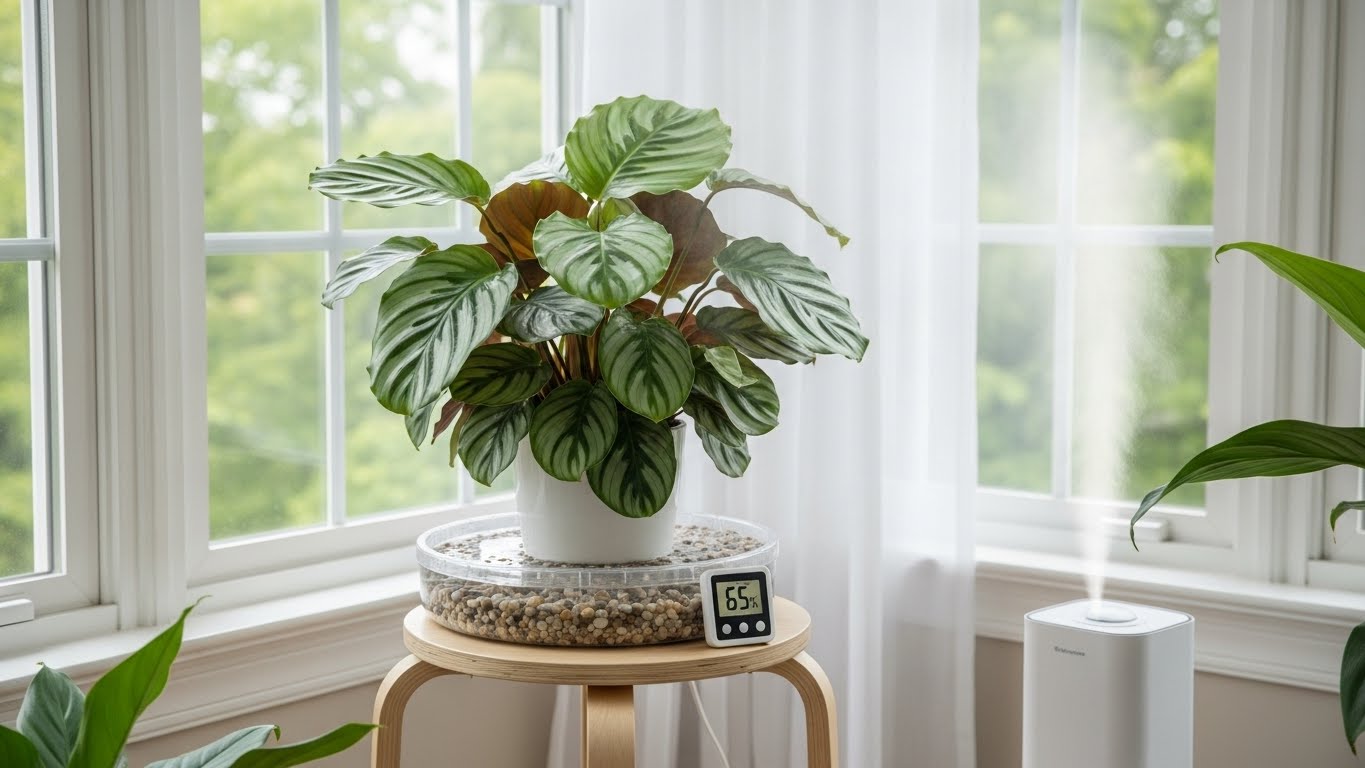
To care for your Calathea, remember a few key points! They thrive in bright, indirect light and should be kept in temperatures of 65°F to 80°F (18°C to 27°C). Water them once a week, making sure the soil stays moist but not soggy. Use a mix of peat moss, coconut coir, and perlite for the best soil. Keep humidity levels around 50-60%. With some attention and love, your Calathea will flourish! Discover more tips and tricks to guarantee your plant’s vibrant health!
Key Takeaways
💡 If you’re new to Calathea care, this guide is perfect for you.
➜ Get the step-by-step guide
- Calathea thrives in bright, indirect sunlight with about 12 hours of light exposure daily; avoid direct sunlight to prevent leaf burn.
- Water weekly, ensuring soil retains moisture without becoming soggy; check moisture levels by inserting a finger an inch deep.
- Use a well-draining, moisture-retaining soil mix with peat moss, coconut coir, and perlite to promote healthy root growth.
- Maintain humidity levels between 50% and 60% using misting, pebble trays, or humidifiers to support vibrant foliage.
- Fertilize during the growing season with liquid fertilizer every 4-6 weeks and organic options every 6-8 weeks for optimal health.
Understanding Calathea Varieties
When it comes to Calathea varieties, do you know just how many stunning options there are? Each type boasts unique Calathea characteristics, from vibrant colors to intricate patterns on their leaves. You might be drawn to the striking Calathea ornata with its pink stripes, or perhaps the bold leaves of the Calathea medallion excite you. Understanding these differences helps you choose the perfect plant for your home. Plus, if you’re enthusiastic about expanding your collection, Calathea propagation is a rewarding journey! You can easily propagate these beauties through division, ensuring each new plant inherits those lovely traits. To ensure their vibrant leaves thrive, it’s essential to mimic their rainforest microclimate during care. So, plunge into the world of Calathea varieties, and let your green thumb flourish with these enchanting plants!
Ideal Light Conditions for Calatheas
To keep your Calatheas thriving, it’s essential to provide them with the right light conditions. These beautiful plants love natural light but prefer it in the form of indirect sunlight. Aim for moderate light intensity, and be mindful of window placement; too much direct sunlight can scorch their leaves. During the day, they enjoy about 12 hours of light exposure, so consider seasonal lighting changes that may affect them. If natural light isn’t enough, you can use artificial lighting to supplement their needs. Just remember, Calatheas thrive best in bright, filtered light, so adjusting their environment helps them flourish. By understanding their light preferences, you’ll create a cozy spot where your Calatheas can dance and thrive!
Watering Guidelines for Healthy Growth
Watering your Calathea correctly is key to keeping it healthy and vibrant. You’ll want to establish a consistent watering frequency, usually about once a week, but always check the soil first. Stick your finger about an inch deep; if it feels dry, it’s time to water. Calatheas love moisture retention, so make sure the potting mix holds onto some water without becoming soggy. When you water, do it thoroughly, allowing water to drain from the bottom. This helps prevent root rot, which can be detrimental to your plant. Keep an eye on the leaves, too! If they start curling or browning, it might be a sign you need to adjust your watering routine. Happy watering!
Choosing the Right Soil Mix
Choosing the right soil mix for your Calathea is essential for its health and growth. You’ll want to take into account the soil composition, ensuring it retains moisture while allowing excess water to drain away, which is important for preventing root rot. Plus, don’t forget to check the pH level, as Calatheas prefer slightly acidic conditions to thrive!
Soil Composition Essentials
When it comes to growing healthy Calatheas, the right soil mix is essential for their success and happiness. You want a blend that guarantees a good soil nutrient balance, rich in organic matter. Here’s what to look for:
- Peat Moss: This helps retain moisture while providing essential nutrients.
- Coconut Coir: It’s great for aeration and adds organic matter to your mix.
- Perlite or Orchid Bark: This improves drainage, preventing root rot.
Combining these ingredients creates a cozy environment for your Calatheas, allowing them to thrive. Remember, a well-balanced soil mix not only supports growth but also keeps your plants vibrant and lush. Choose wisely, and watch your Calatheas flourish!
Drainage Importance
While it might seem like a small detail, having the right drainage in your Calathea’s soil mix can make a big difference in how well your plant grows. You’ll want to choose a soil that allows excess water to escape easily, as this helps prevent root rot. Incorporate drainage techniques like mixing in perlite or orchid bark to create a light, airy texture. Don’t forget about pot selection! A pot with drainage holes is essential, allowing water to flow out and keeping your plant’s roots happy. Remember, a well-drained soil mix helps maintain the right balance of moisture, so your Calathea can thrive in its cozy home. Happy planting!
Ph Level Considerations
Understanding the pH level of your Calathea’s soil is essential for keeping your plant healthy and vibrant, as it directly affects nutrient availability. A balanced pH helps with root health and moisture retention, guaranteeing your plant thrives. Here’s how to choose the right soil mix:
- pH Testing: Regularly check your soil’s pH. Aim for a level between 6.0 and 7.0, which is ideal for Calatheas.
- Soil Amendments: If the pH is off, consider adding amendments like peat moss or lime to adjust plant acidity.
- Nutrient Availability: Proper pH guarantees your Calathea can access nutrients efficiently, promoting lush foliage and vibrant colors.
With the right soil choices, your Calathea will flourish beautifully!
Maintaining Optimal Humidity Levels
How can you keep your Calathea happy and thriving? Maintaining ideal humidity levels is key! These plants adore humidity, ideally between 50% and 60%. Start with humidity monitoring; you can use a simple hygrometer to check the air around your plant. If it’s too dry, consider adding humidity sources. Misting your Calathea daily is one option, but a pebble tray filled with water or a humidifier can work wonders too. Grouping your plants together can also help create a mini rainforest effect! Just remember, keeping the leaves dry while providing moisture is essential. With a little attention to humidity, you’ll see your Calathea flourish and display those gorgeous, vibrant leaves!
Temperature Requirements for Calatheas
When it comes to keeping your Calatheas happy, temperature is key! These plants thrive best in a cozy range between 65°F and 80°F, so it’s important to keep an eye on how much the temperature swings throughout the day. As the seasons change, don’t forget to adjust their surroundings to guarantee they stay comfortable and healthy!
Ideal Temperature Range
Calatheas thrive best in a cozy environment, so it’s crucial to keep their temperature between 65°F and 80°F (18°C to 27°C). These plants are quite sensitive to temperature changes, and maintaining the ideal temperature guarantees they flourish. Here are some tips to help you create the perfect atmosphere:
- Avoid drafty areas: Keep your Calathea away from windows or doors that might let in cold air.
- Watch out for heat sources: Stay clear of radiators or heaters that might raise the temperature too high.
- Use a thermometer: Regularly check the temperature around your plant to make sure it stays in that sweet spot.
Temperature Fluctuations Impact
💡 Humidity is crucial for Calathea health. Learn how to maintain the right levels.
➜ Discover proven techniques
Temperature fluctuations can throw a wrench in your Calathea’s happiness, so it’s important to keep a close eye on their environment. These beautiful plants thrive best when you provide them with temperature stability. Rapid temperature changes can stress them out, leading to wilting leaves or browning tips. Aim to keep your Calathea in a cozy spot where the temperature stays between 65°F and 80°F. Sudden drafts from windows or heating vents can be particularly harmful, so be mindful of those sneaky cold spots. You want your Calathea to feel safe and comfortable, just like you would in your favorite cozy blanket. By maintaining a stable temperature, you’re setting your plant up for a joyful life!
Seasonal Temperature Adjustments
💡 Watering can make or break your Calathea’s health. Get insights on the perfect watering schedule.
➜ Master this approach
As the seasons change, so do the temperature needs of your beloved Calathea. To keep your plant thriving, you’ll need to make some seasonal adjustments to meet its temperature preferences. Here’s what you should consider:
- Spring and Summer: Aim for temperatures between 65°F and 80°F (18°C to 27°C). Your Calathea loves warmth but avoid direct sunlight.
- Fall: Gradually lower the temperature to around 60°F to 75°F (15°C to 24°C). This helps prepare your plant for winter.
- Winter: Keep it cozy! Aim for a minimum of 60°F (15°C) to prevent stress, while ensuring it’s away from chilly drafts.
Fertilizing Your Calathea
When it comes to keeping your Calathea vibrant and healthy, understanding how to fertilize it is key. To give your lovely plant the nutrients it craves, you should choose the right fertilizer types and stick to a consistent feeding schedule.
Here’s a simple table to help you out:
Fertilizer Type | When to Apply | Frequency |
|---|---|---|
Liquid Fertilizer | During growing season (spring/summer) | Every 4-6 weeks |
Slow-Release Fertilizer | At the start of growing season | Once every 3 months |
Organic Fertilizer | Anytime, as needed | Every 6-8 weeks |
With this guide, you’ll nourish your Calathea and watch it thrive. Happy planting!
Common Pests and How to Manage Them
While Calatheas are known for their stunning foliage, they can sometimes attract pesky pests that might threaten their beauty. To keep your plants vibrant, focus on these key strategies:
- Pest Identification: Regular inspections help you spot issues early, like spider mites or aphids.
- Natural Remedies: Consider using neem oil or insecticidal soap as gentle, effective solutions that won’t harm your plant.
- Preventative Measures: Moisture management is essential; keep humidity high and rotate plants to enhance their habitat, reducing pest risks.
Pruning and Propagation Techniques
Pruning your Calathea isn’t just about keeping it tidy; it’s an essential step in promoting healthy growth and enhancing its vibrant leaves. Start by using sharp, clean scissors to remove any yellow or damaged leaves, which helps the plant focus its energy on new growth. You can also trim back leggy stems to encourage bushier foliage.
For propagation methods, consider dividing your Calathea during repotting. Gently separate the root ball into sections, ensuring each has roots and leaves. Replant these sections in fresh soil, and watch them thrive in their new homes. Regular pruning and propagation not only keep your Calathea looking its best but also deepen your connection with this beautiful plant. Enjoy the journey!
Signs of Stress and How to Address Them
Calathea plants can be sensitive, so spotting signs of stress early is crucial to keeping them healthy and vibrant. Watch for these stress indicators that may signal your plant needs your attention:
- Brown edges on leaves – This could mean it’s too dry or the humidity is too low.
- Yellowing leaves – Often a sign of overwatering or inadequate light.
- Wilting or drooping – Your Calathea may need more water or a better environment.
Address these issues with simple recovery techniques. Increase humidity levels by misting or using a pebble tray, adjust your watering schedule, and verify it gets indirect light. With a little care, your Calathea will bounce back and thrive!
Seasonal Care Tips for Calatheas
As the seasons change, so do the needs of your Calatheas, making it essential to adjust your care routine. During winter, you’ll want to protect them from cold drafts while ensuring they get enough humidity, while summer calls for promoting their growth with brighter light and regular watering. Let’s explore these seasonal strategies to keep your Calatheas thriving all year long!
Winter Care Strategies
When the cold winter months arrive, your Calatheas need a little extra love to thrive, so it’s important to adjust your care routine accordingly. They might enter a bit of winter dormancy, slowing down their growth. Here are some key strategies for winter care:
- Light: Keep your Calatheas in a bright spot, but avoid direct sunlight, which can scorch their leaves.
- Watering: Reduce winter watering; let the top inch of soil dry out between waterings to prevent overwatering.
- Humidity: Maintain humidity levels by misting your plants or placing a humidifier nearby to keep them comfortable.
With these strategies, your Calatheas will stay happy and healthy throughout the winter!
Summer Growth Encouragement
After the winter chill fades away, your Calatheas will start to perk up and grow again, making summer the perfect time to encourage their vibrant growth. To boost their health, consider summer feeding with a balanced liquid fertilizer. This will provide essential nutrients and enhance growth stimulation. Use a diluted solution every four to six weeks, making certain you’re not over-fertilizing, as that can harm your plants. Pay attention to their watering needs, too—keep the soil moist but not soggy. Also, make sure they get bright, indirect light to thrive. With these simple steps, your Calatheas will flourish, showcasing their beautiful leaves and vibrant colors all summer long. Enjoy watching them thrive!
Conclusion
Taking care of your Calathea can feel like a walk in the park, as long as you follow the right steps! By providing the perfect light, water, soil, and humidity, you’ll create a happy home for your plant. Remember, just like a knight wouldn’t forget their armor before a quest, don’t overlook the signs of stress or pests. With a little attention and love, your Calathea will thrive and bring beauty to your space for years to come!
💡 Is your Calathea showing signs of distress? Learn how to identify and remedy common issues.
➜ Explore advanced methods


