
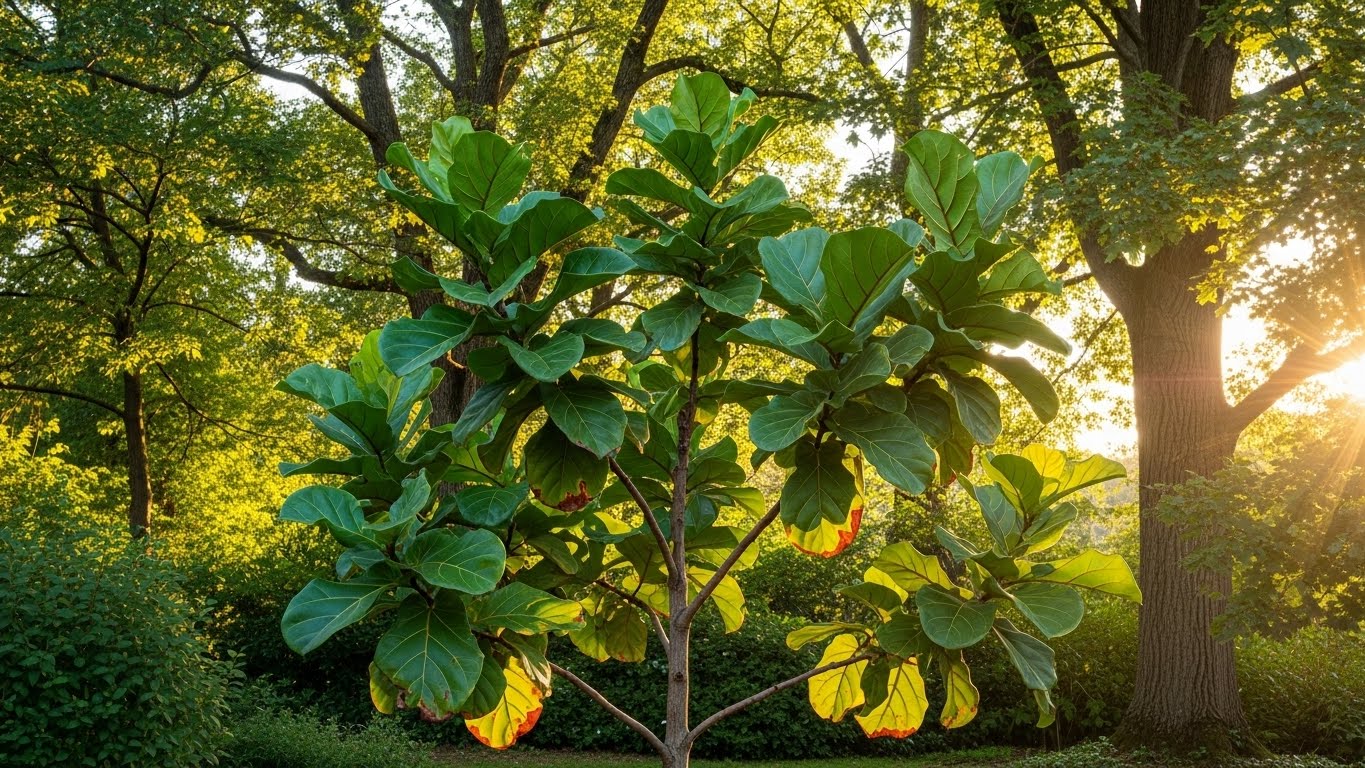
Yes, fiddle leaf figs can live outside, but you need to keep a few things in mind! They love bright, indirect sunlight and temperatures between 60°F and 75°F, so avoid chilly weather and direct afternoon sun. Humidity is key, ideally between 40% and 60%. Always check for pests and guarantee good drainage. As seasons change, pay attention to their needs and signs of stress, like drooping leaves. Let’s explore even more ways to keep your fiddle leaf fig thriving!
Key Takeaways
💡 If you’re new to caring for fiddle leaf figs, this guide offers essential tips and tricks.
➜ Get the step-by-step guide
- Fiddle Leaf Figs can thrive outdoors if protected from frost and extreme temperatures, ideally in temperatures between 60°F and 75°F.
- They prefer bright, indirect sunlight for 6-8 hours daily, with some shade during the hottest parts of the day.
- Gradually acclimate Fiddle Leaf Figs to outdoor conditions to prevent stress and monitor for signs like drooping leaves.
- Ensure the soil remains moist but not soggy, allowing the top inch to dry before watering to avoid root rot.
- Regular pest checks are crucial in outdoor settings; use insecticidal soap or neem oil for treatment if pests are detected.
Understanding Fiddle Leaf Fig Basics
When you think about bringing a touch of nature into your outdoor space, Fiddle Leaf Figs are a fantastic option that can really brighten things up. These popular houseplants can thrive outside with the right fiddle leaf fig care. They love bright, indirect sunlight, so placing them in a partially shaded area can promote healthy fiddle leaf fig growth. You’ll want to keep the soil moist but not soggy, as these plants can be sensitive to overwatering. Remember to check for pests regularly, since outdoor environments can attract unwanted visitors. With a little love and attention, your Fiddle Leaf Fig can flourish in your garden or patio, adding that vibrant, lush feel you desire. Additionally, ensure that you maintain adequate drainage holes in the pots to prevent water pooling, which is essential for healthy root systems.
Ideal Temperature Conditions
Fiddle Leaf Figs can really shine in your outdoor space, but they also have specific temperature needs to thrive. Ideally, you want to keep them in temperature ranges between 60°F and 75°F. These lovely plants can tolerate slightly cooler temperatures, but anything below 50°F can lead to frost damage, which could harm their beautiful leaves. If temperatures dip too low, you might notice brown spots or wilting, signaling distress. When summer hits and the heat rises, make certain they’re shaded from intense sun during the hottest parts of the day. By paying attention to these temperature guidelines, you’ll help your fiddle leaf figs flourish and stay healthy, creating a vibrant addition to your garden.
Humidity Requirements
When it comes to humidity, Fiddle Leaf Figs have some specific needs that you should know about. They thrive in humidity levels between 30% and 65%, which can be tricky to maintain outdoors compared to indoors. Understanding these differences will help you create the perfect environment for your fig to flourish!
Ideal Humidity Levels
To keep your fiddle leaf fig thriving outdoors, it’s essential to pay attention to humidity levels, as these plants flourish in a humid environment. Ideally, you want humidity levels between 40% and 60% to keep your plant happy. If you notice humidity fluctuations, don’t fret—there are ways to help. You can place your fiddle leaf fig near natural humidity sources like fountains or group it with other plants to create a mini-ecosystem. Misting the leaves occasionally can also boost humidity, especially during dry spells. If you live in a particularly dry area, consider using a humidifier to maintain those ideal conditions. With the right humidity, your fiddle leaf fig will thrive and bring joy to your outdoor space!
Outdoor vs. Indoor Humidity
While both outdoor and indoor environments can support the growth of a fiddle leaf fig, their humidity levels often differ markedly. Outdoor humidity tends to be more consistent and can provide the moisture your plant craves, especially in warmer months. This is essential because fiddle leaf figs thrive in humidity levels above 50%. On the other hand, indoor humidity can fluctuate considerably due to heating or air conditioning, which might leave your plant feeling parched. To keep your fiddle leaf fig happy indoors, consider using a humidifier or placing a pebble tray filled with water nearby. Remember, balancing these humidity levels is key to ensuring your plant thrives, whether it’s indoors or outdoors!
Sunlight Exposure Preferences
When it comes to sunlight exposure, fiddle leaf figs have some specific preferences that you’ll want to take into account for their outdoor happiness. They thrive best in bright, indirect light, but they can tolerate a bit of shade, especially during those scorching summer days. Finding the right balance will help your plants flourish and keep those gorgeous leaves healthy!
Ideal Sunlight Conditions
Fiddle Leaf Figs thrive best when they get just the right amount of sunlight, and understanding their sunlight exposure preferences can make a huge difference in how well they grow. These beautiful plants love bright, indirect light but can’t handle harsh, direct sunlight for long. You’ll want to aim for about 6 to 8 hours of sunlight daily, ensuring they soak up that lovely light intensity without burning their leaves.
Here’s a quick guide to help you:
Light Intensity | Sunlight Duration |
|---|---|
Bright, Indirect Light | 6-8 hours daily |
Direct Morning Light | 4-6 hours daily |
Low Light Conditions | Less than 4 hours |
Shade Tolerance Levels
Understanding shade tolerance levels is just as important as knowing how much sunlight your Fiddle Leaf Fig needs. These plants thrive best in bright, indirect light, but they can adapt to some shade varieties, especially during the hotter months. If you’re placing your Fiddle Leaf Fig outdoors, consider partial shade, as too much direct sunlight can scorch its leaves. Over time, your plant can develop outdoor adaptations that help it handle varying light conditions. Just remember, while it can tolerate some shade, it won’t flourish without adequate light. If you notice yellowing leaves, it might be a sign your plant needs more sun. Keep a close eye on it to guarantee it stays happy and healthy!
Acclimating Your Fiddle Leaf Fig to Outdoor Conditions
Acclimating your Fiddle Leaf Fig to outdoor conditions can be a fun adventure, and it’s essential to do it gradually to guarantee your plant thrives. Start the acclimation process by introducing your fig to the outdoors for just a few hours each day, then slowly increase the time spent outside. This outdoor adaptation helps your plant adjust to sunlight, wind, and temperature changes without shock.
Here are some tips to make the process smoother:
- Choose a shaded spot initially to ease your plant into brighter conditions.
- Monitor the weather to avoid extreme temperatures during the acclimation process.
- Look for signs of stress, like drooping leaves, and adjust exposure accordingly.
With patience, your Fiddle Leaf Fig will flourish outdoors!
Choosing the Right Outdoor Location
When it comes to choosing the right outdoor location for your Fiddle Leaf Fig, what factors should you consider to guarantee it thrives? First, think about microclimate factors like shade and wind protection. These plants love bright, indirect light, so placing them near a south-facing wall can assure they soak up the sun without getting scorched. Next, check the soil conditions. Well-draining soil is essential to prevent root rot, so avoid spots where water tends to pool. If your yard has a mix of sun and shade, try placing your fig in a slightly sheltered area that balances both. By carefully considering these elements, you’ll set your Fiddle Leaf Fig up for a happy, healthy outdoor life!
Potting Considerations for Outdoor Living
When it comes to potting your fiddle leaf fig for outdoor living, the pot size and drainage are essential factors you can’t overlook. A pot that’s too small can stunt your plant’s growth, while good drainage helps prevent waterlogged roots, which can be a recipe for disaster. By choosing the right pot and ensuring proper drainage, you’ll set your fiddle leaf fig up for a thriving outdoor life!
Pot Size Importance
Choosing the right pot size is essential when you’re getting ready to move your fiddle leaf fig outdoors. A well-sized pot not only enhances its beauty but also supports root health, allowing your plant to thrive in its new environment. You want to guarantee your fiddle leaf fig has enough room to grow without feeling cramped.
- Proper pot size encourages healthy root development.
- Larger pots retain more soil moisture, benefiting your plant.
- An appropriately sized pot reduces the risk of root rot.
Drainage Needs Assessment
Ensuring your fiddle leaf fig has proper drainage is essential for its health, especially when moving it outdoors. Without effective drainage solutions, water can accumulate, leading to root rot. Think about your soil composition—it should be well-aerated and provide the right balance of moisture retention and release.
💡 Understanding the specific needs of your fiddle leaf fig during winter is crucial for its health.
➜ Discover proven techniques
Drainage Solutions | Soil Composition |
|---|---|
Use pots with drainage holes | Mix of potting soil and perlite |
Add a layer of gravel | Incorporate organic matter |
Elevate the pot slightly | Use sandy soil for drainage |
Monitor during rain | Avoid heavy clay mixtures |
Test drainage regularly | Re-pot if needed |
Protection From Wind and Rain
To keep your fiddle leaf figs thriving outdoors, it’s essential to shield them from harsh wind and heavy rain, which can damage their broad leaves and weak stems. Setting up proper protection will create a cozy environment for your plants. Here are a few tips to take into account:
💡 If your fiddle leaf fig isn’t thriving indoors, it might be time to reevaluate its environment.
➜ Learn the complete strategy
- Use wind barriers: Position them near fences or walls to block strong gusts.
- Install rain covers: A simple tarp or outdoor umbrella can keep those heavy drops at bay.
- Create a sheltered spot: Find a location that’s naturally shielded, like under a tree or porch.
Seasonal Changes and Their Impact
As the seasons change, your fiddle leaf fig faces new challenges, like temperature fluctuations and varying sunlight exposure. These shifts can affect how well your plant grows, so it’s important to keep an eye on its needs throughout the year. By understanding these seasonal impacts, you can help your fiddle leaf fig thrive in its outdoor environment.
Temperature Fluctuations
Temperature fluctuations can greatly influence the health and growth of your fiddle leaf fig when kept outside, especially during seasonal changes. These plants have a certain temperature sensitivity, so it’s essential to reflect on how they’ll adapt outdoors. Sudden drops or rises in temperature can stress your tree, affecting its leaves and overall wellness.
To help your fiddle leaf fig thrive, keep these tips in mind:
- Gradual outdoor acclimation: Introduce your plant to outdoor conditions slowly.
- Monitor nighttime temperatures: Protect your fig if temperatures dip below 50°F (10°C).
- Shield from harsh winds: Position your plant where it’s sheltered from strong gusts.
Sunlight Exposure Variability
When you move your fiddle leaf fig outside, sunlight exposure becomes a key factor in its health and growth. The intensity of sunlight and the duration it shines on your plant can change dramatically with the seasons. In summer, longer days mean more light, but that intense sun can scorch your fiddle leaf fig if it’s not acclimated. During fall and winter, the sun’s angle lowers, providing softer, gentler rays. This reduced intensity can lead to slower growth, so make sure to adjust its placement. Try to give your plant a few hours of morning sun and some shade during the hottest parts of the day. By keeping an eye on these changes, you’ll help your fiddle thrive!
Pest Management for Outdoor Fiddle Leaf Figs
Pest management for outdoor fiddle leaf figs is crucial if you want your plants to thrive and look their best. Recognizing pests early can save your plants from significant damage. Start by regularly inspecting your leaves for any signs of trouble.
Here are some effective strategies to keep your fiddle leaf figs healthy:
- Pest Identification: Look for common pests like spider mites, aphids, or scale insects.
- Organic Treatments: Use natural solutions like neem oil or insecticidal soap to treat infestations without harming beneficial insects.
- Regular Maintenance: Keep your plants clean by gently wiping down the leaves to remove dust and pests.
Embracing these practices will guarantee your fiddle leaf figs stay vibrant and robust while enjoying their outdoor life!
Watering Practices for Outdoor Plants
Watering your outdoor fiddle leaf figs is vital for keeping them healthy and happy, especially since these plants thrive in specific conditions. To guarantee your figs flourish, consider their watering frequency. During warm months, you’ll likely need to water more often, while cooler weeks may require less. Always check the soil’s moisture before watering; if it’s dry an inch down, it’s time to give your plants a drink.
Don’t forget about drainage solutions! Proper drainage is essential to prevent root rot. You can use pots with holes or create a raised bed. By paying attention to these details, you’re setting up your fiddle leaf figs for a vibrant outdoor life, filled with sunshine and joy!
Signs of Stress in Fiddle Leaf Figs
Fiddle leaf figs are stunning plants that can brighten up any outdoor space, but they can show signs of stress if their needs aren’t met. Keeping an eye out for these signs helps you care for your beautiful plant:
Fiddle leaf figs enhance outdoor spaces but may show stress signs if not properly cared for.
- Leaf discoloration: Yellowing or browning leaves can indicate overwatering or nutrient issues.
- Drooping leaves: If the leaves start to droop, it might be thirsty or suffering from root rot.
- Pest infestation: Tiny bugs can wreak havoc, leading to slow growth and wilting stems.
You might also notice leaf drop or fungal issues if conditions aren’t ideal. By recognizing these stress signs early, you can take action and help your fiddle leaf fig thrive in its outdoor environment!
Transitioning Back Indoors
As the cooler months approach and temperatures begin to drop, it’s time to think about moving your beloved fiddle leaf fig back indoors. Start by choosing the right day for this change, ideally when the temperature is mild. This seasonal timing helps prevent shock, making indoor acclimation smoother for your plant.
Once inside, place your fiddle leaf fig in a bright spot, away from drafts. Keep an eye on the humidity levels; it might need a little extra moisture to adapt. If you notice any dropped leaves, don’t worry! This is normal as it adjusts to its new environment. With a little patience and care, your fiddle leaf fig will thrive indoors during the chilly months ahead.
Common Myths About Fiddle Leaf Figs Outdoors
When it comes to growing fiddle leaf figs outdoors, many people believe some common myths that can lead to confusion and even plant troubles. Let’s explore some myth debunking to clear the air about your fiddle leaf fig’s outdoor resilience:
- Fiddle Leaf Figs Can’t Handle Sun: They can thrive in bright, indirect light but may need some protection from harsh afternoon sun, especially in hotter climates.
- They’re Only Indoor Plants: While they prefer indoor conditions, with the right care, they can flourish outside during warm months.
- Watering Needs Don’t Change: They often need more water outdoors, especially in sunny spots, so keep an eye on their moisture levels.
Understanding these myths helps you care for your fiddle leaf fig, ensuring it thrives wherever it’s planted.
Expert Tips for Outdoor Care
To guarantee your fiddle leaf fig thrives outdoors, it’s essential to keep a few expert tips in mind. First, choose a spot that offers bright, indirect light—too much direct sunlight can scorch those beautiful leaves! Keep an eye out for fiddle leaf fig pests, like spider mites and mealybugs, and treat them promptly with insecticidal soap or neem oil. Don’t forget about outdoor plant nutrition; use a balanced fertilizer every few months to keep your plant healthy and vibrant. During cooler nights, consider bringing your fiddle leaf fig indoors to protect it from chilly temperatures. Finally, water wisely—let the top inch of soil dry out before watering again, ensuring your plant stays happy and hydrated!
Conclusion
In the garden of life, your fiddle leaf fig can thrive outdoors, but it needs the right conditions to flourish. By understanding its temperature, humidity, and sunlight preferences, you can create a cozy outdoor habitat for it during warmer months. Just like a butterfly evolving from a cocoon, your fig will need time to adjust. When the chill returns, gently bring it back inside, ensuring it continues to grow healthy and strong, ready to brighten your home once again!
💡 If your fiddle leaf fig is struggling to grow, understanding the reasons behind it can help you take action.
➜ See how to implement this


