
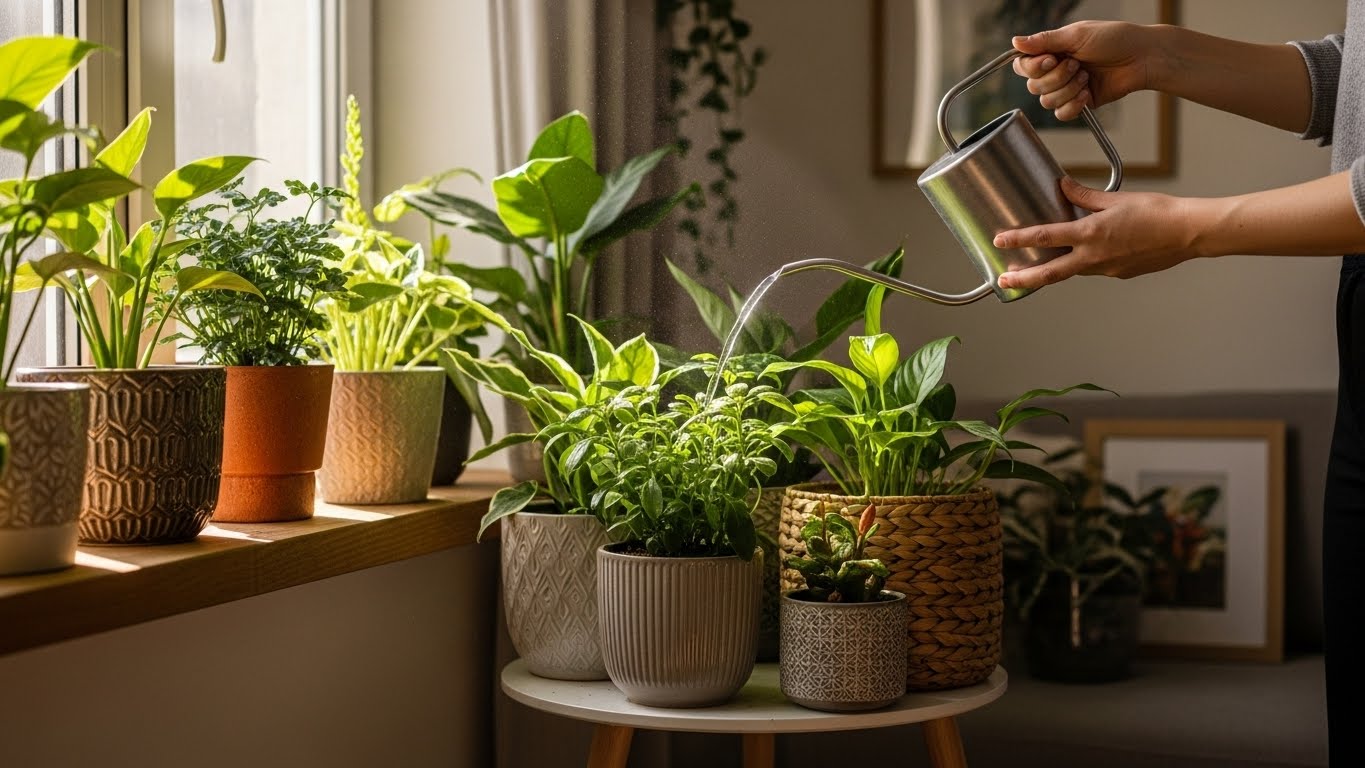
Using tap water for your indoor plants can be fine, but it’s important to know what’s in it. Tap water often contains chlorine and fluoride. While chlorine keeps the water safe, too much can harm your plants. Fluoride’s benefits are debated, as high levels might block nutrient uptake. Let your tap water sit for a few hours to help reduce chlorine. For more sensitive plants, consider rainwater or distilled water instead. Keep exploring to uncover all the ways to guarantee plant health!
Understanding Tap Water Composition
💡 Humidity plays a vital role in plant health. Discover why maintathisng the right levels is essential for your indoor garden.
➜ Understand the importance of humidity
When you turn on the tap to fill up your watering can, have you ever wondered what’s actually in that water? The reality is, your tap water is a mix of tap water minerals and chemical additives. These minerals, like calcium and magnesium, can be beneficial for your plants, helping them thrive. However, chemical additives, like chlorine and fluoride, are often included to keep the water safe for drinking, but they might not be ideal for your greenery. It’s important to know that while most plants can handle tap water, some might be sensitive to these chemicals. So, before you pour, consider letting the water sit for a bit, allowing some of those additives to dissipate, ensuring your plants get the best.
The Role of Chlorine in Tap Water
Though it might seem surprising, chlorine plays an essential role in keeping our drinking water safe, and that includes the water you use for your plants. This common disinfectant helps eliminate harmful bacteria, ensuring that the water you pour into your pots is clean and safe. However, too much chlorine exposure can affect your plants. Some varieties are more sensitive to chlorine, which can lead to leaf burn or stunted growth. If you notice your plant’s leaves turning brown or wilting, it might be worth considering the chlorine levels in your tap water. To minimize chlorine’s impact, you can let your water sit out for a few hours before using it, allowing some of the chlorine to evaporate.
Fluoride: Friend or Foe for Plants?
When it comes to fluoride, you might wonder if it’s helping or harming your plants. While some level of fluoride can be beneficial for growth, too much can lead to problems like leaf burn and stunted development. Let’s explore what safe levels look like and consider some alternative water sources that can keep your indoor plants thriving!
Effects on Plant Growth
Fluoride, a mineral often found in drinking water, has sparked quite a debate among plant enthusiasts: is it a helpful ally or a harmful foe for your indoor plants? While some studies suggest that fluoride can improve root development, others warn it might hinder nutrient absorption. You’ll want to keep an eye on how your plants react.
Effect | Positive Impact | Negative Impact |
|---|---|---|
Nutrient Absorption | Enhances root function | May block nutrient uptake |
Root Development | Stimulates growth | Can cause root damage |
Overall Health | Improves resilience | Leads to leaf discoloration |
Finding the right balance is essential, so watch your plants closely to see how they respond to fluoride in your water!
Safe Levels of Fluoride
Understanding the safe levels of fluoride in your indoor plants’ water can make all the difference in keeping them healthy and thriving. Fluoride sources, like tap water, can be beneficial in small amounts, but too much can lead to fluoride effects that harm your plants. Ideally, you want to keep fluoride levels below 0.5 mg/L. Higher concentrations may cause leaf discoloration, stunted growth, or even plant death. It’s important to monitor the water you use, especially if you’re drawing from municipal supplies that often contain added fluoride. By being mindful of these levels, you’ll nurture your green friends and guarantee they flourish in your home. Remember, a little care goes a long way in plant happiness!
Alternative Water Sources
Exploring alternative water sources for your indoor plants can be an exciting adventure that opens up new possibilities for keeping your greenery vibrant and healthy. One of the best options is rainwater, which brings a host of benefits. It’s naturally soft, free from chemicals, and your plants will thrive with the nutrients it provides. Collecting rainwater can be as simple as placing a bucket outside during a rainstorm!
If rainwater isn’t an option, consider distilled alternatives. Distilled water is purified and lacks harmful additives, making it safe for your plants. While both sources can be great for your indoor garden, they help you avoid the fluoride found in tap water, ensuring your plants grow strong and happy.
Hard Water vs. Soft Water: What’s the Difference?
Have you ever wondered why your plants seem to thrive or struggle depending on the water you use? Understanding the difference between hard water and soft water can help you nurture your indoor friends better.
Hard Water Benefits | Soft Water Effects |
|---|---|
Rich in minerals like calcium and magnesium, promoting growth | Lacks essential minerals, potentially leading to deficiencies |
Helps improve soil structure over time | May cause nutrient leaching, harming soil quality |
Can lead to mineral buildup, affecting plant health | Easier on your plants’ leaves, reducing the risk of damage |
Often more affordable and readily available | May require more additives for ideal plant growth |
Testing Your Tap Water Quality
When it comes to keeping your indoor plants happy and healthy, testing your tap water quality is a smart move. You’ll want to check the pH level, as it can greatly affect nutrient absorption, and be aware of chlorine and chloramine, which might harm your plants. Don’t forget to contemplate the hardness and minerals in your water, since these factors can impact everything from growth to overall health!
Ph Level Importance
Understanding the pH level of your tap water is crucial for keeping your indoor plants healthy and thriving. The pH level affects soil health, nutrient absorption, and overall water quality. A balanced pH guarantees your plants can access the nutrients they need.
Here’s a quick look at pH levels:
pH Level | Effect on Plants | Recommended Action |
|---|---|---|
6.0-7.0 | Ideal for most plants | Keep using tap water |
5.0-6.0 | Slightly acidic | Add lime to soil |
7.0+ | Alkaline, potential issues | Use distilled water or adjust pH |
Chlorine and Chloramine Effects
Water quality doesn’t stop at pH levels; chlorine and chloramine are two common substances found in tap water that can impact your indoor plants. These chemicals are used to disinfect water but can lead to chlorine toxicity and chloramine exposure for your leafy friends. If you water your plants with untreated tap water, you might notice yellowing leaves or stunted growth, signs that they’re not happy! To keep your plants thriving, consider letting your tap water sit out for 24 hours before using it. This simple step allows chlorine to evaporate, making the water safer for your plants. Keep an eye on your water quality, and your indoor garden will flourish with vibrant, healthy growth!
Hardness and Minerals
To guarantee your indoor plants thrive, knowing about water hardness and mineral content is essential, as these factors can greatly affect plant health. Hard water often contains high levels of minerals, which can lead to buildup in your plant pots and affect water absorption. To test your tap water, consider these helpful tips:
- Check for mineral buildup: Look for white crusty deposits on pots.
- Test pH levels: A balanced pH helps plants absorb nutrients.
- Use a water testing kit: This can provide insights into mineral content.
- Observe plant growth: Stunted growth may indicate water issues.
- Consult local water reports: They offer information on hardness and minerals.
The Impact of Ph Levels on Plant Health
When it comes to keeping your indoor plants healthy, pH levels play an essential role in their well-being. The pH of your water affects how well your plants absorb nutrients. If the pH is too high or too low, it can lead to nutrient deficiencies, causing your plants to struggle. To monitor this, you can use pH measurement techniques like litmus paper or digital meters. Remember, several factors impact pH, including the source of your water and the soil composition. By understanding these pH impact factors, you can create an ideal environment for your plants. So, keep an eye on those pH levels, and you’ll have thriving, happy plants in no time!
Minerals in Tap Water: Beneficial or Harmful?
Minerals found in tap water can greatly influence your indoor plants’ health, adding another layer to the care routine you’ve established. While some minerals are beneficial, others can be harmful contaminants. Here’s what you need to know:
- Calcium: Strengthens cell walls and promotes growth.
- Magnesium: Essential for photosynthesis, helping your plants thrive.
- Iron: Vital for chlorophyll production, enhancing green leaves.
- Sodium: Can be harmful in excess, leading to nutrient imbalance.
- Chlorine: Often used to disinfect water, but can stress your plants.
Understanding these minerals helps you make informed choices. If your tap water contains beneficial minerals, it can boost your plants’ growth, but be cautious of harmful contaminants that could hinder their health.
💡 Understanding how to properly water your plants is crucial for their health. This guide will help you avoid common mistakes.
➜ Master the watering techniques
Water Temperature and Its Effects on Plants
When it comes to watering your indoor plants, the temperature of the water can make a big difference in their growth. Ideally, you want to use water that’s close to room temperature, as this helps your plants absorb it more effectively. Cold water can shock them, while hot water might just cook their roots, so finding that sweet spot is key to keeping your greenery thriving!
💡 Identifying root rot early can save your plants. Learn the symptoms and recovery methods to keep your indoor garden thriving.
➜ Discover the signs of root rot
Ideal Water Temperature
Water temperature plays an essential role in keeping your indoor plants healthy and thriving. To guarantee ideal watering, aim for the perfect temperature, which is typically between 60°F to 75°F (15°C to 24°C). Water that’s too hot or cold can shock your plants, leading to stress and poor growth. Here are some tips to remember:
- Use room temperature water for best results.
- Avoid ice-cold water, as it can harm roots.
- Let tap water sit for a few hours to reach the right warmth.
- Test the water on your wrist; it should feel neutral.
- Observe your plants; they’ll let you know if they’re happy with the temperature!
Temperature Impact on Growth
Temperature can greatly affect how well your indoor plants grow and thrive, so understanding its impact is essential for any plant parent. When you expose your plants to temperature fluctuations, their growth rates can either speed up or slow down dramatically. Ideally, you want to keep a consistent temperature that aligns with seasonal changes, as this helps your plants adapt. Additionally, high humidity levels can enhance their ability to absorb moisture, but if temperatures drop too low, it could hinder their growth. Remember, a cozy environment will encourage healthy growth, keeping your leafy friends vibrant and full of life. So, pay attention to temperature, and watch your plants flourish!
How to Let Tap Water Sit Before Use
Letting tap water sit before using it for your indoor plants can make a big difference in their health, especially if you’re concerned about chemicals like chlorine. The process allows for water settling and chlorine evaporation, ensuring your plants get the cleanest water possible. Here’s how you can do it:
- Fill a container with tap water.
- Let it sit for at least 24 hours.
- Use a wide-mouthed container to speed up evaporation.
- Cover the container loosely to prevent dust while allowing gas exchange.
- Stir the water occasionally to help release trapped gases.
Alternatives to Tap Water for Indoor Plants
If you’re looking for better options than tap water for your indoor plants, you’ve got some exciting alternatives! Collecting rainwater can give your plants a natural boost, while distilled water is pure and free from chemicals. Plus, investing in a water filtration system can guarantee your plants thrive with the best quality water possible.
Rainwater Collection Benefits
When you think about watering your indoor plants, consider rainwater as a fantastic alternative to tap water. Collecting rainwater not only offers a natural irrigation method but also provides numerous benefits for your plants. Here are some reasons to embrace rainwater collection:
- Free and abundant: It’s a sustainable resource that doesn’t impact your wallet.
- pH balance: Rainwater usually has a neutral pH, which is great for most plants.
- Nutrient-rich: It contains fewer chemicals than tap water, benefiting plant health.
- Temperature: Rainwater is often warmer than tap water, reducing shock to your plants.
- Environmentally friendly: Using rainwater helps conserve municipal water supplies.
Distilled Water Advantages
Using distilled water can be an excellent choice for keeping your indoor plants happy and healthy, especially if you’re concerned about the quality of tap water. One of the main distilled benefits is that it’s free from minerals and chemicals that can harm your plants. This purity means your plants receive ideal hydration without any unwanted additives. When you use distilled water, you create a safe environment for sensitive species, promoting robust growth and vibrant leaves. Plus, it helps prevent mineral buildup in the soil, which can impact plant health over time. If you want to give your plants the best chance at thriving, consider using distilled water—it’s a simple yet effective way to enhance their hydration and overall health!
Water Filtration Systems
Water filtration systems offer a fantastic alternative to tap water for your indoor plants, especially if you’re worried about contaminants that could hinder their growth. With so many options available, you can choose a system that fits your needs and budget. Here are some key points to contemplate:
- System Types: Explore options like activated carbon filters, reverse osmosis, or UV systems.
- Filtration Benefits: Improve water quality by removing harmful chemicals and bacteria.
- Maintenance Tips: Regularly check and replace filters to guarantee efficiency.
- Installation Guidelines: Follow manufacturer instructions for easy setup.
- Cost Considerations: Compare prices and read product reviews to find the best value.
Investing in a quality filtration system can truly enhance your plant care routine!
Rainwater Harvesting: A Natural Solution
Rainwater harvesting isn’t just an eco-friendly trend; it’s a practical solution for ensuring your indoor plants thrive. By collecting rainwater, you tap into a natural resource rich in nutrients, giving your plants the hydration they crave. This method boasts several rainwater benefits, including reduced water bills and a smaller environmental footprint. Plus, using rainwater aligns perfectly with sustainable gardening practices, allowing you to nurture your plants while caring for the planet.
To get started, set up a simple collection system using barrels or buckets to catch rainwater. Just make sure you keep it clean to avoid any contaminants. Your plants will thank you for this fresh, chemical-free water, and you’ll enjoy watching them flourish like never before!
Distilled Water: Pros and Cons for Plant Care
When it comes to keeping your indoor plants healthy, many gardeners wonder if distilled water is a suitable choice. It’s great that you’re considering options! Let’s explore the distilled water benefits and drawbacks.
Distilled Water Benefits:
- Free from minerals and chemicals
- Reduces the risk of soil buildup
- Ideal for sensitive plants
- Enhances nutrient absorption
- Prevents water hardness issues
Distilled Water Drawbacks:
- Lacks essential minerals
- Can be more expensive
- Not sustainable long-term
- May require mixing with other water types
- Can be inconvenient for daily use
Understanding Watering Frequency and Amount
Have you ever wondered how often you should water your indoor plants and how much they actually need? When it comes to creating effective watering schedules, it’s essential to take into account your plants’ individual needs. Different species have varying thirst levels, so observe them closely. Generally, you’ll want to water when the top inch of soil feels dry, but be mindful of moisture retention in the soil, as too much water can lead to root rot. A good rule of thumb is to water deeply but less frequently, allowing the roots to absorb what they need without drowning. Remember, keeping a consistent routine helps your plants thrive, making your indoor garden flourish with love and care.
Best Practices for Watering Indoor Plants
Watering your indoor plants can be a delightful experience, especially when you follow some best practices that guarantee their health and happiness. To make certain your plants thrive, consider these watering techniques that help with moisture retention:
- Check soil moisture: Always feel the soil before watering; it should be slightly dry on top.
- Water deeply: Give your plants a good soak to encourage root development.
- Use room temperature water: Cold water can shock your plants, so let it sit for a bit.
- Water in the morning: This allows excess moisture to evaporate, preventing mold.
- Rotate your plants: This guarantees even light exposure and growth.
Conclusion
To sum up, using tap water for your indoor plants can be just as invigorating as a cool drink on a hot day, but it’s important to know what’s in it. By understanding the composition of your tap water and its effects on plants, you can make informed choices to keep your green friends thriving. Whether you opt for tap, rainwater, or distilled water, remember that proper watering practices are key to ensuring your plants flourish. Happy gardening!
💡 Proper fertilization is key to healthy plants. Explore these tips to support blooming and growth effectively.
➜ Explore essential fertilizer tips


