
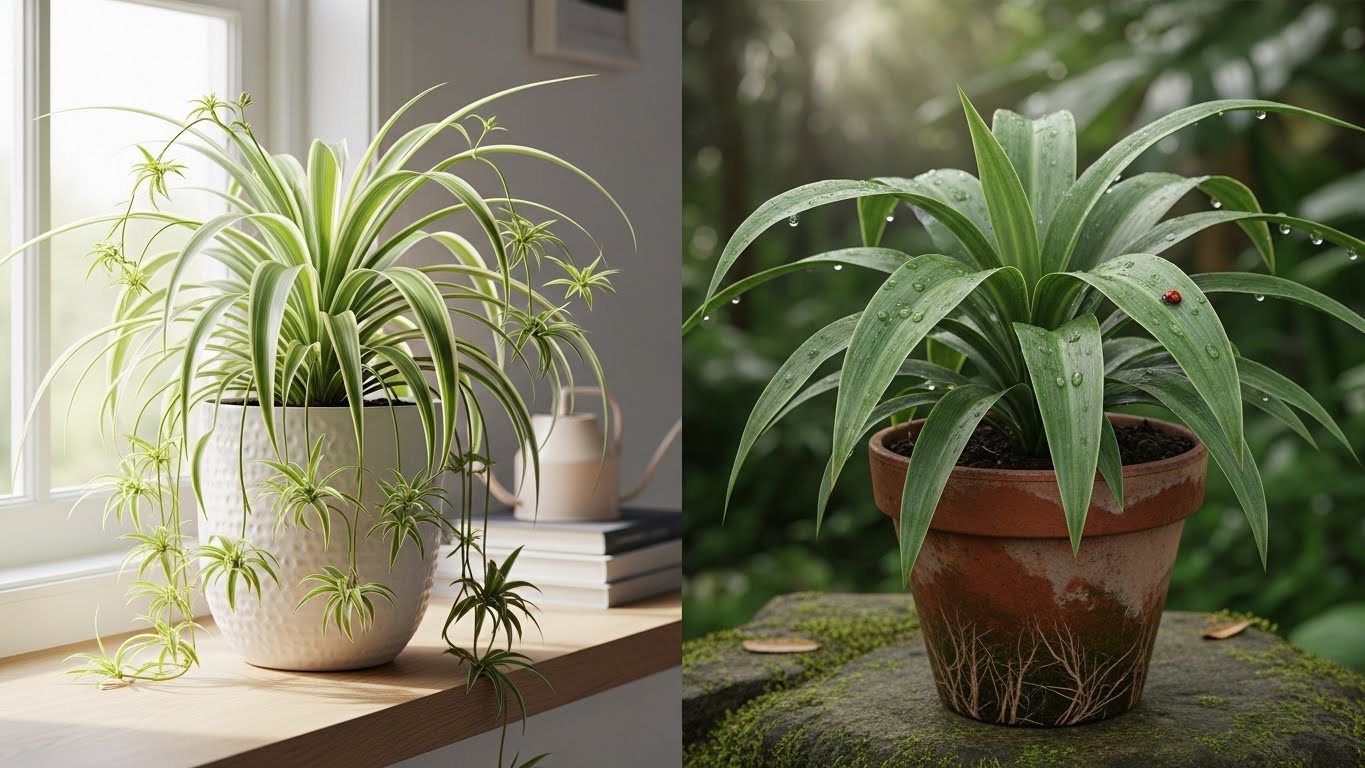
Yes, spider plants can thrive outdoors, adding vibrancy to your patio or garden! When moving them outside, start with a shady spot to avoid sunburn and gradually increase their sunlight exposure. They prefer bright, indirect light and well-draining soil. Keep an eye out for pests and water them when the top inch of soil feels dry. If you notice brown tips, wilting, or faded leaves, it’s time to bring them back indoors. Want to know more about their care?
Key Takeaways
- Spider plants can thrive outdoors but require gradual acclimation to avoid sunburn and stress.
- They prefer bright, indirect light and should be protected from direct sunlight.
- Use well-draining potting mix outdoors to prevent root rot and ensure proper drainage.
- Regularly monitor for pests that may appear when the plant is outside.
- Signs to bring spider plants indoors include wilting, brown leaf tips, or yellowing leaves.
Understanding Spider Plants and Their Ideal Conditions
When you think about adding a bit of greenery to your home, spider plants might just be the perfect choice, especially if you want a low-maintenance houseplant that thrives in a variety of conditions. Originating from tropical regions of Africa and Asia, these hardy plants are known for their resilience. They prefer an ideal temperature range between 65°F and 75°F, making them perfect for indoor environments. Spider plants can handle lower light levels and aren’t picky about humidity, which means you don’t have to stress about their care. Just give them occasional water, and they’ll flourish, producing charming baby plantlets that dangle from their leaves. You’ll find that they’re a delightful addition to your living space! Additionally, maintaining a stable temperature range is crucial for their overall health and growth.
Benefits of Moving Spider Plants Outdoors
Moving spider plants outdoors can be an exciting adventure for both you and your green friends! When you let your spider plants bask in natural sunlight exposure, they’ll thrive like never before. The warm rays can boost their growth, making those vibrant leaves shine bright. Plus, being outdoors helps with pest control; natural predators can keep pesky bugs at bay, reducing the need for chemical treatments. Fresh outdoor air can also enhance their overall health, allowing them to absorb more nutrients. Just imagine the joy of watching your plants flourish in a sunny spot on your patio! So, if you’re ready for a little garden magic, moving your spider plants outside could be the perfect step for their happiness.
Preparing Your Spider Plants for Outdoor Living
Before you take your spider plants outdoors, it’s important to prepare them for their new environment. Start with outdoor acclimation to help them adjust gradually. Here’s how:
Preparing your spider plants for outdoor life starts with gradual acclimation to ensure a smooth transition.
- Choose a shady spot: Begin by placing them in partial shade to protect them from intense sunlight.
- Check temperature tolerance: Make sure nighttime temperatures are above 50°F (10°C) before moving them outside.
- Gradually increase sunlight: After a week, slowly introduce them to more sunlight to help them adapt.
- Monitor for pests: Keep an eye out for any unwanted visitors that might hitch a ride from indoors.
Outdoor Care Tips for Spider Plants
Now that your spider plants are acclimated to the outdoors, giving them the right care is key to keeping them healthy and thriving. First, make sure they get the right sunlight exposure; they love bright, indirect light, so a spot with filtered sunlight is perfect. Too much direct sunlight can scorch their leaves, so keep an eye out!
When it comes to potting soil, choose a well-draining mix to prevent root rot. Water them when the top inch of soil feels dry, but don’t let them sit in water. Finally, check for pests regularly, as outdoor conditions can invite little critters. With these tips, your spider plants will flourish outside, bringing you joy all season long!
Signs Your Spider Plant Needs to Come Back Indoors
When you notice your spider plant showing signs of stress, it might be time to bring it back indoors. Seasonal changes can be tough on your plant, especially with temperature fluctuations. Keep an eye out for these signals:
- Brown tips on leaves: This can indicate it’s too hot or dry outside.
- Wilting: If your spider plant looks droopy, it’s a cry for help.
- Fading color: Healthy green leaves turning yellow may signal too much direct sunlight.
- Pests: If you spot tiny bugs, indoor environments can be better for pest control.
Conclusion
In short, spider plants can thrive outdoors if you give them the right care. By understanding their needs and preparing them properly, you can enjoy their beauty on your patio all summer long. Just remember, when the weather turns chilly, it’s time to bring them back inside. With a bit of attention, your spider plants can be the star of your indoor and outdoor spaces. So, don’t let the grass grow under your feet—get your plants outside today!


