
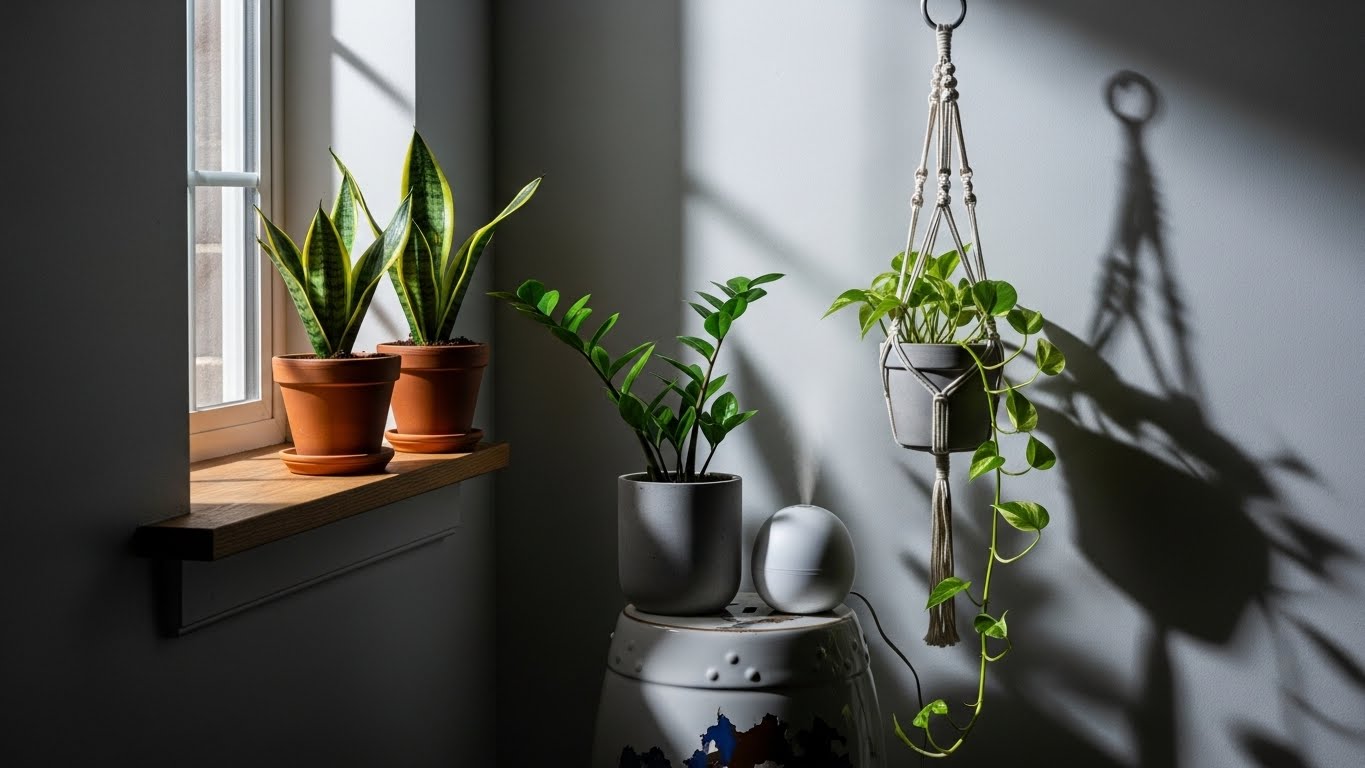
If you’re looking for compact plants that thrive in low light, consider the ZZ Plant and Snake Plant. The ZZ Plant has glossy leaves and grows 3-4 feet tall, while the Snake Plant can reach up to 8 feet, adding stylish verticality. The Golden Pothos and Heartleaf Philodendron are great too, featuring lovely vines perfect for small spaces. With minimal care, these plants not only beautify your home but also purify the air. Stick around to discover even more fantastic options!
ZZ Plant
If you’re looking for a plant that thrives even in the dimmest corners of your home, the ZZ Plant (Zamioculcas zamiifolia) might just be your new best friend!
This stunning low-light houseplant can reach heights of 3 to 4 feet, boasting glossy leaves that catch the eye.
What’s even better? ZZ Plants are incredibly low-maintenance. You only need to water them occasionally, allowing the soil to dry out completely between drinks.
They’re resilient, so if you forget about them for a bit, they won’t hold it against you.
Plus, they purify your indoor air, adding a revitalizing touch of greenery.
With the ZZ Plant, you’ll effortlessly brighten up your space while enjoying a low-stress plant companion!
Snake Plant
Let’s talk about the Snake Plant, a fantastic choice if you’re looking for a low-light indoor companion.
This hardy plant not only thrives with minimal care, preferring to stay dry between waterings, but it also adds a striking visual element to your space with its unique, upright leaves.
Plus, its ability to purify the air makes it a smart and stylish addition to any room!
Care Requirements Overview
When it comes to caring for the Snake Plant (Sansevieria trifasciata), you’ll find that this hardy houseplant is a breeze to maintain, especially in low light conditions.
These resilient low-light plants thrive in partial shade, making them perfect for your dimly lit spaces. You’ll love that they can grow up to 8 feet tall indoors, adding stunning vertical interest to your collection.
Just remember to water your Snake Plant only when the soil has completely dried out—overwatering can lead to trouble.
Since it’s a slow-growing plant, it’s ideal for beginner plant parents like you. Plus, it purifies the air, helping to improve your indoor environment while requiring minimal care.
Enjoy the ease of this wonderful plant!
Ideal Placement Suggestions
Finding the perfect spot for your Snake Plant can make a big difference in how well it thrives, so consider placing it in areas with low light where it can still shine.
Ideal spots include north-facing windows or shaded corners, where the plant can soak up soft, ambient light without the risk of scorching from harsh sun.
It’s also perfect for hallways or busy offices, as its adaptability allows it to tolerate neglect.
To keep your Snake Plant growing evenly, remember to rotate it every few weeks, ensuring all sides enjoy their share of light.
With these placement tips, your Snake Plant will flourish, adding a touch of green to your space even in the dimmest areas.
Golden Pothos
Golden Pothos, also known as Epipremnum aureum, is a fantastic choice for anyone looking to brighten up their indoor space, especially if sunlight is in short supply.
This resilient plant thrives in low light conditions, making it perfect for cozy corners or office spaces. Its heart-shaped leaves can grow between 4 to 8 inches, and those long vines can stretch out several feet, creating a lush, green atmosphere.
Priced from just $12.99, it’s affordable for both beginners and seasoned plant lovers. Plus, it’s easy to care for; just let the top 2 inches of soil dry out before watering.
Not only does it look great, but it also purifies the air, enhancing your indoor environment effortlessly.
Spider Plant
The Spider Plant, scientifically known as Chlorophytum comosum, is a wonderful addition to any indoor garden, especially if you’re dealing with low light.
This charming plant thrives in partial shade and grows to a mature height of 12-15 inches, making it a perfect fit for cozy corners.
You’ll love how low-maintenance it is; just let the top 2 inches of soil dry out before watering.
Plus, the spider plant produces adorable offshoots, or “babies,” that you can propagate easily to expand your green family.
Not to mention, it’s celebrated for its air-purifying qualities, enhancing your indoor air quality.
Heartleaf Philodendron
If you’re looking for a plant that thrives in low light and brings a touch of charm to your space, the Heartleaf Philodendron is a perfect choice.
With its attractive heart-shaped leaves and easy-care requirements, it’s great for beginners who want to add some greenery without too much fuss.
Plus, its trailing vines can create a stunning display in hanging planters or on shelves, making it a lovely addition to your compact indoor garden.
Ideal for Low Light
When you’re searching for a plant that can thrive in low light, the Heartleaf Philodendron might just be the perfect choice for you! This charming plant, with its heart-shaped leaves measuring 2-4 inches, loves dim corners and can even grow up to 4 feet long as it vines gracefully.
Imagine it draping over shelves or hanging in baskets, adding a touch of green to your space. While it’s a slow grower in low light, don’t worry—it’ll still produce new leaves, adapting beautifully to your home.
Just remember to let the soil dry out between waterings; this little gem prefers it that way. With its resilience and ease of care, the Heartleaf Philodendron truly shines in low light conditions!
Easy Care Requirements
Caring for a Heartleaf Philodendron is a breeze, making it a fantastic choice for both novice and experienced plant lovers. This easy to care plant thrives in low light, so you don’t need to worry about finding the perfect sunny spot.
Just water it when the top two inches of soil feel dry, which helps prevent overwatering—an easy habit to develop!
You’ll love how adaptable it is, tolerating a range of light conditions from partial shade to bright indirect light. As it grows, those charming vines can reach up to 4 feet long, producing new leaves even in dim spaces.
With minimal care, it’ll add a lovely touch of greenery to your home, brightening your indoor environment effortlessly.
Attractive Heart-Shaped Leaves
The Heartleaf Philodendron is a true showstopper with its stunning heart-shaped leaves that capture attention and bring life to any space.
These attractive heart-shaped leaves, measuring 2-4 inches, create a lovely display as they cascade down in trailing vines, sometimes reaching lengths of up to 4 feet.
Perfect for low-light areas, this resilient plant flourishes even with limited sunlight, making it an ideal choice for your cozy nook.
Plus, it’s easy to care for—just let the soil dry between waterings to keep your plant happy.
With its ability to produce new leaves in dim conditions and its simple propagation process, you’ll find joy in nurturing this charming plant in your home.
Calathea Rattlesnake
Looking for a stunning houseplant that thrives in low light? The Calathea Rattlesnake (Calathea lancifolia) is just what you need!
With its elongated leaves showcasing wavy patterns and a beautiful mix of dark and light green stripes, it resembles the scales of a rattlesnake. This plant loves low to medium indirect light, making it perfect for those cozy corners in your home.
To keep it happy, water it once a week with distilled water, and don’t forget to mist it regularly to maintain humidity.
You’ll be amazed as it opens and closes its leaves, responding to the light and darkness around it. The Calathea Rattlesnake is sure to bring a touch of nature indoors!
Aglaonema Siam
If you’re captivated by the beauty of houseplants like the Calathea Rattlesnake, you’ll definitely want to check out the Aglaonema Siam! This low-maintenance indoor plant is a showstopper with its vibrant, colorful leaves. It thrives in low light but prefers bright, indirect light, making it a perfect fit for any room.
Feature | Details |
|---|---|
Size | 1 to 3 feet tall |
Watering Frequency | Every 7 to 10 days |
Air-Purifying Qualities | Improves indoor air quality |
With just the right care, allowing the top 2 inches of soil to dry between waterings, the Aglaonema Siam will flourish, adding a touch of nature to your home while keeping the air fresh!
Baby Rubber Plant
Let’s explore the Baby Rubber Plant, a fantastic choice for your low-light spaces.
You’ll love its thick, glossy leaves and how easy it’s to care for, needing just a weekly watering to keep it happy.
We’ll cover its care requirements, the best growing conditions, and some common issues you might face, along with simple solutions to keep your plant thriving!
Care Requirements Overview
Caring for a Baby Rubber Plant can be a rewarding experience, especially since it thrives in low light and is perfect for cozy indoor spaces.
To keep your plant healthy, place it in a warm area away from drafts. Water it once a week, but always check the soil first—if it feels dry, it’s time for a drink.
This pet-friendly plant also produces lovely flowers, adding charm to your home. Don’t forget to rotate your Baby Rubber Plant regularly; this guarantees even growth on all sides.
Ideal Growing Conditions
When you’re aiming to create the perfect home for your Baby Rubber Plant, it’s essential to understand its ideal growing conditions.
This lovely plant thrives in low light, making it perfect for dimly lit rooms where sunlight is scarce. Keep it cozy in a warm environment, ideally between 60-75°F (15-24°C), and avoid drafts to make it feel secure.
Water it once a week, letting the soil dry out just a bit between waterings to keep it happy. Remember, it’s pet-friendly, so your furry friends can roam safely around it.
To encourage even growth, rotate your plant regularly, ensuring it reaches for light evenly. Your Baby Rubber Plant will flourish, adding charm to your space!
Common Issues and Solutions
Even in the cozy environment you’ve created for your Baby Rubber Plant, you might run into some common issues that can affect its health and appearance.
Remember, plants require attention to thrive! Here are a few solutions for common concerns:
- Underwatering: If leaves start drooping, water your plant weekly.
- Low Humidity: To prevent drying out, mist the leaves regularly, especially in dry months.
- Uneven Growth: Rotate your plant every couple of weeks for balanced growth.
- Pests: Check for small bugs; if you find any, wipe them off with a damp cloth.
English Ivy
English Ivy, or Hedera helix, is a fantastic choice for anyone looking to add some greenery to low-light spaces. This trailing vine thrives in indirect light and loves to adapt to shaded areas, making it perfect for dim spots in your home. You’ll appreciate its air-purifying qualities, too!
Care Aspect | Details |
|---|---|
Light Requirements | Low light, indirect sunlight |
Watering Frequency | Once a week |
Soil Condition | Moist, not soggy |
Maintenance | Prune regularly |
Pet-Friendly | Yes, but monitor growth |
With just a little care, you can enjoy a lush, beautiful plant that stays compact and vibrant. Remember, a little attention goes a long way in keeping your English Ivy thriving!
Boston Fern
The Boston Fern, with its lush, feathery fronds, is a fantastic option for brightening up low-light areas in your home.
This charming plant thrives in indirect light and loves a bit of humidity. To keep your Boston Fern happy, follow these simple guidelines:
- Water Weekly: Guarantee the soil stays consistently moist.
- Mist Regularly: This helps maintain humidity, preventing leaf scorching.
- Pet-Friendly: Rest easy knowing it’s non-toxic for your furry friends.
- Space to Grow: With its expansive, T-shaped leaves, it can grow quite large, adding a vibrant touch to any room.
Conclusion
Incorporating compact plants into your low-light spaces can truly brighten up your environment, like little green gems sparkling in the shadows. From the resilient ZZ Plant to the charming Boston Fern, these plants not only thrive where sunlight is scarce but also add life to your home. So, why wait? Bring home one of these leafy companions, and watch as your space transforms into a cozy oasis, filled with fresh air and vibrant energy!


