
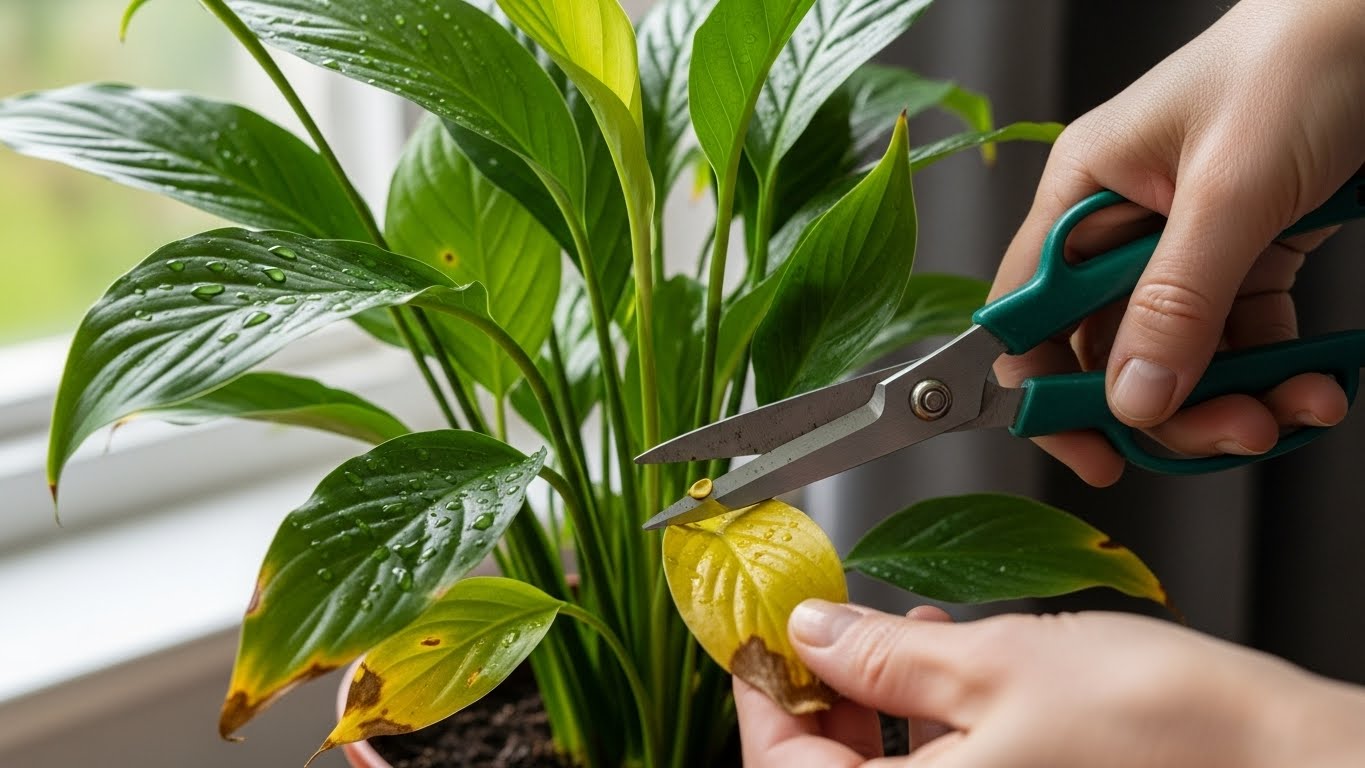
To prune your peace lily safely, start by picking a time in spring or early summer, just after blooming. Use clean, sharp shears to cut off any yellowing or dead leaves at the base. This helps keep your plant healthy and encourages new growth. After pruning, lightly water your peace lily and keep it in bright, indirect light. Be sure to watch for pests and signs of stress, and you’ll learn even more great care tips!
Key Takeaways
- Use sharp, clean pruning shears to ensure precise cuts and minimize damage to the plant.
- Wear gloves to protect your hands from sap and sharp edges during the pruning process.
- Disinfect your tools with rubbing alcohol before and after pruning to prevent disease spread.
- Cut leaves at the base to avoid stubs and remove only dead or yellowing parts.
- Water the plant lightly after pruning and monitor for new growth and pests afterward.
Understanding the Basics of Peace Lily Care
Caring for a peace lily is not just about keeping it alive; it’s about helping it thrive and show off those stunning white blooms. To create a happy home for your plant, start with the right soil. Peace lilies prefer well-draining potting mixes that retain some moisture without becoming soggy. This balance helps prevent root rot, which can be a real bummer. Additionally, proper light conditions are crucial for photosynthesis and flower production, so ensure your peace lily receives bright, indirect light. Now, let’s talk light conditions. Your peace lily loves bright, indirect light, so placing it near a window with filtered sunlight is ideal. Avoid direct sunlight, as it can scorch those beautiful leaves. By paying attention to these basics, you’ll set your peace lily up for success, and soon enough, it’ll reward you with gorgeous blooms!
When to Prune Your Peace Lily
Knowing when to prune your Peace Lily is key to keeping it healthy and thriving. You’ll want to watch for signs of overgrowth, consider the timing for blooms, and keep seasonal maintenance in mind to guarantee your plant stays vibrant. By paying attention to these factors, you can give your Peace Lily the care it needs to flourish!
Signs of Overgrowth
Recognizing the signs of overgrowth in your peace lily is essential for keeping it healthy and vibrant. If you notice leaf yellowing, it’s a clear indicator that your plant needs some attention. Another telltale sign is root overcrowding, where roots start to peek out of the pot or wrap tightly around themselves. These conditions can stress your peace lily, affecting its overall health.
Sign | Action Needed |
|---|---|
Leaf yellowing | Check water & light |
Root overcrowding | Repot into a larger pot |
Sparse blooms | Prune for more light |
Wilting leaves | Adjust watering schedule |
Slow growth | Fertilize appropriately |
Timing for Blooms
When it comes to pruning your peace lily, timing can make all the difference in ensuring a healthy bloom. Ideally, you should prune right after the blooming cycle ends. This usually happens in late spring or early summer, when your plant’s flowering frequency peaks. By snipping away the spent blooms and any damaged leaves, you encourage new growth and prepare your peace lily for its next bloom cycle. Remember, the best time to assess your plant is after it flowers, as this helps energize it for future blooms. So, keep an eye on those lovely flowers, and don’t hesitate to prune when the time feels right. Your peace lily will thank you with vibrant, fresh blooms!
Seasonal Maintenance Tips
To keep your peace lily thriving throughout the year, it’s essential to incorporate seasonal maintenance into your care routine. Start by pruning your plant in early spring, just before it begins to bloom. This helps promote new growth and vibrant flowers. During summer, focus on seasonal watering—ensure the soil stays moist but not soggy, as heat can quickly dry it out. As the air gets drier in fall and winter, pay attention to humidity levels. You might want to mist the leaves or use a humidifier to keep your peace lily happy. Regularly check for yellowing leaves, too; trimming them back can help your plant conserve energy for healthy growth. Your peace lily will thank you!
Tools You’ll Need for Pruning
Pruning a peace lily can be a fun and rewarding task, but having the right tools on hand makes the process even smoother. To adopt effective pruning techniques, you’ll need some essential tools that make your job easier and keep your plant healthy.
- Sharp pruning shears: They guarantee clean cuts, minimizing damage to the plant.
- Gloves: Protect your hands from any sap or sharp edges while you work.
- A clean cloth: Use it to wipe down your tools before and after pruning, guaranteeing they stay disease-free.
With these tools ready, you’ll be well-equipped to tackle your peace lily’s pruning needs, promoting its growth and beauty as you go along. Happy pruning!
Step-by-Step Pruning Process
Getting ready to prune your peace lily is an exciting step in keeping it healthy and vibrant! Follow these simple steps to master your pruning techniques for plant rejuvenation:
Step | Action |
|---|---|
1. Assess | Look for yellowing leaves or spent blooms. |
2. Prepare | Use clean, sharp scissors for a precise cut. |
3. Prune | Cut leaves close to the base, removing any dead parts. |
As you prune, feel that connection with your plant. You’re not just cutting; you’re helping it thrive! Each snip encourages fresh growth and improves its overall health, so enjoy the process and watch your peace lily flourish.
Aftercare for Your Pruned Peace Lily
Once you’ve finished pruning your peace lily, it’s important to give it the proper aftercare to help it bounce back and thrive. Start by ensuring the humidity levels are just right—peace lilies love a humid environment. You can mist the leaves or place a humidifier nearby. Next, wait about a month before applying any fertilizer, allowing the plant to recover first. When you do fertilize, choose a balanced houseplant fertilizer to support new growth.
After pruning your peace lily, ensure proper humidity and wait a month before fertilizing to promote recovery and growth.
Here’s a quick checklist for aftercare:
- Maintain humidity levels with misting or a humidifier.
- Wait at least a month before fertilizer application.
- Monitor your plant for signs of stress or new growth.
With love and attention, your peace lily will flourish beautifully!
Common Mistakes to Avoid While Pruning
When you’re pruning your peace lily, it’s easy to make a few common mistakes that can harm your plant. For instance, over-pruning can stress the plant and stunt its growth, while using dull tools can lead to jagged cuts that make it harder for your peace lily to heal. By keeping these pitfalls in mind, you’ll set your plant up for success and keep it looking its best!
Over-Pruning the Plant
While pruning your peace lily can help it thrive, over-pruning can lead to more harm than good. You want to keep your plant happy, so be careful not to cut away too much! Here are some common over-pruning symptoms to watch for:
- Yellowing leaves, indicating stress.
- Stunted growth, showing your plant is struggling.
- Wilting flowers, a sign of distress after excessive cuts.
If you notice these signs, don’t panic! Your peace lily can still bounce back with proper care and patience. Focus on its recovery by giving it extra attention, like ensuring it gets enough water and light. Remember, less is often more when it comes to pruning, so take it slow and be gentle with your green friend!
Using Dull Tools
Using dull tools can be another common mistake that many plant lovers make while pruning their peace lilies. When you use a dull tool, you risk damaging your plant more than helping it. Dull tool safety is vital; a clean cut encourages healthy growth, while a ragged tear can lead to infection. It’s important to use sharp, well-maintained tools to practice effective pruning techniques. Not only does this keep your peace lily thriving, but it also makes your job easier! So, before you start, take a moment to sharpen your shears or scissors. It’ll save you time and guarantee your plant gets the best care. Remember, a little preparation goes a long way in keeping your peace lily happy and healthy!
Conclusion
To sum up, pruning your peace lily is like giving it a fresh haircut; it helps it thrive and look its best. By following the steps and tips provided, you’re nurturing not just a plant, but a little piece of nature in your home. Remember, just as we all need a little trim now and then to grow, so does your peace lily. With care and attention, you’ll see it flourish, bringing joy to your space for years to come.


