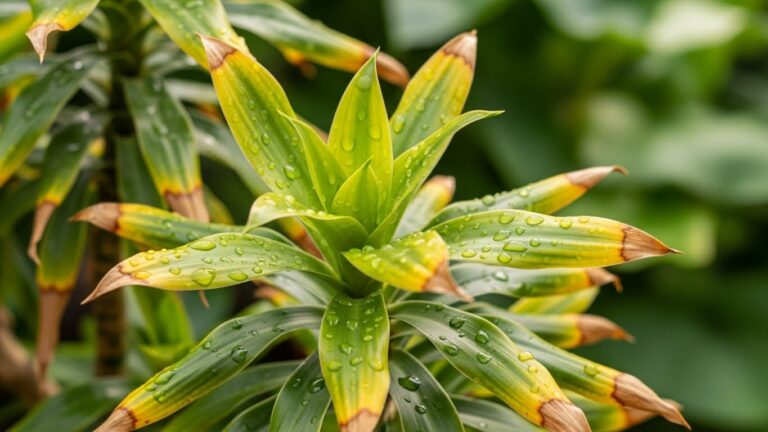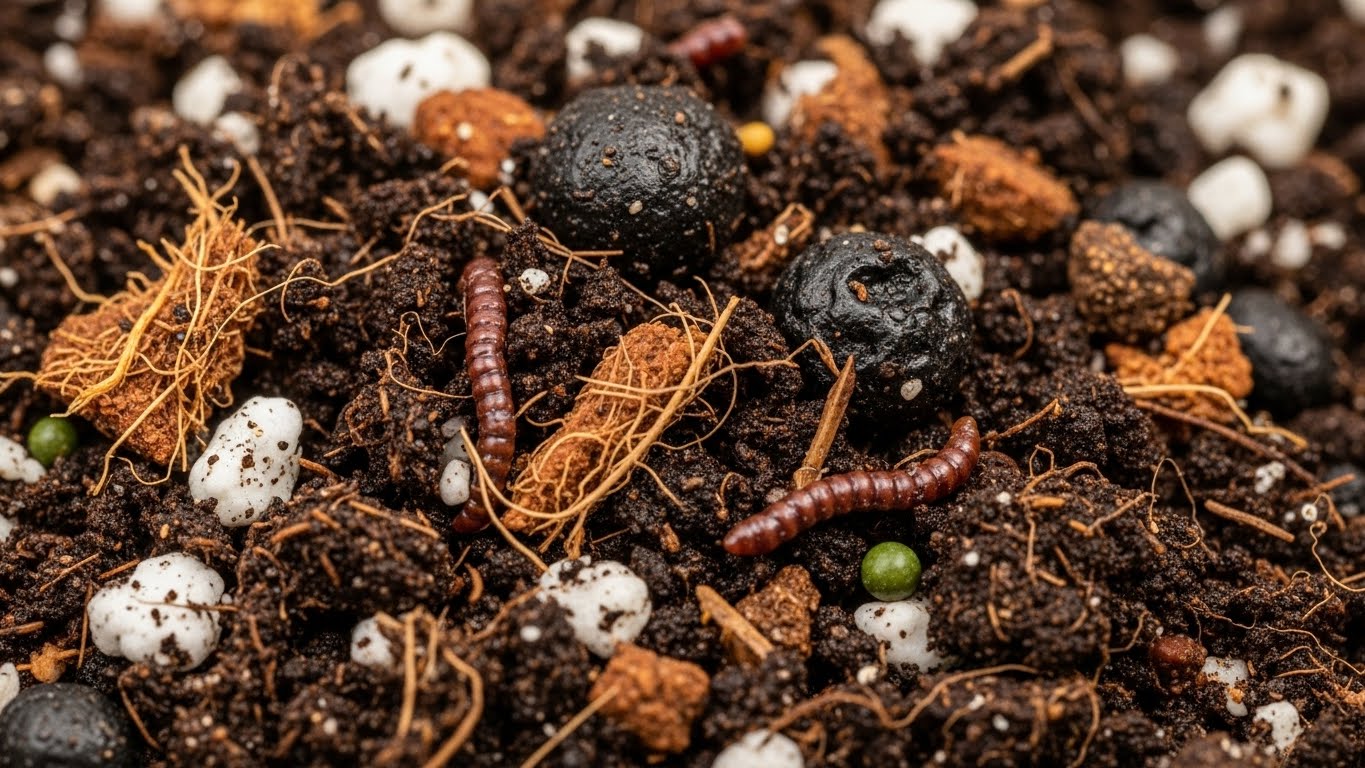
For your Dracaena plant, an ideal potting mix should include peat moss, perlite, and orchid bark for excellent drainage and aeration. You can find great commercial options like Miracle-Gro or FoxFarm that work well. If you prefer a DIY approach, mix equal parts peat moss, perlite, and compost. This combination will keep your Dracaena healthy and thriving! Keep going, and you’ll discover more about how to care for your plant’s potting mix needs!
Key Takeaways
💡 Understanding the fundamental needs of your Dracaena is crucial for its health and growth.
➜ Master the essentials of Dracaena care
- Dracaena thrives in a well-draining potting mix with balanced components like peat moss, perlite, and orchid bark.
- Commercial mixes like Miracle-Gro and FoxFarm are ideal for their excellent drainage and moisture retention.
- Organic options such as Black Gold and Espoma provide nutrient-rich environments for healthy Dracaena growth.
- A DIY mix of 2 parts peat moss, 1 part perlite, and 1 part compost is effective for customized care.
- Monitor for signs like root binding or yellowing leaves to determine when a new potting mix is needed.
Understanding Dracaena Plant Needs
When you think about caring for Dracaena plants, it’s essential to understand their unique needs, especially since these vibrant houseplants thrive in specific conditions. First off, your Dracaena loves bright, indirect light, so place it near a window but avoid direct sunlight. Keep an eye on the soil moisture, too; it prefers to dry out slightly between waterings. This balance is key for ideal Dracaena care, as overwatering can hinder plant growth. Additionally, Dracaena plants are known for their air-purifying abilities, effectively removing toxins from the air. Also, remember that Dracaena doesn’t need frequent fertilization—just a little during the growing season will do. Finally, make sure to keep the leaves clean; a gentle wipe with a damp cloth will help your plant breathe and shine. Enjoy nurturing your beautiful Dracaena!
Characteristics of an Ideal Potting Mix
Creating the perfect potting mix for your Dracaena plants is like mixing a recipe for success; the right ingredients guarantee your plant thrives. An ideal potting mix should have balanced potting mix components like peat moss, perlite, and orchid bark, which provide excellent drainage and aeration. This combination helps prevent root rot, a common issue for Dracaenas.
Additionally, aim for a soil pH between 6.0 and 6.5, as this range is perfect for nutrient absorption. You want your Dracaena to feel at home, so keep it light and fluffy. By focusing on these characteristics, you’ll create a cozy environment where your Dracaena can flourish, showcasing its stunning leaves and vibrant growth.
Top Commercial Potting Mixes for Dracaena
If you’re on the hunt for the best commercial potting mixes for your Dracaena, you’re in luck—there are several fantastic options that can help your plant thrive! Top brands like Miracle-Gro and FoxFarm offer mixes specifically designed for tropical plants, providing excellent drainage and moisture retention. If you prefer organic options, consider brands like Black Gold or Espoma, which use natural ingredients to create a rich, nutrient-packed environment for your Dracaena. These mixes often contain peat moss, perlite, and compost, ensuring your plant gets just what it needs. Remember, choosing the right potting mix is essential for keeping your Dracaena healthy and happy, so pick one that suits your style and your plant’s needs!
DIY Potting Mix Recipes for Dracaena
Making your own potting mix for Dracaena plants can be a rewarding experience, giving you control over the ingredients and ensuring your plant gets exactly what it needs to flourish. Here’s a simple DIY recipe using common DIY mix ingredients and organic amendments:
Ingredient | Quantity | Purpose |
|---|---|---|
Peat Moss | 2 parts | Retains moisture |
Perlite | 1 part | Improves drainage |
Compost | 1 part | Provides nutrients |
Worm Castings | 1/2 part | Boosts soil fertility |
Mix these together thoroughly, and you’ll create a rich environment for your Dracaena. Remember, customizing your potting mix helps your plant thrive and shows your care! Enjoy the process!
Importance of Drainage in Potting Mix
When it comes to potting mix for your Dracaena, understanding the importance of drainage isn’t just a detail—it’s essential for your plant’s health. Good drainage techniques help prevent water from sitting in the potting containers, which can lead to root rot and other problems. Your Dracaena thrives when its roots can breathe, absorbing nutrients without drowning.
To achieve this, consider mixing in perlite or coarse sand to your potting mix. These materials create air pockets, allowing excess water to escape. Remember, the right balance in your mix makes all the difference, ensuring your Dracaena stays happy and vibrant. So, invest a little time in perfecting your potting mix for the best results!
How to Repot Your Dracaena
Repotting your Dracaena can be a rewarding experience, especially since it helps your plant continue to grow strong and healthy. To get started, choose a new pot that’s one size larger, ensuring it has drainage holes. Carefully remove your Dracaena from its current pot, gently loosening the roots if they’re tightly bound. Next, place fresh potting mix at the bottom of the new pot, then position your Dracaena in the center, filling around it with more mix. Use proper repotting techniques like pressing the soil lightly to eliminate air pockets. Aim to repot every 2-3 years or whenever you notice your plant outgrowing its space. With the right care, your Dracaena will thrive in its new home!
Signs Your Dracaena Needs a New Potting Mix
Noticing your Dracaena showing signs of stress? It might be time to contemplate a new potting mix! Keep an eye out for root bound indicators, like roots poking out of the drainage holes, or soil that’s breaking down and losing its structure, as these can signal that your plant’s growing conditions need a refresh.
💡 Proper fertilization is key to ensuring your Dracaena thrives after repotting.
➜ Discover proven fertilization techniques
Root Bound Indicators
Your Dracaena might be sending you some clear signals that it’s time for a change, especially if you start noticing certain signs of being root bound. One major indicator is when you see roots growing out of the drainage holes; this means your plant is cramped and needs a larger container size. Another sign is if the soil dries out too quickly, which can happen when there’s too much root growth and not enough soil to hold moisture. If your Dracaena looks stunted or the leaves are turning yellow, that’s another red flag. Pay attention to these signs so you can give your plant the fresh start it deserves with a new potting mix that supports healthy growth!
💡 Protecting your Dracaena from pests is vital after repotting.
➜ Explore natural pest control methods
Soil Decomposition Signs
When the soil in your Dracaena’s pot starts to break down, it can lead to some serious problems for your plant. You might notice changes in soil texture, like it becoming hard and compacted. This compaction can cause moisture retention issues, making it hard for roots to breathe. If you see signs of fungal growth, that’s another red flag! Depletion of organic matter often leads to nutrient depletion, leaving your Dracaena hungry. An imbalance in pH can also occur, affecting how nutrients are absorbed. Keep an eye on microbial activity; reduced microbial life means your plant’s health is at risk. If you’re spotting any of these signs, it’s time to evaluate a fresh potting mix for your beloved Dracaena!
Maintaining Soil Moisture for Dracaena
Maintaining the right soil moisture for your Dracaena is essential, as these beautiful plants thrive in well-balanced environments. To keep your Dracaena happy, you’ll want to establish a consistent watering frequency. Overwatering can be just as harmful as underwatering, so finding that sweet spot is key.
Here’s a quick guide to help you:
Soil Moisture Level | Watering Frequency |
|---|---|
Very Dry | Water every week |
Slightly Dry | Water every 10 days |
Moist | Water every 2 weeks |
Damp | Water every 3 weeks |
Wet | Wait until dry |
Common Mistakes to Avoid With Potting Mix
When it comes to potting mix for your Dracaena, avoiding common mistakes can make all the difference in keeping your plant healthy. You might unknowingly overwater, create poor drainage, or neglect nutrient balance, leading to unhappy leaves. Let’s explore these pitfalls so you can give your Dracaena the best chance to thrive!
Overwatering Risks
One of the biggest mistakes you can make with your dracaena plants is overwatering, especially when using the wrong potting mix. If you’re not careful, you might notice overwatering symptoms like yellowing leaves, wilting, or a droopy appearance. These signs can mean your plant’s roots are drowning, leading to root rot—a sneaky killer for your beloved greenery. Remember, dracaenas prefer a well-draining mix that allows moisture to escape instead of sitting stagnant. To avoid drowning your plant, check the potting mix’s texture and drainage capabilities. Make sure you let the top inch of soil dry out before watering again. Your dracaena will thank you with vibrant growth and health!
Poor Drainage Issues
Poor drainage can be a sneaky problem that sneaks up on you when caring for your dracaena plants, especially if you’re not paying attention to the type of potting mix you’re using. If your mix retains too much water, it can lead to root rot and other nasty issues. To avoid this, look for drainage solutions like adding perlite or coarse sand to your potting mix. These soil amendments improve airflow and help excess water escape. Remember, a well-draining mix is essential for a happy dracaena. If you notice water pooling at the bottom of your pot, it’s time to reassess your mix. Keeping your plant’s roots dry and healthy is the key to vibrant growth!
Inadequate Nutrient Balance
Finding the right nutrient balance in your potting mix is essential for keeping your dracaena plants healthy and thriving. If your mix lacks the right nutrients, you might notice nutrient deficiencies, causing your plant’s leaves to yellow or stunt growth. It’s vital to check that your potting mix contains a blend of essential elements like nitrogen, phosphorus, and potassium.
Don’t forget about pH imbalance, which can affect nutrient availability. Ideally, your mix should have a pH between 6.0 and 7.0. If it’s too acidic or alkaline, your dracaena won’t absorb nutrients properly. By ensuring a balanced mix, you’re setting your plant up for success, making it vibrant and full of life. Happy planting!
Conclusion
In the grand adventure of growing your Dracaena, choosing the right potting mix is like picking the perfect treasure map—it leads to lush, thriving plants! While you might think any old soil will do, remember that your Dracaena has specific needs, just like you wouldn’t wear flip-flops in a snowstorm. By following these tips and tricks, you’re not just potting a plant; you’re setting the stage for a flourishing green companion. Happy planting!
💡 Repotting your Dracaena correctly is essential for its long-term health.
➜ Get the step-by-step repotting guide