
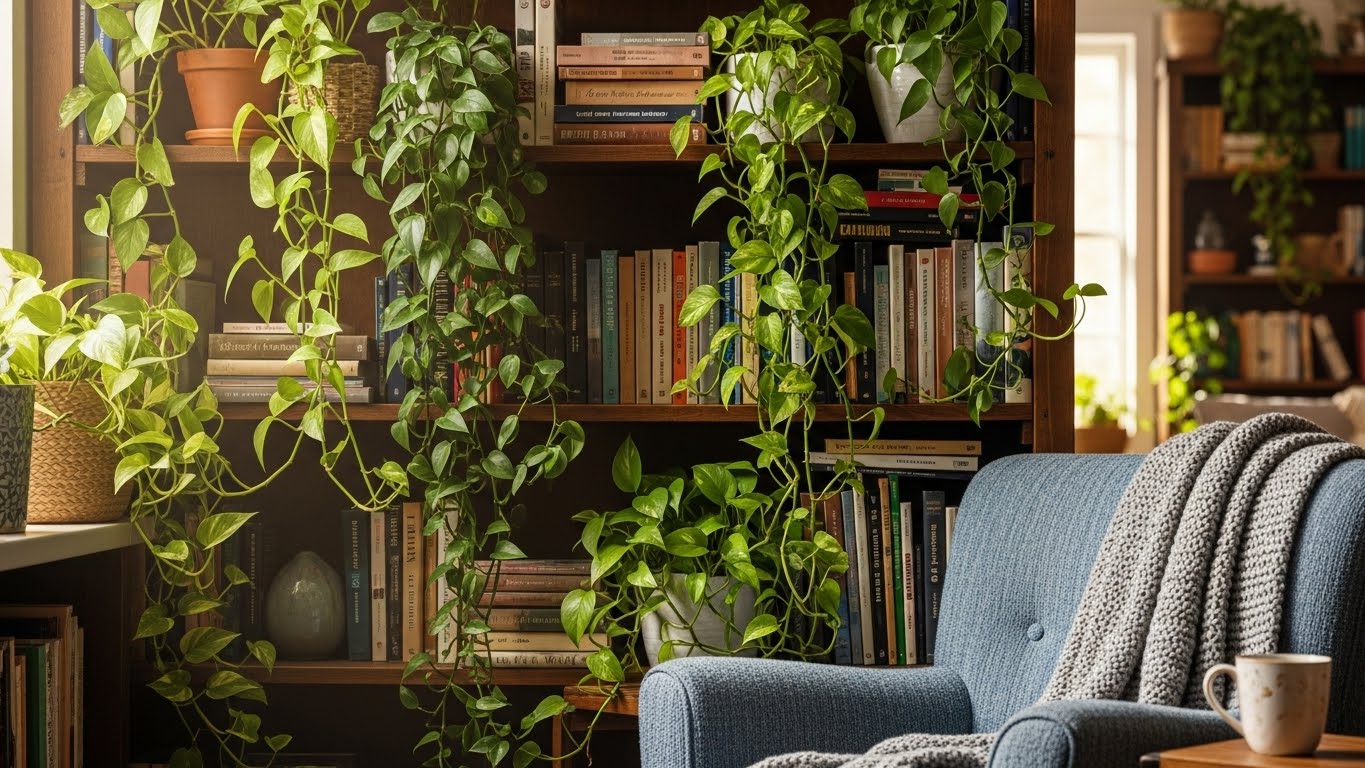
If you’re looking to add some greenery to your bookshelves, consider easy trailing plants like Pothos, with its beautiful cascading vines, or String of Hearts, which adds charm with its heart-shaped leaves. Ivy provides classic elegance, while Tradescantia brings vibrant colors. Rattlesnake Plant offers unique patterns, and Spider Plant is great for air purification. Creeping Fig creates a lush curtain effect, Scindapsus boasts stunning variegation, and Burro’s Tail adds a succulent touch. Stick around to discover more fantastic options!
Pothos: The Ultimate Beginner’s Plant
💡 If you’re looking to enhance your bookshelf with trailing plants that are safe for pets, this article is a must-read.
➜ Explore pet-safe vthisng options
When you’re looking to add some greenery to your bookshelf, Pothos is the perfect plant to start with, especially if you’re new to plant care. This resilient beauty can thrive in a variety of conditions, making it your ideal companion. To help it flourish, use ideal soil that drains well, like a potting mix combined with perlite. Pothos also loves to be propagated. You can easily clip a few stems and place them in water, watching roots develop over time. Once they’re ready, just pop them in soil, and you’re on your way to multiplying your green friends! With minimal effort and a little love, your Pothos will cascade beautifully, bringing life and joy to your bookshelf.
String of Hearts: A Charming Choice
If you’re looking for a plant that adds a touch of charm to your bookshelf, the String of Hearts is a fantastic choice! This plant not only thrives with a bit of care but also looks stunning as its heart-shaped leaves trail down. Let’s explore some essential care tips and the best spots to place it for maximum impact!
Care Tips for Success
Caring for a String of Hearts can be a rewarding experience, especially since this lovely plant brings a touch of charm and elegance to any bookshelf. To keep your String of Hearts thriving, pay attention to its water requirements. Allow the soil to dry out completely between waterings, as overwatering can lead to root rot. Aim to water every two to three weeks, adjusting based on your home’s climate.
Humidity preferences are also essential; this plant enjoys moderate humidity but can tolerate drier air. To maintain its vibrancy, mist the leaves occasionally or place it near a humidifier. By meeting these simple needs, your String of Hearts will flourish, displaying its delightful heart-shaped leaves with pride.
Ideal Placement Suggestions
To truly showcase the beauty of your String of Hearts, choosing the right spot on your bookshelf is essential. Consider placing it at a shelf height where you can easily admire its delicate vines cascading down. A little above eye level often creates a stunning visual effect. It’s also important to guarantee your plant gets the right light exposure—indirect sunlight works best. If your bookshelf is near a window, that’s perfect! Just avoid harsh rays that can scorch those lovely leaves. Additionally, you might want to rotate the plant occasionally, allowing all sides to bask in the light. By thoughtfully selecting its location, you’ll create a charming display that brings warmth and life to your space.
Ivy: Classic Elegance for Your Shelves
Ivy is a timeless choice that brings a touch of classic elegance to your bookshelves. With various types to choose from, you’ll find the perfect variety that suits your style, and caring for them isn’t as tricky as you might think. Plus, learning how to style ivy on your shelves can transform your reading space into a lush, inviting oasis!
Varieties of Ivy
When it comes to trailing plants for your bookshelf, few can match the classic elegance of ivy. One popular variety is English Ivy, known for its beautiful, heart-shaped leaves and ability to adapt to different light conditions. It can create a stunning cascade over the edges of your shelves, adding charm to your space. Another lovely choice is Variegated Ivy, which features leaves speckled with creamy whites and yellows. This variety brings a unique pop of color, making your bookshelf even more inviting. Both types are easy to care for, thrive indoors, and can be trained to grow in various directions. With their timeless appeal, these ivies are perfect companions for your literary adventures!
Care and Maintenance
Caring for your ivy is easier than you might think, especially if you keep a few key points in mind. First, establish a consistent watering schedule; ivy plants love moisture but don’t want soggy roots. Water them when the top inch of soil feels dry. Next, pay attention to humidity requirements. Ivy thrives in moderate humidity, so if your home is dry, consider misting the leaves occasionally or placing a small humidifier nearby. Finally, make sure your ivy gets bright, indirect light, as too much direct sunlight can scorch the leaves. By following these simple steps, you’ll help your ivy flourish, adding that classic elegance to your shelves while enjoying a delightful plant companion.
Styling on Shelves
Transforming your bookshelf into a lush oasis is both fun and rewarding, especially with the classic elegance of ivy. This trailing plant brings an effortless charm to your shelf aesthetics. When arranging your ivy, consider mixing it with books and decorative items to create a harmonious look.
Here’s a simple table to inspire your plant arrangements:
Item Type | Description | Placement Idea |
|---|---|---|
Books | Varied sizes, colors | Stack horizontally |
Ivy | Cascading green vines | Hang from the top shelf |
Decorative Item | Unique trinkets or photos | Place on a lower shelf |
Tradescantia: Colorful and Vibrant
If you’re looking to add a splash of color and vibrancy to your bookshelf, Tradescantia, commonly known as spiderwort or wandering Jew, is a fantastic choice. With its striking green leaves adorned with purple and silver stripes, it’ll catch everyone’s eye. To keep your Tradescantia thriving, pay attention to its lighting preferences; it loves bright, indirect sunlight but can tolerate low light. You can easily propagate it using cuttings, making tradescantia propagation techniques a breeze. Just place the cuttings in water or soil, and watch them grow! This plant not only brings beauty to your space but also adds a touch of life, making your bookshelf feel warm and inviting. You’ll adore the energy it brings!
Rattlesnake Plant: Unique Foliage for Interest
The Rattlesnake Plant, with its striking leaf patterns, adds a touch of uniqueness to your bookshelf that’s hard to resist. You’ll appreciate how low maintenance it is, making it perfect for busy lives, plus it thrives in bright, indirect light, which is common in most homes. By choosing this plant, you not only enhance your space but also enjoy a beautiful, easy-care companion.
Distinctive Leaf Patterns
💡 To truly make your bookshelf stand out, consider incorporating trailing vines that add both movement and texture.
➜ Discover trailing vines that elevate your decor
When it comes to adding personality to your bookshelf, the Rattlesnake Plant stands out with its truly unique foliage. Its enchanting leaf texture and pattern diversity bring life to any space. Here are three reasons to love this plant:
- Striking Patterns: The bold green leaves are adorned with dark green, wavy markings, resembling a rattlesnake’s skin.
- Variety: You’ll find different shapes and sizes, ensuring that each leaf tells its own story, making your shelf feel dynamic and lively.
- Textural Appeal: The smooth surface contrasts beautifully with the intricate designs, inviting you to reach out and touch them.
Choose the Rattlesnake Plant for your bookshelf, and watch it become a conversation starter, adding flair and excitement to your space!
💡 If you’re new to plant care, it’s essential to choose beginner-friendly options that thrive effortlessly on your bookshelf.
➜ Get the step-by-step guide for beginner-friendly plants
Low Maintenance Care
Caring for a Rattlesnake Plant is a breeze, especially since it thrives on neglect! This stunning houseplant only asks for minimal attention. It’s perfect for those low light options where other plants might struggle. Just keep a watchful eye on its watering frequency—too much moisture can be harmful.
Here’s a simple care guide:
Care Task | Recommendation |
|---|---|
Watering Frequency | Every 2-3 weeks |
Light Requirements | Low to indirect light |
Temperature Range | 60°F to 85°F |
Humidity Level | Moderate to high |
With these easy guidelines, you can enjoy the unique foliage of your Rattlesnake Plant without the hassle. Embrace the simplicity of plant care!
Ideal Light Conditions
Lighting plays an essential role in helping your Rattlesnake Plant flourish, so finding the right spot in your home is key to showcasing its unique foliage. This stunning plant thrives in conditions that mimic its natural habitat. To assist you in finding the perfect lighting, consider these tips:
- Indirect sunlight: Place your Rattlesnake Plant in a spot where it gets bright, but indirect sunlight, as direct rays can scorch its leaves.
- Natural light: A north or east-facing window is ideal, allowing for gentle natural light without overwhelming heat.
- Rotate regularly: Every few weeks, give your plant a gentle spin to guarantee even growth and prevent it from leaning toward the light.
With the right light, your Rattlesnake Plant will show off its striking, wavy leaves beautifully!
Philodendron Brasil: A Touch of Tropical
Philodendron Brasil is like a gust of invigorating tropical air that can transform your bookshelf into a vibrant oasis. With its heart-shaped leaves sporting striking green and yellow variegation, this plant brings those sought-after tropical vibes right into your space. Philodendron care is surprisingly simple, making it perfect for your busy lifestyle. It thrives in bright, indirect light but can adjust to lower light conditions, so don’t worry if your bookshelf isn’t bathed in sunshine. Water it when the top inch of soil feels dry, and watch it grow, trailing gracefully down your shelves. With minimal fuss, you’ll enjoy a lush, lively atmosphere that brightens your day and inspires your imagination. Embrace the tropical charm of Philodendron Brasil!
Spider Plant: Resilient and Air-Purifying
If you’re looking for a plant that’s not only stunning but also incredibly easy to care for, the Spider Plant is an excellent choice. This resilient beauty offers a range of benefits that make it perfect for your bookshelf. Here are three amazing spider plant benefits you won’t want to miss:
- Air Purification: Spider plants help cleanse the air, removing toxins and improving your indoor environment.
- Low Maintenance: They thrive in various lighting conditions and only need occasional watering.
- Easy Propagation: You can easily grow new plants from the baby “pups” that sprout from the main plant.
With simple spider plant propagation, you can share this delightful green friend with others, enhancing your space and theirs!
Creeping Fig: Lush and Versatile
Creeping Fig, with its vibrant green leaves and lush growth, can transform any bookshelf into a stunning display of nature’s beauty. This versatile plant is not only eye-catching but also easy to care for. When it comes to creeping fig care, make sure it gets bright, indirect light and keep the soil slightly moist but not soggy. You’ll love the different creeping fig varieties available, from the classic Ficus pumila to the variegated types that add a splash of color. As it grows, you can let it cascade down your shelves, creating a beautiful green curtain. With a little attention, your creeping fig will thrive, bringing a touch of the outdoors into your cozy reading nook.
Scindapsus: Beautiful Variegation
When you think of adding a touch of elegance to your bookshelf, Scindapsus should be at the top of your list. With its stunning variegation types, this plant not only looks great but also brings life to your space. Here are a few care techniques to keep your Scindapsus thriving:
- Light: Place it in bright, indirect sunlight for best growth.
- Water: Allow the soil to dry out slightly between waterings; overwatering can lead to root rot.
- Humidity: Keep the humidity high to enhance the vibrant colors of the leaves.
This enchanting plant is perfect for cascading down shelves, showcasing its beautiful patterns and adding warmth to your home. You’ll love how it transforms your bookshelf!
Burro’s Tail: A Succulent Option
Burro’s Tail, with its unique trailing stems adorned with plump, fleshy leaves, makes a fantastic addition to any bookshelf. This succulent thrives with minimal fuss, so you’ll love how easy burro’s tail care is. Place it in bright, indirect light, and water it only when the soil feels dry. Avoid overwatering, as it can lead to root rot.
When it comes to burro’s tail propagation, you can simply take leaf cuttings and let them dry out for a day before planting them in soil. In no time, you’ll have new plants to share or add to your collection! Watching your burro’s tail grow and cascade beautifully will bring you joy and a touch of nature indoors.
Conclusion
Incorporating trailing plants into your bookshelf not only adds beauty but also brings life to your space. Imagine your favorite reading nook adorned with a vibrant Pothos, its lush leaves gracefully cascading down. This simple addition can transform your room into a cozy retreat, making it the perfect spot to immerse yourself in your next adventure. So, whether you choose a String of Hearts or a Rattlesnake Plant, your shelves will thrive, creating an inviting atmosphere for all your books!
💡 For those who may not have time for daily watering, this article highlights plants that can thrive with mthismal care.
➜ See how to implement low-maintenance watering techniques


