
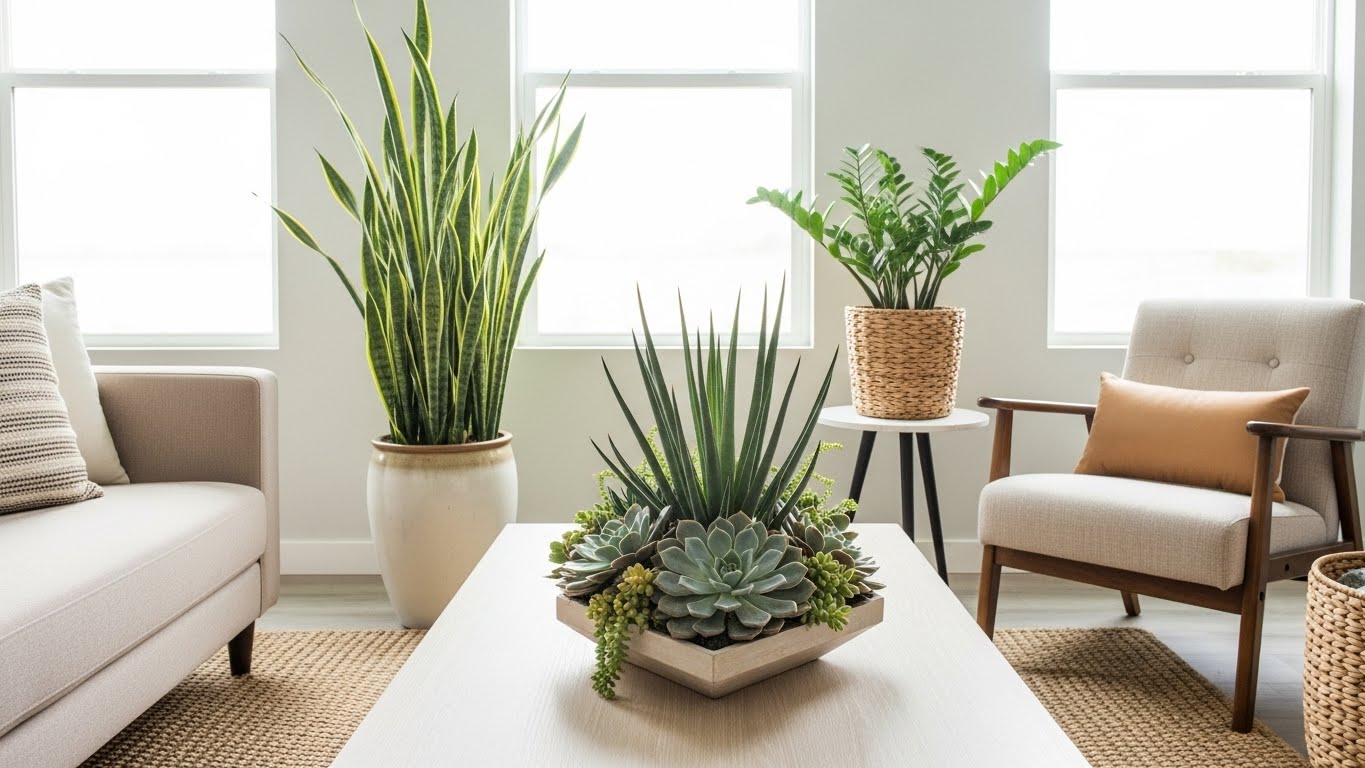
If you want plants that thrive on occasional watering, consider the Snake Plant, ZZ Plant, or Pothos. These resilient greens handle neglect well and purify your air. The Spider Plant and Peace Lily are also low-maintenance choices, providing charm and beauty to your space. Jade Plants and Succulents are perfect if you prefer something extra tough. Aloe Vera and Chinese Evergreen not only survive on your weekend care but also offer unique benefits. Discover even more plant possibilities ahead!
Snake Plant
💡 If you’re looking to create a serene environment, consider plants that can help reduce visual clutter.
➜ Discover proven techniques
If you’re looking for a plant that’s nearly impossible to kill, the snake plant might just be your new best friend! With its striking, sword-like leaves, this hardy beauty not only brightens your space but also offers amazing snake plant benefits. It purifies the air, removes toxins, and even releases oxygen at night, making it perfect for your bedroom. Plus, snake plant propagation is super easy! You can simply cut a leaf, let it dry, and place it in water or soil. Before you know it, you’ll have new little friends sprouting up! So, if you want a low-maintenance plant that thrives on neglect, the snake plant is definitely the way to go. Give it a try—you won’t regret it!
ZZ Plant
The ZZ plant is a fantastic choice for anyone looking to brighten up their space with minimal effort. It’s essential to know its ideal growing conditions, how often to water it, and common care mistakes that can happen along the way. Let’s explore what makes the ZZ plant a resilient and low-maintenance option for your indoor garden!
Ideal Growing Conditions
When you want your ZZ plant to thrive, it’s essential to provide the right growing conditions that mimic its natural habitat. This hardy plant loves bright, indirect light, so place it near a window where it can soak up those rays without being scorched. Remember, too much direct sunlight can damage those lovely leaves!
As for soil requirements, choose a well-draining mix, like a cactus blend or a potting mix with added perlite. This guarantees the roots don’t sit in water, which can lead to rot.
Watering Frequency Guidelines
To guarantee your ZZ plant stays healthy and vibrant, knowing how often to water it is essential. These plants thrive on a careful watering schedule. You’ll want to check the soil moisture levels before watering. Here’s a simple guide to help you out:
Condition | Watering Frequency |
|---|---|
Soil is dry | Water every 2-3 weeks |
Soil is slightly moist | Water every 3-4 weeks |
Soil is very dry | Water every week |
Soil is consistently moist | Water every 4-6 weeks |
Keep in mind that overwatering can cause root rot, so it’s always better to err on the side of caution. By following these guidelines, your ZZ plant will thrive, bringing joy to your space!
Common Care Mistakes
Caring for a ZZ plant can be a rewarding experience, but many people make common mistakes that can hinder their plant’s growth. To help you keep your ZZ thriving, here are some pitfalls to avoid:
- Overwatering Problems: ZZ plants prefer dry soil, so stick to a watering schedule that allows the soil to dry out completely between waterings.
- Ignoring Lighting Conditions: They thrive in bright, indirect light but can tolerate low light. Just avoid placing them in direct sunlight, which can scorch their leaves.
- Neglecting Dust: Dust can accumulate on leaves, blocking sunlight. Wipe them down regularly to keep them clean.
- Using the Wrong Soil: Make sure you use well-draining soil to prevent root rot.
Avoid these mistakes, and you’ll enjoy your ZZ plant’s beauty for years!
Pothos
Pothos, with its vibrant green leaves and easygoing nature, makes for an excellent houseplant choice for beginners and experienced gardeners alike. You’ll love how easy it is to care for this beauty! To guarantee your pothos thrives, focus on pothos leaf care by wiping the leaves gently with a damp cloth, keeping them dust-free and shiny. When it comes to pothos propagation methods, you can simply cut a stem with a few leaves and place it in water or soil, watching it grow roots over time. Remember, pothos enjoys bright, indirect light and needs watering only when the top inch of soil feels dry. With a little love, your pothos will flourish and bring your space to life!
Spider Plant
Spider plants, known for their charming arching leaves and adorable baby plantlets, are a fantastic choice for anyone looking to brighten up their home. You’ll love their easy-going nature and the numerous spider plant benefits they offer. Here are a few reasons to contemplate adding one to your space:
- Air Purification: Spider plants help clean the air, removing toxins and improving indoor air quality.
- Low Maintenance: They thrive in various light conditions and only need occasional watering.
- Spider Plant Propagation: Their baby plantlets can easily be propagated, creating new plants for friends or your own collection.
- Aesthetic Appeal: Their lush foliage adds a fresh touch to any room.
With a spider plant, you’re not just getting a plant; you’re inviting a little bit of joy into your life!
Peace Lily
When you think about adding a touch of elegance to your home, the peace lily might just be the perfect plant for you. Its glossy leaves and beautiful white blooms create a serene atmosphere. When it comes to peace lily propagation, you can easily divide the plant during repotting, ensuring it thrives in its new space. However, keep in mind that peace lily toxicity makes it essential to keep this lovely plant out of reach of pets and small children.
Care Aspect | Details |
|---|---|
Light Requirements | Indirect sunlight |
Watering Frequency | Weekly |
Soil Type | Well-draining potting mix |
Temperature Range | 65°F to 85°F (18°C to 29°C) |
Toxicity | Mildly toxic |
Rubber Plant
Now that you’ve mastered caring for your Peace Lily, let’s turn our attention to the Rubber Plant! This vibrant houseplant loves bright, indirect sunlight and thrives in well-draining soil, making it a perfect addition to your indoor garden. With a few simple care tips, you’ll keep your Rubber Plant healthy and happy, ready to grow tall and lush!
Ideal Growing Conditions
Creating the perfect environment for your rubber plant is essential if you want it to thrive. To guarantee your plant flourishes, focus on these ideal conditions:
- Light Requirements: Your rubber plant loves bright, indirect sunlight. Too much direct light can scorch its leaves.
- Ideal Soil: Use well-draining potting soil, ideally mixed with perlite or sand for that extra aeration.
- Temperature: Keep your plant in a warm space, ideally between 60-75°F (15-24°C). Avoid cold drafts!
- Humidity: Rubber plants appreciate humidity, so consider misting the leaves or placing a humidity tray nearby.
Common Care Tips
Caring for your rubber plant involves a few simple yet important steps to keep it healthy and vibrant. First, make certain it gets bright, indirect sunlight to thrive. Water it when the top inch of soil feels dry, making sure you don’t overwater, as this can lead to root rot. For best plant nutrition, use a balanced fertilizer during the growing season, once a month. Don’t forget about pest management! Check your plant regularly for pests like spider mites or mealybugs; if you spot any, gently wipe them off with a damp cloth or use insecticidal soap. Finally, dust the leaves occasionally to help your rubber plant breathe better. Following these tips will guarantee your plant flourishes!
Cast Iron Plant
The Cast Iron Plant, known scientifically as Aspidistra elatior, is a fantastic choice for anyone looking to add a resilient green companion to their indoor garden. This plant thrives even in less-than-ideal conditions, making it perfect for busy lives. Here’s why you’ll love it:
The Cast Iron Plant is a resilient and low-maintenance choice for anyone wanting a robust indoor companion.
- Low Maintenance: It doesn’t need constant attention, making cast iron care a breeze.
- Air Purifier: It helps improve indoor air quality, creating a healthier environment.
- Versatile: It adapts to various light conditions, so you can place it almost anywhere.
- Long-Lived: With proper care, it can thrive for many years, offering lasting beauty.
With these cast iron benefits, you’ll find joy in having this tough yet charming plant in your home!
💡 For those who struggle with regular watering, this guide offers insights into plants that thrive with mthismal attention.
➜ Get the step-by-step guide
Dracaena
Dracaena, a popular choice among houseplants, brings a splash of vibrant green to any indoor space. These beautiful plants come in various dracaena varieties, like the striking Dracaena marginata or the robust Dracaena fragrans. To keep your dracaena thriving, focus on dracaena care that includes indirect sunlight and well-draining soil. Water them when the top inch of soil feels dry, but avoid overwatering—these plants prefer a little neglect. They love warmth, so keep them away from cold drafts. Occasionally, wipe their leaves with a damp cloth to keep them dust-free and happy. With just a bit of attention, your dracaena can flourish, adding life and color wherever you place it. Enjoy your gardening journey!
💡 If you’re often away or forgetful with watering, these resilient plants can be your best friends.
➜ See how to implement this
Philodendron
Philodendrons are among the most popular houseplants for a reason! They’re not just beautiful; they’re also easy to care for. If you’re keen to grow your collection or share with friends, here are some essential philodendron propagation methods:
- Cuttings: Snip a healthy stem and place it in water or soil.
- Division: Separate the plant into smaller sections, ensuring each has roots.
- Offsets: Look for small plants growing at the base to gently remove and replant.
- Air layering: Wrap moist sphagnum moss around a stem section to encourage root growth.
While you enjoy these propagation methods, don’t forget about philodendron pest management. Regularly check for pests and treat them promptly to keep your plants thriving!
Burro’s Tail
Burro’s Tail, with its unique trailing stems and plump, succulent leaves, makes a striking addition to any plant collection. You’ll love how easy it is to care for this charming plant! It thrives in bright, indirect sunlight, so place it near a window but out of harsh rays to keep those lovely leaves from scorching. When it comes to propagation methods, you can take stem cuttings and let them dry for a day before planting them in soil. Remember, less is more; water it only when the top inch of soil feels dry. This way, your Burro’s Tail will flourish, creating a stunning cascade that’ll fill your space with beauty. Enjoy nurturing this delightful succulent!
Parlor Palm
Parlor Palms are one of the most popular houseplants, and it’s easy to see why! These lovely plants bring a touch of tropical charm to your space and are surprisingly easy to care for. Here are some essential tips for parlor palm care and propagation:
- Light: They thrive in low to bright indirect light, so don’t worry if your space isn’t sun-drenched.
- Water: Keep the soil slightly moist but never soggy; let it dry out between waterings.
- Humidity: They love humidity, so mist them occasionally or place a humidifier nearby.
- Propagation: You can propagate them by dividing the root ball during repotting.
With a little love, your parlor palm will flourish and brighten your home!
Jade Plant
Jade plants are often recognized for their striking, fleshy leaves and vibrant green color, making them a popular choice among houseplant enthusiasts. To guarantee great jade plant care, keep your plant in bright, indirect sunlight and water it only when the soil feels dry. This prevents overwatering, which can lead to root rot. When it comes to jade plant propagation, it’s easy! Just take a leaf or a stem cutting, let it dry for a day, and then plant it in well-draining soil. With a little love and patience, you’ll see new roots sprouting in no time. Remember, jade plants are resilient, so don’t worry too much—your green companion will thrive with just a bit of attention!
Succulents
Succulents are fascinating plants that not only add beauty to your home but also require minimal care, making them perfect for both novice and experienced gardeners alike. Here are some delightful aspects of succulents you should know:
- Diverse Succulent Varieties: From Echeverias to Haworthias, there’s a succulent for everyone.
- Watering Needs: Water them sparingly; they thrive on neglect.
- Propagation Techniques: You can easily grow new plants from leaves or cuttings.
- Light Requirements: Most love bright, indirect sunlight, so place them near a window.
With their charming shapes and colors, succulents bring joy into your space. Plus, their resilience makes them low-maintenance companions. Immerse yourself in the world of succulents, and let your gardening journey bloom!
Aloe Vera
Aloe Vera is not just a pretty plant; it’s packed with benefits that can help you in everyday life. You’ll want to know how to care for it properly to keep it thriving and avoid common issues, like wilting or browning leaves. Let’s explore the amazing perks of Aloe Vera and how to give it the best care possible!
Benefits of Aloe Vera
When you think about amazing plants that can benefit your health and home, the versatile Aloe Vera definitely deserves a spot on your list. This remarkable plant boasts numerous advantages, making it a must-have for your space. Here are some fantastic benefits you can enjoy:
- Healing properties: Aloe Vera gel speeds up the healing of minor burns and cuts.
- Skincare benefits: It hydrates and soothes your skin, making it perfect for daily use.
- Digestive aid: Drinking Aloe Vera juice can help improve digestion and reduce inflammation.
- Air purifier: Aloe Vera helps to purify the air in your home, creating a healthier environment.
With these incredible qualities, Aloe Vera is not just a pretty plant—it’s a true companion for your well-being!
Care Instructions Overview
Caring for your Aloe Vera is a rewarding experience that allows you to enjoy all the benefits this plant has to offer. To keep your Aloe happy and healthy, remember it thrives best in bright, indirect sunlight. Water it sparingly, letting the soil dry out completely between waterings. This helps prevent root rot, which can harm your plant. For ideal plant nutrition, consider using a balanced fertilizer during the growing season, but don’t overdo it—Aloe prefers lean soil. Keep an eye out for pests like mealybugs; if you spot any, gently wipe them away with a damp cloth. With a little love and attention, your Aloe Vera will flourish, adding beauty and benefits to your home!
Common Issues and Solutions
Even the most experienced plant parents can encounter challenges with their Aloe Vera, but don’t worry—most issues are easy to fix! Here are some common problems and their solutions:
- Overwatering: If your Aloe’s leaves are turning yellow, cut back on watering. Let the soil dry out completely between drinks.
- Pest Infestation: Check for tiny bugs, like mealybugs. Use a cotton swab dipped in rubbing alcohol for effective pest control.
- Brown Tips: This could mean your Aloe’s getting too much sun. Move it to a spot with bright, indirect light.
- Plant Diseases: Fungal infections can occur. Make sure your pot has drainage holes, and avoid humid environments.
With a little care, your Aloe can thrive!
Chinese Evergreen
Chinese Evergreens, also known as Aglaonema, are fantastic houseplants that bring a splash of color and life to any indoor space. They’re perfect for beginners since they thrive in low light and require minimal care. You’ll love their vibrant, variegated leaves, which come in various plant varieties, each offering a unique touch to your home.
To keep your Chinese Evergreen happy, water it thoroughly once the top inch of soil feels dry. Avoid overwatering, as they dislike soggy roots. If you notice yellowing leaves, it might be a sign they need less water. With their resilience and beauty, your Chinese Evergreen will be a delightful addition to your plant collection, making your weekends brighter and more enjoyable!
Conclusion
To sum up, your weekend watering routine can be a breeze with these resilient plants. They’re like the superheroes of the plant world, thriving on minimal attention while still bringing life and color to your space. From the charming Snake Plant to the cheerful Pothos, each one has its own unique flair that makes caring for them feel like a rewarding adventure. So, go ahead and embrace your green thumb—you’ll be amazed at how these plants flourish with just a little love!
💡 Busy lifestyles shouldn’t mean sacrificing greenery. Explore plants that require less care and still look great.
➜ Explore advanced methods


