
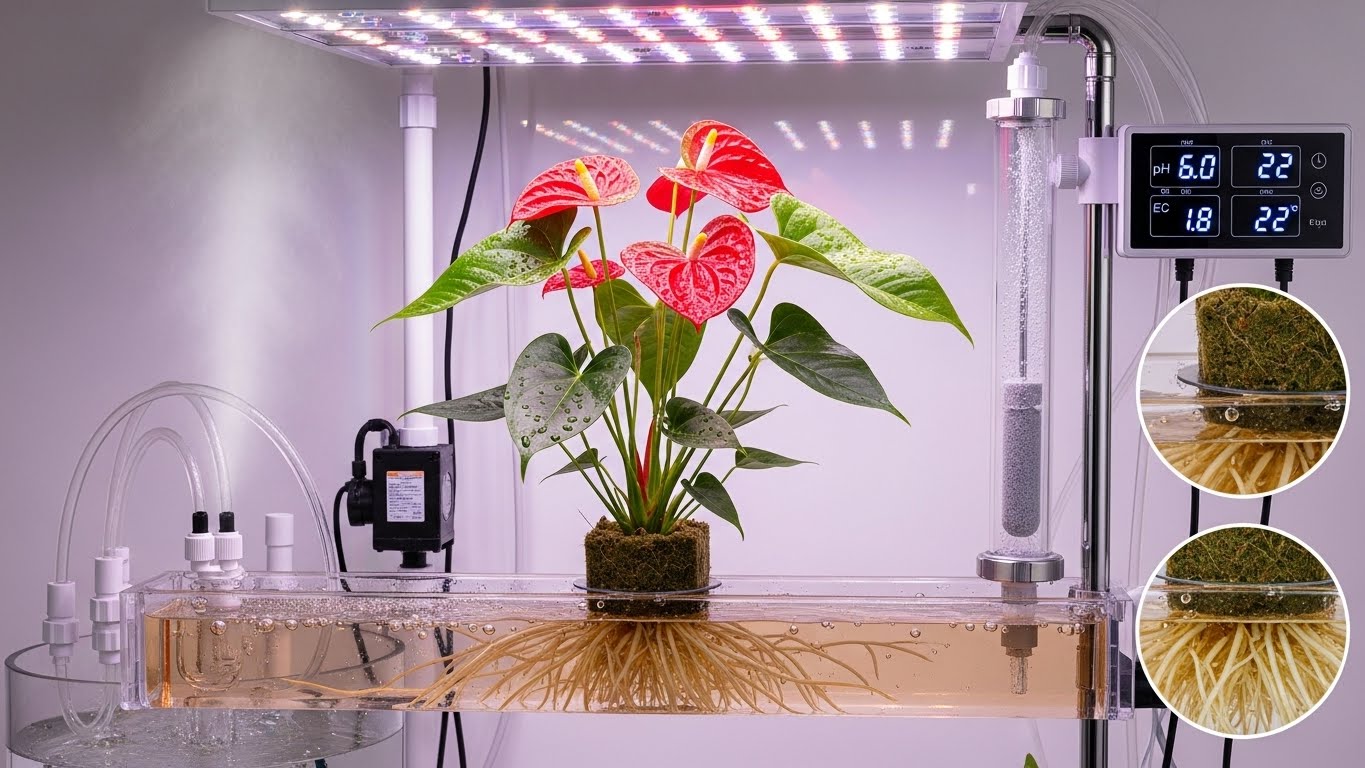
Growing anthuriums in water is a fun, low-maintenance way to showcase these beautiful plants! To start your hydroponic setup, choose a clear container, use distilled water, and keep the roots submerged while avoiding drowning them. Change the water every two weeks for freshness and mix in hydroponic fertilizers regularly. Keep an eye on the pH between 5.5 and 6.5 for best plant health. Stick around to uncover more tips on ensuring your anthuriums thrive!
Key Takeaways
💡 Understanding when to repot your anthurium is crucial for its growth.
➜ Get the step-by-step guide
- Select clear containers to monitor root growth, using filtered or distilled water for optimal health.
- Change water every two weeks to prevent stagnation and maintain oxygen levels.
- Maintain a pH balance between 5.5 and 6.5 for effective nutrient absorption.
- Use hydroponic fertilizers every two to four weeks to meet nutrient needs.
- Ensure proper water circulation with pumps or air stones to promote root health.
Understanding Anthuriums: A Brief Overview

Anthuriums, often called flamingo flowers, are a vibrant addition to any indoor garden. With their heart-shaped leaves and stunning blooms, these plants can truly brighten up your space. You’ll find various anthurium varieties, each offering unique colors and sizes, from the classic red to soft pinks and whites. Understanding their growth habits is vital; they thrive in warm, humid environments and prefer indirect sunlight. Just remember, these beauties like well-draining soil, so keep that in mind while you care for them. Watering them regularly is essential, but be careful not to overdo it. By getting to know these fantastic plants, you’ll create a lively atmosphere in your home, making every corner feel more inviting and alive. Additionally, they are epiphytes, which means they naturally grow on other plants, allowing them to adapt to well-draining soil conditions that mimic their native habitat.
Benefits of Growing Anthuriums in Water
Growing anthuriums in water offers several exciting benefits that can make your gardening experience even more enjoyable. First, their stunning aesthetic appeal brightens up any space, turning your home into a tropical paradise. You’ll love how the vibrant colors catch the eye and spark joy. Plus, growing them in water is incredibly low maintenance. You won’t need to worry about soil pests or messy cleanup. Just change the water regularly, and you’re good to go! This method also allows you to easily monitor the roots, ensuring they stay healthy and vibrant. With less fuss and more beauty, you’ll find that nurturing anthuriums in water is not only satisfying but also a delightful way to enhance your living environment.
Setting Up Your Hydroponic System
To create a thriving hydroponic system for your anthuriums, you’ll need to gather a few essential supplies and set everything up properly. First, consider the different hydroponic system types, like deep water culture or nutrient film technique. Each offers unique benefits, so choose one that suits your lifestyle. Next, focus on water circulation techniques, which are vital for ensuring your plants get enough nutrients and oxygen. You can use a submersible pump or a simple air stone to keep the water moving. Finally, remember to maintain a clean environment, as this helps prevent algae and bacteria growth. With the right setup, your anthuriums will thrive, bringing beauty and joy into your space!
Choosing the Right Container and Water
When you’re ready to plunge into hydroponics, selecting the right container and water is essential for your anthuriums’ success. Start with container types; clear glass or plastic jars let you monitor root growth, while sturdy pots provide stability. Choose a container that suits your space and aesthetic.
Next, focus on water selection. Use filtered or distilled water to avoid harmful chemicals found in tap water, which can hinder your plants’ growth. Make certain the water level covers the roots but doesn’t drown them. Change the water every couple of weeks to keep it fresh and oxygen-rich. By carefully choosing your container and water, you’ll create a thriving environment for your beautiful anthuriums, making your hydroponic journey enjoyable and rewarding!
Care and Maintenance for Water-Grown Anthuriums
💡 Propagation can enhance your collection and ensure a continuous supply of beautiful blooms.
➜ Discover proven techniques
Taking care of your water-grown anthuriums is essential for their health and vibrancy. You’ll want to pay close attention to water quality, making certain it’s clean and free from harmful chemicals, while also keeping an eye on their nutrient needs to keep them thriving. By managing these factors, you can guarantee your plants not only survive but flourish in their water environment!
Water Quality Importance
💡 Identifying and addressing leaf issues is essential for maintathisng healthy plants.
➜ Explore advanced methods
Water quality plays a crucial role in the health and growth of your anthuriums, so understanding how to maintain it is essential. To keep your plants thriving, focus on these three important aspects:
- Water Source: Use distilled or rainwater whenever possible. Tap water often contains chemicals that can harm your plants.
- pH Balance: Aim for a pH level between 5.5 and 6.5. Regularly test the water to verify it stays within this range, as it affects nutrient absorption.
- Regular Changes: Change the water every two weeks to prevent stagnation and guarantee your anthuriums have fresh, clean water.
Nutrient Management Strategies
Nutrient management is just as important as water quality for keeping your anthuriums healthy and vibrant. To thrive, these beauties need the right nutrient types, like nitrogen, phosphorus, and potassium. You can find these in hydroponic fertilizers specially formulated for water-growing plants.
Timing’s vital too; you should feed your anthuriums every two to four weeks. This helps guarantee they get the nutrients they need when they’re actively growing. Remember to dilute your fertilizer to avoid overloading their delicate roots.
Troubleshooting Common Issues in Hydroponic Anthurium Growth
While growing anthuriums in water can be a rewarding experience, you might run into a few common issues along the way that could leave you scratching your head. Here’s how to tackle them:
Growing anthuriums in water is fulfilling, but be prepared for common challenges that may arise.
- Root Rot: If you notice a foul smell or mushy roots, it’s likely root rot. Remove the affected roots and change the water frequently to keep things fresh.
- Pests: Tiny invaders can pop up unexpectedly. Keep an eye out for aphids or spider mites. Regularly check your plants and use gentle pest management techniques, like insecticidal soap.
- Nutrient Deficiency: Yellowing leaves might indicate a lack of nutrients. Consider adding a diluted hydroponic fertilizer to your water every few weeks to keep your anthuriums thriving.
Conclusion
To sum up, growing anthuriums in water can be a rewarding adventure, much like starting a journey through a lush tropical paradise. With the right setup and care, you’ll watch these stunning plants thrive, showcasing their vibrant colors and unique shapes. Remember, every drop of water counts, so keep an eye on their needs and enjoy the beauty they bring to your space. Immerse yourself in this hydroponic world, and let your green thumb bloom!
💡 Anthuriums make wonderful gifts, and knowing their symbolism can enhance your gifting experience.
➜ Learn the complete strategy


