
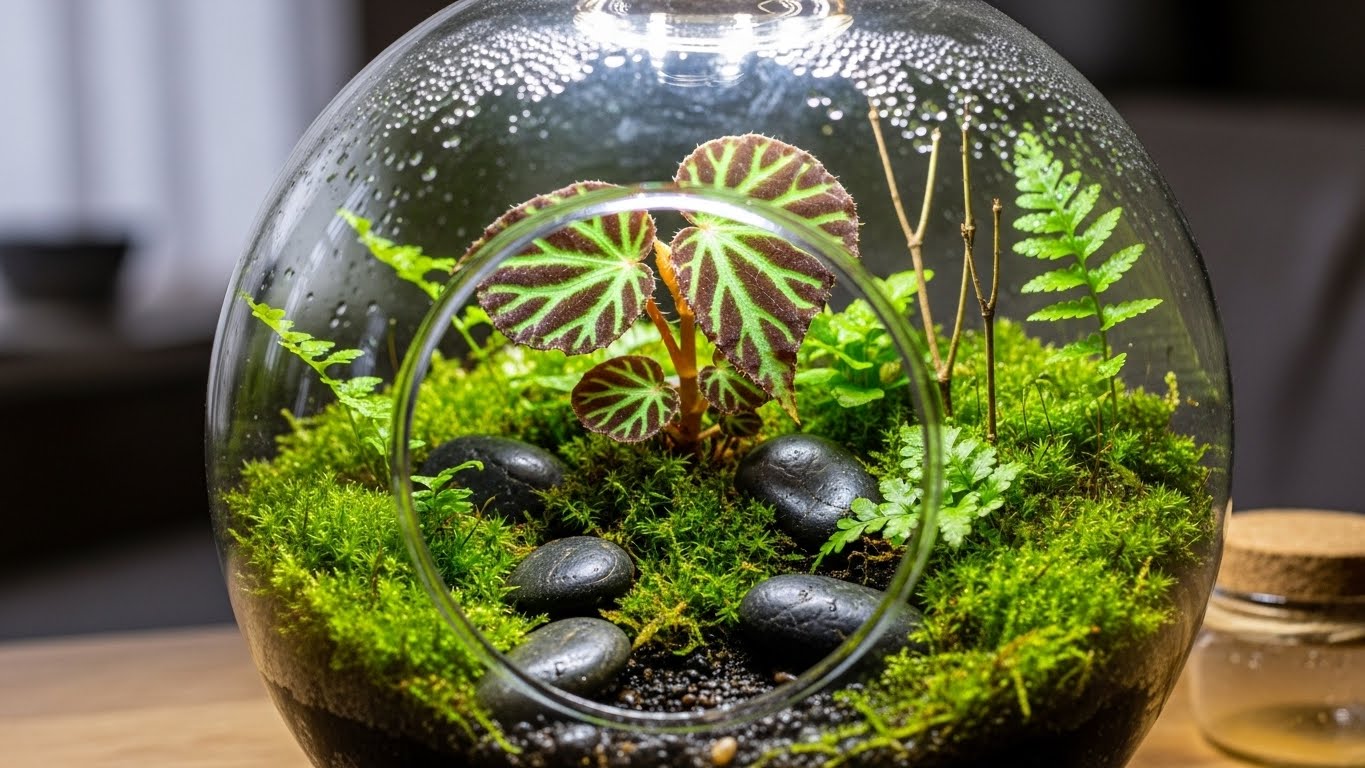
Growing begonias in terrariums can be a fun project! Start by choosing the right terrarium size, ensuring there’s enough space for each plant. Select begonia varieties that suit your light conditions and mix colorful leaves for a stunning display. Don’t forget proper drainage with pebbles and charcoal to prevent soggy roots. Maintain bright, indirect light and monitor humidity levels. Regularly prune and check for pests to keep your plants healthy. Keep going to discover tips on creating a beautiful arrangement!
Key Takeaways
💡 Ensure your begonias thrive throughout the seasons with a comprehensive care calendar.
➜ Master this year-round care strategy
- Do choose the right terrarium size: Select a size that allows for proper plant spacing and growth, enhancing visual appeal.
- Don’t overwater your begonias: Water every 7 to 10 days, ensuring the soil is slightly damp but never soggy to prevent root rot.
- Do ensure effective drainage: Use a mix of pebbles, activated charcoal, and sand to prevent waterlogging and promote healthy root growth.
- Don’t expose begonias to direct sunlight: Place the terrarium in bright, indirect light to avoid scorching delicate leaves and maintain optimal growth.
- Do regularly inspect for pests: Check for signs of aphids, spider mites, or powdery mildew, and treat them promptly to keep your plants healthy.
Selecting the Right Terrarium Size

When you’re diving into the world of terrariums, picking the right size is essential, since it sets the stage for your begonias to thrive. Consider the various terrarium shapes available—each offers unique opportunities for growth. A tall, cylindrical terrarium might give your plants room to stretch, while a wide, shallow one encourages broader plant spacing, allowing your begonias to flourish without feeling cramped. Aim to provide each plant enough space to grow and breathe, as too little room can hinder their development. Remember, the right size not only supports healthy growth but also enhances the aesthetic of your space. So, choose wisely, and let your begonias shine in their new, cozy home!
Choosing the Best Begonia Varieties
Choosing the best begonia varieties for your terrarium can be an exciting adventure, especially since these plants come in so many stunning forms and colors. You’ll find popular begonia types like the Rex begonia, known for its beautifully patterned leaves, and the Wax begonia, which brings vibrant blooms. Each type has unique begonia characteristics; for instance, some thrive in lower light, while others prefer bright, indirect sunlight. Consider the size and shape of your terrarium when selecting, as some varieties can grow quite large. Don’t forget to mix textures and colors for a mesmerizing display! With so many options, you’re sure to find the perfect begonias that’ll make your terrarium truly special. Proper watering is essential for their health, as overwatering can lead to root rot. Happy planting!
Ensuring Proper Drainage
Ensuring proper drainage is essential for the health of your begonias in a terrarium, and it’s easier than you might think! Start by creating effective drainage layers at the bottom of your terrarium. A simple mix of pebbles, activated charcoal, and sand can work wonders. The right soil composition is equally important; use a well-draining potting mix to keep your begonias thriving.
Here’s a quick overview:
Drainage Layer | Purpose | Recommended Material |
|---|---|---|
Bottom Layer | Prevents waterlogging | Pebbles |
Charcoal Layer | Removes odors & toxins | Activated charcoal |
Topsoil Layer | Supports plant growth | Well-draining potting mix |
With these tips, you’ll create a happy home for your begonias!
Understanding Light Requirements
Understanding the light requirements for your begonias is essential for their growth and significance. These lovely plants thrive best in bright, indirect sunlight. Direct sunlight can scorch their delicate leaves, so it’s vital to find that sweet spot where they can soak up enough light without being overwhelmed. You’ll want to pay attention to light intensity; too little can cause them to become leggy and weak, while too much can lead to browning edges. Position your terrarium near a window that filters the sun, or use sheer curtains to diffuse the light. Remember, adjusting their environment as seasons change will keep your begonias happy and vibrant, creating a stunning display in your home. Happy growing!
Maintaining Humidity Levels
While you might think that light is the only factor to take into account for your begonias, maintaining the right humidity levels is just as vital for their health and happiness. Begonias thrive in humid environments, so consider using humidity sources like pebble trays or a small humidifier. It’s also helpful to group your plants together, as they can create a microclimate that boosts moisture. Don’t forget about humidity monitoring! Keep an eye on moisture levels with a hygrometer to guarantee they stay within the ideal range—around 50-70%. If the air feels too dry, mist your plants regularly. Remember, happy begonias lead to vibrant growth, so take the time to nurture their humidity needs!
Watering Techniques for Begonias
When it comes to watering begonias, timing and technique are key to keeping these beauties thriving in your terrarium. You want to guarantee proper moisture retention while promoting healthy root growth. Here’s a quick guide to help you:
Time of Day | Watering Method | Frequency |
|---|---|---|
Morning | Bottom watering | Once a week |
Afternoon | Mist lightly | Every 3 days |
Evening | Check soil moisture | As needed |
Always check the soil first; if it’s dry an inch down, it’s time to water. Avoid overwatering, as soggy roots can lead to rot. By paying attention to these watering techniques, you’ll keep your begonias happy and healthy!
Fertilizing Your Terrarium Plants
💡 If you’re looking for beautiful blooms without the hassle, wax begonias are a fantastic choice.
➜ Discover proven techniques for low-maintenance begonias
When it comes to fertilizing your terrarium plants, understanding the right types of fertilizers is key to keeping your begonias healthy and vibrant. You’ll want to think about how often you should apply these nutrients, as too much can be just as harmful as too little. Let’s explore the best options and frequency to help your plants thrive!
Types of Fertilizers
💡 Avoiding common pitfalls can make a significant difference in the health of your begonias.
➜ See how to avoid common indoor begonia mistakes
Fertilizing your terrarium plants is essential for their growth and health, and there are several types of fertilizers to reflect upon. You can choose from organic options, which are great for nurturing your plants naturally, or you might prefer liquid fertilizers for a more immediate boost. Organic options, like compost or worm castings, enrich the soil slowly, providing a steady supply of nutrients. On the other hand, liquid fertilizers can be diluted in water and applied directly, making it easy to adjust the strength according to your plants’ needs. No matter which type you pick, remember to read the labels and follow the instructions. Your begonias will thrive with the right care, and you’ll enjoy their beauty even more!
Application Frequency
After selecting the right fertilizer for your begonias, the next important step is figuring out how often to apply it. Application timing is essential for keeping your plants healthy and thriving. Generally, you should fertilize every four to six weeks during the growing season, which is typically spring and summer. This helps maintain a proper nutrient balance, ensuring your begonias get what they need without being overwhelmed. In the fall and winter, you can ease off since your plants will slow down their growth. Remember, it’s better to under-fertilize than to overdo it. Keep an eye on your begonias; if they start to look a bit off, you might need to adjust your application frequency. Happy growing!
Pruning and Care Tips
Now that you’ve got your begonias thriving, it’s essential to keep them looking their best with some smart pruning and care tips. You’ll want to learn the best techniques to trim your plants while ensuring they get the right amount of water to flourish. By mastering these skills, you’ll create a vibrant terrarium that showcases your beautiful begonias!
Pruning Techniques Explained
When it comes to keeping your begonias thriving in a terrarium, mastering pruning techniques is essential. Start by deadheading flowers; this means removing spent blooms to encourage new growth and maintain your plant’s beauty. Use sharp scissors to snip them off right at the base. Next, focus on shaping foliage. Trim any leggy or overgrown branches to create a balanced, fuller appearance. Be gentle and avoid cutting too much at once, as this can stress your plant. Regular pruning not only enhances your begonias’ look but also promotes healthy growth. Remember, a little care goes a long way, so embrace these techniques and watch your terrarium flourish with vibrant begonias! Happy pruning!
Watering Guidelines for Begonias
To keep your begonias thriving in a terrarium, understanding the right watering guidelines is essential. You’ll want to check the soil moisture regularly; it should be slightly damp but never soggy. A good rule of thumb is to water your begonias every 7 to 10 days, adjusting the water frequency depending on your terrarium’s environment. If it’s warm and humid, you might find they need a little less water. Conversely, during cooler months, they may require more. Always avoid letting water sit at the bottom of the terrarium, as this can lead to root rot. Remember, keeping an eye on your plants will help you find that perfect balance for their growth and happiness!
Common Pests and Diseases
Even though begonias are beautiful additions to terrariums, they can sometimes attract pesky pests and suffer from diseases that may threaten their health. Common offenders include aphids, spider mites, and powdery mildew. To tackle these issues, focus on effective pest management and disease prevention. Regularly inspect your plants for signs of trouble, like discolored leaves or sticky residue. If you spot any pests, gently wash them off with water or use insecticidal soap. For disease prevention, guarantee your terrarium has good airflow and avoid overwatering, as damp conditions can invite fungal problems. Remember, keeping your begonias healthy means being vigilant and proactive, so don’t hesitate to take action at the first sign of trouble!
Creating an Aesthetic Arrangement
How do you create an aesthetic arrangement for your begonias in a terrarium? Start by considering arrangement balance; you want to mix taller plants with shorter ones to create visual interest. Place taller begonias in the back and shorter varieties towards the front. Next, think about color contrast. Choose begonias with vibrant leaves, like green and red, to make each other pop. You might even add decorative stones or moss to enhance the overall look. Don’t forget about spacing! Give each plant enough room to breathe and grow. Finally, step back and admire your work. Adjust any plants if needed, ensuring your terrarium feels harmonious and inviting. With these tips, you’ll have a stunning display that showcases your beautiful begonias!
Conclusion
To sum up, growing begonias in terrariums can be a rewarding adventure if you follow these do’s and don’ts. Remember, “patience is a virtue”—your plants need time to thrive! By selecting the right size, choosing suitable varieties, and maintaining proper care, you’ll create a beautiful, vibrant environment. So, roll up your sleeves, get your hands dirty, and enjoy the process of nurturing your green companions. Happy gardening, and may your terrarium flourish!
💡 Humidity is key to thriving begonias, especially in a terrarium setting.
➜ Explore advanced methods to enhance humidity


