
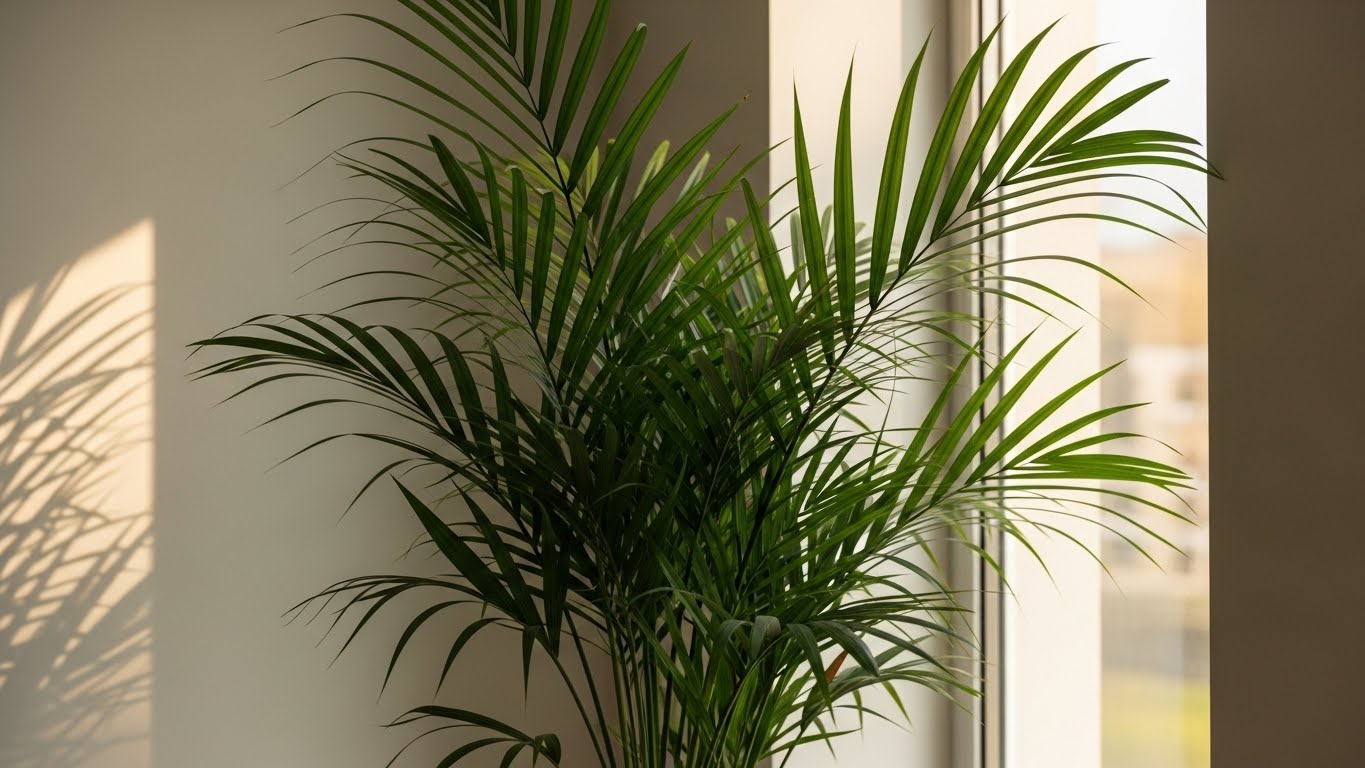
Areca palms thrive best in bright, indirect light, which makes them perfect for your home or garden. They need about 6-8 hours of light each day, so placing them near east or west-facing windows is ideal. Too much direct sunlight can scorch their fronds, while not enough light can stunt their growth. Keep an eye out for yellowing leaves or browning tips, as these can be signs your palm is unhappy. Want to know more about caring for your Areca palm?
Key Takeaways
💡 If you’re curious about starting your Areca Palm journey from seeds, this article provides valuable insights.
➜ Discover proven techniques
- Areca palms thrive in bright, indirect light for 6-8 hours daily to support optimal growth.
- Excessive direct sunlight can scorch fronds, while insufficient light can stunt growth.
- Yellowing leaves may indicate inadequate light, while browning tips suggest too much direct sun.
- Ideal indoor placement is near east or west-facing windows, avoiding direct sunlight exposure.
- Areca palms can adapt to lower light conditions but prefer dappled sunlight similar to their natural habitat.
Understanding Areca Palm Lighting Preferences
When it comes to keeping your Areca palm happy and thriving, knowing its lighting preferences is key. These lovely plants adore bright, indirect light, so finding the right spot in your home is crucial. You’ll want to guarantee they receive the proper light intensity; too much direct sunlight can scorch those beautiful fronds, while too little can stunt their growth. Aim for about six to eight hours of light duration each day, but remember, consistency is essential! If you notice yellowing leaves, it might signal that your palm isn’t getting enough light. Keep an eye on your Areca, and adjust as needed. With the right lighting, you’ll create a vibrant oasis in your space, and your palm will flourish! Additionally, Areca Palms can adapt to lower light conditions, but this may result in slower growth and a leggier appearance.
Ideal Light Conditions for Areca Palms
To help your Areca palm thrive, it’s essential to understand its best light conditions. In its natural habitat, this palm loves bright, indirect light, so you’ll want to mimic that at home. By recognizing optimal light levels and watching for signs of light stress, you can keep your plant healthy and happy!
Natural Habitat Overview
Areca palms thrive in environments that mimic their natural habitat, where they bask in dappled sunlight filtering through taller trees. In the lush tropical ecosystem of their origin, these palms flourish under a canopy, receiving just the right amount of light. You’ll find that they love warm temperatures and high humidity levels, which help them grow strong and healthy. If you want to replicate this environment at home, consider placing your areca palm near a window with indirect sunlight, allowing it to feel cozy. Keeping the air around it humid can also be beneficial; misting the leaves or using a pebble tray filled with water can create that tropical vibe, helping your palm thrive beautifully.
Optimal Light Levels
While you might think that all plants love direct sunlight, areca palms actually prefer bright, indirect light to thrive. These beautiful palms flourish best when you provide the right light intensity and duration. Here’s what you should aim for:
- Light Intensity: Aim for a spot that receives filtered sunlight, avoiding harsh direct rays.
- Light Duration: Ideally, your areca palm should bask in bright, indirect light for about 10-12 hours a day.
- Indoor Placement: A location near a window with sheer curtains is perfect.
- Rotation: Rotate your palm occasionally to guarantee even light exposure on all sides.
Signs of Light Stress
Understanding the signs of light stress in your areca palm is essential for keeping it healthy and vibrant. When your palm isn’t getting the right light intensity, it can show clear signs of distress. For instance, yellowing leaves can indicate it’s struggling with too much or too little light. If you notice browning leaf tips, that could mean it’s just not adapting well to its current light conditions. Remember, areca palms thrive in bright, indirect light, so if it’s too dim, it may not flourish. Keep an eye out for these signs, and don’t hesitate to adjust its location or light exposure. With a little attention, your areca palm will thrive beautifully!
Signs Your Areca Palm Is Getting Too Much or Too Little Light
Determining whether your Areca palm is thriving or struggling often starts with observing its light conditions. You’ll want to pay close attention to any signs of distress, as they can guide your light adjustment.
Here are some indicators your palm might be getting too much or too little light:
💡 Understanding whether your Areca Palm needs additional light can enhance its growth and health.
➜ Get the step-by-step guide
- Leaf discoloration: Yellowing leaves often signal too much light, while dark green or dull leaves may indicate insufficient light.
- Leaf drop: If your palm is shedding leaves, it might be a sign of light imbalance.
- Stunted growth: A lack of growth can suggest your palm isn’t receiving enough light.
- Browning tips: This could mean it’s getting too much direct sunlight.
Indoor vs. Outdoor Lighting for Areca Palms
When considering the lighting needs of your Areca palm, it’s essential to understand the differences between indoor and outdoor conditions. Indoors, you’ll want to place your palm near bright, indirect light to keep it thriving, while outdoors, it flourishes best in partial shade or filtered sunlight. Knowing these ideal conditions helps you create the perfect environment for your Areca palm to grow strong and healthy!
💡 If you’re noticing curling leaves on your Areca Palm, it could be related to light conditions. This article helps you troubleshoot effectively.
➜ Master this approach
Optimal Indoor Lighting
To keep your Areca palm thriving indoors, you’ll want to pay close attention to its lighting needs, especially since these plants flourish in bright, indirect sunlight. While indoor light may not replicate outdoor conditions, you can create a cozy environment with the right light sources. Here are some tips to guarantee your palm gets the best light:
- Place your Areca palm near east or west-facing windows.
- Use sheer curtains to filter bright sunlight.
- Rotate the plant every few weeks for even growth.
- Consider using grow lights if natural light is limited.
Ideal Outdoor Conditions
Areca palms thrive best in outdoor conditions, where they can soak up plenty of bright, indirect sunlight. For ideal outdoor placement, choose a spot that offers dappled light, like under a tree or on a patio shaded by an umbrella. Too much direct sunlight can scorch their leaves, so be mindful of their sunlight exposure.
You’ll find that these palms can handle varying light levels, but they truly flourish in a gentle breeze and natural surroundings. Keeping them outdoors not only enhances their growth but also adds a tropical vibe to your space! Just remember, finding the right balance of light will keep your Areca palm happy and healthy, ensuring it brings joy to your outdoor oasis.
Common Myths About Areca Palm Light Requirements
Many people believe that Areca palms thrive only in direct sunlight, but that’s just one of the myths surrounding their light requirements. Let’s clear up some common palm misconceptions:
Areca palms thrive in bright, indirect light, debunking the myth that they only flourish in direct sunlight.
- Areca palms can’t tolerate low light: They actually prefer bright, indirect light and can adapt to lower light conditions.
- They need constant sunlight: While they enjoy light, too much direct sun can scorch their leaves.
- Any type of light is good: Fluorescent or artificial light isn’t ideal; natural light is best for growth.
- They won’t grow indoors: With the right light, these palms can flourish beautifully inside your home.
Understanding these light myths can help you create a loving environment for your Areca palm to thrive.
Tips for Creating the Perfect Light Environment for Areca Palms
Creating the perfect light environment for your Areca palm can be a rewarding challenge, especially when you see it thrive in a well-suited space. To start, place your palm in a spot with bright, indirect sunlight. This helps maintain the right light intensity for ideal growth patterns. If natural light is limited, consider using grow lights to supplement, guaranteeing they mimic the sun’s warmth. Monitor your palm’s leaves; if they turn yellow, it might be getting too much light. Conversely, if the growth slows down, it may need a little more. Remember, consistency is key! Rotate your plant occasionally to guarantee all sides receive equal light, promoting balanced growth and a fuller appearance. Your Areca will thank you!
Conclusion
To sum up, giving your areca palm the right amount of light is like finding the perfect recipe; too much or too little can spoil the dish! Aim for bright, indirect sunlight, and keep an eye on those telltale signs of distress. Whether indoors or outdoors, your palm will thrive in the right conditions. So, create a cozy light environment, and watch your areca palm grow tall and lush, turning your space into a mini tropical paradise!
💡 Areca Palms not only beautify your space but also purify the air. Learn how proper light contributes to their air-purifying abilities.
➜ Explore advanced methods


