
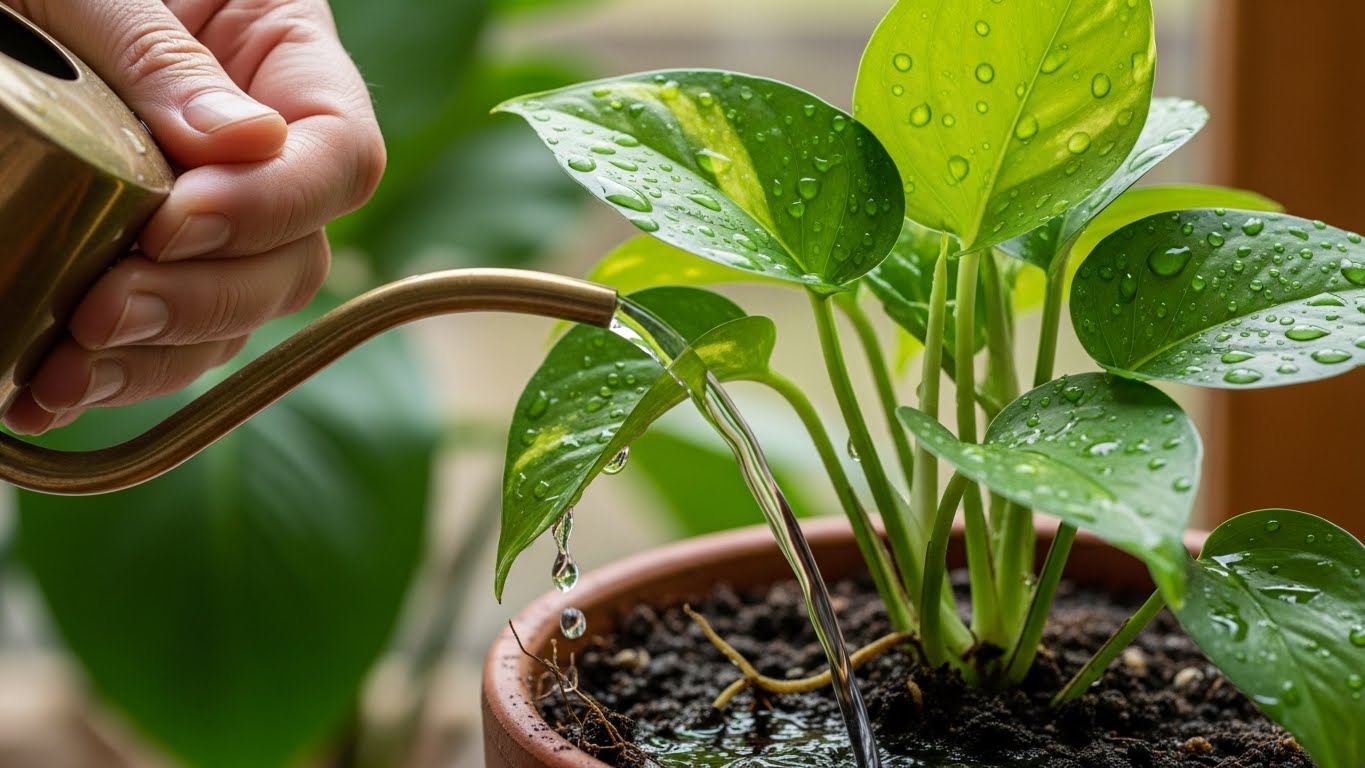
To keep your Pothos happy, water it based on the soil’s moisture level. If the top inch of soil feels dry, it’s time to give it a drink! Water your plant every 1-2 weeks in spring, weekly in summer, and every 2-3 weeks during winter. Always check for signs of yellowing leaves or drooping, which indicate over or underwatering. Discovering the perfect watering routine for your Pothos is an adventure, so keep going for more tips!
Key Takeaways
- Water pothos every 1-2 weeks in spring, weekly in summer, and every 2-3 weeks in winter due to dormancy.
- Check soil moisture; water when the top inch feels dry to prevent overwatering.
- Adjust watering based on environmental conditions like humidity, temperature, and light exposure.
- Use well-draining soil and ensure pots have drainage holes to avoid root rot.
- Trust your instincts; observe the plant for signs of underwatering or overwatering to adjust the routine.
Understanding Pothos and Its Watering Needs
Pothos, often celebrated for its lush, heart-shaped leaves and resilience, is a fantastic choice for both beginner and seasoned plant enthusiasts. Its origins trace back to the tropical rainforests of Southeast Asia, where it thrives in the shade and humidity. You might’ve heard some watering myths, like how pothos loves to sit in water. This isn’t true! While they do enjoy moisture, overwatering can lead to root rot, jeopardizing your plant’s health. Instead, learn to read the signs your pothos gives you. By understanding its needs, you’ll create a nurturing environment that allows it to flourish. Remember, your pothos is a living companion, and with a little care, it’ll reward you with vibrant greenery for years to come!
Signs Your Pothos Needs Water
When you notice your pothos starting to droop or its leaves curling, it’s a clear sign that it might be thirsty. This is your plant’s way of saying, “Help me!” If you catch your pothos looking a bit sad, don’t worry—it’s an easy fix. Keep an eye on the soil; if it feels dry a couple of inches down, it’s time for some hydration. Remember these pothos watering tips: always water thoroughly, letting excess drain out. If you ignore those signs, your lovely pothos could face drought stress, which can lead to further issues. So, pay attention to your plant’s cues, and you’ll keep it happy and healthy!
Signs of Overwatering in Pothos
While it’s easy to get carried away with watering your pothos, overdoing it can lead to trouble for your plant. You’ll want to watch for these overwatering symptoms to keep your pothos healthy:
- Yellowing Leaves: If the leaves start turning yellow, it’s a sign they’re drowning.
- Wilting: Ironically, overwatered pothos can wilt, as roots suffer from root rot and can’t absorb nutrients.
- Mushy Stems: If the stems feel soft or mushy, it’s a clear warning that your plant’s roots are in distress.
Recognizing these signs early can help you adjust your watering routine and save your beloved pothos from root rot. Your plant will thank you for paying attention!
Ideal Watering Frequency for Pothos
When it comes to watering your pothos, understanding the right frequency is key to keeping your plant healthy and thriving. You’ll want to pay attention to soil moisture levels, adjust your watering schedule with the changing seasons, and consider the size of your pot. With these factors in mind, you can create a watering routine that supports your pothos’ growth and wellness!
Soil Moisture Levels
Understanding soil moisture levels is essential for keeping your Pothos thriving, as these plants love a balance between being well-hydrated and avoiding soggy roots. To achieve this, keep an eye on the following:
- Check the top inch of soil – If it feels dry, it’s time to water. If it’s still moist, hold off a bit longer.
- Ensure proper soil drainage – Use a pot with drainage holes, allowing excess water to escape and preventing root rot.
- Consider moisture retention – A well-draining potting mix can help maintain just the right amount of moisture without drowning your plant.
Seasonal Watering Adjustments
Adjusting your watering routine based on the changing seasons can make a big difference in keeping your Pothos happy and healthy. As temperatures rise in summer, your Pothos might need more water due to increased evaporation. During cooler months, however, you’ll want to reduce watering since your plant’s growth slows. Pay attention to seasonal rainfall too; if it’s raining a lot, you may not need to water as frequently.
Here’s a quick guide:
Season | Watering Frequency | Notes |
|---|---|---|
Spring | Every 1-2 weeks | Growth spurt, more moisture |
Summer | Weekly | High evaporation, keep an eye |
Winter | Every 2-3 weeks | Dormancy, less water needed |
Adjust as needed for temperature fluctuations!
Pot Size Considerations
The size of your Pothos pot plays an essential role in how often you should water your plant. A bigger pot holds more soil, which retains more moisture, while a smaller pot dries out quicker. Here are some pot size considerations to keep in mind:
- Small Pots: These need watering more frequently, usually every week, since they dry out faster.
- Medium Pots: You can water every 10 to 14 days, as they strike a balance between moisture retention and drainage.
- Large Pots: Water every 2 to 3 weeks, but make sure they have proper drainage holes to prevent root rot.
Factors Influencing Watering Schedule
When it comes to watering your pothos, a few key factors play a big role in figuring out the right schedule. You’ll want to keep an eye on soil moisture levels, as they can tell you when your plant needs a drink, and consider environmental conditions like humidity and temperature, which can change how quickly the soil dries out. By paying attention to these elements, you’ll guarantee your pothos stays happy and healthy!
Soil Moisture Levels
Understanding soil moisture levels is key to keeping your pothos plant happy and healthy. You want to pay attention to how wet or dry the soil feels to guarantee proper moisture retention. Here are three important factors to take into account:
- Soil Type: Well-draining soil is essential; it helps prevent root rot by allowing excess water to escape.
- Pot Size: A larger pot holds more soil, which retains moisture longer. Smaller pots dry out quickly, needing more frequent watering.
- Plant Size: Bigger plants use more water, so if your pothos is thriving, it might need extra hydration.
Environmental Conditions
Environmental conditions play a huge role in determining how often you should water your pothos plant. When you think about light exposure, remember that brighter spaces can dry out the soil faster, so you might need to water more often. On the flip side, if your pothos is in a low-light area, it will retain moisture longer, and you can hold off for a bit. Temperature fluctuations also impact watering; if your home gets warm during the day and cooler at night, the plant might need extra hydration to cope. Keep an eye on these factors, and trust your instincts! Your pothos will flourish when you adjust your watering routine to match its unique environment.
Pot Size and Soil Type Considerations
Choosing the right pot size and soil type for your pothos can make a huge difference in how often you need to water it. Here are some key points to take into account:
- Potting Material: Choose pots made of breathable materials like terracotta or ceramic. They help prevent overwatering by allowing moisture to escape.
- Drainage Holes: Always verify your pot has drainage holes. This allows excess water to flow out, reducing the risk of root rot.
- Pot Size: A slightly larger pot can give roots room to grow, but avoid going too big. A pot that’s too large retains more moisture, which can lead to soggy soil.
Seasonal Changes and Watering Adjustments
As the seasons change, so does your pothos’ need for water. During the spring and summer, when your plant experiences seasonal growth, it’ll naturally crave more hydration. The warmer temperatures mean the soil dries out faster, so keep an eye on it, watering when the top inch feels dry. Conversely, as autumn and winter roll in, temperature fluctuations can impact your plant’s water needs. With cooler weather, your pothos will slow its growth, requiring less water. In this season, you might only need to water every couple of weeks. Remember, adjusting your watering routine according to the season helps your pothos thrive, ensuring it’s happy and healthy year-round. Keep those changes in mind, and your plant will flourish!
Humidity and Its Effect on Watering
Humidity plays a big role in how often you should water your pothos. Ideally, these plants thrive in humidity levels between 40% and 70%, so if your home feels dry, you might notice some signs of low humidity, like browning leaf tips or slower growth. Keeping an eye on these indicators can help you adjust your watering routine for a healthier, happier plant!
Ideal Humidity Levels
When you care for your Pothos, understanding the ideal humidity levels is key to keeping your plant happy and healthy. Pothos thrive in humidity levels between 40% and 70%. Here’s how you can create the perfect environment for your leafy friend:
- Misting: Lightly mist your Pothos once or twice a week to boost humidity effects, especially in dry seasons.
- Pebble Trays: Place a tray filled with water and pebbles under your pot. As the water evaporates, it increases humidity around the plant.
- Humidity Monitors: Use a hygrometer to keep an eye on humidity levels, ensuring they’re within the ideal range.
Signs of Low Humidity
Recognizing the signs of low humidity is essential for keeping your Pothos healthy and thriving. If the air in your home is too dry, you might notice crispy leaf edges or yellowing leaves. Your Pothos may also exhibit stunted growth, struggling to reach its full potential. Another telltale sign is when the leaves start to curl inward, which can signal that humidity levels aren’t ideal. To keep your plant happy, aim for a humidity level of at least 40-60%. If you’re noticing these symptoms, it might be time to increase moisture in the air. Consider using a humidifier or placing your pot on a tray filled with pebbles and water, ensuring your Pothos gets the care it deserves!
Temperature Impact on Pothos Water Requirements
While you might think that watering your Pothos plant is a one-size-fits-all task, the temperature in your home actually plays a significant role in how often you should water it. Pothos thrive best within specific temperature thresholds, and climate variations can change their water needs. Here’s what you should consider:
- Warm temperatures (above 75°F): Water more frequently, as the plant will lose moisture quickly.
- Moderate temperatures (65°F to 75°F): Stick to a regular watering schedule, checking the soil to avoid overwatering.
- Cool temperatures (below 65°F): Reduce watering, as Pothos will require less moisture and can go dormant.
Water Quality and Its Importance
Water quality plays an important role in the health of your Pothos plant, so it’s critical to pay attention to what you’re using. The water source you choose can greatly impact your plant’s growth and overall vigor. Tap water often contains chlorine and fluoride, which may not be friendly to your Pothos. Instead, consider using filtered or distilled water to give your plant the best chance at thriving.
Also, keep an eye on the pH levels of your water. Pothos prefer a slightly acidic to neutral pH, around 6 to 7. Testing your water can help guarantee it’s just right for your green friend. By focusing on water quality, you’ll create a more nurturing environment for your Pothos to flourish.
How to Properly Water Your Pothos
To keep your Pothos thriving, mastering the art of watering is crucial. Here’s how to do it right:
- Choose the Right Water Temperature: Use lukewarm water. Cold water can shock your plant, while warm water encourages better absorption.
- Apply Effective Watering Techniques: Water your Pothos until you see it draining from the bottom of the pot. This guarantees the roots get enough moisture without sitting in water.
- Monitor and Adjust: Check the soil regularly. If it feels dry an inch down, it’s time to water again. But if it’s still moist, hold off a bit longer.
Using a Moisture Meter for Pothos
Using a moisture meter for your Pothos can make watering easier and more effective! This handy tool helps you find the ideal moisture levels, ensuring your plant gets just the right amount of water. Plus, with a moisture meter, you can confidently avoid overwatering or underwatering, keeping your Pothos healthy and thriving!
Benefits of Moisture Meters
When you’re caring for your Pothos, knowing the right moisture level can make all the difference, and that’s where a moisture meter shines. This handy tool takes the guesswork out of watering, helping you keep your plant happy and healthy. Here are some moisture meter benefits you’ll love:
- Accurate Readings: It provides precise moisture levels, so you won’t over or underwater your Pothos.
- Easy to Use: With simple moisture meter usage, you can quickly check your plant’s needs without fuss.
- Promotes Healthy Growth: Keeping the moisture just right encourages your Pothos to thrive, making your plant care journey more enjoyable.
Investing in a moisture meter is a smart choice for nurturing your beautiful green friend!
Ideal Moisture Levels
Finding the ideal moisture levels for your Pothos can be a game changer in keeping your plant thriving. To guarantee your Pothos gets the right amount of water, use a moisture meter. It gives you precise readings, helping you understand when to water. Aim for soil that’s slightly moist but not soggy; this balance is vital for healthy roots.
Here are some pothos hydration tips: water when the top inch of soil feels dry, and consider incorporating moisture retention techniques like adding perlite or coconut coir to your potting mix. These methods help keep the soil’s moisture levels consistent, giving your Pothos the hydration it craves. Happy watering, and watch your plant flourish!
Using the Meter Effectively
To get the most out of your moisture meter, it’s important to know how to use it effectively. This handy tool can help you gauge when your pothos needs water, making it easier to keep your plant healthy. Follow these steps for accurate reading levels:
- Insert the Probe: Gently push the meter’s probe into the soil about 2-4 inches deep, avoiding roots.
- Check the Reading: Look at the display to see the moisture level. Aim for a reading between 3 and 4 for ideal hydration.
- Water as Needed: If the meter shows a reading below 3, it’s time to water your pothos.
Using your moisture meter correctly can help you nurture your plant, keeping it thriving and vibrant!
Common Mistakes to Avoid When Watering
Watering your pothos might seem straightforward, but many people trip up by making common mistakes that can harm their plant. One big error is sticking to a strict watering schedule without checking the soil. Instead, feel the top inch—if it’s dry, it’s time to water. Overwatering can lead to root rot, so make sure your pot has good drainage. Also, don’t forget about moisture retention; using a well-draining soil mix helps balance moisture levels. Finally, avoid using cold water straight from the tap; room temperature water is gentler on your plant. By dodging these pitfalls, you’ll keep your pothos happy and thriving, and that’s what it’s all about!
Reviving an Overwatered or Underwatered Pothos
Reviving an overwatered or underwatered pothos can feel like a plant parent’s worst nightmare, but don’t worry—there’s still hope for your leafy friend! Here’s how you can help your plant bounce back:
- Assess the damage: Check for yellow leaves or mushy stems to identify overwatering. For underwatered plants, look for droopy, dry leaves.
- Adjust watering: If it’s overwatered, let the soil dry out completely before watering again. For underwatered plants, water thoroughly, allowing excess to drain.
- Provide proper light: Guarantee your pothos gets bright, indirect light to help it recover and stimulate growth.
With a little care, reviving your pothos can be a rewarding experience, bringing your green companion back to life!
Tips for Maintaining the Right Watering Routine
Maintaining the right watering routine for your pothos is key to keeping it healthy and thriving, especially since these plants can be quite sensitive to moisture levels. To achieve this, start by employing effective pothos watering techniques. Check the top inch of soil; if it’s dry, it’s time to water. Aim for an ideal watering schedule of once a week, adjusting based on your home’s humidity and temperature.
Consider using a moisture meter for precise readings. When watering, soak the soil thoroughly, allowing excess water to drain. This prevents root rot while ensuring your plant gets enough hydration. Keep an eye on your pothos’ leaves; if they droop, they might need more water, while yellowing leaves could indicate overwatering.
Conclusion
To sum up, keeping your pothos happy and healthy requires a keen eye on its watering needs. Did you know that over 90% of houseplant problems stem from improper watering? By understanding when and how to water your pothos, you can prevent issues and promote lush growth. Remember to check the soil moisture and adjust your routine based on factors like light and humidity. With a little care, your pothos will thrive and bring vibrant greenery to your space!


