
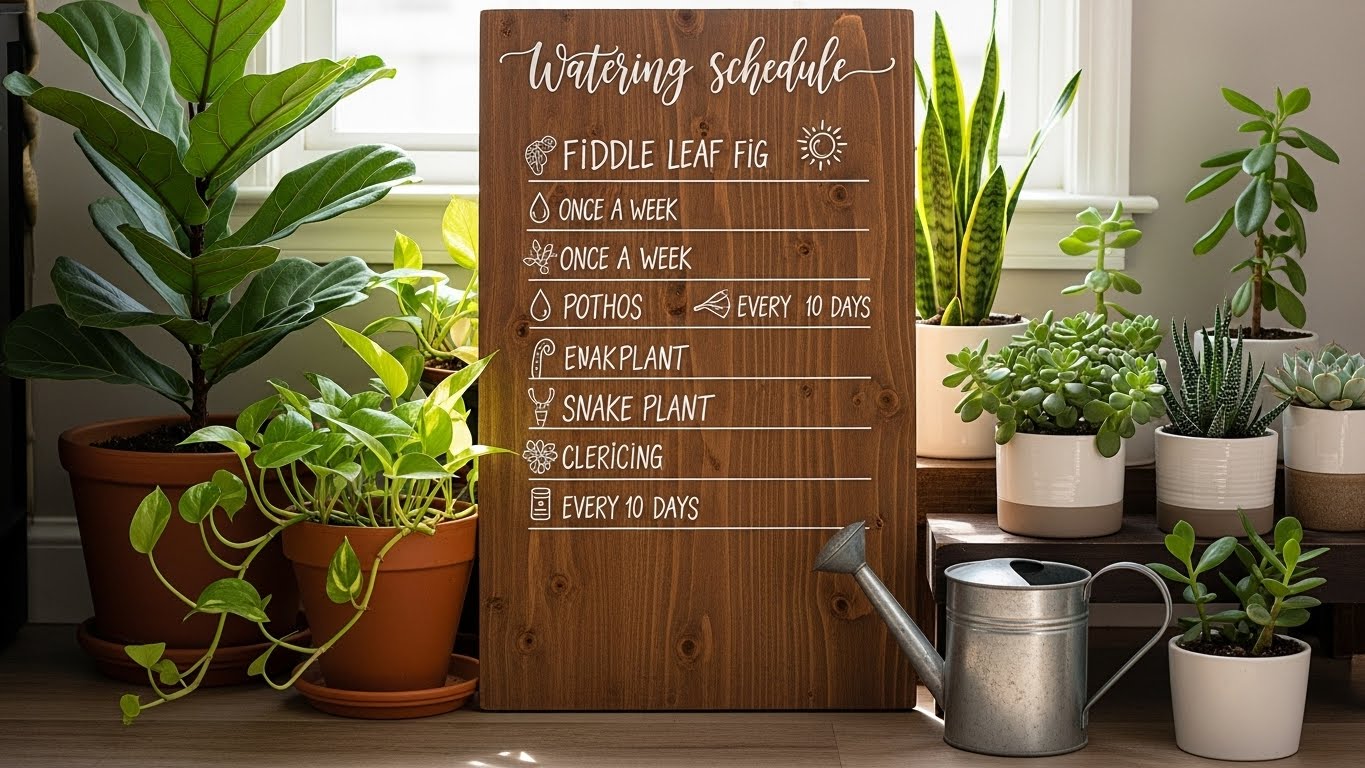
To create a simple indoor plant watering schedule, start by understanding each plant’s watering needs. Check soil moisture regularly using finger tests or moisture meters. Different plants might need watering every week or two, depending on their type and pot size. Adjust your schedule seasonally, watering more in warmer months and less in winter. Keep track of when you water, and watch for signs of over or underwatering. Stick around, and you’ll discover more helpful tips for plant care!
Understanding Your Plants’ Watering Needs
💡 Understanding the right watering techniques is crucial for your indoor plants’ health.
➜ Master this approach
When you’re caring for indoor plants, understanding their watering needs is essential, especially since overwatering or underwatering can lead to problems. Each plant species has unique requirements, so it’s crucial to know what yours need. For example, succulents thrive on little water, while ferns prefer a moist environment. Pay close attention to your plants; their leaves will often tell you if they’re thirsty or drowning. Healthy roots are key to vibrant plants, so check the soil. Stick your finger in about an inch deep—if it feels dry, it’s time to water. Finding the right balance helps maintain root health, ensuring your green friends flourish. Your plants will reward your care with beauty and life!
Factors Affecting Watering Frequency
When it comes to watering your indoor plants, several factors can change how often you need to do it. Different types of plants have unique needs, and environmental conditions like light and humidity play a huge role too. Plus, don’t forget about pot size; a larger pot holds more moisture, which can affect your watering schedule!
Plant Type Variability
Different types of indoor plants have unique needs, which means their watering schedules can vary quite a bit. For instance, tropical plants thrive in humidity and need consistent moisture, so you’ll want to check their soil regularly. They’re like your friends who just love a good chat; they need attention! On the other hand, succulent care is a whole different ballgame. These tough little guys prefer dryer conditions and can survive with less water, so you might only need to water them every couple of weeks. Understanding these differences helps you create an effective watering schedule. By tailoring your approach, you’ll keep your indoor garden happy and healthy, ensuring each plant gets just what it needs to flourish.
Environmental Conditions Impact
Environmental conditions play an essential role in determining how often you should water your indoor plants. Both humidity levels and temperature fluctuations greatly influence your plants’ needs. In dry environments, plants lose moisture quickly, requiring more frequent watering. On the other hand, higher humidity levels can slow down the evaporation process, meaning you might not need to water as often. Similarly, if your home experiences significant temperature changes, it can affect how much water your plants absorb. When it’s warmer, they may drink up more, while cooler temperatures can lead to slower growth and less water needed. Keep an eye on these factors, and you’ll find the perfect balance for your green companions!
Pot Size Considerations
Choosing the right pot size for your indoor plants can make a significant difference in how often you need to water them. A pot that’s too small won’t hold enough soil, leading to quicker drying out, while a larger pot may retain moisture longer. Consider the pot depth; deeper pots can store more soil, which helps retain water, especially if you’re using a soil type that drains well. If you choose a more absorbent soil, like peat, it might stay moist longer, allowing you to water less frequently. By balancing pot size and soil type, you’ll create a perfect watering routine, keeping your plants happy and thriving without stressing over their hydration needs.
Assessing Soil Moisture Levels
Understanding soil moisture is key to keeping your indoor plants healthy and thriving. You’ll want to check how deep the moisture goes in the soil and look for signs that it might be too dry. By mastering these skills, you’ll guarantee your plants get just the right amount of water they need to flourish!
Importance of Soil Moisture
Soil moisture is crucial for keeping your indoor plants healthy and thriving, and knowing how to assess it can make a big difference in your plant care routine. When you understand soil moisture, you can improve moisture retention and guarantee your plants get just the right amount of water. Too much moisture can lead to root rot, while too little can stress your plants. It’s essential to take into account your soil’s drainage, as well. Well-draining soil helps excess water escape, preventing soggy conditions that harm your plants. By regularly checking the moisture levels, you can create a balanced environment where your indoor plants flourish, looking vibrant and full of life. Happy watering!
Checking Moisture Depth
How can you tell if your indoor plants need a drink? Checking the moisture depth in the soil is key! You can use your fingers for a quick soil test—stick them about an inch deep into the pot. If it feels dry, it’s time to water. For a more precise measure, consider using moisture sensors. These handy tools can give you an accurate reading on the soil’s moisture level, helping you avoid over- or under-watering. Regularly checking moisture levels guarantees your plants stay healthy and happy. Don’t forget, each plant has different needs, so adjust your watering schedule based on what your green friends are telling you! Happy testing!
Signs of Dry Soil
When you notice your plants looking a bit droopy or their leaves starting to curl, it’s a strong indication that they might be experiencing dry soil. To assess soil moisture levels effectively, keep an eye out for these signs:
- Cracked soil surface: If you see cracks forming, your soil is likely too dry.
- Light soil texture: Soil that feels airy and loose often struggles with moisture retention.
- Brown leaf tips: This could indicate that your plant isn’t getting enough water.
- Weight of the pot: A lightweight pot can signal that the soil is dry.
Pay attention to these signs and adjust your watering schedule accordingly to keep your plants happy and thriving!
Choosing the Right Watering Tools
Choosing the right watering tools can make all the difference when it comes to keeping your indoor plants healthy and thriving. Start with a watering can that’s easy to handle, giving your plants just the right amount of water. For precision, moisture meters and soil testers help you gauge when it’s time to water. If you’re busy, self-watering pots take the guesswork out of your routine. Want to get fancy? Drip irrigation systems deliver consistent moisture, while watering globes slowly release water as needed. For delicate plants, a spray bottle provides gentle hydration. If you have larger plants, a garden hose might be your best friend. With the right tools, your plants will flourish!
Creating a Watering Calendar
Creating a watering calendar is a fun and essential step in keeping your indoor plants healthy. Start by determining each plant’s specific needs, like how much water they like and how often they should be watered. Once you know that, set a consistent watering frequency to help your plants thrive, making it easier for you to stay on top of their care!
Determine Plant Needs
💡 Creating a structured care schedule can significantly improve your plant’s vitality.
➜ Get the step-by-step guide
Understanding your plants’ needs is essential for keeping them healthy and thriving, and creating a watering calendar can make this task much easier. Different plant species have unique requirements based on their growth stage, so you’ll want to pay close attention. Here are four key factors to evaluate:
- Light Requirements: Different plants thrive in varying light conditions, affecting their water needs.
- Soil Type: Well-draining soil dries out faster, demanding more frequent watering.
- Humidity Levels: Some plants prefer humid environments, while others do well in drier air.
- Seasonal Changes: Plants often need more water during their active growing season.
Set Watering Frequency
💡 Identifying the signs of overwatering and underwatering can save your plants from distress.
➜ Discover proven techniques
Once you’ve evaluated your plants’ needs, the next step is to set a watering frequency that matches those requirements. Start by creating a watering calendar, noting how often each plant needs hydration. Most indoor plants thrive with watering every 1-2 weeks, but keep an eye on their soil moisture. If you notice any wilting or yellowing, those are signs that frequency adjustments might be necessary. Remember, each plant is unique! You might find that some need more or less water than you initially thought. By sticking to your watering calendar and adjusting as needed, you’ll help your plants flourish and keep them happy. Enjoy watching them thrive as you nurture them with your care!
Categorizing Plants by Watering Requirements
When it comes to keeping your indoor plants healthy and happy, knowing their watering needs is essential. Categorizing your plants by watering requirements makes it easier to give them the love they need. Here are four common watering categories for plant types:
- Low Watering Needs: Succulents and cacti thrive on neglect, needing water every few weeks.
- Moderate Watering Needs: Ferns and pothos prefer a balanced approach, enjoying moisture but not soggy soil.
- High Watering Needs: Tropical plants like peace lilies love consistent moisture and need regular watering.
- Variable Needs: Some plants, like orchids, may change their needs based on the season.
Getting to know these categories helps you create a personalized watering schedule that keeps your green friends thriving!
Adjusting Your Schedule for Seasonal Changes
As the seasons change, so too do your indoor plants’ watering needs, which means you’ll want to adjust your schedule accordingly. During warmer months, when temperatures rise, your plants may require more water due to increased evaporation and growth. Conversely, as temperatures drop in winter, plants enter a slower growth phase, meaning they’ll need less water.
To make these seasonal adjustments, keep an eye on the temperature influence in your home. Check the soil moisture regularly; if it feels dry an inch below the surface, it’s time to water. Remember, each plant is different, so adapt your routine based on what works best for them. With these tweaks, your plants will thrive year-round, and you’ll enjoy their beauty even more!
Signs of Overwatering and Underwatering
Recognizing the signs of overwatering and underwatering is essential for keeping your indoor plants healthy and happy. When you pay attention to these indicators, you can better care for your green friends. Here are some key signs to watch for:
- Overwatering Symptoms: Yellowing leaves, mushy stems, and root rot.
- Underwatering Signs: Wilting leaves, dry soil, and crispy edges.
- Overwatering Symptoms: Foul odor from the soil and stunted growth.
- Underwatering Signs: Leaf drop and brown spots.
If you notice any of these signs, adjust your watering routine accordingly. Remember, a little observation goes a long way in ensuring your plants thrive. Caring for them is a delightful journey, so stay attentive and keep them flourishing!
Best Practices for Watering Techniques
Watering your indoor plants correctly is essential for their health, so it’s important to understand the best techniques that can help them thrive. First, always use room temperature water; cold water can shock your plants. When watering, aim for the soil, not the leaves, to improve moisture retention and prevent mold. A good strategy is to water thoroughly until you see it draining from the bottom, ensuring the roots get what they need. Use a watering can with a narrow spout for precision. Finally, consider grouping your plants by their water needs; this makes it easier to remember their schedules. By mastering these watering techniques, you’ll keep your indoor garden lush and vibrant!
Tips for Watering Different Plant Types
When it comes to keeping your indoor plants happy, understanding their unique watering needs is key. Each type of plant has its own preferences, so let’s explore some tips:
- Herb watering: Keep your herbs moist but not soggy. Water when the top inch of soil feels dry.
- Succulent care: Succulents love dry conditions! Water thoroughly and let the soil dry out completely before the next drink.
- Foliage plants: These beauties enjoy a consistent routine. Water when the top half of the soil feels dry to the touch.
- Cacti: Just like succulents, cacti prefer dryness. Water every few weeks, allowing the soil to dry out completely between sessions.
Keeping Track of Your Watering Schedule
Keeping track of your indoor plant watering schedule can make all the difference in maintaining their health and beauty, especially since each plant type has its own unique needs. To help you stay organized, consider using tracking tools like apps or simple spreadsheets. They’re user-friendly and can provide a visual guide to when each plant needs water. You might also find reminder systems, like phone alarms or sticky notes, useful. Set these reminders based on your plants’ specific needs—some may thrive on weekly hydration, while others might require less frequent watering. By keeping a close eye on your schedule, you’ll nurture your plants and create a thriving indoor garden that flourishes with your care.
Troubleshooting Common Watering Issues
Indoor plants can be a bit tricky at times, especially when it comes to watering them correctly. You might be facing some common issues, but don’t worry! Here’s how to troubleshoot:
- Yellowing Leaves: This could signal overwatering, often a result of watering myths.
- Drooping Leaves: If your plant looks sad, it might be thirsty. Check the soil moisture!
- Root Rot: This nasty issue happens when roots sit in soggy soil too long. Make sure you have proper drainage.
- Fungal Growth: If you see mold on the soil, you’re likely overwatering. Adjust your schedule.
Enhancing Plant Care With Additional Tips
While watering is crucial for your plants’ survival, there are plenty of other tips and tricks to enhance your plant care routine. Start by focusing on plant nutrition; using a balanced fertilizer can keep your plants thriving. You don’t want them to miss out on essential nutrients! Also, pay attention to humidity levels, especially in dry environments. Consider placing a small humidifier nearby or misting your plants occasionally to maintain that perfect moisture. Remember, each plant has its unique needs, so take the time to learn about them. Finally, don’t forget to check for pests regularly; a quick inspection can save your plants from bigger problems down the line. Happy gardening!
Conclusion
To sum up, creating a simple indoor plant watering schedule can turn your home into a thriving green oasis. By understanding your plants’ needs and regularly checking soil moisture, you’ll keep your leafy friends healthy and happy. Think of it as a dance—when you find the right rhythm, everything blooms beautifully. So grab your watering can and get started; your plants will thank you for the attention and care you give them! Happy watering!
💡 Planning for your plants while you’re away is key to their survival.
➜ Explore advanced methods


