
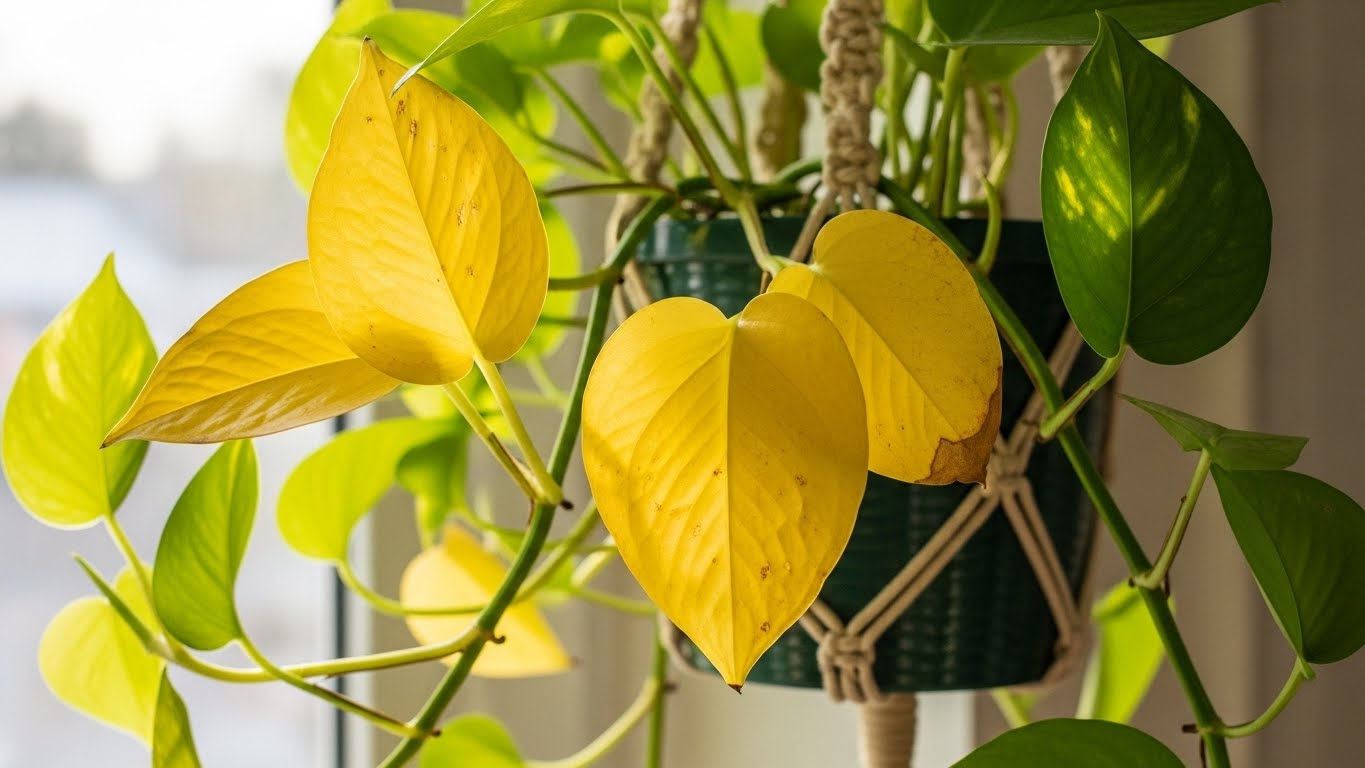
If your pothos has yellow or brown leaves, don’t worry! First, check your watering habits—overwatering can lead to root rot, while underwatering causes wilting. Next, evaluate its light conditions; pothos love bright, indirect light. Look for signs of pests like webs or sticky residue, and consider if your plant needs nutrients—balanced fertilizer every few weeks can make a difference. Finally, trim any damaged leaves to promote new growth. Let’s explore these solutions further!
Key Takeaways
- Assess watering habits; ensure the soil dries out between waterings to prevent overwatering or underwatering symptoms.
- Check light conditions; provide bright, indirect light to avoid yellowing from insufficient light or sunburn from direct sunlight.
- Inspect for pests; look for sticky residue, webs, or spots, and treat any infestations promptly.
- Fertilize with a balanced fertilizer every four to six weeks to address potential nutrient deficiencies affecting leaf color.
- Prune yellow or brown leaves using clean scissors to promote new growth and overall plant health.
Understanding the Causes of Yellow and Browning Leaves
When you notice yellow or browning leaves on your pothos, it can feel a bit alarming, but don’t worry—you’re not alone! Understanding the causes of this leaf coloration is key to keeping your plant healthy. Often, it’s a sign of plant stress, which can arise from various factors.
For instance, if your pothos gets too much direct sunlight, the leaves may scorch, leading to that dreaded yellow hue. Conversely, insufficient light can also cause leaves to yellow as your plant struggles to thrive. Other stressors, like nutrient deficiencies or temperature fluctuations, can further impact your pothos. By identifying these issues early, you can take steps to help your plant bounce back, ensuring it remains vibrant and lush.
Assessing Watering Habits
To keep your pothos healthy, you need to check your watering habits. If the leaves are turning yellow, it could mean you’re giving too much water, while dry, crispy leaves might signal that your plant’s thirsty. Let’s explore the signs of overwatering and underwatering, so you can get your pothos back on track!
Overwatering Symptoms
Spotting yellow leaves on your pothos plant can be a little alarming, but it’s often a clear sign that something’s off with your watering habits. Overwatering effects can be tricky, but recognizing the signs can help you find the right drainage solutions. Here are some symptoms to look for:
- Leaves turning yellow or brown
- Root rot, which may cause a mushy texture
- Soil that feels constantly wet
- A musty odor from the pot
If you notice any of these signs, it’s time to reassess your watering routine. Make sure your pot has proper drainage to prevent excess water from sitting at the bottom. Your pothos will thank you with lush, green leaves once you get it right!
Underwatering Indicators
While overwatering can lead to yellow leaves, underwatering is another common issue that can affect your pothos plant. If you notice your plant’s leaves are wilting or curling, it’s a sign it might not be getting enough water. Check the soil moisture—if it feels dry and crumbly, your pothos is likely thirsting for hydration. Additionally, when you lift the pot, it should feel lighter than usual, indicating poor water retention. Keep an eye out for browning leaf tips too; this often means your plant is struggling. To help your pothos thrive, make sure you’re watering it consistently, allowing the top inch of soil to dry before you give it another drink. Happy watering!
Evaluating Light Conditions
When it comes to your Pothos, light conditions are key to its health and vibrancy. You need to understand its ideal light requirements, as well as the signs that indicate it’s not getting enough light. By evaluating these factors, you can help your plant thrive and keep those yellow leaves at bay!
Ideal Light Requirements
To guarantee your pothos thrives and avoids those pesky yellow leaves, it’s essential to evaluate its light conditions. Your plant needs just the right amount of light, so let’s break it down:
- Natural light: Place it near a window with indirect sunlight.
- Artificial light: Use a grow light if natural light isn’t available.
- Bright, indirect light: This is the sweet spot for your pothos.
- Avoid direct sunlight: It can scorch those beautiful leaves.
Signs of Insufficient Light
It’s not always easy to tell if your pothos is getting enough light, but there are some clear signs you can look for. First, if you notice slow pothos growth, it might be a sign that they’re not getting enough sunlight. Instead of lush, vibrant leaves, you may see leaf discoloration, turning yellow or even brown. Additionally, if your plant is stretching towards the light or its leaves are smaller than usual, it’s definitely craving more brightness. Keep an eye on these signs, and remember that your pothos thrives in bright, indirect light. By recognizing these indicators, you’ll help your plant flourish and maintain that beautiful green hue you love!
Checking for Pests and Diseases
Have you ever noticed your pothos plant sporting yellow leaves and wondered if pests or diseases might be the culprit? It’s essential to explore pest identification and disease management to help your plant thrive again. Here are some signs to look out for:
- Sticky residue on leaves
- Tiny webs or spots under leaves
- Wilting despite proper care
- Fungal growth or dark spots
Start by inspecting your plant closely. Check both the top and underside of leaves for any unwanted visitors. If you spot pests, treat them promptly with insecticidal soap or neem oil. For diseases, maintain good air circulation and remove affected leaves to prevent spreading. Your pothos will thank you!
Nutrient Deficiencies and Fertilization
When your pothos plant’s leaves start turning yellow, it could signal a nutrient deficiency, which often happens if it isn’t getting the right fertilizers or nutrients. To bring back that vibrant green, focus on achieving a proper nutrient balance. Start with a balanced fertilizer, ideally one that contains nitrogen, phosphorus, and potassium. These elements are essential for healthy growth. When you apply fertilizer, follow the instructions carefully to avoid over-fertilizing, which can harm your plant. Typically, every four to six weeks during the growing season is a good rule of thumb. Remember, your pothos will appreciate the extra care, and soon, those yellow leaves can be replaced with beautiful, lush greenery!
Pruning and Caring for Affected Leaves
Once you’ve addressed any nutrient deficiencies, it’s time to focus on the yellow leaves themselves. Caring for your Pothos involves some gentle pruning and care techniques that can make a big difference. Here’s how to get started:
After addressing nutrient deficiencies, it’s essential to care for yellow leaves through gentle pruning techniques.
- Identify affected leaves: Look for those that are most yellow or brown.
- Use clean scissors: Always have sharp, sanitized trimming tools for a clean cut.
- Cut at the base: Trim leaves close to the stem to promote new growth.
- Monitor the plant: Keep an eye on your Pothos after trimming to guarantee it’s thriving.
Conclusion
To sum up, tackling yellow or browning leaves on your pothos doesn’t have to be a Herculean task! By carefully evaluating your watering habits, light conditions, and potential pests, you can breathe new life into your plant. Don’t forget about nutrition and pruning—your pothos will appreciate it more than a cat loves a sunny spot! With a little attention and care, your plant will thrive, showcasing its vibrant, leafy glory in no time!


