
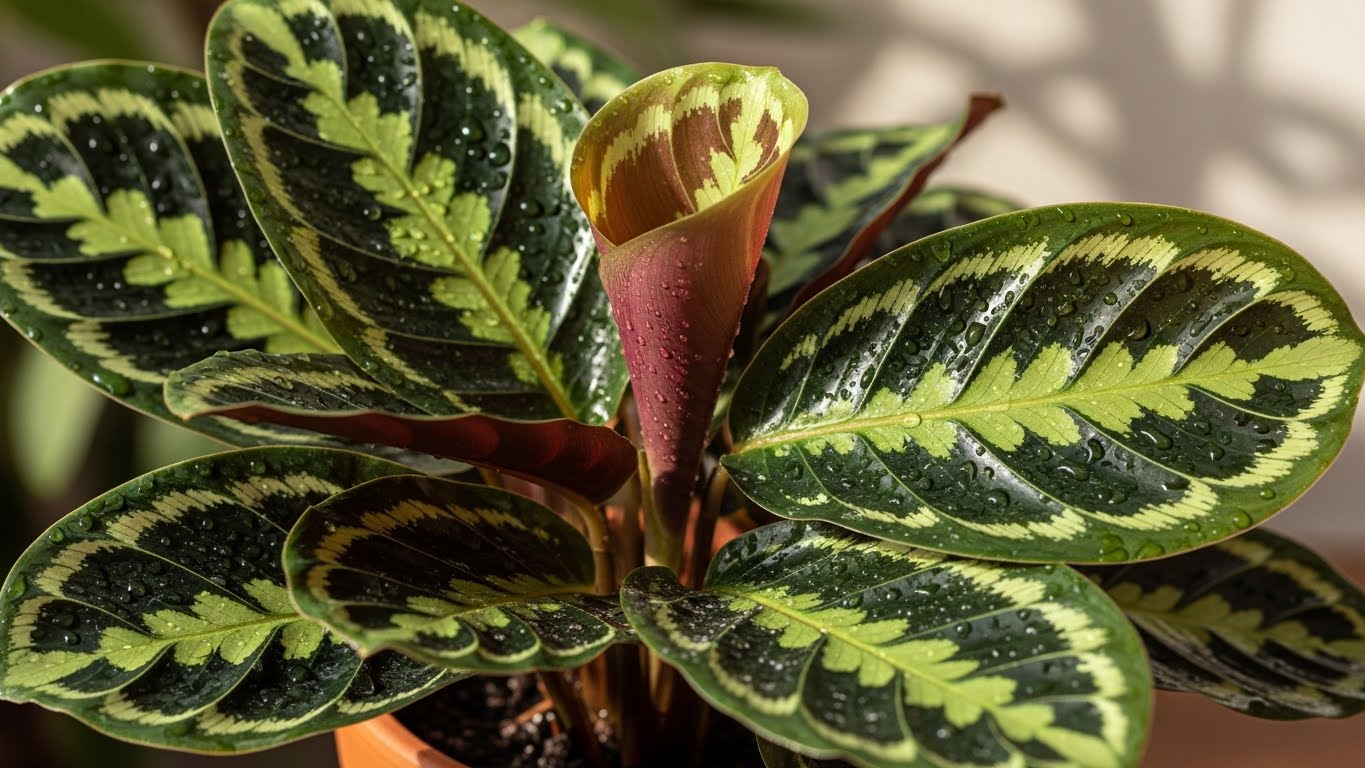
To keep your Calathea leaves crisp and vibrant, mimic its tropical habitat by maintaining humidity levels between 50%-60%, and place it in bright, indirect light to avoid leaf scorch. Water your plant when the top inch of soil is dry, ensuring thorough watering while using a well-draining soil mix rich in organic matter. Regularly prune yellowing leaves and check for pests. Want to learn how to adjust care throughout the seasons? There’s more to discover!
Key Takeaways
💡 If you’re new to caring for Calathea, this guide is perfect for you.
➜ Get the step-by-step guide
- Maintain humidity levels between 50%-60% to prevent curling and browning of Calathea leaves.
- Position the plant in bright, indirect light to avoid leaf scorching and promote healthy growth.
- Use a well-draining soil mix with organic matter to retain moisture without risking root rot.
- Water the plant when the top inch of soil is dry, ensuring thorough watering for optimal moisture retention.
- Regularly prune yellowing or damaged leaves to encourage new growth and enhance the plant’s appearance.
Understanding Calathea’s Natural Habitat
To truly understand how to care for your Calathea plants, it’s essential to first explore their natural habitat. These beautiful plants thrive in the lush, vibrant tropical rainforests of South America, where they enjoy warm temperatures and indirect sunlight. Imagine the rich, diverse environment that surrounds them! The soil composition in these rainforests is important, as it’s often rich in organic matter, providing essential nutrients. This soil retains moisture yet drains well, which helps prevent root rot. When you mimic this environment at home, you’re giving your Calathea the best chance to flourish. By creating a similar setting, you’ll see those stunning leaves stay crisp and vibrant, making your indoor jungle feel just a little more like its natural home. Additionally, maintaining high humidity levels is crucial for preventing common issues like crispy edges and curling leaves.
The Importance of Humidity
Humidity plays an essential role in keeping your Calathea leaves looking their best, especially since these plants originate from the humid rainforests of South America. Without proper humidity levels, your Calathea may struggle with moisture retention, leading to crispy, brown edges on its beautiful leaves.
Humidity Level | Effect on Calathea |
|---|---|
Below 30% | Leaves may curl and brown |
30% – 50% | Growth slows, leaves droop |
50% – 60% | Healthy, vibrant leaves |
60% – 70% | Ideal for lush growth |
Above 70% | Risk of mold or pests |
To keep your plant happy, consider using a humidifier, misting, or placing it on a pebble tray to boost those humidity levels. Your Calathea will reward you with stunning foliage!
Finding the Right Light Conditions
When it comes to keeping your Calathea leaves looking crisp and vibrant, finding the right light conditions is essential. You want to provide them with bright, indirect light, as too much direct sunlight can scorch their beautiful leaves. By understanding how to balance their light exposure, you’ll help your plants thrive and showcase their stunning patterns.
Ideal Light Exposure
Finding the right light conditions for your Calathea can make all the difference in keeping its leaves crisp and vibrant. These beautiful plants thrive in indirect light, so you’ll want to make certain they get just the right amount of light intensity. Here are some tips to help you:
- Place your Calathea near a north or east-facing window.
- Avoid direct sunlight, which can scorch the leaves.
- Use sheer curtains to filter the light.
- Consider rotating your plant occasionally for even growth.
- Monitor your plant’s response; if the leaves start curling, adjust its position.
Avoid Direct Sunlight
To keep your Calathea looking its best, you’ve got to shield it from direct sunlight, which can be surprisingly harmful. This beautiful plant thrives in lower light conditions, where it can soak up just the right amount of brightness without the risk of leaf scorching. Bright, direct sunlight can lead to intense light intensity, causing those stunning leaves to fade or develop brown edges. Instead, place your Calathea in a spot with filtered light or partial shade, like near a window with sheer curtains. This way, you’ll provide a cozy environment that promotes vibrant colors and healthy growth. Remember, your Calathea wants to feel safe and loved, so give it the gentle light it craves!
Watering Techniques for Optimal Growth
Watering your Calathea correctly is essential for keeping its leaves crisp and vibrant, as the right amount of moisture helps the plant thrive. To guarantee your beloved plant gets the best care, consider these watering techniques:
- Use drip irrigation: It delivers water directly to the roots, promoting moisture retention.
- Check the soil: Always feel the top inch of soil; if it’s dry, it’s time to water.
- Water thoroughly: Allow water to seep from the drainage holes, guaranteeing deep root hydration.
- Adjust to seasons: Water less in winter, as Calathea needs less moisture during dormancy.
- Humidity boost: Mist the leaves regularly to keep them hydrated and happy.
With these tips, your Calathea will flourish!
Choosing the Right Soil Mix
Choosing the right soil mix for your Calathea is essential for keeping those vibrant leaves looking their best. You’ll want a blend that offers excellent drainage and aeration, which helps prevent root rot while allowing the roots to breathe. Additionally, nutrient-rich components in the soil will provide your plant with the nourishment it needs to thrive, so let’s explore what makes the perfect mix!
Drainage and Aeration Importance
When it comes to growing healthy Calatheas, the soil you choose plays an essential role in their overall health and vibrancy. To keep those leaves looking crisp, you need to focus on drainage solutions and aeration techniques. A well-draining soil mix will help prevent root rot and keep your plant happy. Here are some tips for choosing the right soil:
- Use a mix designed for houseplants or tropical plants.
- Add perlite or orchid bark for better drainage.
- Look for ingredients that retain moisture without becoming soggy.
- Make sure the pot you choose has adequate drainage holes.
- Don’t forget to refresh the soil every couple of years to maintain its effectiveness.
With the right soil, your Calathea will flourish!
Nutrient-Rich Soil Components
To guarantee your Calathea thrives, you’ll want to select a soil mix packed with essential nutrients that support lush growth and vibrant leaves. A blend rich in organic matter is key, so consider including soil amendments and organic fertilizers.
Here’s a simple guide to help you choose:
Soil Component | Benefits | Recommended Amount |
|---|---|---|
Peat Moss | Retains moisture, encourages roots | 50% |
Perlite | Improves aeration, prevents compaction | 25% |
Worm Castings | Provides nutrients, boosts growth | 25% |
Mixing these components will create a nurturing environment, ensuring your Calathea gets everything it needs to shine beautifully in your home. Happy planting!
Fertilizing Your Calathea
Fertilizing your Calathea is an essential step to keep those beautiful leaves lush and vibrant, and it’s not as tricky as it might seem! To nourish your plant effectively, focus on the right fertilizer types and application frequency. Here are some tips to get you started:
Fertilizing your Calathea is key for vibrant leaves; it’s simple with the right tips on fertilizer and timing.
💡 Humidity is crucial for Calathea health. Learn how to maintain the right levels.
➜ Discover proven techniques
- Use a balanced, water-soluble fertilizer diluted to half strength.
- Fertilize during the growing season, typically spring and summer.
- Apply every 4-6 weeks, but skip fertilizing in fall and winter.
- Look for fertilizers rich in nitrogen, phosphorus, and potassium.
- Always follow the instructions on the package to avoid over-fertilizing.
Pruning and Maintenance Tips
After guaranteeing your Calathea gets the right nutrients through fertilization, it’s time to keep those stunning leaves in top shape with some pruning and maintenance. Start by regularly inspecting your plant for any yellowing or damaged leaves. Use sharp, clean scissors for pruning; snip away dead or dying leaves to promote healthy growth. Create a maintenance schedule that includes wiping down leaves with a damp cloth, removing dust to let them shine. Also, consider checking the humidity levels—Calatheas love a humid environment! By using these pruning techniques and sticking to your maintenance schedule, you’ll guarantee your Calathea remains vibrant and lively, bringing joy to your space. Your dedication will truly show in those gorgeous leaves!
💡 Brown leaf edges can be a sign of stress. Find out how to prevent this issue.
➜ Learn the complete strategy
Identifying Common Pests
When caring for your Calathea, it’s essential to watch out for common pests that can sneak in and cause trouble. You’ll want to look for signs of infestation, like tiny webs or sticky residue on the leaves, which can indicate unwanted visitors. By staying alert and knowing what to look for, you can keep your plant healthy and vibrant!
Common Calathea Pests
Calathea plants are stunning additions to any home, but they can fall prey to some pesky pests that threaten their vibrant leaves. Identifying these common pests early is key for effective pest control and pest prevention. Here are five you might encounter:
- Spider Mites: Tiny, web-spinning pests that suck the sap from leaves.
- Mealybugs: White, cottony bugs that cluster on stems and leaves.
- Aphids: Small, green or black insects that feed on new growth.
- Scale Insects: Hard, shell-like bugs that attach to the leaves and stems.
- Thrips: Tiny, slender bugs that can cause discoloration and damage.
Keep an eye out for these unwelcome guests, so your Calathea stays healthy and beautiful!
Signs of Infestation
You might not realize it, but spotting the signs of pest infestation early can save your Calathea from serious damage. Keep an eye out for these common infestation signs to guarantee your plant stays healthy and vibrant.
Pest Type | Infestation Signs | Pest Control Methods |
|---|---|---|
Spider Mites | Tiny webs, yellowing leaves | Neem oil, insecticidal soap |
Aphids | Sticky residue, distorted leaves | Water spray, ladybugs |
Mealybugs | Cotton-like fluff, leaf drop | Rubbing alcohol, neem oil |
Managing Temperature Fluctuations
Managing temperature fluctuations is essential for keeping your Calathea leaves looking their best, as these plants thrive in warm, humid environments. To guarantee temperature stability, especially during seasonal variations, follow these tips:
Keeping your Calathea in a warm, humid environment is key to maintaining vibrant leaves and overall health.
- Keep them away from drafts: Avoid placing your Calathea near windows or doors where chilly air can sneak in.
- Monitor room temperature: Aim for a cozy range between 65°F and 80°F (18°C to 27°C).
- Use a thermometer: This helps you keep track of temperature changes.
- Provide consistent humidity: Use a humidifier or pebble tray to maintain moisture.
- Watch for heat sources: Keep your plant away from heaters or radiators to prevent overheating.
With these simple steps, your Calathea will thrive, keeping those leaves vibrant and crisp!
Troubleshooting Wilting Leaves
When you notice your Calathea leaves wilting, it can be alarming, but don’t worry—there are several common reasons for this issue that you can address. Leaf droop causes often stem from underwatering or overwatering, so check your plant’s soil moisture. If it feels too dry or soggy, adjust your watering routine. Another factor might be humidity; Calatheas love moisture, so try misting the leaves or using a humidifier. For recovery strategies, gently prune any severely damaged leaves and give your plant some time to bounce back. With a little care and attention, you’ll see those vibrant leaves thrive again. Remember, it’s all about tuning into your plant’s needs and making small adjustments!
Preventing Leaf Browning
Preventing leaf browning is a top priority for keeping your Calathea healthy and stunning. Leaf discoloration causes can often be traced back to environmental stress factors, so it’s essential to address them promptly. Here’s what you can do:
Keeping your Calathea vibrant requires prompt attention to environmental stress factors that cause leaf browning.
- Maintain humidity: Calatheas thrive in high humidity, so consider using a humidifier or misting them regularly.
- Check watering: Overwatering or underwatering can lead to browning, so find that sweet spot.
- Provide indirect light: Direct sunlight can scorch those beautiful leaves, so keep them in bright, indirect light.
- Avoid drafts: Sudden temperature changes can stress your plant, so keep it away from doors and windows.
- Fertilize wisely: Use a balanced fertilizer during the growing season to nourish your Calathea.
Repotting Your Calathea
Repotting your Calathea can be a rewarding experience, especially when you see how much happier your plant becomes in fresh soil. You should consider repotting every 1-2 years, or when you notice roots poking through the drainage holes. The best pot size is usually one that’s 1-2 inches larger in diameter than the current pot.
Here’s a simple guide to help you:
Repotting Frequency | Best Pot Size | Signs Your Plant Needs Repotting |
|---|---|---|
Every 1-2 years | 1-2 inches larger | Roots coming out of the bottom |
When growth slows | Maintain drainage | Soil dries out too quickly |
After leaf yellowing | Use breathable pots | Plant looks overcrowded |
| When repotting, use fresh, well-draining soil to guarantee your Calathea thrives. Happy planting!
Seasonal Care Adjustments
As the seasons change, so do the needs of your Calathea, which means you’ll need to adjust your care routine to keep its leaves crisp and vibrant. Seasonal temperature and humidity changes can be tricky, but with a few simple adjustments, you can keep your plant happy.
As seasons shift, adapt your Calathea care for vibrant leaves and happy growth.
- Increase humidity during winter’s dry months.
- Move your Calathea away from drafty windows in colder weather.
- Reduce watering frequency when temperatures drop, as it needs less moisture.
- Monitor light exposure, ensuring it gets bright, indirect light year-round.
- Fertilize less in the winter months to avoid overfeeding.
Conclusion
So, there you have it! Keeping your Calathea’s leaves crisp and vibrant isn’t rocket science; it’s just a matter of juggling humidity, light, and water like a pro. Who knew your plant could be such a diva? With the right care, you’ll impress your friends with your lush greenery, and your Calathea will thank you by showing off those gorgeous leaves. Remember, a happy plant means a happy you, so let the leaf-loving adventures begin!
💡 Recognizing signs of distress in your Calathea can help you take action before it’s too late.
➜ See how to implement this


