
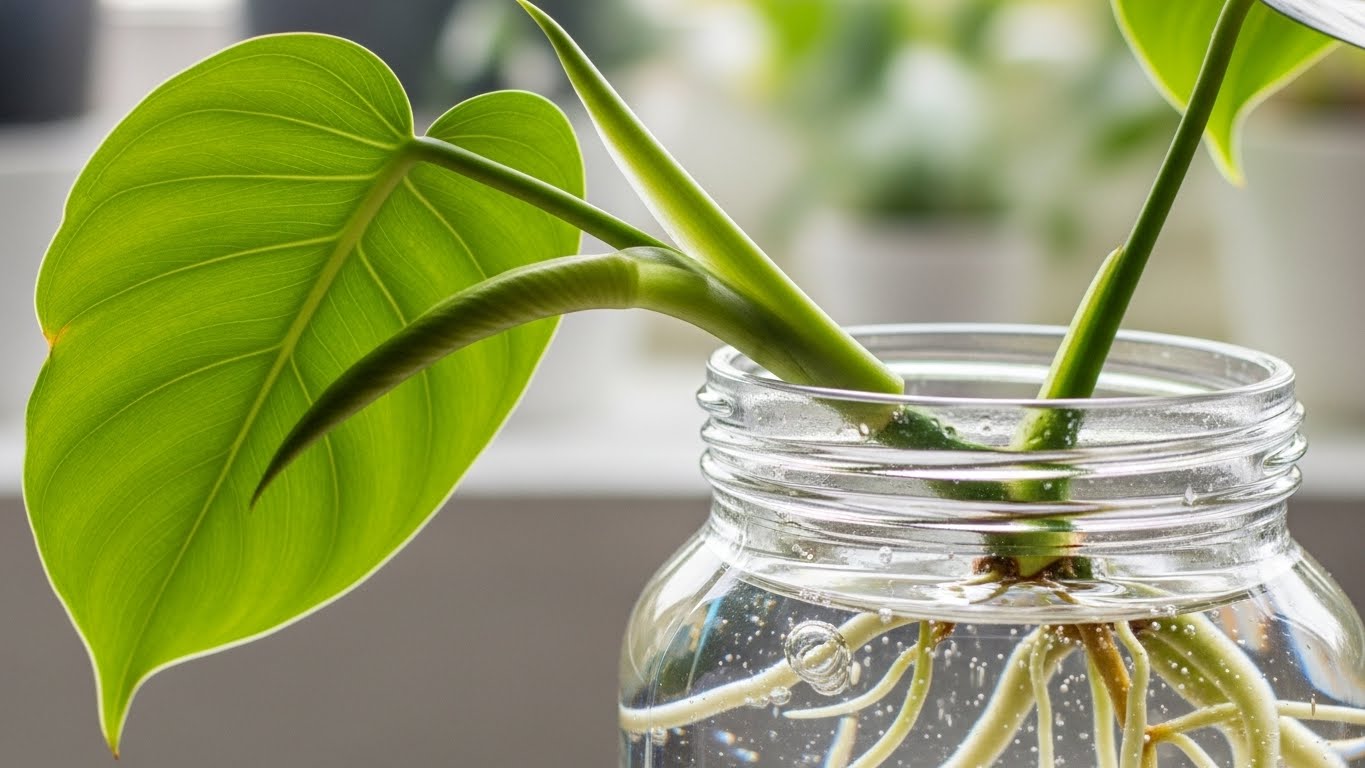
To propagate philodendrons, start by choosing healthy cuttings from a vigorous plant. You can use either water or soil for this process. If using water, submerge a node in clear, filtered water and change it weekly. For soil propagation, plant your cutting in a well-draining mix, keeping the soil moist but not soggy. Provide bright, indirect light and maintain humidity levels. With the right care, you’ll see new growth soon, and there’s even more to explore!
Key Takeaways
- Choose healthy, firm stems with fresh leaves and make clean cuts just below a node for optimal propagation.
- For water propagation, use a clear container, ensuring at least one node is submerged, and change the water weekly.
- When propagating in soil, select a well-draining mix and maintain proper moisture by watering when the top inch feels dry.
- Keep humidity levels around 60-80% for cuttings and provide bright, indirect light while avoiding direct sunlight.
- Monitor your cuttings regularly to ensure healthy growth and adjust care as needed for thriving new plants.
Choosing the Right Philodendron for Propagation
When it comes to propagating philodendrons, choosing the right variety is like picking a star player for your gardening team! You’ll want to explore some common philodendron varieties, like the heartleaf, which thrives in low light, or the glorious ‘Birkins’, known for its stunning variegation. Each variety has its own ideal growing conditions, so pay attention! For instance, heartleaf prefers humidity and well-draining soil, while ‘Birkins’ loves bright, indirect light. By selecting the right type, you create a nurturing environment for your cuttings. Remember, the happier your plant is, the easier it’ll be to propagate. So, immerse yourself in the world of philodendrons, and let your green thumb shine as you choose the perfect variety for your gardening adventure!
Preparing Your Cuttings
When you’re ready to prepare your cuttings, the first step is selecting healthy stems that are free from any signs of disease or damage. You’ll want to make clean cuts just below a node, which is where new roots will sprout. Taking your time with these steps sets you up for successful propagation and happy plants!
Selecting Healthy Stems
Selecting healthy stems for your Philodendron cuttings is like choosing the best ingredients for a recipe; the quality of your starting materials greatly influences the final result. Look for stems that are firm and vibrant, as this indicates strong stem quality. Gently squeeze them to verify they’re not soft or mushy, which can signal decay. Pay close attention to leaf health too—choose stems with fresh, green leaves free of spots or yellowing. These leaves will support your propagation journey, helping your new plants thrive. When you’re excited about your cuttings, remember that starting with healthy stems sets you up for success. So, take your time, and pick the best! Your future plants will thank you.
Making Clean Cuts
Get ready to make those clean cuts! You want your philodendron cuttings to thrive, so pay attention to your cutting techniques. First, grab a sharp, sterilized knife or scissors—this is key for tool hygiene. A clean cut reduces the risk of disease, giving your plant the best chance to root. Aim for a 4-6 inch stem with at least two leaves attached; this’ll help your cuttings absorb sunlight and nutrients. When cutting, slice just below a leaf node, where roots are more likely to sprout. Remember, the cleaner the cut, the happier your plant will be! Now, you’re ready to move on to the next step in your propagation journey. Happy gardening!
Propagating in Water
Propagating your Philodendron in water is not just easy, but it’s also a fun way to watch your plant grow! To get started, choose a clear container; this lets you see the roots develop, adding to the excitement. Make sure to select a container that holds your cuttings upright and has enough space for growth. Next, focus on water quality—using filtered or distilled water is best. Tap water can contain chemicals that harm your plant, so avoid it if you can. Place your cuttings in the container, ensuring at least one node is submerged. Change the water every week to keep it fresh and clear. Soon, you’ll see roots sprouting, and your Philodendron will flourish!
Propagating in Soil
While watching roots grow in water can be a thrilling experience, propagating your Philodendron in soil offers its own unique benefits and can be just as rewarding! To get started, choose the right soil types. A well-draining mix, like potting soil combined with perlite or orchid bark, helps prevent root rot. When you plant your cuttings, make sure the moisture levels are just right—not too wet, but not too dry either. Keep an eye on the soil, watering it when the top inch feels dry. Over time, you’ll see your cuttings take root and flourish. With a little patience and care, you’ll soon have vibrant new plants to enjoy, adding to the beauty of your indoor garden!
Caring for Your New Cuttings
Caring for your new cuttings is essential to guarantee they thrive and grow into healthy plants. First, focus on water quality; use clean, chlorine-free water to keep your cuttings happy. Next, maintain humidity levels around 60-80% for ideal growth. You can achieve this by misting your cuttings regularly or placing them in a humidity tray.
Here’s a quick reference table to help you remember key care tips:
Care Aspect | Ideal Level | Tips |
|---|---|---|
Water Quality | Clean & Chlorine-free | Change water weekly |
Humidity Levels | 60-80% | Mist regularly or use a tray |
Light Exposure | Bright, Indirect | Avoid direct sunlight |
Keep an eye on your cuttings, and they’ll flourish before you know it!
Transplanting Your New Plants
Once your new Philodendron cuttings have established roots, it’s time to think about transplanting them into larger pots. Choosing the right soil is essential for helping your plants thrive, so you’ll want a mix that drains well but also retains some moisture. Timing is key too; aim to transplant when your plants are actively growing for the best results!
Timing for Transplanting
When it comes to transplanting your new Philodendron plants, timing plays a crucial role in ensuring their successful growth and development. To give your plants the best start, aim to transplant during ideal seasons, specifically in spring or early summer, when their growth cycles are at their peak.
Here’s a quick guide to help you decide when to transplant:
Season | Best Time to Transplant |
|---|---|
Spring | March to May |
Early Summer | June |
Late Summer | July to August |
Fall | Avoid, unless necessary |
Winter | Avoid, dormancy period |
Choosing the Right Soil
Choosing the right soil for your Philodendron is essential, as it directly influences how well your plant adjusts after transplanting. You’ll want to contemplate using soilless mixtures, which provide excellent aeration and moisture retention. These blends often include ingredients like peat moss, coconut coir, and perlite, creating a lightweight environment for your roots to thrive.
Troubleshooting Common Issues
While propagating philodendrons can be a fun and rewarding experience, you might run into a few common issues along the way. Don’t worry; these are often easy to fix! Here are some signs to watch for:
- Root rot: This occurs when the roots sit in water too long.
- Leaf yellowing: If your leaves are turning yellow, it might mean overwatering.
- Slow root growth: This can indicate insufficient light.
- Wilting leaves: Your plant could be thirsty or suffering from too much sun.
- Pests: Check for tiny bugs on the leaves.
Conclusion
In summary, propagating philodendrons is like planting seeds of possibility in your home. Whether you choose water or soil, each cutting holds the promise of new life and vibrant greenery. With a bit of care and attention, you’ll watch your little plants thrive, bringing joy and beauty to your space. So, grab your scissors, roll up your sleeves, and immerse yourself in the wonderful world of propagation—your future garden awaits!


