
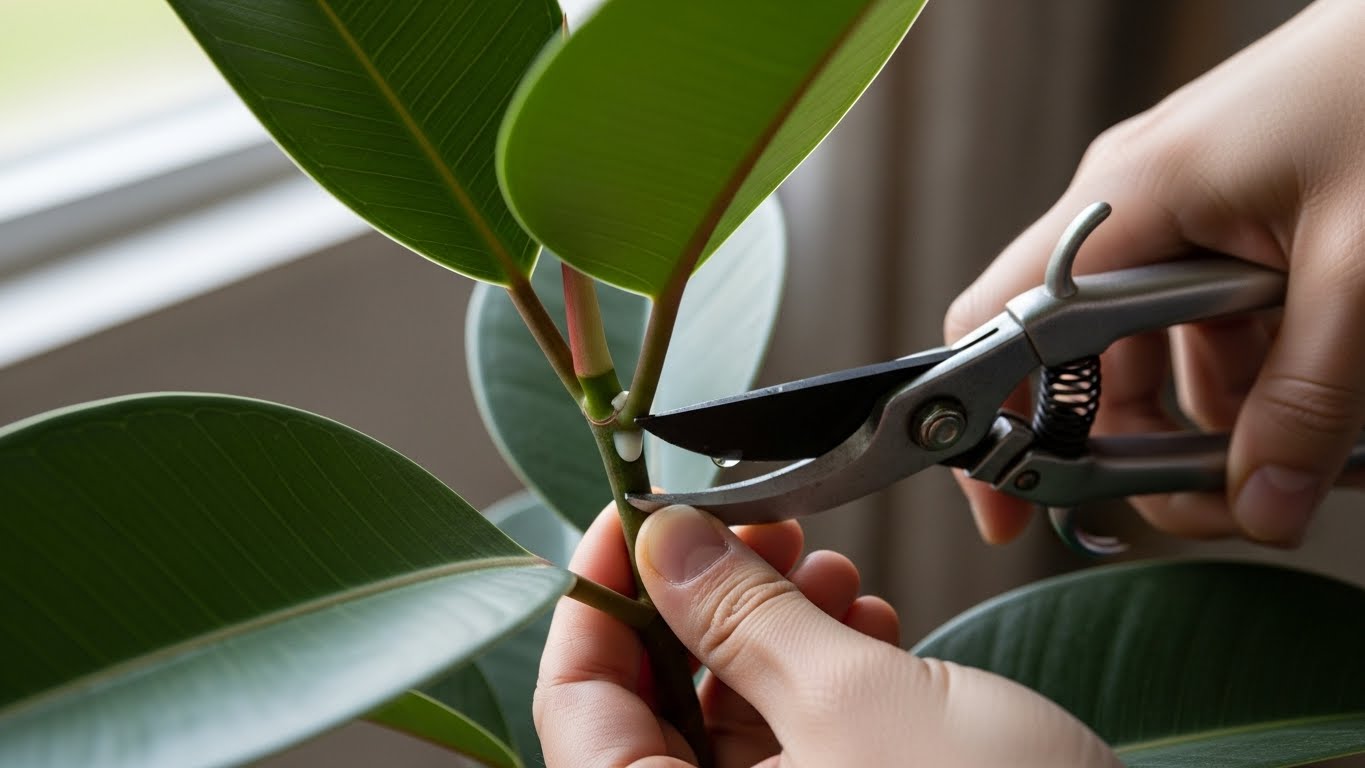
To prune your rubber plant for a better shape, start in spring or early summer when it’s actively growing. Grab sharp pruning shears to make clean cuts and wear gloves for protection. Look for branches that are too long or straggly, and cut just above a healthy leaf node. Wipe away any sap, and consider using an organic sealant for cuts. After pruning, adjust your watering schedule and keep an eye on your plant’s needs—there’s more to explore!
Key Takeaways
- Prune during spring or early summer when the plant is actively growing for optimal recovery and shape improvement.
- Use sharp pruning shears to make clean cuts, focusing on branches that are too long, leggy, or growing inward.
- Cut just above healthy leaf nodes to encourage new growth while maintaining the plant’s natural shape.
- Regularly monitor light conditions and rotate the plant to promote even growth and prevent imbalance.
- Avoid over-pruning; retain sufficient leaves for photosynthesis and overall health while shaping the plant.
Understanding Your Rubber Plant’s Growth Habit
When you think about your rubber plant, it’s important to remember that these lively greens grow in a unique way, making them a delight to care for. Understanding their growth patterns can help you nurture them better. Rubber plants typically grow tall and upright, developing a strong central stem. Their leaf structure is equally fascinating, featuring thick, glossy leaves that can vary in color from deep green to variegated shades. As you observe your plant, notice how new leaves emerge, unfurling gracefully from the center. This growth habit not only adds to its charm but also impacts how you’ll want to care for it. By learning about these traits, you’ll feel more connected to your rubber plant, enhancing your gardening experience. Additionally, understanding the apical meristem role in rubber plant growth can help you make informed pruning decisions.
When Is the Best Time to Prune?
Knowing when to prune your rubber plant is essential for keeping it healthy and vibrant. The best time to tackle this task is during the spring or early summer, when your plant is actively growing and can recover quickly from any cuts you make. By considering the season and your plant’s overall health, you can guarantee that your pruning efforts lead to a thriving rubber plant.
Optimal Seasonal Timing
Pruning a rubber plant can be a rewarding experience, especially if you choose the right time to do it. The best time to prune is during the spring and summer months, when your plant is in its peak seasonal growth. This will help guarantee that your rubber plant heals quickly and thrives with your pruning techniques. Here are some tips to reflect on:
- Wait until new growth appears
- Avoid pruning in winter
- Use clean, sharp tools
- Focus on removing dead or damaged leaves
- Make cuts just above leaf nodes
Plant Health Considerations
Understanding your rubber plant’s health is key to knowing the right time for pruning. You’ll want to check for any signs of plant diseases or nutrient deficiencies before making cuts. Pruning during the growing season, typically spring or early summer, supports recovery and new growth. If your plant shows distress, like yellowing leaves, that might be a cue to prune and give it a boost.
Here’s a quick guide for your reference:
Condition | Best Time to Prune | Notes |
|---|---|---|
Healthy Growth | Spring/Summer | Supports new growth |
Plant Diseases | Immediately | Remove affected areas |
Nutrient Deficiencies | Early Spring | Stimulates recovery |
Dormant Plant | Late Fall/Winter | Minimal stress on the plant |
Keep these tips in mind for a thriving rubber plant!
Tools You’ll Need for Pruning
When it comes to pruning a rubber plant, having the right tools makes all the difference, ensuring a smooth and successful experience. With the right pruning tools in hand, you’ll find that your cutting techniques become much easier and more effective. Here’s a handy list of what you’ll need:
- Sharp pruning shears: For clean cuts.
- Loppers: For thicker branches.
- Gloves: To protect your hands from sap.
- Disinfectant: To keep tools free from bacteria.
- A clean cloth: For wiping down tools before and after use.
Having these tools ready will not only boost your confidence but also help your rubber plant thrive. Happy pruning!
Assessing Which Branches to Cut
After gathering your tools and getting ready for some hands-on care, it’s time to figure out which branches of your rubber plant need a little snipping. Start by observing the overall shape of your plant; you want it to be balanced and full. Focus on branch selection—look for any branches that are too long, leggy, or growing inward. These can disrupt the plant’s aesthetic and health. Remember to take into account cut placement; aim for areas where the branch is thick and healthy, ideally just above a leaf node. This encourages new growth and keeps your plant thriving. Trust your instincts, and don’t hesitate to make those cuts to help your rubber plant flourish in its new shape!
How to Make the Right Cuts
Making the right cuts on your rubber plant is essential for its health and appearance, so grab your pruning shears and get ready to snip! When you’re ready to prune, remember these cutting techniques to guarantee your plant thrives:
Pruning your rubber plant is crucial for its vitality—follow the right techniques to ensure it flourishes!
- Choose healthy branches for cutting
- Cut just above a leaf node to encourage growth
- Use clean, sharp shears to avoid damage
- Make cuts at a slight angle for faster healing
- Consider the overall shape while selecting branches
Pruning for Shape vs. Size
When you prune your rubber plant, you’re not just cutting branches; you’re shaping its overall look and controlling its growth. If you want a bushy, fuller appearance, focus on trimming back the top, but if you need to manage its height, you might want to cut back some of those longer stems. Understanding the balance between shape and size will help your plant thrive while looking its best!
Aesthetic Shape Enhancement
Pruning your rubber plant can transform its appearance, helping it achieve a more attractive shape that complements your home. By focusing on aesthetic shape enhancement, you can create visual appeal and aesthetic balance. Here are some tips to guide you:
- Trim leggy growth to encourage a bushier look
- Remove any dead or unhealthy leaves to promote health
- Shape the canopy by cutting back uneven branches
- Balance the plant by pruning from all sides, not just one
- Encourage lateral growth by pinching back the tips of long stems
These simple steps will not only enhance the rubber plant’s aesthetic but also contribute to a more harmonious environment. You’ll love how a little pruning can make such a big difference!
Controlled Growth Management
While enhancing the aesthetic shape of your rubber plant is important, managing its growth is equally essential. You want to encourage healthy growth patterns while keeping your plant looking fabulous. By using effective pruning techniques, you can control how big your rubber plant gets, allowing it to fit perfectly in your space. Focus on trimming back any leggy stems or overgrown branches to maintain a balanced look. Remember, regular pruning helps redirect energy into healthier leaves and sturdier stems, promoting overall health. Don’t be afraid to experiment with different cuts—just keep an eye on how it responds, and soon you’ll master the art of growth management. With a little patience, your rubber plant will thrive beautifully!
Encouraging New Growth After Pruning
After you’ve pruned your rubber plant, you might be wondering how to encourage new growth, and the good news is that with a little care, your plant will flourish in no time. To reap the pruning benefits, follow these simple steps:
- Water regularly: Keep the soil moist but not soggy.
- Provide bright, indirect light: This helps stimulate new leaves.
- Fertilize every few weeks: Use a balanced fertilizer during the growing season.
- Maintain humidity: Rubber plants love humidity, so mist them occasionally.
- Be patient: New growth takes time, so don’t rush it!
Dealing With Sap and Wounds
When you prune your rubber plant, you might be surprised to find a sticky sap oozing from the cut areas. Don’t worry; this is completely normal! Managing that sap is essential for healthy wound care. First, keep a cloth handy to wipe away any excess sap. This helps prevent it from attracting pests or causing infections. You can also use a sharp knife to make clean cuts, minimizing sap loss. After pruning, consider applying a small amount of organic sealant to the cuts. This promotes healing and protects against potential disease. Remember, taking care of those wounds will help your rubber plant thrive, so don’t skip this important step in your pruning routine!
Post-Pruning Care Tips
After you’ve pruned your rubber plant, it’s important to give it the right care to help it recover and thrive. Adjusting your watering schedule, providing the right fertilizer, and ensuring it gets the best light can make a big difference in its health. Let’s explore these essential post-pruning tips to keep your plant looking its best!
Watering Schedule Adjustments
Adjusting your watering schedule after pruning a rubber plant is crucial to its recovery and overall health. You’ll want to monitor your plant closely, as its needs may change. Here’s how to manage your watering frequency and moisture levels effectively:
- Water less frequently right after pruning, allowing the plant to recover.
- Check the top inch of soil; if it’s dry, it’s time to water.
- Verify the pot has good drainage to prevent overwatering.
- Use lukewarm water; it’s gentler on the roots.
- Observe your plant for signs of stress, like drooping leaves, which may indicate it needs more or less water.
Fertilization After Pruning
Once you’ve adjusted your watering routine, it’s time to think about fertilization to support your rubber plant’s recovery and growth. Choosing the right fertilizer types and timing can make all the difference. After pruning, your plant will need extra nutrients to bounce back.
Here’s a simple guide to help you:
Fertilizer Type | Nutrient Timing | Frequency |
|---|---|---|
Balanced Liquid | 2-4 weeks post-pruning | Every 4-6 weeks |
Slow-Release Granules | 1 month after pruning | Every 3 months |
Organic Options | 2 weeks post-pruning | Every 6 weeks |
Optimal Light Conditions
Providing your rubber plant with the right light conditions is essential for its recovery after pruning, as it helps encourage new growth and keeps the plant healthy. Focus on these key aspects to guarantee your plant thrives:
- Light Intensity: Place your rubber plant in bright, indirect light. Too much direct sunlight can scorch its leaves.
- Light Duration: Aim for 10-12 hours of light daily to promote vigorous growth.
- Rotate Regularly: Turn your plant every few weeks for even exposure to light.
- Watch for Signs: Keep an eye out for drooping or discolored leaves, which signal it might need more light.
- Avoid Low Light: Don’t let it stay in dim areas, as this can hinder its recovery.
Common Mistakes to Avoid
When you plunge into pruning your rubber plant, it’s easy to make a few common mistakes that can set you back in your plant-care journey. One major pitfall is over pruning; cutting too much can lead to over pruning consequences like stunted growth or a weak structure. Remember, your rubber plant needs leaves to photosynthesize and thrive. Another mistake is using improper cutting techniques, which can harm the plant. Always use clean, sharp scissors and make angled cuts to encourage healthy regrowth. Additionally, don’t forget to prune at the right time—spring is ideal. By avoiding these mistakes, you’ll help your rubber plant flourish, showing off its beautiful shape for years to come. Happy pruning!
Signs Your Rubber Plant Needs More Attention
After you’ve pruned your rubber plant and taken steps to avoid common mistakes, it’s important to keep an eye on its overall health. If you’re noticing any of these signs, your plant might need more attention:
- Leaf discoloration: Yellow or brown leaves can indicate stress.
- Stunted growth: If your plant isn’t growing as expected, it could be lacking nutrients.
- Pest infestations: Check for tiny bugs on the leaves that could be harming your plant.
- Root rot: A mushy root system often signals overwatering or poor soil quality.
- Humidity levels and light exposure: Inadequate humidity or insufficient light can lead to unhappy plants.
Being attentive to these signs guarantees your rubber plant stays vibrant and healthy!
Conclusion
Pruning your rubber plant is a fun way to shape it into a leafy masterpiece, much like an artist crafting a statue from marble. By following the tips we’ve covered, you’ll keep your plant healthy and thriving, ensuring it grows strong and beautiful. Remember, regular pruning not only enhances its appearance but also encourages new growth. So grab your pruning shears and get started—your rubber plant will thank you with vibrant leaves and a fuller shape!


