
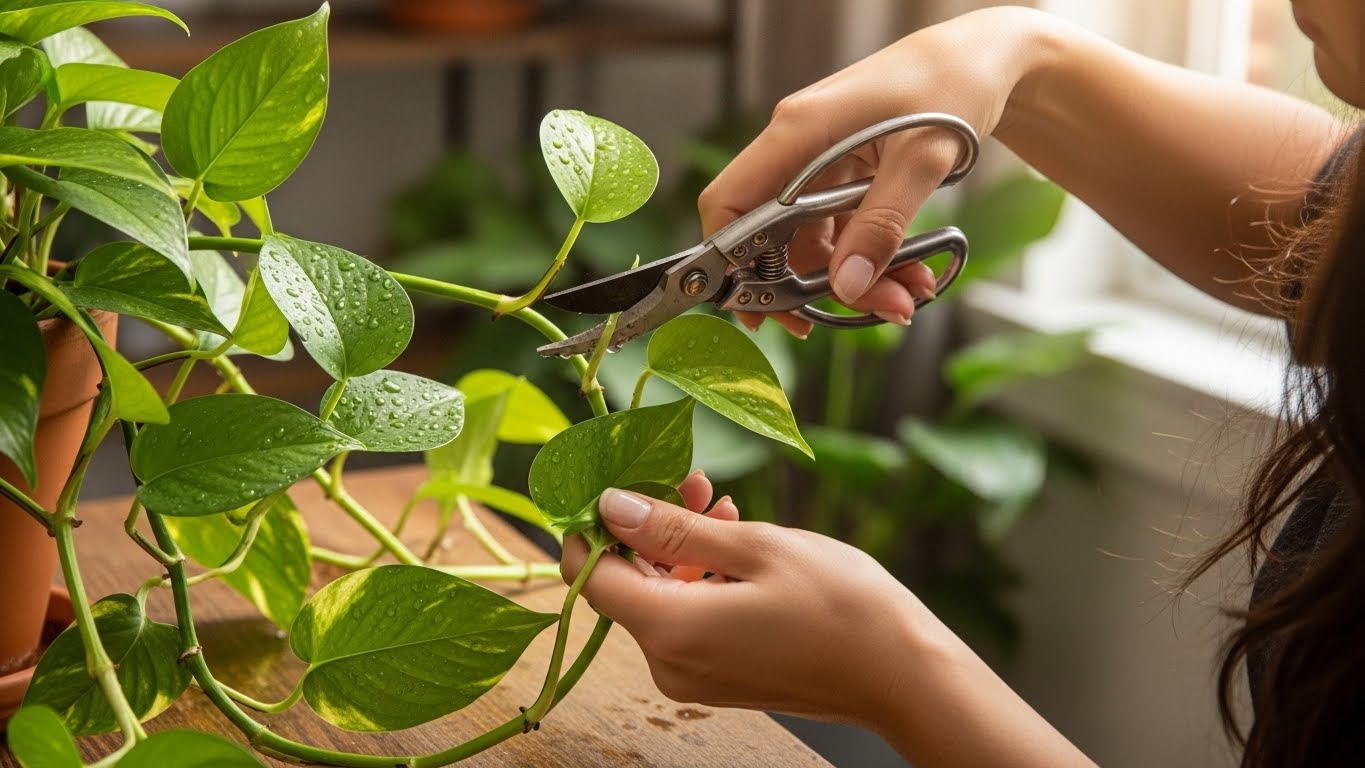
To prune your pothos for bushier growth, start in early spring or summer. Snip back long, leggy vines or yellowing leaves, making your cuts just above leaf nodes at a 45-degree angle with sharp scissors. Try to trim every 4 to 6 weeks to encourage fuller growth. Don’t forget to check for pests and guarantee your plant gets bright, indirect light! Stick around to find out the best ways to care for your pothos after pruning!
Key Takeaways
- Prune your pothos in early spring or summer every 4-6 weeks to encourage bushier growth.
- Trim back long, leggy vines and remove yellowing leaves to promote healthier, fuller plants.
- Make cuts just above a leaf node at a 45-degree angle to stimulate new growth.
- Pinch off tips of vines to encourage branching and create a denser appearance.
- Regularly monitor soil moisture and provide balanced fertilizer every 4-6 weeks for optimal growth.
Understanding Pothos Growth Patterns
Have you ever wondered how pothos plants seem to grow so quickly and beautifully? Their enchanting pothos growth comes from unique growth patterns, making them a favorite among plant lovers. These plants thrive in various lighting conditions, but they particularly flourish in bright, indirect light. When you provide the right environment, you’ll notice that the vines can grow several feet long in just a few months!
Pothos growth typically follows a cascading pattern, as their trailing vines stretch out, seeking sunlight. You might spot new leaves unfurling, showcasing vibrant colors and heart-shaped forms. Understanding these growth patterns helps you appreciate your pothos even more. By nurturing these delightful plants, you can create a lush, green oasis in your space that brings joy and freshness.
When to Prune Your Pothos
Knowing when to prune your pothos is essential for keeping it healthy and vibrant. The best seasons for pruning are early spring and summer, when your plant is actively growing. During these times, you’ll encourage bushier growth and help your pothos thrive. Aim to prune every 4 to 6 weeks, but don’t stress if you miss a session. Just look for long, leggy vines or yellowing leaves as signs that it’s time to trim. Remember, the more you prune, the fuller your plant will become! Enjoy the process, and don’t hesitate to experiment with different styles of pruning to find what works best for your pothos. With a little care, your plant will flourish beautifully.
Tools You Need for Pruning
Before you start pruning your pothos, it’s important to gather the right tools to make the process smooth and safe. You’ll need some essential pruning tools, like sharp scissors or pruning shears, to guarantee clean cuts, and don’t forget to wear safety gear, such as gloves, to protect your hands. With the right equipment in hand, you’re all set to give your plant the care it deserves!
Essential Pruning Tools
When you’re ready to give your pothos a little makeover, having the right tools at your side makes all the difference. First, grab a pair of sharp pruning shears; they’ll help you execute those pruning techniques cleanly, promoting plant health. You’ll also want some sturdy gloves to protect your hands while you work. A small trowel can be handy for repotting or adjusting soil levels after pruning. Finally, don’t forget a clean cloth—wiping down your tools between cuts helps prevent disease from spreading. With these essentials in hand, you’re set to tackle your pothos project, ensuring it thrives and grows bushier than ever. Happy pruning!
Safety Gear Requirements
While you’re gearing up to prune your pothos, safety should be at the top of your list. You want to avoid any accidents or mishaps that could occur during the process. Here’s a quick checklist to keep you safe and sound:
- Safety gloves: Protect your hands from sharp tools and plant irritants.
- Eye protection: Shield your eyes from fallen debris and sap.
- Knee pads: Keep your knees comfy while you’re crouching or kneeling.
- Apron or old shirt: Wear something you don’t mind getting dirty.
Preparing Your Pruning Area
Before you start pruning your pothos, it’s important to set up your workspace. Gather all your necessary tools, like sharp scissors and a clean cloth, to keep things tidy. Choosing a clean area will help you stay organized and make the whole process smoother!
Gather Necessary Tools
Gathering the right tools is essential for a successful pruning session with your pothos plant. Having the right equipment not only makes the process smoother but also enhances your plant care experience. Here’s what you’ll need to get started:
- Sharp pruning shears: For clean cuts, which help your plant thrive.
- Gloves: To protect your hands from any rough edges or sap.
- A clean cloth: Useful for wiping down your tools, ensuring you’re using safe pruning techniques.
- A container or bag: To collect cuttings and keep your space tidy.
With these tools in hand, you’ll be ready to plunge into pruning techniques that promote bushier growth and a healthier pothos. Let’s get to it!
Choose a Clean Space
Creating a clean space for pruning your pothos is an important step that sets the stage for a successful and enjoyable experience. A tidy workspace not only helps you focus, but it also allows you to embrace the joy of nurturing your plant. Start by choosing a table or countertop that’s free of clutter. Lay down some newspaper or a cloth to catch any fallen leaves and cuttings.
What to Do | Why It Matters |
|---|---|
Clear the area | Minimizes distractions |
Gather tools | Keeps everything handy |
Prepare a trash bag | Simplifies cleanup |
Create a cozy vibe | Makes the process enjoyable |
Feeling connected to your pothos during pruning makes the experience even more rewarding, so immerse yourself with those pruning techniques!
Assessing the Health of Your Plant
When you want your pothos to thrive, it’s essential to assess its health regularly. Start by looking for signs of pests or diseases, as catching these issues early can save your plant. Here are some key aspects to evaluate:
- Leaves: Check for discoloration or spots, which may indicate disease.
- Stems: Look for any mushy areas, as they can signal rot.
- Soil Moisture: Verify it’s not too wet or dry, affecting your plant’s roots.
- Growth Patterns: Notice if the growth seems stunted, which could mean it’s struggling.
Regular pest assessment and disease identification will help keep your pothos happy and bushy. Don’t hesitate to give your plant the attention it deserves!
Identifying Leggy Growth
Identifying leggy growth in your pothos is important for maintaining its vibrant appearance. When you notice long, spindly stems reaching for the light, that’s a sign your plant’s not happy. Leggy stems often indicate that your pothos is stretching out due to insufficient light, leaving it looking sparse and less full.
To help your plant thrive, keep an eye out for those growth signals. If you see leaves that are farther apart than usual or fewer leaves overall, it’s time to take action. Don’t worry; this isn’t the end! Recognizing these signs early can make all the difference, allowing you to nurture your pothos back to its bushy glory. Remember, a little attention goes a long way!
Techniques for Pruning Pothos
Pruning your pothos is a fantastic way to encourage healthy growth and keep your plant looking its best! Using the right pruning techniques can lead to bushier growth, making your pothos more vibrant and full. Here are some effective techniques to try:
- Trim back leggy stems to promote new growth.
- Pinch off the tips of vines to encourage branching.
- Remove any yellow or dead leaves to improve overall health.
- Make cuts just above a leaf node for ideal growth.
How to Make Clean Cuts
Crafting clean cuts while pruning your pothos can make a significant difference in how your plant thrives. To achieve this, you need to start with clean tools. Dirty or dull tools can lead to jagged cuts, which may harm your plant. Here are some effective pruning techniques to guarantee you get those clean cuts:
Tool Type | Purpose |
|---|---|
Sharp Scissors | Trim small stems |
Pruning Shears | Cut thicker vines |
Razor Blade | Fine, precise cuts |
Disinfectant | Clean your tools |
Before you begin, disinfect your tools to prevent any disease. Aim for a quick, smooth motion when cutting, allowing your pothos to heal quickly. Happy pruning!
Where to Cut for Optimal Growth
When you’re ready to prune your pothos, knowing where to cut is key for helping your plant thrive. Focus on healthy nodes, trim just above leaf nodes, and don’t forget to remove those leggy stems that can make your plant look scraggly. With these tips, you’ll encourage new growth and keep your pothos looking lush and vibrant!
Choose Healthy Nodes
Choosing the right spots to cut your pothos can make all the difference in how well it grows back. For healthy growth, focus on selecting nodes that are robust and full of life. These nodes are where new leaves and stems will emerge, giving your plant that bushy look you desire.
Here are some tips for effective node selection:
- Look for nodes with small bumps or growths; they indicate potential new growth.
- Choose nodes that are green and firm, avoiding any that appear brown or wilted.
- Aim for sections with multiple nodes to encourage fuller growth.
- Verify your cuts are clean and made with sharp scissors to prevent damage.
With careful node selection, your pothos will thrive beautifully!
Trim Above Leaf Nodes
To see your pothos thrive and flourish, you’ll want to trim just above the leaf nodes, and this simple technique can make a big difference in your plant’s growth. When you engage in pothos pruning, focus on those little bumps on the stem where the leaves grow. Cutting just above these nodes encourages your plant to branch out, creating a bushier appearance. Use clean, sharp scissors to make a precise cut, ensuring not to damage the surrounding leaves. This method is essential for effective plant maintenance, as it stimulates new growth and keeps your pothos looking vibrant. So, grab those scissors and give your plant the care it deserves—watch it flourish before your eyes!
Remove Leggy Stems
Leggy stems can make your pothos look a bit sad, but don’t worry—you can easily fix that! To encourage bushier growth, it’s important to utilize proper pruning techniques. Start by identifying the leggy growth, then follow these simple steps:
- Cut about an inch above a leaf node for ideal regrowth.
- Use clean, sharp scissors to avoid damaging the plant.
- Focus on the long, spindly parts that lack leaves.
- Don’t be afraid to trim back considerably; your pothos will thank you!
Encouraging Branching and New Growth
While pruning can seem a bit intimidating at first, it’s actually a fun way to encourage your pothos to branch out and grow new, vibrant leaves. By using effective branching techniques, like cutting just above a node, you’ll stimulate new growth. Nodes are those little bumps on the stem where leaves emerge, so snipping here gives your plant a chance to sprout fresh branches. Aim for a cut at a 45-degree angle, allowing moisture to run off and preventing rot. Don’t be afraid to be bold; removing longer stems can lead to fuller, bushier growth. Remember, your pothos loves a little trim now and then, so embrace this hands-on approach to nurture a lively, lush plant!
Removing Yellow or Damaged Leaves
When you notice yellow or damaged leaves on your pothos, it’s important to take action to keep your plant healthy. Start by identifying these leaves and cutting them at the base to encourage new growth. Monitoring your plant’s overall health after pruning will help you guarantee it thrives and stays vibrant.
Identify Yellow Leaves
Yellow leaves on your pothos plant can be like little warning signs, telling you that something isn’t quite right. Instead of ignoring these signals, you should identify the yellow leaf causes and take action. Here are a few common reasons for yellowing leaves and some prevention methods to take into account:
- Overwatering: Too much moisture can suffocate roots.
- Underwatering: Lack of water can stress the plant.
- Nutrient Deficiency: Plants need balanced nutrients to thrive.
- Poor Light Conditions: Insufficient light can lead to weak growth.
Cut at Base
Pruning your pothos is an essential part of keeping it healthy and thriving, especially when it comes to removing yellow or damaged leaves. To give your plant a fresh start, use the base pruning cutting technique. Begin by identifying those unsightly yellow or brown leaves. With sharp, clean scissors, cut them off right at the base of the stem. This not only removes the damaged foliage but also encourages new growth, making your pothos bushier and more vibrant. Remember, don’t be shy! Regularly checking and snipping away these leaves helps keep your plant looking its best. So, grab those scissors, and let’s get to work! Your pothos will thank you with lush, green growth in no time.
Monitor Plant Health
After trimming away those unwanted yellow or brown leaves, it’s time to keep a close eye on your pothos to guarantee it stays healthy and thrives. Monitoring your plant’s health is essential for maintaining its vigor. Watch for pothos symptoms that indicate it’s struggling, so you can respond quickly.
Here are a few signs to look out for:
- Leaves turning yellow or brown
- Wilting or drooping stems
- Stunted growth or small leaves
- Fungal spots or mold on the soil
Propagating Cuttings From Pruned Stems
Ready to turn those pruned pothos stems into new plants? It’s easier than you think! Start by using simple cutting techniques; make sure each cutting has at least two leaves and a node, where roots can sprout. You can choose your preferred propagation methods—water or soil. For water propagation, place the cuttings in a jar, ensuring the nodes are submerged, and wait for roots to form. If you opt for soil, plant the cuttings directly in a pot with well-draining mix, keeping them moist. Whichever method you choose, be patient and watch your new plants thrive. Soon, you’ll have beautiful little pothos to share with friends or fill your space with lush greenery!
Aftercare Following Pruning
Once you’ve pruned your pothos, it’s essential to give it the right aftercare to guarantee it flourishes. Your plant will need a little extra love during this time. Stick to a consistent watering schedule, allowing the top inch of soil to dry out before you water again. This helps prevent overwatering, which can be harmful.
After pruning your pothos, ensure proper aftercare by maintaining consistent watering and allowing the soil to dry out.
For ideal growth, consider these tips:
- Fertilizer application: Use a balanced fertilizer every 4-6 weeks.
- Humidity: Keep your pothos in a humid environment for lush growth.
- Light: Place it in bright, indirect light to encourage bushiness.
- Check for pests: Regularly inspect for any unwanted visitors.
With these steps, your pothos will thrive!
Monitoring Your Pothos Post-Pruning
How can you tell if your pothos is bouncing back after pruning? Start with careful growth observation. Look for new leaves sprouting in a couple of weeks, which is a great sign your plant is thriving. In your post-pruning care routine, make sure to maintain consistent watering and avoid direct sunlight, as these factors can impact recovery. If you notice the stems thickening or branching out, that’s even better! Keep an eye on any yellowing leaves or wilting, as they may indicate stress. Remember, patience is key. Each little change means your pothos is on its way to becoming bushier and livelier. So, stick around, nurture it, and enjoy the journey of growth together!
Tips for Maintaining a Full Appearance
To keep your pothos looking lush and full, it’s essential to adopt a few simple care techniques that can make a big difference. By implementing these tips, you’ll enhance your plant aesthetics and encourage bushier growth through effective pruning techniques.
- Water consistently: Confirm your pothos gets enough moisture, but avoid waterlogging.
- Provide bright, indirect light: This helps them grow strong and vibrant.
- Rotate your plant: This encourages even growth by exposing all sides to light.
- Fertilize regularly: Use a balanced fertilizer during the growing season to boost growth.
With these small adjustments, you’ll create an environment where your pothos can thrive, looking fuller and healthier all year round!
Conclusion
To sum up, pruning your pothos isn’t just about snipping away leaves; it’s a chance to encourage vibrant, bushy growth that’ll make your plant thrive. By understanding when and how to prune, you’re setting the stage for a lush, full appearance that contrasts beautifully with its previous sparse look. So, grab your scissors, nurture those cuttings, and watch your pothos transform into a stunning green masterpiece. With a little care, your plant will be the envy of your friends!


