
Introduction: A Fresh Start for Your Favorite Houseplant
Have you ever looked at a beloved houseplant and felt like it’s just… stuck? The growth has stalled, the leaves look a little tired, and it just doesn’t have the same vibrancy it once did. Chances are, it’s sending you a clear signal: it’s time for a change of scenery. Repotting is not a stressful chore to be feared, but a fundamental act of plant care that rejuvenates and supports long-term health. It is a vital process that provides a plant with fresh, nutrient-rich soil, more space for its roots to grow, and an opportunity to diagnose and address underlying health issues. This guide will walk you through the entire process, from learning to read your plant’s signals and choosing the right repotting strategy to mastering the step-by-step procedure and ensuring a swift, stress-free recovery for your green companion.
💡 If you’re repotting a rubber plant, understanding its specific care needs is crucial.
➜ Master this approach
Reading the Signs: When Does Your Plant Need Repotting?
Repot your indoor plant when it shows clear signs of being root-bound, its soil is depleted, or its growth has noticeably stalled, typically every 12 to 18 months for fast-growing species. While some slow-growing plants can live in the same pot for years, most will eventually exhaust their resources and require intervention. Learning to recognize the signals is the first step toward becoming a more intuitive plant caretaker.
The Definitive Checklist: Is It Time for a New Home?
A plant communicates its needs through a variety of physical cues. These signs are not isolated symptoms but are often interconnected parts of a single narrative: the plant has outgrown its current environment. As a plant’s roots expand to seek water and nutrients, they eventually exhaust the limited space within a pot, leading to a cascade of observable issues.
Root Cues (The Most Obvious Clues)
The most direct way to assess the need for repotting is to examine the root system.
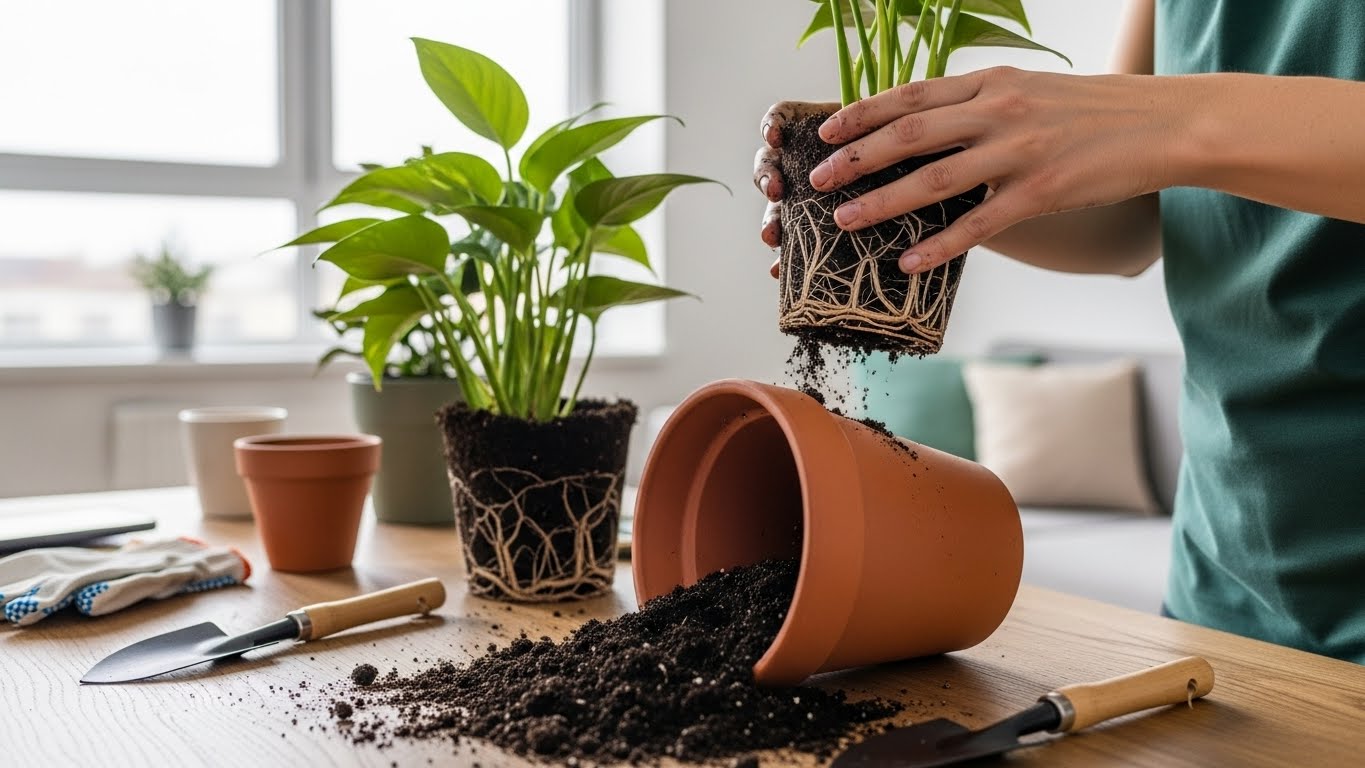
- Circling Roots: When a plant is gently lifted from its pot, the most classic sign of distress is a dense, coiled mass of roots that has taken the shape of the container. This condition is known as being root-bound or pot-bound. Instead of a healthy mix of soil and roots, you see more roots than soil.
- Escaping Roots: A plant’s roots will actively search for more space and resources when their current environment is depleted. This often manifests as roots visibly growing through the drainage holes at the bottom of the pot or even emerging from the soil’s surface at the top.
- Plant Pushing Up: In some cases, the root ball becomes so dense that it physically pushes the entire plant upward, causing the soil level to rise and the plant to lift out of its pot.
- Pot Distortion: For plants with particularly strong root systems, the pressure can become so intense that it physically deforms or even cracks a flexible plastic pot.
Soil & Watering Cues (The Environmental Indicators)
The condition of the soil and the plant’s watering needs are also strong indicators.
- Quick Dry-Down: The soil dries out significantly faster than it used to, demanding more frequent watering. This occurs because the pot contains a high ratio of roots to soil, leaving very little medium to retain moisture.
- Water Runs Straight Through: When the plant is watered, the water seems to immediately exit through the drainage holes without being absorbed. This suggests the root ball is so dense and the soil so compacted that water is simply channeling through gaps rather than saturating the medium.
- Salt & Mineral Crust: A visible white or yellowish crust on the soil surface, around the pot’s rim, or near the drainage holes is a sign of salt and mineral buildup. These deposits come from tap water and fertilizers and can become toxic over time, inhibiting water absorption and burning the roots.
Growth & Health Cues (The Plant’s Body Language)
The overall appearance and vitality of the plant can signal root-related stress.
- Stunted Growth: The plant has either stopped producing new leaves or its growth has slowed dramatically, a particularly telling sign during the active growing seasons of spring and summer.
- Yellowing or Drooping Leaves: If the plant consistently displays yellowing leaves, wilting, or leaf drop, and other potential causes like improper watering or pests have been ruled out, the issue likely lies with the roots. A constricted root system cannot effectively absorb the water and nutrients needed to support healthy foliage.
- Top-Heavy & Unstable: The plant’s foliage has grown disproportionately large for its container, causing it to become unstable and tip over easily. A properly sized pot provides a stable anchor for the plant.
Timing is Everything: The Best Season for Repotting
The ideal time to repot most houseplants is in the spring, just as they are emerging from winter dormancy and entering a period of active growth. The increasing daylight and energy reserves allow the plant to recover more quickly from the stress of being moved and to establish its roots in the new soil efficiently.
However, there are situations that call for emergency repotting regardless of the season. If a plant is suffering from severe root rot, a pest infestation in the soil, or if its pot is broken, it is better to repot immediately than to wait. Be aware that recovery may be slower during the fall and winter when the plant’s growth has naturally slowed.
The Repotting Decision: Up-Pot, Refresh, or Root Prune?
“Repotting” is a general term that encompasses several different actions, each with a specific goal. The choice between them is a strategic decision about managing a plant’s life cycle within the constraints of an indoor environment. It allows the plant owner to move from a reactive role of fixing a problem to a proactive one of directing the plant’s future growth.
Option 1: Up-Potting for Growth
Up-potting is the most common form of repotting and involves moving a healthy, root-bound plant into a slightly larger container. The purpose is to provide the root system with more space to expand, which in turn supports the growth of new foliage.
A critical aspect of up-potting is adhering to the “Goldilocks” principle: the new pot should not be too big. A common and detrimental mistake is to move a plant into a container that is excessively large. The vast amount of excess soil will hold moisture that the plant’s current root system cannot absorb, creating a constantly damp environment that is a prime breeding ground for the fungal pathogens that cause root rot.
Current Pot Diameter | Slow Grower (e.g., Sansevieria, ZZ Plant) | Moderate Grower (e.g., Pothos, Philodendron) | Fast Grower (e.g., Monstera, Ficus) |
4 inches | 5-inch pot | 5-inch pot | 6-inch pot |
6 inches | 7-inch pot | 8-inch pot | 8-inch pot |
8 inches | 9-inch pot | 10-inch pot | 10-inch pot |
10 inches | 12-inch pot | 12-inch pot | 12- to 14-inch pot |
12+ inches | Add 2 inches to diameter | Add 2-3 inches to diameter | Add 3-4 inches to diameter |
Table data synthesized from multiple sources recommending a 1-2 inch increase for pots under 10 inches and a 2-4 inch increase for pots over 10 inches, adjusted for plant growth rate.
Option 2: Same-Pot Soil Refresh
A same-pot refresh is the ideal solution when the goal is to replenish depleted nutrients and improve soil structure without encouraging the plant to grow larger. This is perfect for plants that have reached their desired size, for slow-growing species that are not yet root-bound, or when you wish to continue using a favorite decorative pot. The process involves removing the plant, gently shaking off approximately one-third to one-half of the old, depleted soil from the root ball, and placing it back into the same (thoroughly cleaned) pot with a fresh, high-quality potting mix.
💡 Aloe vera is another popular indoor plant that benefits from proper repotting techniques.
➜ Discover proven techniques
Option 3: Root Pruning to Maintain Size
Root pruning is an advanced technique used to maintain the size of a large or mature plant, allowing it to thrive in the same container indefinitely. This method is particularly useful for managing large floor plants, container trees, or bonsai specimens. The top growth of a plant is directly proportional to the mass of its root system; by trimming the roots, you control the plant’s overall size while also stimulating the growth of new, more efficient feeder roots.
💡 Repotting can disturb pests that may be lurking in the soil, so knowing how to manage them is essential.
➜ See how to implement this
The procedure involves removing the plant from its pot and using a clean, sharp knife or pruning shears to slice off the outer 1-2 inches of the root ball from the sides and bottom. Up to one-third of the total root mass can be safely removed. The plant is then repotted into the same container with fresh soil filling the space created by the pruning. For a more detailed guide on trimming foliage and roots, see our complete guide on /how-to-prune-indoor-plants/.
The Main Event: How to Repot Your Indoor Plant (Step-by-Step)
The physical act of repotting requires a balance between gentle handling and assertive action. While it may feel counterintuitive to disturb the roots, this intervention is often the most critical step for a successful outcome. Fear of causing damage can lead to inaction, which is ultimately more harmful to a root-bound plant than the controlled, corrective stress of repotting.
Gather Your Tools & Materials
Supplies:
- A New Pot: The new container must have drainage holes. Terracotta pots are porous and allow soil to dry out faster, which is beneficial for plants prone to root rot. Plastic or glazed ceramic pots retain more moisture, suiting plants that prefer consistently damp conditions.
- Fresh Potting Mix: Always use a high-quality, sterile potting mix formulated for container plants. Never use soil from your garden, as it is too dense, may contain pests, and lacks the proper structure for potted plants. Specialty mixes are available for plants with specific needs, such as succulents, orchids, or African violets. Choosing the right soil and container is half the battle. Dive deeper with
/the-ultimate-potting-soil-container-guide/. - Water
Tools:
- Workspace Cover: A tarp, old newspaper, or a dedicated repotting mat will contain the mess and make cleanup easier.
- Pruning Shears or a Sharp Knife: Sterilize your cutting tools with rubbing alcohol before use to prevent the spread of disease. These are essential for trimming dead roots or performing root pruning.
- Small Trowel or Scoop: For easily handling and adding soil to the pot.
- Gardening Gloves: To keep hands clean and protect skin from potentially irritating plant saps.
- Chopstick or similar tool: Useful for gently loosening a compacted root ball and helping to settle soil into crevices without over-compacting it.
Step-by-Step Instructions
Step 1: Preparation
- Estimated Time: 5-10 minutes
- Action: Water the plant thoroughly one to two days before you plan to repot. A hydrated plant is less susceptible to shock, and moist soil helps the root ball slide out of the pot more easily. Prepare your workspace and pre-moisten the new potting mix until it is slightly damp, like a wrung-out sponge. If you are reusing a pot, scrub it with soap and water and sterilize it with a 10% bleach solution to eliminate any lingering pathogens.
Step 2: Remove the Plant
- Estimated Time: 2-5 minutes
- Action: Turn the pot on its side and gently tap the bottom and sides to loosen the root ball. Grasp the plant at the base of its stems and gently slide it out. If it is stuck, run a knife or trowel around the inside edge of the pot to free the roots. Avoid pulling or yanking the plant by its stems, which can cause damage.
Step 3: Inspect and Prepare the Root Ball
- Estimated Time: 5-15 minutes
- Action: Once the plant is free, gently shake off about one-third of the old soil to expose the roots for inspection. Healthy roots are typically firm and light in color (white, tan, or light orange), while rotten roots will be black or brown, mushy, and may have a foul odor. Use your clean shears to trim away any dead or rotting roots. If the plant is root-bound, gently tease the circling roots apart with your fingers or a chopstick. This step is crucial; if a tightly wound root ball is placed directly into a new pot, the roots may continue their circular growth pattern and fail to expand into the new soil. For severely matted roots, make two to four shallow, vertical cuts into the sides of the root ball with a sharp knife to break the pattern and encourage new outward growth.
Step 4: Potting the Plant
- Estimated Time: 5-10 minutes
- Action: Add a layer of fresh potting mix to the bottom of the new pot. Center the plant on top of this layer, ensuring the top of the root ball sits about one inch below the pot’s rim to leave space for watering. Add or remove soil from the bottom as needed to achieve the correct height. Fill in around the sides with more potting mix, gently tamping it down with your fingers or a chopstick to eliminate large air pockets. Do not compact the soil too tightly, as roots require oxygen to thrive.
Step 5: Water Thoroughly
- Estimated Time: 2-5 minutes
- Action: Water the newly potted plant slowly and deeply until water flows freely from the drainage holes. This final watering is essential for settling the soil around the roots, eliminating any remaining air pockets, and providing immediate hydration. Allow the pot to drain completely for 15-30 minutes, then discard any excess water that has collected in the saucer. Never allow a plant to sit in standing water, as this can lead to root rot.
Aftercare: Navigating Post-Repotting Recovery & Transplant Shock
A newly repotted plant is in a vulnerable state of recovery. It has undergone a stressful procedure and needs a calm, stable environment to heal and acclimate. Understanding how to manage this period is key to ensuring the repotting is a success.
Understanding Transplant Shock
Transplant shock is a term used to describe a period of stress a plant undergoes after being moved or repotted. It is not a disease but a natural physiological response to root disturbance. The primary cause is an imbalance: the disturbed and often-pruned root system is temporarily unable to absorb water and nutrients quickly enough to meet the demands of the leaves, leading to symptoms of stress.
Common symptoms of transplant shock include:
- Wilting or drooping leaves
- Yellowing leaves
- Leaf drop
- Stunted new growth
These symptoms are often temporary and will resolve within a few weeks if the plant is given proper aftercare.
The 4-Week Recovery Plan
Providing the right care in the month following a repot can significantly reduce the severity and duration of transplant shock.
Week 1-2: Rest & Hydration
- Watering: The goal is to maintain consistent soil moisture without creating waterlogged conditions. The soil should feel like a well-wrung-out sponge. Check the soil every few days and water thoroughly only when the top inch feels dry to the touch. Panicked overwatering in response to wilting is a common mistake that leads to root rot in an already stressed plant. Exception: For succulents, cacti, and other arid plants, wait several days to a week before providing the first watering. This allows any cuts on the roots to callous over, preventing rot.
- Light: Move the plant from direct sunlight to a location with bright, indirect light. Reducing the light intensity lowers the rate of transpiration (water loss through leaves), which lessens the demand on the recovering root system.
Week 3-4: Gradual Acclimation
- Fertilizer: Do not fertilize a newly repotted plant. This is one of the most critical rules of aftercare. Fresh potting mix contains all the nutrients the plant needs for its initial recovery, and adding fertilizer can burn the sensitive, newly developing roots. Wait at least 4-6 weeks, or until you observe clear signs of vigorous new growth, before resuming a regular fertilizing schedule.
- Environment: Keep the plant in its stable, lower-light recovery spot. Avoid moving it frequently or exposing it to drafts from windows, doors, or vents, as these create additional stress.
If your plant’s symptoms of stress seem severe or persist beyond a few weeks, it may indicate a more serious issue. Our guide to /how-to-spot-fix-common-houseplant-problems/ can help you diagnose what’s going on.
Conclusion: Confident Repotting for Healthier, Happier Plants
Repotting is one of the most impactful actions a plant owner can take to ensure the long-term health and vitality of their indoor greenery. It is a proactive measure that addresses the inevitable depletion of resources within a containerized environment. By learning to recognize the subtle and overt signs that a plant needs a new home, you can intervene before stress leads to decline. Understanding the strategic differences between up-potting for growth, refreshing the soil to maintain size, and root pruning to manage mature plants transforms a simple task into an act of intentional stewardship. With a clear, step-by-step process and a dedicated aftercare plan, you can confidently navigate the procedure and minimize the risks of transplant shock. Armed with this knowledge, you are no longer just a plant owner; you are a skilled and perceptive caretaker, equipped to provide your plants with the fresh start they need to thrive for years to come.
💡 Repotting can be especially important as seasons change, particularly in colder climates.
➜ Explore advanced methods


