
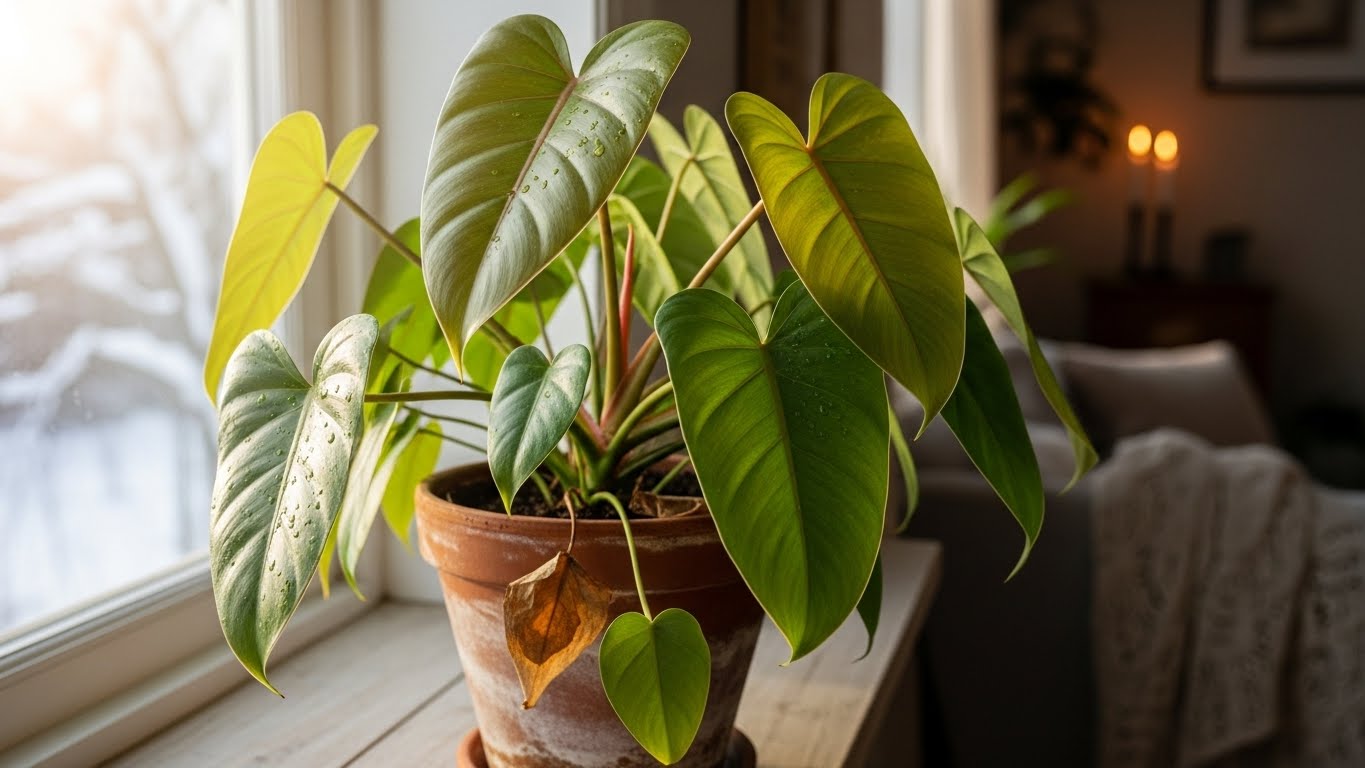
In cold states, caring for your philodendron means keeping it warm and humid. Make sure your home stays between 65°F and 80°F, avoiding drafts. Check the soil every couple of weeks; water only when dry to prevent root rot. High humidity is key, so consider misting or using a humidifier. Keep your plant near a window with bright, indirect light, and rotate it regularly. If you’re curious about more tips for keeping it healthy, there’s plenty more to explore!
Key Takeaways
- Maintain indoor temperatures between 65°F and 80°F to ensure your philodendron thrives in cold states.
- Increase humidity levels above 40-60% by using a humidifier or placing the plant in humidity-rich areas.
- Adjust watering frequency during winter; check soil moisture bi-weekly and water only when it dries out.
- Fertilize every four to six weeks with organic options during growth periods to enrich the soil.
- Regularly inspect for pests and prune dead leaves to promote a healthy and vibrant plant.
Understanding Philodendron’s Tropical Nature
When you think about philodendrons, imagine stepping into a lush, green rainforest, where warm temperatures and high humidity create the perfect environment for these vibrant plants to thrive. Their tropical origins play a huge role in how they adapt to various climates, showcasing their resilience. You’ll find that philodendrons have evolved to handle fluctuating conditions, whether it’s the dampness of a jungle floor or the slightly drier air above. This adaptability means you can enjoy their beauty indoors, too! By mimicking their natural habitat with warmth and moisture, you’ll help your philodendron flourish. So, embrace that tropical vibe, and remember, with a little care, you can bring a piece of the rainforest right into your home.
Assessing Indoor Temperatures
To guarantee your philodendron thrives indoors, it’s essential to keep an eye on the temperature of its environment. Philodendrons prefer a cozy range between 65°F and 80°F. Watch out for temperature fluctuations, as they can stress your plant. If your home gets chilly at night, or if the heat kicks on and off, your philodendron might not appreciate it.
Indoor drafts can be sneaky, too! Check around windows and doors, as cold air can sneak in and create uncomfortable conditions. Keep your plant away from these drafty spots, and consider using a thermometer to monitor the temperature. By ensuring a stable, warm environment, you’re setting your philodendron up for success and helping it flourish indoors!
Adjusting Watering Routines
As the seasons change, your Philodendron’s watering needs will shift, too! In winter, you might find that the soil dries out more slowly, so you’ll want to adjust how often you water. By keeping an eye on soil moisture and considering the temperature in your home, you can make sure your plant stays happy and healthy all year round.
Winter Watering Frequency
Adjusting your watering routine for a Philodendron during winter can make all the difference in keeping your plant healthy and thriving. As temperatures drop, your plant enters a period of dormancy, which means it needs less water. Instead of the usual weekly watering, check the winter soil every two weeks or so. Stick your finger in the soil; if it feels dry up to your first knuckle, it’s time to water. Always guarantee excess water can drain away, preventing root rot. Remember, your Philodendron’s needs change with the seasons, so embrace this quieter time. By giving it just the right amount of water, you’ll help it conserve energy and prepare for the vibrant growth that spring brings!
Soil Moisture Monitoring
Keeping an eye on soil moisture is essential for your Philodendron’s health, especially as you adjust your watering routine. Proper soil moisture helps your plant thrive and can prevent overwatering or underwatering. Here are some tips to keep your soil in check:
- Use a moisture meter to gauge soil moisture levels accurately.
- Stick your finger into the soil about an inch; if it feels dry, it’s time to water.
- Observe the leaves; droopy or yellowing leaves can indicate moisture issues.
- Water deeply but infrequently to encourage strong root growth.
Temperature Impact on Watering
Temperature plays an essential role in determining how often you need to water your Philodendron, especially as the seasons change. In colder months, when temperatures drop, your plant’s growth slows down, meaning it requires less water. Adjust your watering techniques accordingly; let the soil dry out a bit more between waterings. On the flip side, during warmer months, as temperature fluctuations occur, your Philodendron might drink up water faster. Keep an eye on the soil moisture, and don’t hesitate to give it a drink when it feels dry. By tuning into these changes, you’ll help your plant thrive, feeling the love you offer through attentive care while ensuring it gets just the right amount of hydration!
Importance of Humidity Levels
Humidity plays an essential role in keeping your philodendron healthy and thriving. When humidity levels drop below the ideal range, you might notice your plant’s leaves curling or browning, signaling it needs some extra moisture. Luckily, there are simple ways to increase indoor humidity, helping your philodendron flourish all year round!
Optimal Humidity Range
When it comes to caring for your philodendron, understanding the importance of humidity levels is essential for its overall health and growth. Ideally, these plants thrive in ideal humidity levels of 40-60%. To achieve this, you can use some handy humidity control techniques that make a big difference.
- Place your philodendron in a bathroom or kitchen where it can benefit from natural humidity.
- Use a humidifier to maintain consistent moisture in the air.
- Group your plants together; they create a mini humid environment.
- Mist the leaves regularly, especially during dry winter months.
Signs of Low Humidity
It’s important to recognize the signs that your philodendron is struggling with low humidity, as these indicators can help you take action before any serious damage occurs. Here are some common humidity indicators to watch for:
Sign | Description |
|---|---|
Leaf Browning | Tips of leaves turn brown and crispy |
Wilting Leaves | Leaves droop and lose their firmness |
Leaf Curling | Edges of leaves may curl inward |
Yellowing Leaves | Leaves turn yellow and drop off |
Increased Pest Activity | Pests thrive in dry air conditions |
When you notice these signs, it’s a clear indication that your plant’s environment might be too dry. Addressing low humidity is essential for keeping your philodendron happy and thriving!
Increasing Indoor Humidity
Creating a cozy environment for your philodendron is key to its health and happiness, and one of the best ways to achieve that is by increasing indoor humidity. Philodendrons thrive in moist conditions, so you’ll want to keep humidity levels up. Here are a few simple ways to create that perfect atmosphere:
- Misting plants regularly helps to boost humidity around them.
- Humidity trays filled with water and pebbles can elevate moisture levels.
- Grouping plants together creates a mini-ecosystem, increasing humidity naturally.
- Using a humidifier can provide consistent moisture, especially during dry winters.
With these tips, you’ll create a nurturing space that keeps your philodendron vibrant and flourishing. Your plant will thank you!
Choosing the Right Location
Choosing the right location for your Philodendron is crucial, as it can greatly impact the plant’s growth and overall health. Start by considering its light preferences; these beauties thrive in bright, indirect light. A cozy spot near a window, where it can soak in the filtered sunlight, is perfect. Just make certain it’s not too close to direct sun, as that can scorch the leaves!
Next, think about ideal spacing. Philodendrons enjoy some room to breathe, so don’t crowd them with other plants. This helps guarantee good air circulation, preventing mold and pests. By selecting a thoughtful location, you’re setting your Philodendron up for success, making it a happy, thriving companion in your home.
Managing Light Exposure
Managing light exposure for your Philodendron is key to keeping it healthy and vibrant. You’ll need to make seasonal adjustments to guarantee your plant receives just the right light intensity. During the colder months, natural sunlight might be limited, so consider these tips:
- Position your Philodendron near a window for bright, indirect light.
- Rotate the plant regularly to promote even growth on all sides.
- Use sheer curtains if the sun’s rays are too harsh, protecting the leaves from burns.
- Monitor the leaves; if they turn yellow, it might be a sign of too much light.
Fertilizing During Winter
When winter rolls around, your philodendron’s nutrient needs change, so it’s important to assess what it requires to thrive. You might not need to fertilize as often, but knowing the right types of fertilizers to use can make all the difference. Let’s explore how to keep your plant happy and healthy during the colder months!
Nutrient Needs Assessment
Even though winter might seem like a quiet time for your Philodendron, it still has nutritional needs that shouldn’t be overlooked. During these colder months, your plant can experience nutrient deficiencies if it doesn’t get the right care. To keep your Philodendron healthy, consider these soil amendments:
- Organic fertilizers: They provide essential nutrients.
- Compost: A great way to enrich the soil naturally.
- Micronutrients: Make certain your plant gets trace elements it needs.
- pH testing kits: Help assess soil health for ideal nutrient absorption.
Frequency of Application
To keep your Philodendron thriving during the chilly winter months, you’ll want to fertilize it regularly, but not too often. Aim for a light dose of fertilizer every four to six weeks. You’re making seasonal adjustments, so consider how your watering schedule might shift with the colder temperatures. As your plant slows down its growth, it won’t need as many nutrients, and too much fertilizer can actually harm it. Pay close attention to the leaves; if they start to look dull or yellow, you may need to reevaluate your fertilizing routine. By keeping this balance, you’ll guarantee your Philodendron stays healthy and happy through the winter, ready to burst back to life come spring!
Suitable Fertilizer Types
While winter might make you think twice about how to care for your Philodendron, choosing the right type of fertilizer can truly make a difference in keeping your plant healthy. During this chilly season, it’s essential to reflect on organic options and slow release fertilizers, which provide nutrients gradually, ensuring your plant thrives. Here are some great choices:
- Organic compost: Enriches the soil naturally.
- Fish emulsion: Packed with nutrients, it’s gentle yet effective.
- Bone meal: A fantastic source of phosphorus for root development.
- Slow release granules: Offer a steady supply of nutrients over time.
Inspecting for Pests
Have you ever wondered what tiny intruders might be lurking on your Philodendron? Regular pest inspections are essential for keeping your plant healthy and thriving. Start by closely examining the leaves and stems for signs of infestation, like tiny webs or sticky residue. Take note of any unusual spots or discoloration, as these can indicate pest presence.
For effective pest identification, familiarize yourself with common offenders such as spider mites and aphids. Don’t worry; you can take preventive measures to protect your Philodendron. Consider washing the leaves with a gentle soap solution or using neem oil as a natural deterrent. Remember, a little vigilance goes a long way in ensuring your beloved plant stays safe and vibrant!
Pruning for Health
After keeping a watchful eye on your Philodendron for pests, it’s time to focus on another important aspect of plant care: pruning for health. Pruning not only enhances the plant’s appearance but also encourages healthy growth. Here are some pruning techniques you can try:
- Remove dead or yellowing leaves to keep your plant looking fresh.
- Trim leggy stems to promote bushier growth and fuller leaves.
- Shape the plant to maintain an appealing form and balance.
- Cut back overgrown areas to guarantee all parts receive sunlight evenly.
Repotting Considerations
When your Philodendron starts to outgrow its pot, it’s time to contemplate repotting, which can seem a bit challenging but is vital for your plant’s health. Timing is important; spring is often the best season for repotting, as your plant’s growth is vigorous then. Choose a container size that’s about 2 inches larger in diameter than the current pot. This gives your Philodendron room to spread its roots without overwhelming it. Confirm the new pot has drainage holes to prevent water from sitting at the bottom. Gently loosen the root ball and place the plant in its new home, filling in with fresh potting mix. This loving care guarantees your Philodendron thrives happily!
Signs of Stress in Your Philodendron
Is your Philodendron looking a bit off lately? It might be trying to tell you something! Recognizing the signs of stress is key to keeping your plant happy. Here are some common stress indicators to watch for:
- Wilting leaves: If they’re drooping, your plant may need water.
- Discoloration patterns: Yellowing or browning leaves can signal overwatering or nutrient issues.
- Slow growth: If your Philodendron isn’t growing as it should, it might need a change in light or nutrients.
- Leaf drop: Losing leaves can mean it’s unhappy with its environment.
Utilizing Grow Lights
Sometimes, stress in your Philodendron can stem from inadequate lighting, which is where grow lights come into play. These lights can help mimic natural sunlight, giving your plant the energy it needs to thrive. There are various grow light types, including fluorescent, LED, and incandescent, each offering different benefits. For your Philodendron, LED lights are often the best choice, as they provide a full light spectrum while using less energy.
When using grow lights, position them about 12-24 inches above your plant, ensuring it gets the right amount of light without burning the leaves. Adjust the duration to around 12-16 hours a day, keeping your Philodendron happy and healthy throughout the cold months.
Preparing for Spring Growth
As the days grow longer and warmer, your Philodendron is gearing up for a burst of spring growth, so it’s the perfect time to prepare your plant for this exciting season. Here are some spring preparation tips to help you out:
- Repot your plant into fresh soil to provide nutrients.
- Fertilize with a balanced fertilizer to boost growth stimulation techniques.
- Increase watering frequency as the soil dries out faster in warmer temperatures.
- Prune any dead leaves to encourage new growth and keep your plant healthy.
Conclusion
Caring for your philodendron during colder months doesn’t have to be a chore! By keeping an eye on temperatures, humidity, and watering, you can guarantee your plant thrives. Imagine a young girl named Mia, who nurtured her philodendron through winter, watching it grow strong and vibrant. When spring arrived, it burst with new leaves, filling her room with life. With a little effort, your philodendron can flourish, making your home feel warm and inviting, even in the coldest weather!


