
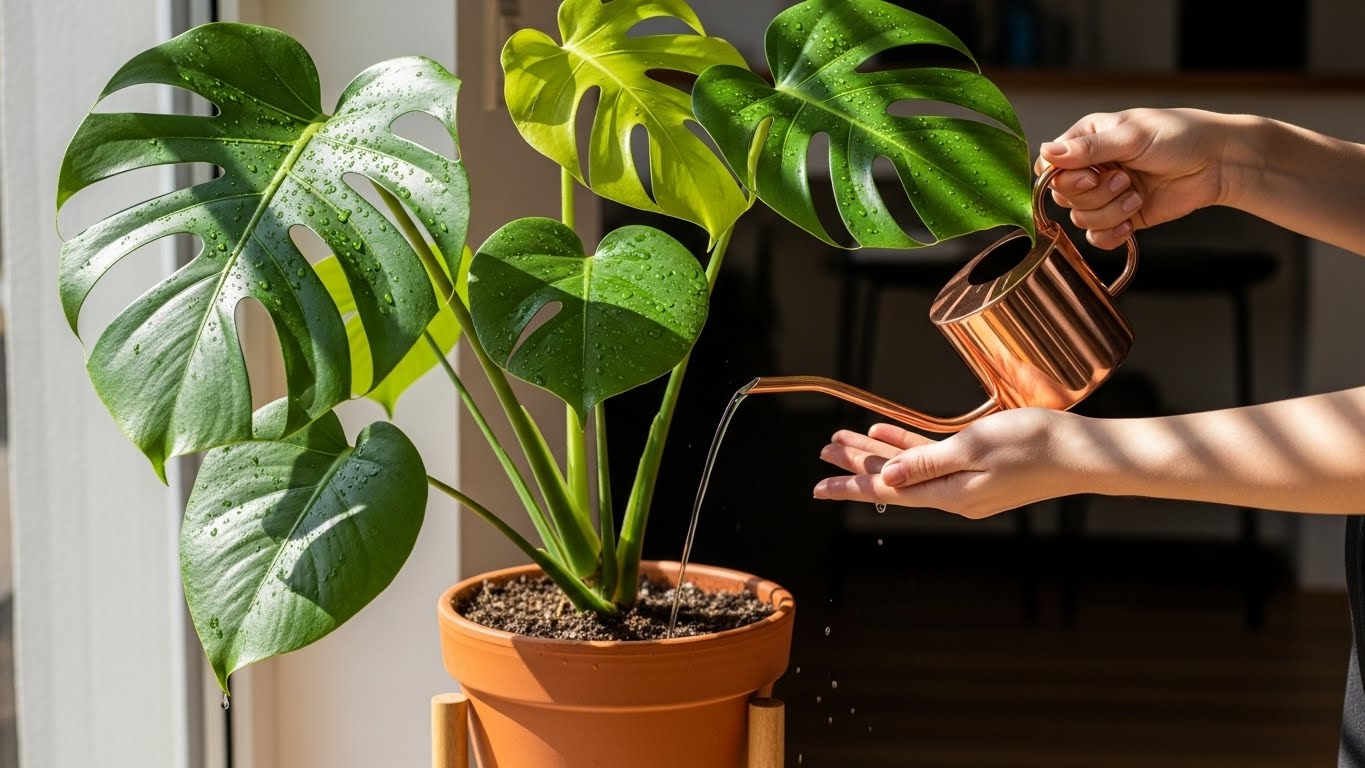
To water your Monstera without overwatering, make sure to check the top inch of soil—only water when it feels dry. Keep an eye out for yellowing leaves, as they can signal both over and underwatering. Use well-draining soil, and choose pots with drainage holes. Adjust your watering routine with the seasons; typically, you’ll water more in spring and summer. If you want even more tips for keeping your Monstera happy, stay tuned!
Key Takeaways
💡 If you’re eager to cultivate a thriving Monstera, understanding its care is essential.
➜ Discover proven techniques
- Check the top inch of soil; water only when it feels dry to the touch to avoid overwatering.
- Use a moisture meter for accurate readings of soil dampness before deciding to water.
- Ensure your pot has drainage holes to prevent water from pooling at the bottom.
- Choose a well-draining potting mix with organic matter and perlite to promote proper aeration.
- Adjust watering frequency based on seasonal changes and environmental conditions, especially in winter.
Understanding Monstera’s Watering Needs
When you think about caring for your Monstera, understanding its watering needs is crucial, as it can make all the difference in keeping your plant healthy and thriving. Monstera plants love a balance of moisture, so you’ll want to aim for ideal moisture in the soil. This means watering when the top inch feels dry; it’s a simple way to guarantee your plant doesn’t get thirsty or drown. Remember, factors like light, temperature, and humidity can affect how often you need to water. By paying attention to these details, you’ll create a nurturing environment where your Monstera can flourish. Additionally, understanding the importance of top 2-3 inches of soil can help you determine the right time to water. So, keep an eye on your plant, and it’ll reward you with those lovely, iconic leaves!
Signs of Overwatering
When caring for your Monstera, it’s important to recognize the signs of overwatering to keep your plant healthy. You might notice yellowing leaves, which is often a cry for help from your plant. Additionally, look out for root rot indicators and any mold or fungus growth, as these can signal that your watering routine needs a little adjustment.
Yellowing Leaf Symptoms
If you notice your Monstera’s leaves turning yellow, it might be trying to tell you something important about its watering routine. Yellowing leaves can indicate overwatering, which can lead to several issues. Here are some common yellowing leaf causes and remedies to contemplate:
- Too much water: Check if the soil is soggy.
- Poor drainage: Confirm your pot has drainage holes.
- Nutrient deficiency: Think about using a balanced fertilizer.
- Temperature stress: Keep your plant in a stable environment.
To remedy yellowing leaves, adjust your watering habits, allowing the soil to dry out between waterings. Remember, your Monstera thrives on a balanced routine, so pay close attention to its needs!
Root Rot Indicators
Root rot is a sneaky villain in the world of houseplants, especially for your beloved Monstera. To keep your plant thriving, you need to watch for signs that indicate trouble with root health. One major indicator is the smell—if you notice a foul, musty odor coming from the soil, it’s a red flag. Additionally, check the leaves; if they’re wilting or turning brown despite adequate care, that could signal overwatering. You should also consider the moisture levels in the soil—if it feels soggy or overly wet, that’s a sign you might be drowning your Monstera. Remember, a happy plant has healthy roots, so stay vigilant and adjust your watering routine accordingly!
Mold and Fungus Growth
Mold and fungus can creep into your Monstera’s soil when you water too much, making it a sneaky sign of overwatering that you shouldn’t ignore. These unwanted guests can harm your plant, so keep an eye out for these signs:
- White, fuzzy patches on the soil surface
- A musty smell coming from the pot
- Discolored or wilting leaves
- Excessive moisture in the soil that doesn’t dry out
For effective mold prevention, let the top inch of soil dry before watering again. If you spot fungus, you can use a gentle fungicide as a fungus treatment. By staying vigilant and acting quickly, you’ll help your Monstera thrive, free from unwanted mold and fungus!
Signs of Underwatering
When your Monstera isn’t getting enough water, it can show some pretty clear signs that you shouldn’t ignore. You might notice the leaves turning yellow, which is a big red flag, and if you check the soil, it might feel completely dry. Keeping an eye on these indicators will help you keep your plant happy and thriving!
Yellowing Leaves Indicator
Yellowing leaves can be a telltale sign that your Monstera is not getting enough water. If you notice this happening, it’s important to act quickly. Understanding the yellowing leaf causes can help you determine what’s going wrong and how to fix it. Here are some effective remedies you can try:
- Increase your watering frequency, making certain the soil stays consistently moist.
- Use a moisture meter to check the soil’s dampness before watering.
- Consider adjusting your plant’s location to make sure it gets adequate light.
- Trim away the yellowing leaves to encourage new growth.
Soil Dryness Check
💡 Pot size plays a crucial role in your Monstera’s health and watering needs.
➜ Get the step-by-step guide
How can you tell if your Monstera is thirsty? One of the best ways is to check the soil moisture. Stick your finger about an inch into the soil; if it feels dry and crumbly, it’s a clear sign your plant needs water. Monitor how well your potting mix holds moisture—good moisture retention is key to a happy Monstera. If the soil stays too dry for too long, you might notice drooping leaves or brown tips. Remember, it’s essential to find that balance; too little moisture can be just as harmful as too much. So, keep an eye on your plant’s needs, and you’ll develop a beautiful bond with your Monstera that thrives!
Choosing the Right Potting Mix
💡 Caring for a variegated Monstera requires specific techniques, especially regarding watering.
➜ Explore advanced methods
Choosing the right potting mix for your Monstera is essential, as it not only supports healthy growth but also helps maintain the right moisture balance. You want to guarantee your plant thrives, so consider these key elements in your potting material:
Selecting the ideal potting mix is crucial for your Monstera’s health and moisture balance.
- Well-draining soil: Look for a mix designed to prevent waterlogging.
- Lightweight texture: Choose a soil that’s easy for roots to navigate.
- Organic matter: Incorporate materials like peat or coconut coir for nutrients.
- Aeration: Add perlite or orchid bark to improve airflow around the roots.
The Importance of Drainage
When it comes to keeping your Monstera healthy, proper drainage is a key player in the game. Without effective drainage systems, water can pool at the bottom of the pot, leading to root rot—a nightmare for any plant lover! So, when you’re making your potting choices, make certain you select a container with drainage holes. This allows excess water to escape, keeping your plant’s roots happy and breathable. Additionally, consider using a well-draining potting mix that complements your chosen pot. By prioritizing drainage, you’re not just preventing overwatering; you’re creating a nurturing environment for your Monstera to thrive. Remember, a little attention to drainage can go a long way in keeping your leafy friend vibrant and flourishing!
How to Check Soil Moisture
Ever wondered if your Monstera is getting just the right amount of water? Checking soil moisture is key to keeping your plant happy. Here are a couple of simple methods to help you out:
- Moisture Meter: Insert it into the soil; it provides a quick reading of moisture levels.
- Finger Test: Stick your finger about an inch into the soil. If it feels dry, it’s time to water.
- Visual Check: Observe the top layer of soil; if it appears dry and crumbly, your plant needs water.
- Weight Test: Lift the pot; a lighter pot usually means it’s time for a drink.
These methods will help guarantee your Monstera stays healthy and thriving!
Watering Frequency Guidelines
Understanding how often to water your Monstera can greatly impact its health, so it’s important to establish a routine that suits its needs. A good watering schedule typically means checking in every 1 to 2 weeks, but it’s essential to pay attention to the moisture levels in the soil. Stick your finger into the top inch of the soil; if it feels dry, it’s time to water. Remember, overwatering can lead to root rot, so be cautious! During warmer months, you might find your plant needs more water, while in cooler months, it could need less. Trust your instincts, and adjust as needed—your Monstera will thrive with your attentive care!
Seasonal Adjustments for Watering
As you get into the rhythm of watering your Monstera, don’t forget that seasonal changes can affect its needs. Your plant’s watering routine should adapt to seasonal temperature shifts and humidity fluctuations. Here’s how you can adjust:
- Spring: Increase watering as new growth starts and the air warms up.
- Summer: Keep the soil moist but check more frequently due to higher temperatures.
- Fall: Gradually reduce watering as the plant slows down and the air cools.
- Winter: Cut back considerably, since lower humidity and cooler temps slow growth.
Tips for Maintaining Humidity
Maintaining the right humidity for your Monstera is essential, especially since these tropical plants thrive in moist environments. You can boost humidity levels by using humidity trays filled with water and pebbles beneath your plant. As the water evaporates, it creates a lovely, humid microclimate around your Monstera.
Another trick is grouping your plants together; they naturally share humidity, making everyone happier. If you live in a dry area, consider using a humidifier to keep the air moist. Regularly misting your Monstera can also help, just be sure not to overdo it. By keeping an eye on the humidity, you’ll guarantee your Monstera stays lush and vibrant, just as it deserves!
Conclusion
In the grand adventure of caring for your Monstera, remember that balance is key. By keeping an eye on its watering needs, from the subtle signs of thirst to the telltale signs of too much love, you’ll guarantee your plant thrives. Embrace the magic of the right potting mix and good drainage, and your Monstera will flourish. So, grab your watering can and give your green friend just what it craves—without the soggy aftermath!
💡 Yellowing leaves can indicate overwatering, making it crucial to understand the signs.
➜ See how to implement this


