
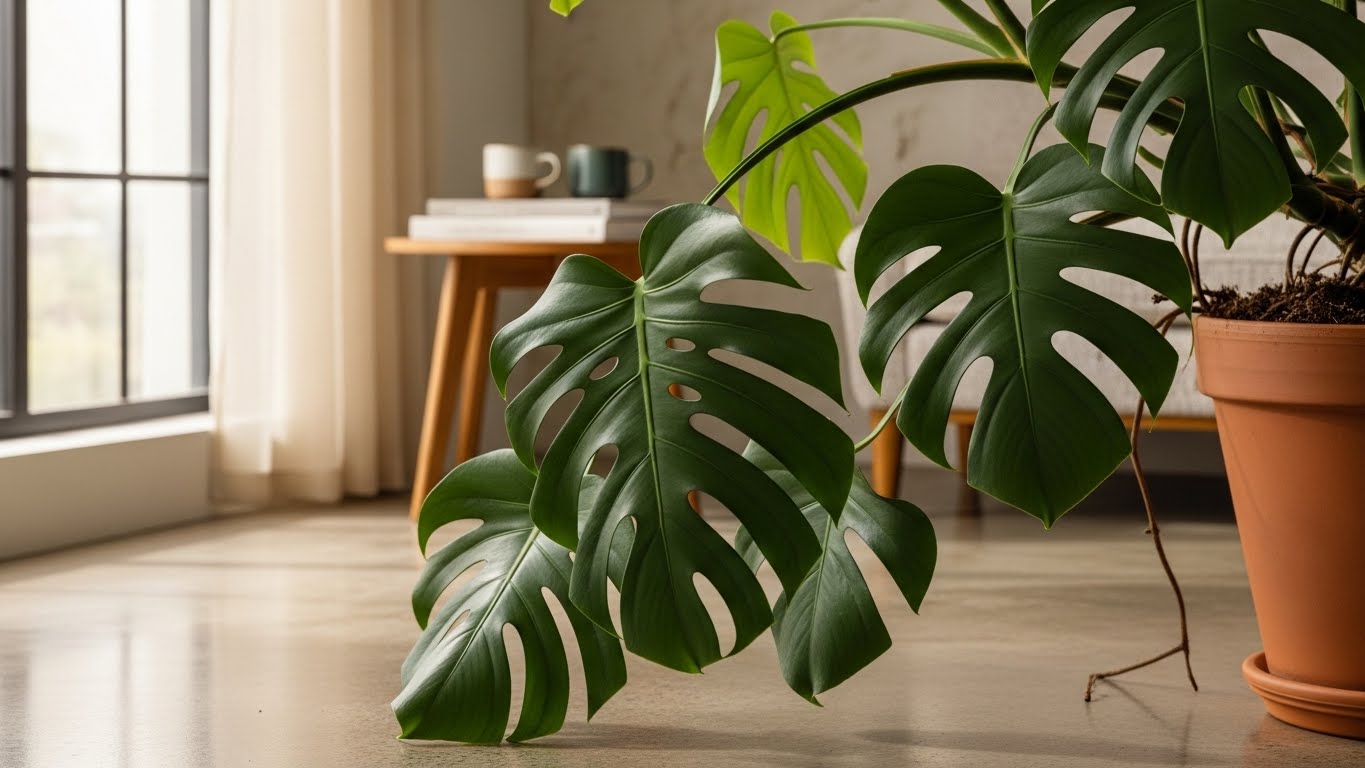
If your Monstera is drooping, it usually means something’s off! Start by checking if you’re over or underwatering. Overwatered plants have yellow, soggy leaves, while underwatered ones might have dry soil and wilting. Make sure it’s getting bright, indirect light and the right humidity, too! Also, watch out for pests like spider mites or mealybugs. If you fix these issues, your Monstera will perk up. Want tips on helping your plant thrive even more?
Key Takeaways
💡 If you’re noticing yellowing leaves alongside drooping, it’s crucial to understand the underlying issues.
➜ Discover proven techniques
- Check the soil moisture; water only when the top inch is dry to prevent overwatering or underwatering issues.
- Ensure the plant receives bright, indirect sunlight; rotate for even light distribution.
- Maintain humidity levels between 60%-80% using a humidifier or misting to support healthy growth.
- Inspect for root-bound conditions; repot in a larger container if roots are circling the pot.
- Look for pest infestations like spider mites or mealybugs; treat with insecticidal soap or neem oil if present.
Understanding Monstera Drooping
Have you ever noticed your Monstera plant looking a bit sad, with its leaves drooping down instead of standing tall and proud? It’s crucial to understand that drooping monstera leaves can signal underlying issues affecting plant health. Sometimes, the problem lies in the environment; factors like low light or extreme temperatures can leave your plant feeling sluggish. Other times, it’s about the soil or the pot size. If it’s too small, your Monstera may feel cramped, affecting its overall vigor. By paying attention to these details, you can create a nurturing space for your plant, helping those beautiful leaves perk up again. Additionally, ensuring proper aeration and moisture retention in the potting medium can significantly improve your plant’s health. Remember, a happy Monstera makes for a more vibrant home!
Watering Issues
When it comes to your Monstera’s drooping leaves, one of the most common culprits is improper watering. You might be giving it too much or not enough water, both of which can lead to droopiness. To keep your Monstera happy, pay attention to its watering frequency. Ideally, you should water when the top inch of soil feels dry. This guarantees your plant gets enough moisture without drowning it. Additionally, consider the potting mix you use; a mix that promotes moisture retention can help keep your Monstera hydrated for longer. Remember, finding the right balance in watering is key to keeping those gorgeous leaves perked up and thriving! So, check that soil and adjust your routine accordingly.
Overwatering Symptoms
While you might think giving your Monstera more water will keep it happy, overwatering can actually lead to some serious problems that cause drooping leaves. You’ll notice overwatering signs like yellowing leaves, which can make your plant look sad and unhealthy. If the leaves start to feel mushy or limp, that’s another clue that you might be giving it too much love in the form of water. Overwatering causes root rot, which can be a death sentence for your Monstera if not addressed quickly. Check the soil—if it’s soggy or doesn’t dry out between waterings, it’s time to cut back. Remember, a happy Monstera thrives in well-draining soil with just the right amount of moisture!
Underwatering Signs
When your Monstera starts drooping, it might just be thirsty! You can spot signs of underwatering, like leaf curling and wilting, which indicate your plant needs a drink. Checking the soil moisture is a quick way to determine if it’s time to give your Monstera some hydration love.
Identifying Underwatering Symptoms
Have you ever noticed your Monstera’s leaves starting to droop? This can be an early sign of underwatering, and it’s essential to catch it before your plant experiences more stress. An underwatering diagnosis often reveals other symptoms, too. Check for dry soil that pulls away from the pot edges, or feel the soil—if it’s bone dry, your Monstera is thirsty. You might also see the stems looking weak and lifeless, which isn’t a good sign. If you notice these symptoms, don’t worry! A little extra water can work wonders. Just remember to give your Monstera a thorough soak and let the excess drain out. Your plant will perk up, and you’ll both feel better!
Leaf Curling and Wilting
Have you ever seen your Monstera’s leaves curling or wilting? This can be a sign of plant stress caused by underwatering, and it’s essential for your plant’s leaf health. When your Monstera doesn’t get enough water, it might react by curling its leaves or letting them droop. Here are three things to take into account:
- Check the Soil: Dry soil can signal it’s time for a drink.
- Observe the Environment: High temperatures can increase water needs.
- Look for New Growth: If your Monstera isn’t producing new leaves, it might need more hydration.
Keeping an eye on these signs helps guarantee your Monstera stays healthy and vibrant, so give it the care it deserves!
Soil Moisture Check
Checking the soil moisture is one of the best ways to determine if your Monstera is suffering from underwatering. Grab a moisture meter or stick your finger about an inch into the soil. If it feels dry, your plant might be thirsty! Look for signs like drooping leaves or crispy edges; they’re your Monstera’s way of telling you it needs water.
To keep things simple, try to check the soil moisture weekly. Remember, it’s better to underwater a little than to overwater, which can cause root rot. By tuning into your plant’s needs, you’ll help it thrive, staying healthy and vibrant. So, let’s nurture that Monstera together—your green friend will appreciate it!
Light Requirements
When you notice your Monstera drooping, one of the first things to contemplate is its light requirements. Your plant craves the right balance of natural light and indirect sunlight to thrive. If it doesn’t get enough, it might show signs of distress. Here are three tips to help you provide the right lighting:
- Place it near a window: A spot with bright, indirect sunlight works wonders. Direct sun can scorch those beautiful leaves.
- Rotate it occasionally: This guarantees all sides get equal light exposure, promoting even growth.
- Watch for shadows: If your plant is stretching towards a light source, it might be time to adjust its location for better light access.
With the right light, your Monstera will bounce back!
Humidity Levels
Humidity plays an essential role in keeping your Monstera happy and healthy. These plants thrive in high humidity, usually around 60% to 80%. If the air is too dry, you might notice your Monstera drooping or developing crispy leaf edges. To guarantee your plant feels cozy, consider its humidity preferences. You can use a humidifier, place a pebble tray filled with water beneath the pot, or group your plants together to create a mini rainforest effect. Regularly misting your Monstera can also help maintain that ideal humidity level. Remember, a happy Monstera is a thriving Monstera, so don’t hesitate to pamper it with the right humidity conditions! Your plant will thank you with lush, vibrant growth.
Soil Quality
When it comes to your Monstera, the quality of soil plays a huge role in its health. You’ll want to guarantee it has good drainage, is packed with nutrients, and maintains a balanced pH level to keep your plant thriving. If the soil isn’t just right, it could be a reason your Monstera is drooping!
Soil Drainage Importance
Soil drainage plays an essential role in keeping your Monstera healthy and vibrant, as it directly affects how well the roots can absorb water and nutrients. When your plant’s soil drains well, it promotes soil aeration benefits, allowing roots to breathe and thrive. Poor drainage, on the other hand, can lead to root rot and drooping leaves. Here are some key drainage techniques you can apply:
💡 Drooping is just one of the many challenges Monstera owners face.
➜ Get the step-by-step guide
- Use a well-draining potting mix: Look for mixes designed for aroids or tropical plants.
- Choose pots with drainage holes: This helps excess water escape, preventing soggy soil.
- Add perlite or orchid bark: These materials improve aeration and guarantee proper drainage.
Nutrient-Rich Soil
Having nutrient-rich soil is essential for your Monstera’s overall health and growth, as it provides the necessary elements your plant needs to thrive. To keep your Monstera happy, consider using quality fertilizer options like balanced slow-release granules or liquid fertilizers that feed your plant gradually. Don’t forget about soil amendments! Mixing in organic matter, like compost or worm castings, can enhance soil structure and nutrient content. These additions encourage beneficial microorganisms, which help your plant absorb nutrients better. If your Monstera’s leaves are drooping, it might be a sign that it’s hungry for nutrients. By ensuring your soil is rich and vibrant, you’re setting the stage for a flourishing, lively Monstera that brings joy to your space!
💡 A drooping Monstera may also indicate a need for better support.
➜ Explore advanced methods
Ph Level Balance
To keep your Monstera thriving, it’s essential to pay attention to the pH level of its soil, as this can greatly impact its ability to absorb nutrients. A balanced pH level, ideally between 5.5 and 7.0, guarantees your plant gets what it needs. Here’s how to maintain that balance:
- pH Testing: Regularly test your soil using a pH meter or test kit to monitor its levels.
- Soil Amendments: If the pH is off, consider adding amendments like lime to raise it or sulfur to lower it.
- Water Quality: Use filtered water when possible, as tap water can sometimes alter soil pH.
Root Bound Problems
When your Monstera starts drooping, it might be signaling that it’s root bound, which means its roots have outgrown their pot. To maintain healthy roots, you need to pay attention to pot size. Here’s a quick look at how to identify root bound issues:
Signs of Root Bound | Effects on Root Health | Solutions |
|---|---|---|
Roots circling the pot | Poor nutrient absorption | Repot in a larger pot |
Water pooling on top | Root rot risk | Use well-draining soil |
Stunted growth | Weak plant structure | Trim back roots if needed |
Droopy leaves | Decreased liveliness | Regularly check roots |
If you notice these signs, it’s time for a pot upgrade. Your Monstera will thrive, and you’ll enjoy a healthier, happier plant!
Temperature Fluctuations
When it comes to keeping your Monstera happy, temperature plays a huge role! These plants thrive best in a cozy range of 65 to 85 degrees Fahrenheit, so sudden drops or cold drafts can really stress them out. If you notice drooping leaves, it might be time to check if your plant is getting the consistent warmth it craves.
Ideal Temperature Range
Maintaining the right temperature for your Monstera is essential to its health, especially since these tropical plants thrive in warm environments. To keep your Monstera happy, aim for an ideal temperature range between 65°F to 85°F (18°C to 29°C). Temperature fluctuations can stress your plant, leading to drooping leaves. Here are three tips to help:
- Stable Environment: Keep your Monstera away from drafty windows or air conditioning vents.
- Seasonal Adjustments: During colder months, consider moving it to a warmer spot or using a space heater.
- Monitor Humidity: A humidity level of 40-60% can help maintain a consistent temperature around your Monstera.
Cold Draft Effects
Cold drafts can really throw a wrench in your Monstera’s happy routine. These temperature fluctuations can stress your plant, leading to drooping leaves and a sad-looking stem. Remember, Monsteras are quite sensitive to changes in their environment. If they’re exposed to cold drafts from windows or air conditioning, they might not thrive like you want them to. You’ll want to avoid placing your Monstera near doors or vents where chilly air flows freely. Instead, find a cozy, stable spot with consistent warmth. When you protect your plant from cold drafts, you’re helping it stay healthy and vibrant. A little extra care can make a big difference, keeping your Monstera looking its best!
Pest Infestations
Pest infestations can be sneaky little troublemakers that cause your Monstera to droop, and if you’re not paying attention, they might just take over your plant without you noticing. To tackle these pesky critters, start with pest identification. Look for these common offenders:
Pest infestations can quietly harm your Monstera; identifying them early is key to keeping your plant healthy and thriving!
- Spider Mites: Tiny and often invisible, they can create webbing on the leaves.
- Mealybugs: These fluffy white bugs cluster on stems and leaf joints, sucking the sap.
- Aphids: Small and green, they can distort new growth and leave a sticky residue.
Once you identify the pests, explore treatment options like insecticidal soap or neem oil. With a little effort, you can restore your Monstera’s health and keep it thriving!
Nutrient Deficiencies
When your Monstera starts drooping, it might not just be a sign of stress from pests; nutrient deficiencies could be the culprit too. Your plant needs essential nutrients to thrive, and if it’s not getting enough, it can show distress. Common nutrient sources include nitrogen, phosphorus, and potassium. If you notice yellowing leaves or slow growth, your Monstera might be craving these elements.
To help, consider adding soil amendments like compost or a balanced fertilizer, which can enrich the soil and provide those missing nutrients. Remember, a healthy plant is a happy plant! Keep an eye on your Monstera’s needs, and you’ll be rewarded with vibrant, lush growth. It’s all about giving it the love and care it deserves!
Recovery Steps for Your Monstera
Recovering a drooping Monstera can be a rewarding experience, and taking the right steps can help bring your plant back to its vibrant self. Here are three essential recovery steps:
Reviving a drooping Monstera is fulfilling; follow these key steps to restore its lush vitality.
- Pruning Techniques: Trim any yellow or damaged leaves to redirect energy to healthier parts of the plant. This simple process can rejuvenate your Monstera and encourage new growth.
- Repotting Tips: If the roots are cramped, consider repotting your Monstera in fresh, well-draining soil. Choose a pot one size larger to give those roots room to breathe.
- Watering Adjustments: Confirm you’re watering adequately. Let the top inch of soil dry between waterings, but don’t let it completely dry out.
With these steps, your Monstera will thrive again!
Conclusion
To sum up, your Monstera’s drooping can be a puzzle, with both overwatering and underwatering presenting symptoms that might confuse you. By evaluating its water, light, and nutrient needs, you can turn your plant’s droopy demeanor into a vibrant display of health. Remember, a little attention can transform a sad plant into a thriving one, and with patience, your green friend will be back to its cheerful self in no time! Keep caring, and watch it flourish!
💡 Improper watering can lead to drooping leaves, so it’s vital to get it right.
➜ Master this approach


