
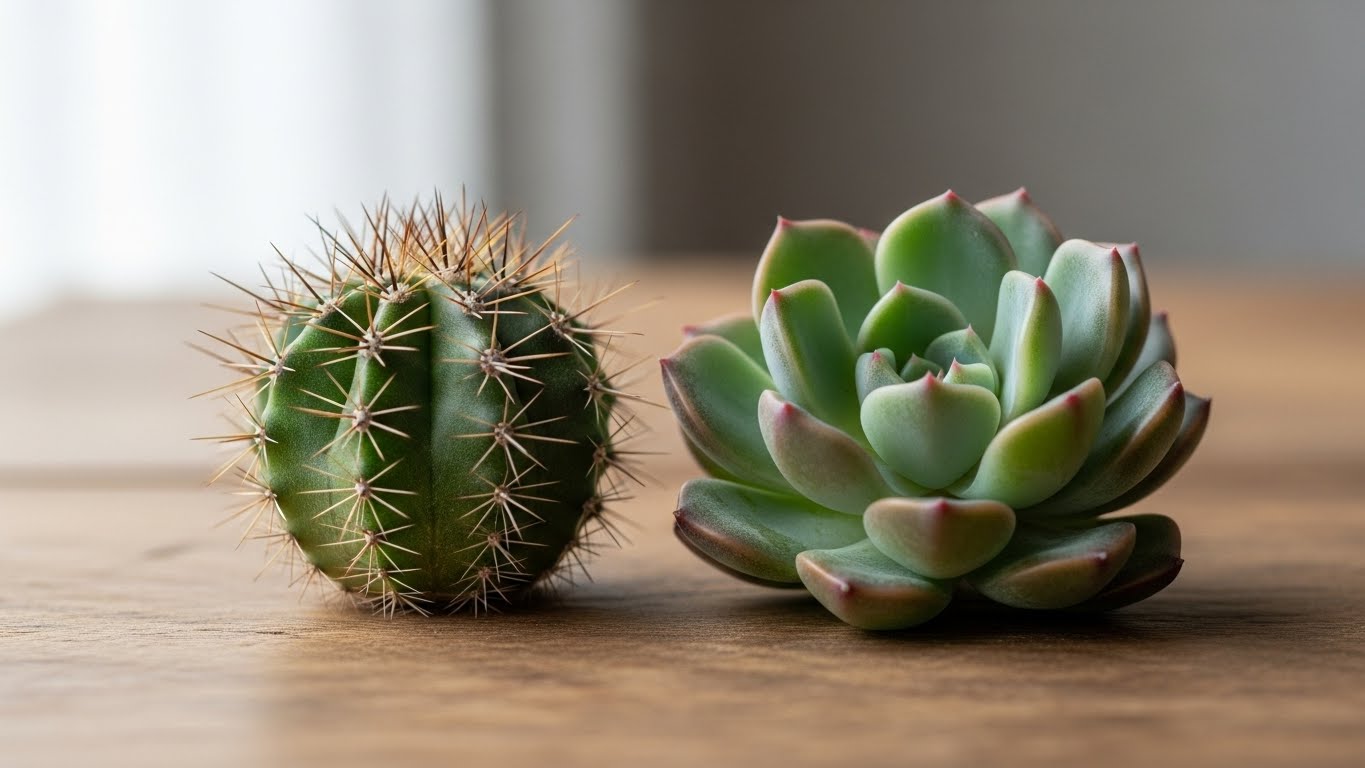
Mini cacti and succulents are both fascinating plants, but they’ve got unique traits! Cacti usually have spiky exteriors, need less water, and thrive in bright sunlight. Succulents, like the Jade Plant and Zebra Plant, have plump leaves and come in vibrant colors, requiring more watering. They prefer filtered light and enjoy well-draining soil. Each has special care needs that can really make a difference in their growth. Keep exploring, and you’ll uncover even more exciting plant facts!
Key Takeaways
💡 Knowing the different types of mthis cacti can enhance your care routine and styling options.
➜ Master the art of cactus identification
- Cacti belong to the Cactaceae family, while succulents encompass a broader category of water-storing plants, including various families.
- Mini cacti require less water than succulents, typically needing watering every two to three weeks versus weekly for succulents.
- Cacti thrive in bright, direct sunlight, whereas succulents can tolerate filtered light, making them more versatile in low-light conditions.
- Cacti prefer gritty, well-draining soil with sand and perlite, while succulents thrive in a balanced potting soil blend.
- Cacti are known for their spiky exteriors and vibrant flowers, while succulents are characterized by plump leaves and diverse shapes, like rosettes.
Understanding Cacti: Characteristics and Varieties
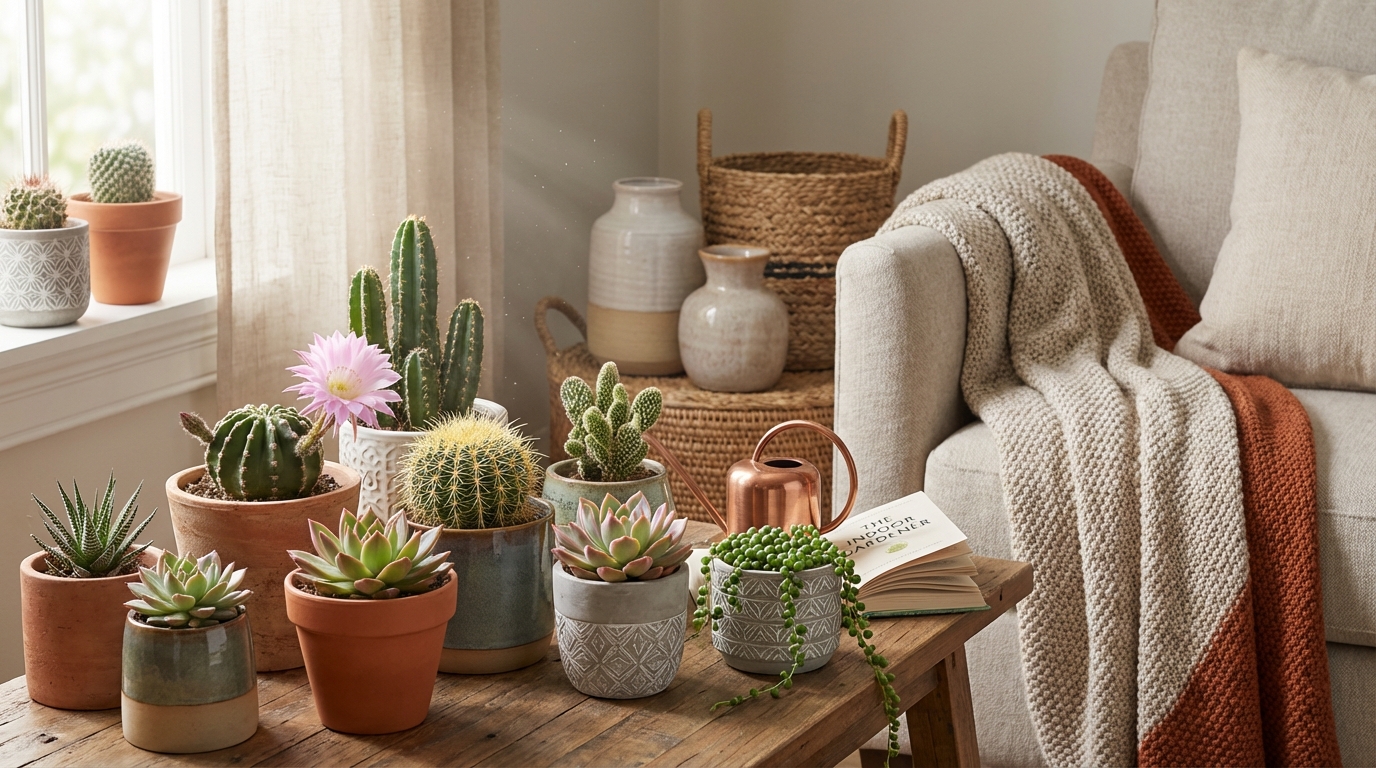
When you think about cacti, you might picture spiky plants that thrive in the desert, but there’s so much more to them than just their tough exterior! Cacti are truly fascinating, with unique characteristics and a variety of shapes and sizes. They grow in diverse habitats, from arid deserts to rocky mountains, adapting to their environment like pros. One of the most delightful surprises is their stunning cactus flowers, which bloom in vibrant colors, often attracting pollinators like bees and hummingbirds. These flowers can be short-lived, but they make a big impression! Understanding cacti helps you appreciate their resilience and beauty, turning them from mere plants into enchanting companions in your garden or home. Additionally, cacti belong to the Cactaceae family, which distinguishes them from other succulent plants.
The World of Succulents: Types and Traits
When you think about succulents, you might picture their plump leaves and vibrant colors, but there’s so much more to explore! From the popular jade plant to the quirky burro’s tail, each succulent has its own unique adaptations that help it thrive in dry environments. Let’s uncover some of these fascinating varieties and their special traits that make them stand out in the plant world!
Popular Succulent Varieties
Succulents come in a dazzling array of shapes, sizes, and colors, with hundreds of popular varieties to choose from! You might fall in love with the plump, rosette-shaped Echeveria, known for its stunning colors that change with the seasons. Or perhaps the charming Jade Plant, with its thick, glossy leaves that symbolize good luck. If you’re looking for something unique, the Zebra Plant boasts striking white stripes that stand out beautifully. For a whimsical touch, the String of Pearls, cascading like green beads, is a must-have. Each of these popular varieties has its own unique features, making it easy to find the perfect succulent to brighten your space and reflect your personality!
Unique Adaptations and Features
Exploring the fascinating world of succulents reveals a variety of unique adaptations and features that help these plants thrive in their often harsh environments. Here are three standout traits you’ll love:
- Water Retention: Succulents store water in their thick, fleshy leaves, allowing them to survive long periods without rainfall.
- Photosynthesis Mechanisms: Unlike many plants, succulents often use a special type of photosynthesis called CAM, allowing them to take in carbon dioxide at night, reducing water loss during the day.
- Protective Structures: Many succulents develop spines or thick skins to guard against herbivores and intense sun, ensuring their survival.
These incredible adaptations not only make succulents unique but also showcase their resilience in tough conditions, inviting you to appreciate their beauty even more.
Key Differences in Watering Needs
Understanding the watering needs of cacti and succulents is essential if you want to keep them thriving in your home. Cacti generally require less water than succulents, thanks to their unique adaptations for moisture retention. You’ll want to water your cactus about every two to three weeks, allowing the soil to dry completely between waterings. In contrast, succulents need a bit more attention; you might find yourself watering them every week or so, depending on humidity levels. Always check the soil moisture first! Overwatering can lead to root rot, so it’s vital to find that perfect balance. By observing their watering frequency, you’ll create a happy environment for both your cacti and succulents to flourish.
Light Requirements for Mini Cacti and Succulents
When it comes to keeping mini cacti and succulents healthy, light plays a significant role in their growth and overall well-being. To guarantee your plants thrive, consider these key light requirements:
- Light Intensity: Mini cacti love bright, direct sunlight, while succulents can tolerate a bit of filtered light.
- Sunlight Duration: Aim for at least 6 hours of sunlight per day for both plants. Too little light can lead to leggy growth or poor health.
- Rotation: Regularly rotate your plants to guarantee even light exposure, preventing them from leaning toward the light source.
Soil Preferences: What Each Plant Needs
Soil plays an essential role in the health of your mini cacti and succulents, and choosing the right type can make all the difference. Both plants thrive in well-draining soil that prevents excess moisture, but their soil composition needs differ slightly. For mini cacti, look for a gritty mix that includes sand and perlite, ensuring that their drainage requirements are met. Succulents, on the other hand, prefer a more balanced blend of potting soil and amendments like pumice or coarse sand. This not only helps with drainage but also provides the nutrients they need to flourish. By understanding these preferences, you’ll create a loving home for your plants, helping them grow strong and vibrant.
Common Pests and Diseases: Cacti vs. Succulents
💡 Understanding the nutritional needs of mthis cacti is crucial for their growth.
➜ Discover essential fertilization tips
Pests and diseases can sneak up on your plants, even those hardy little cacti and succulents that seem almost invincible. To keep them thriving, you’ll want to focus on effective pest management and disease prevention. Here are three common issues to watch for:
- Mealybugs: These small, white pests love to hide in the crevices of your plants, sucking away their nutrients.
- Root Rot: Overwatering can lead to this sneaky disease, causing roots to decay and plants to wilt.
- Spider Mites: These tiny arachnids can wreak havoc, leaving webbing and yellowing leaves in their wake.
Aesthetic Appeal: Style and Decor Considerations
💡 Incorporating mthis cacti into your home decor can elevate your space with a touch of nature.
➜ Explore stylish cactus decor ideas
Cacti and succulents not only bring a touch of nature indoors but also add a unique flair to your home decor. You can easily incorporate them into various aesthetic styles, enhancing your space with lively decor trends. Whether you prefer a minimalist vibe or a boho-chic look, these plants fit right in.
Aesthetic Style | Decor Trend |
|---|---|
Minimalist | Clean lines |
Bohemian | Colorful pots |
Rustic | Natural materials |
Modern | Geometric shapes |
Vintage | Antique containers |
Imagine a mini cactus on your windowsill or a succulent centerpiece on your dining table. With their vibrant colors and interesting shapes, they create a warm and inviting atmosphere, making your home feel special.
Frequently Asked Questions
Can Mini Cacti and Succulents Be Grown Together in the Same Pot?
Yes, you can grow mini cacti and succulents together! Just consider compatibility factors like water needs and potting techniques. Make sure they thrive in a well-draining mix, so they both stay happy and healthy.
How Often Should I Fertilize Mini Cacti and Succulents?
You should fertilize your mini cacti and succulents during their active growth stages, about every four to six weeks. Use a balanced fertilizer or one specifically designed for them to encourage healthy growth and vibrant colors.
Are There Any Poisonous Types of Cacti or Succulents?
Did you know about 2% of cacti species are considered poisonous? While most cacti and succulents are safe species, it’s wise to research any plant before bringing it home to avoid potential risks.
What Are the Best Tools for Propagating Cacti and Succulents?
For propagating cacti and succulents, you’ll need essential tools like sharp scissors, a clean potting mix, and small pots. Use various propagation techniques, like leaf cuttings or offsets, to help your plants thrive and grow.
How Can I Tell if My Cactus or Succulent Is Unhealthy?
If your cactus or succulent looks like it’s auditioning for a horror movie, it’s time for symptom identification! Check for wilting, discoloration, or pests, and follow care tips to revive your beloved green companion.
Conclusion
To conclude, while mini cacti and succulents share some similarities, they have unique traits that set them apart. For example, imagine a student bringing a mini cactus to school, its vibrant colors and unique shape sparking curiosity and conversation among classmates. This little plant not only brightens up a desk but also serves as a fantastic reminder of how diverse and fascinating nature can be. So, whether you choose a cactus or a succulent, you’re sure to bring a touch of joy to your space!
💡 If you notice your mthis cactus showing signs of distress, knowing how to address it is vital.
➜ Learn how to revive shriveling cacti


