
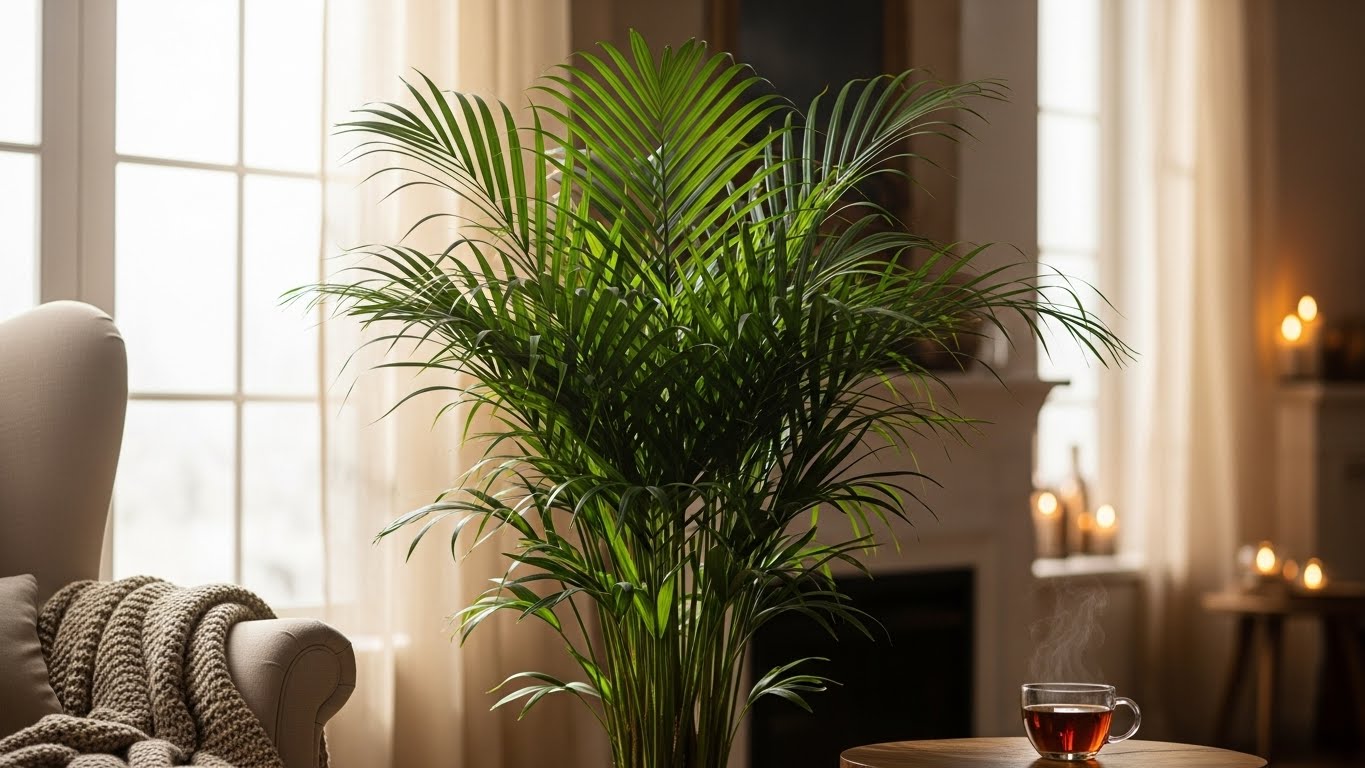
To care for your Kentia palm in winter, keep it in a cozy spot with temperatures between 65°F and 75°F, avoiding drafts and heat sources. Water it less frequently—every 1-3 weeks—when the top inch of soil is dry. Add humidity with misting or a humidifier, and use organic fertilizers every six to eight weeks to keep it nourished. Make sure it gets bright, indirect light for ideal growth. Stay tuned for more tips on pest management and prevention!
Key Takeaways
💡 Understanding the right temperature is crucial for your Kentia palms’ health during winter.
➜ Discover proven techniques
- Maintain indoor temperatures between 65°F and 75°F to support Kentia palm health during winter.
- Water when the top inch of soil dries out, reducing frequency to every 1-3 weeks in winter.
- Increase humidity levels using humidifiers or pebble trays to prevent leaf browning and drooping.
- Fertilize with organic, slow-release options every six to eight weeks to address potential nutrient deficiencies.
- Rotate the plant occasionally to promote even growth and ensure all sides receive adequate light.
Understanding the Kentia Palm’s Needs
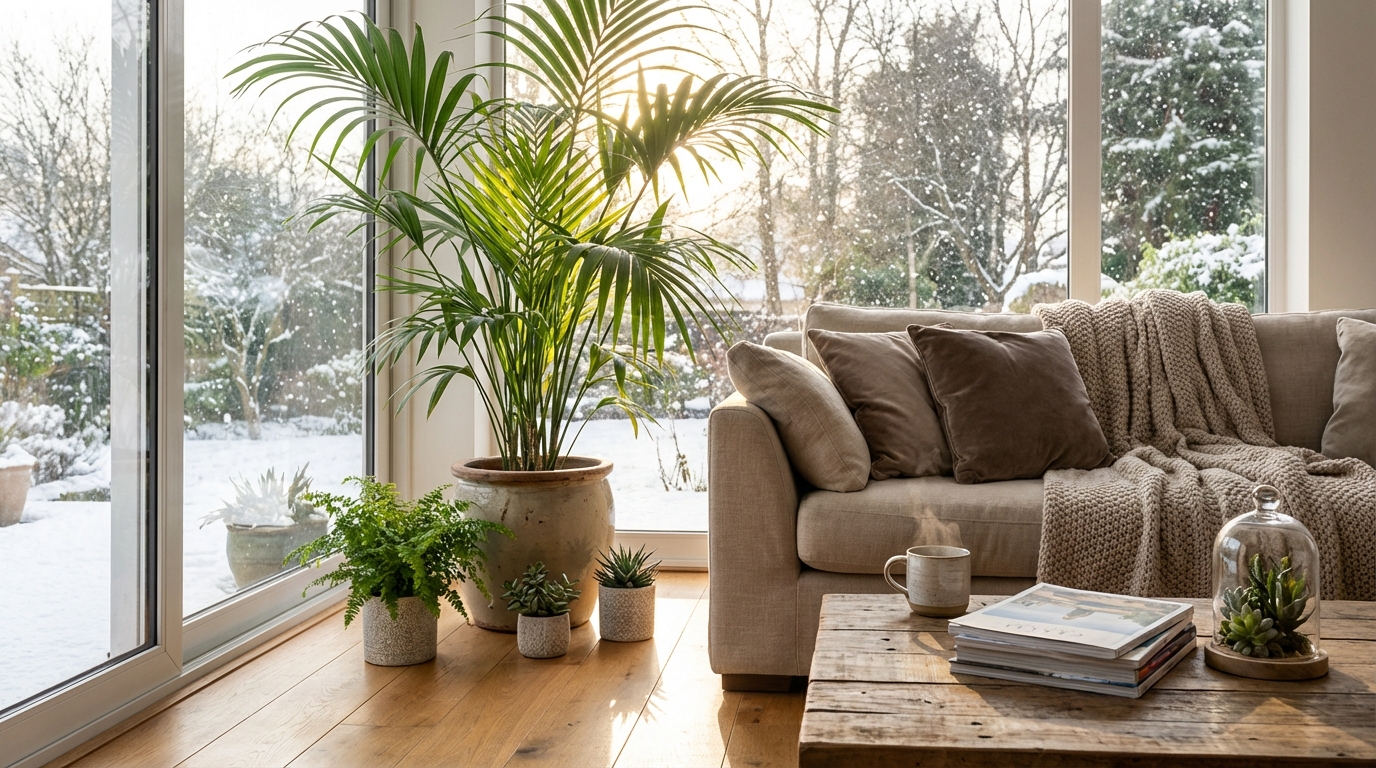
Understanding the needs of your Kentia palm is important, especially during the chilly winter months when it requires a bit of extra care. As seasonal changes occur, your palm may need adjustments in its routine. Keep an eye on its light exposure; it thrives in bright, indirect sunlight. You might want to rotate the plant occasionally to guarantee even growth. Watering is essential, but be careful not to overdo it—allow the top inch of soil to dry out before giving it a drink. Maintaining humidity is also critical; consider misting the leaves or placing a humidifier nearby. Additionally, remember that Kentia palms benefit from supplemental nutrients during the growing season, so adjust your fertilization schedule accordingly. By recognizing and addressing these needs, you’ll help your Kentia palm flourish, even when winter tries to dim its vibrant spirit.
Ideal Indoor Temperature for Winter
When caring for your Kentia palm during winter, keeping the right indoor temperature is key. This tropical beauty thrives best in an ideal temperature range that guarantees its health and your indoor comfort. Aim for a cozy 65°F to 75°F (18°C to 24°C) to keep your palm happy and flourishing.
Here are some tips to help you maintain that perfect environment:
- Avoid drafts: Keep your palm away from chilly windows or doors.
- Monitor heat sources: Make sure it’s not too close to radiators or heaters, which can dry out the air.
- Use a thermometer: Check the temperature regularly to make certain it stays within that sweet spot.
With a little attention, your Kentia palm will thrive all winter long!
Adjusting Watering Practices
Adjusting your watering practices during the winter months is essential for keeping your Kentia palm healthy and vibrant. In winter, your palm needs less water as the cooler temperatures and lower light levels slow down its growth. Pay attention to the soil moisture; checking frequently helps you avoid overwatering. Here’s a handy guide for water frequency:
Condition | Water Frequency |
|---|---|
Dry Soil | Water every 1-2 weeks |
Slightly Moist Soil | Water every 2-3 weeks |
Wet Soil | Water once a month or less |
Providing Adequate Humidity
Providing adequate humidity for your Kentia palm is essential, especially during the dry winter months. Low humidity can lead to brown tips and drooping leaves, so you’ll want to create a comfortable environment for your plant. Here are some effective humidity sources you can use:
- Humidifiers: These devices can add moisture to the air, keeping your palm happy.
- Pebble trays: Place your palm pot on a tray filled with water and pebbles to naturally increase humidity.
- Grouping plants: Surround your Kentia with other plants to create a microclimate with higher humidity.
Consider using humidity monitors to track levels, ensuring they stay between 40-60%. Your Kentia palm will thrive with a little extra care during winter!
Optimal Lighting Conditions
💡 Humidity plays a vital role in keeping your Kentia palms healthy during the colder months.
➜ Get the step-by-step guide
Kentia palms not only need humidity to thrive during winter, but they also require the right amount of light to stay healthy and vibrant. To keep your palm happy, place it near a window that receives plenty of natural light. Remember, indirect sunlight is best, as harsh rays can scorch those lovely fronds. If you don’t have enough natural light, don’t worry! You can use artificial lighting, like fluorescent or LED grow lights, to supplement. Aim for about 12 to 14 hours of light daily. This way, your Kentia palm will soak up the brightness it craves, keeping it lush and beautiful even during those chilly months. With the right lighting, your palm will flourish!
Fertilization During Winter Months
💡 Proper watering is crucial, especially in winter when the needs of your Kentia palms change.
➜ Learn the complete strategy
When winter rolls around, your Kentia palms still need the right nutrients to thrive, so it’s important to evaluate their nutrient needs carefully. Choosing the right type of fertilizer can make a big difference in keeping your palms healthy during the colder months. Let’s explore how to guarantee your palms get the nutrition they require to stay strong and vibrant!
Nutrient Needs Assessment
As temperatures drop and winter settles in, it’s essential to assess your palm’s nutrient needs to keep it healthy and thriving. During this season, your kentia palm might face nutrient deficiencies due to changes in soil composition and lower light levels. To guarantee your palm stays vibrant, consider the following:
- Monitor leaf color: Yellowing leaves can indicate a lack of essential nutrients.
- Check soil moisture: Overwatering can lead to nutrient leaching, affecting your palm’s health.
- Observe growth patterns: Stunted growth may signal insufficient nutrients for your palm’s winter needs.
Fertilizer Type Selection
Choosing the right fertilizer for your kentia palm during winter can make a big difference in its health and growth. Opt for organic fertilizers, as they provide a gentle, natural boost that your palm will appreciate. During these colder months, slow release options are ideal, as they deliver nutrients gradually, ensuring your palm gets what it needs without overwhelming it. Look for formulas specifically designed for palms, which often contain balanced nutrients to promote strong, healthy growth. Apply the fertilizer sparingly, about every six to eight weeks, to keep your palm thriving through winter. Remember, a little care goes a long way in helping your kentia palm flourish, even when the days are short and chilly!
Pest Management and Prevention
While you might think that pests only bother outdoor plants, Kentia palms can also fall victim to unwanted critters, especially during the winter months when indoor humidity levels can create a perfect breeding ground. To keep your palm healthy, you’ll want to focus on pest identification and effective treatment methods.
Indoor Kentia palms are susceptible to pests in winter; regular checks and natural remedies can keep them thriving.
- Regular checks: Inspect the leaves and soil for signs of pests like spider mites or scale insects.
- Natural remedies: Consider using insecticidal soap or neem oil to treat infestations without harsh chemicals.
- Preventive measures: Maintain proper humidity and airflow to discourage pests from settling in.
With these strategies, you’ll help your Kentia palm thrive, ensuring it remains a beautiful addition to your home throughout the winter.
Conclusion
Caring for your Kentia palm during winter isn’t just about keeping it alive; it’s about helping it thrive! Did you know that indoor humidity levels can drop to as low as 10% in winter? That’s why adding moisture to the air can make a big difference. By maintaining the right temperature, adjusting your watering, and ensuring it gets enough light, you’ll keep your palm looking vibrant and healthy. So, give your Kentia the love it deserves this winter!
💡 If you have pets at home, ensuring their safety around your Kentia palms is essential during winter.
➜ Explore advanced methods


