
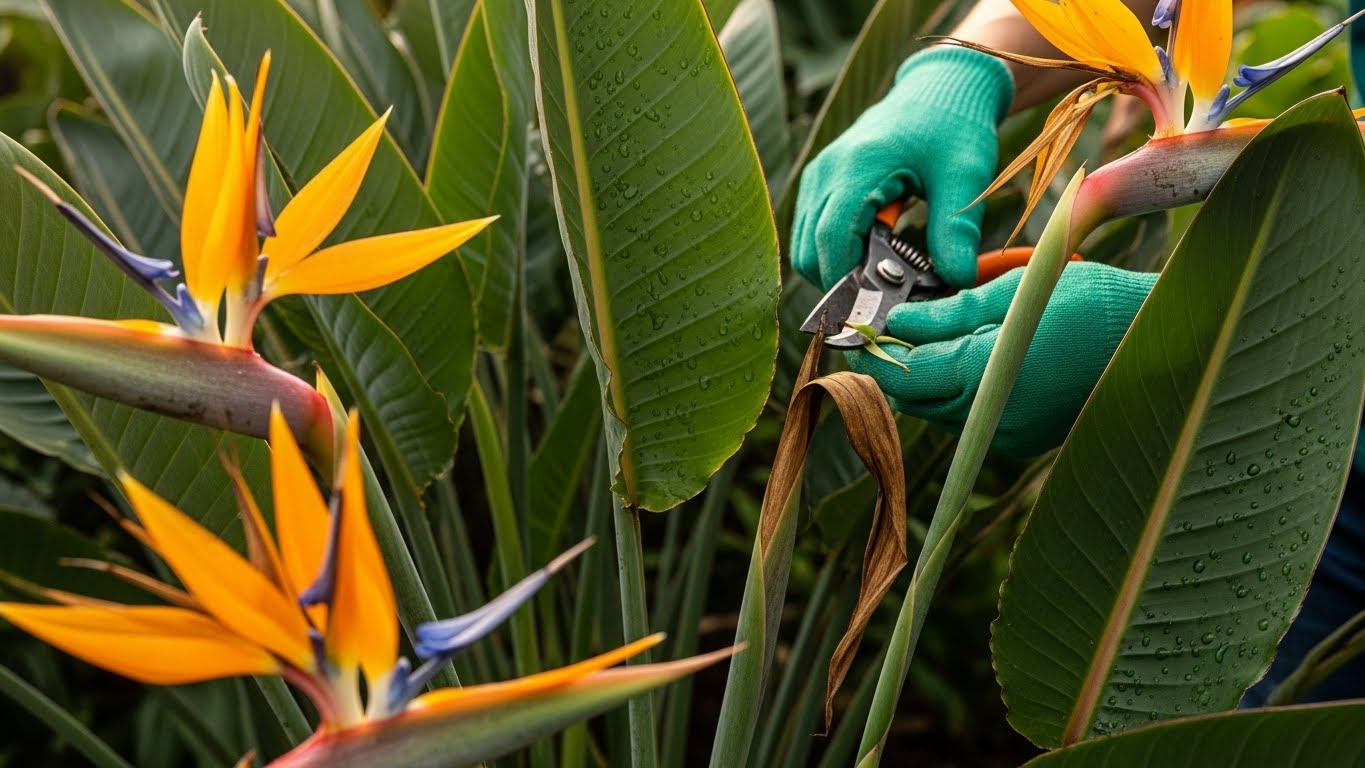
Pruning your Bird of Paradise is all about timing and technique! It’s best to prune in late winter or early spring. First, gather sharp shears and gloves. Remove dead leaves and overcrowded stems to let sunlight in. Always make clean cuts to avoid stress. Avoid over-pruning to keep your plant healthy and blooming. After pruning, give it plenty of sunlight and regular water to encourage new growth. Stick around, and you’ll discover even more tips for keeping your plant thriving!
Key Takeaways
💡 If you’re looking to enhance your Bird of Paradise’s growth, understanding the right care methods is essential.
➜ Discover proven techniques
- Prune during late winter or early spring to align with the plant’s growth cycle and minimize stress.
- Use sharp pruning shears to ensure clean cuts and avoid damaging the plant.
- Remove dead or damaged leaves first, then address overcrowded stems for better airflow.
- Avoid over-pruning to prevent stunted growth and increased vulnerability to pests.
- Regularly monitor plant health after pruning to encourage new growth and ensure vitality.
Understanding the Bird of Paradise Plant
The Bird of Paradise plant, with its striking blooms that resemble exotic birds in flight, is a true marvel of nature. Originating in South Africa, this vibrant beauty captures your attention with its unique bird characteristics, like the bright colors and intricate shapes of its flowers. You might find it intriguing that the plant thrives in warm, sunny environments, making it a popular choice for gardens and indoor spaces alike. As you admire its stunning foliage, remember that this tropical gem symbolizes freedom and joy. Knowing its origins and features helps you appreciate the Bird of Paradise even more. Additionally, understanding its light requirements is crucial for ensuring it flourishes and blooms beautifully. Whether you’re planning to care for one or simply admire its beauty, you’re in for a delightful experience!
When to Prune Your Bird of Paradise
Knowing when to prune your Bird of Paradise is key to keeping it healthy and vibrant. You’ll want to pay attention to the ideal seasons for pruning, look for signs of overgrowth, and consider its flowering cycle to get the best results. Let’s explore these important factors to help your plant thrive!
Ideal Pruning Seasons
When you’re ready to give your Bird of Paradise a little TLC, timing is everything. The best pruning practices suggest tackling this task in late winter or early spring, just before the growing season kicks in. During this time, your plant is still resting, so it won’t feel stressed by your snipping. By pruning now, you align with its seasonal growth patterns, allowing fresh growth to flourish.
Avoid pruning in the fall, as this can encourage new growth that won’t survive the winter chill. Instead, focus on those early months when your Bird of Paradise is gearing up for a vibrant season. This way, you’ll help it thrive while keeping its beauty intact, ensuring a stunning display all year long!
Signs of Overgrowth
As your Bird of Paradise prepares for its growing season, it’s important to keep an eye out for signs of overgrowth that signal it’s time for a trim. Look for increased leaf density, which can indicate the plant’s energy is being wasted on too many leaves rather than healthy growth. Also, observe any unusual growth patterns; if the plant seems to be sprawling or losing its shape, it’s time to act.
Sign of Overgrowth | What to Look For | Action Needed |
|---|---|---|
Increased Leaf Density | Thick clusters of leaves | Prune excess leaves |
Sprawling Growth | Long, uneven stems | Trim back to shape |
Yellowing Leaves | Discolored foliage | Remove unhealthy leaves |
Stunted Growth | Lack of new shoots | Thin out crowded areas |
Weak Stems | Limp or bending stems | Support and trim as needed |
Flowering Cycle Considerations
Understanding the flowering cycle of your Bird of Paradise is essential for knowing the best time to prune it. These stunning plants typically showcase their vibrant seasonal blooms during the warmer months, usually from late spring to early fall. To keep their beauty intact, it’s best to prune after the flowering period. This timing encourages healthy growth and prepares your plant for the next round of blooms. By paying attention to their flowering habits, you can trim away any dead or damaged leaves without sacrificing future blossoms. So, mark your calendar for late fall or early winter, and get ready to give your Bird of Paradise the care it deserves, ensuring it stays healthy and beautiful for years to come!
Tools You’ll Need for Pruning
To successfully prune your Bird of Paradise, you’ll need a few essential tools that make the job easier and more effective. With the right equipment, you can employ pruning techniques that keep your plant healthy and thriving. Here’s what you’ll want to gather before you start:
Gather essential tools for pruning your Bird of Paradise to ensure a healthy and thriving plant.
- Sharp pruning shears: A clean cut helps prevent damage.
- Loppers: Perfect for thicker branches that need trimming.
- Gloves: Protect your hands from thorns and sharp edges.
- Disinfectant spray: Keep your tools clean to prevent disease spread.
Having these tools on hand will not only make your pruning process smoother but also help you connect with your Bird of Paradise as you nurture it into a beautiful, flourishing plant. Happy pruning!
Step-by-Step Pruning Process
💡 Understanding the signs of a root-bound plant can help you make informed pruning decisions.
➜ Get the step-by-step guide
Pruning your Bird of Paradise can be a rewarding experience, and following a step-by-step process makes it easy to achieve great results. Start by inspecting your plant for any dead or damaged leaves; these are the first to go. Use sharp pruning shears and apply proper pruning techniques to trim them back to the base. Next, look for any overcrowded stems; remove a few to improve airflow and sunlight exposure, enhancing overall plant health. If you spot any flower stalks that have finished blooming, cut them down to the base as well. Finally, step back and admire your work! Taking these steps not only beautifies your plant but also promotes its growth and well-being.
Post-Pruning Care and Maintenance
Once you’ve finished pruning your Bird of Paradise, you’ll want to give it some special care to help it bounce back beautifully. Here are a few tips for post-pruning care:
After pruning your Bird of Paradise, give it special care to ensure a beautiful recovery.
- Post pruning watering: Water your plant deeply but less frequently to encourage strong root growth.
- Nutrient boost: Apply a balanced fertilizer a few weeks after pruning to replenish nutrients.
- Sunlight: Make sure your Bird of Paradise receives bright, indirect sunlight for ideal recovery.
- Monitoring: Keep an eye out for any signs of stress or pests, as they can hinder its growth.
Common Mistakes to Avoid
When pruning your Bird of Paradise, it’s easy to make a few common mistakes that can lead to problems. You might be tempted to prune at the wrong time, use dull tools, or even over-prune the plant, which can harm its health and growth. Let’s explore these pitfalls so you can keep your plant thriving and looking its best!
Pruning at Wrong Time
Many people jump into pruning their Bird of Paradise plants without considering the best timing, which can lead to some common mistakes. Pruning at the wrong time can hinder growth and destroy beautifully blooming flowers. To avoid this, keep these points in mind:
- Prune in early spring for ideal growth
- Avoid pruning during cold winter months
- Understand seasonal effects on your plant’s health
- Use appropriate pruning techniques to encourage new growth
Using Dull Tools
Using sharp tools is essential for successful pruning of your Bird of Paradise plants. Dull blades can really diminish your pruning effects, making it harder to achieve clean cuts. When you use dull tools, you’re not just risking ragged edges; you could also stress your plant, leading to potential disease or damage. Imagine trying to cut through something tough with a butter knife—it’s frustrating, right? Your Bird of Paradise deserves better! Sharp tools glide through stems effortlessly, promoting healthier growth and vibrant blooms. So, before you engage in pruning, make sure your tools are in tip-top shape. A little maintenance can go a long way, ensuring that your plant thrives and flourishes beautifully after each pruning session.
Over-pruning the Plant
Over-pruning your Bird of Paradise can lead to more problems than you might expect, so it’s crucial to know how much is too much. When you cut away too much foliage, you risk harming the plant’s health and beauty. Here are some common over pruning effects to watch for:
- Stunted growth and fewer blooms
- Increased vulnerability to pests and diseases
- Brown, withered leaves indicating stress
- Slow recovery that can last for months
Look for signs of damage like drooping leaves or discoloration. Remember, your Bird of Paradise thrives on balance. By pruning with care, you guarantee your plant remains vibrant and flourishing, bringing you joy for years to come.
Encouraging New Growth After Pruning
After you’ve pruned your Bird of Paradise, it’s essential to encourage new growth so your plant can thrive. Start by ensuring it gets plenty of sunlight; these beauties love the light. Water it regularly, but don’t overdo it—aim for moist, not soggy soil. Consider adding a balanced fertilizer to promote root stimulation, which helps your plant push out that lovely new leaf. You might even want to gently scratch the top layer of soil to aerate it, giving roots a boost. Keep an eye on your plant, and be patient; new growth can take time. Soon enough, you’ll see those vibrant leaves emerging, bringing life and beauty back into your space!
Conclusion
Pruning your Bird of Paradise can feel like wielding a lightsaber in a sci-fi movie—exciting and a bit intimidating! But with the right tools and techniques, you’ll keep your plant healthy and thriving. Remember, timing and care are key, and you’ll be rewarded with vibrant growth and stunning blooms. So grab those shears, channel your inner gardener, and watch your Bird of Paradise flourish like a starship soaring through the galaxy! Happy pruning!
💡 Pruning can sometimes lead to leaf browning if not done correctly. Learn how to prevent this issue.
➜ See how to implement this


