
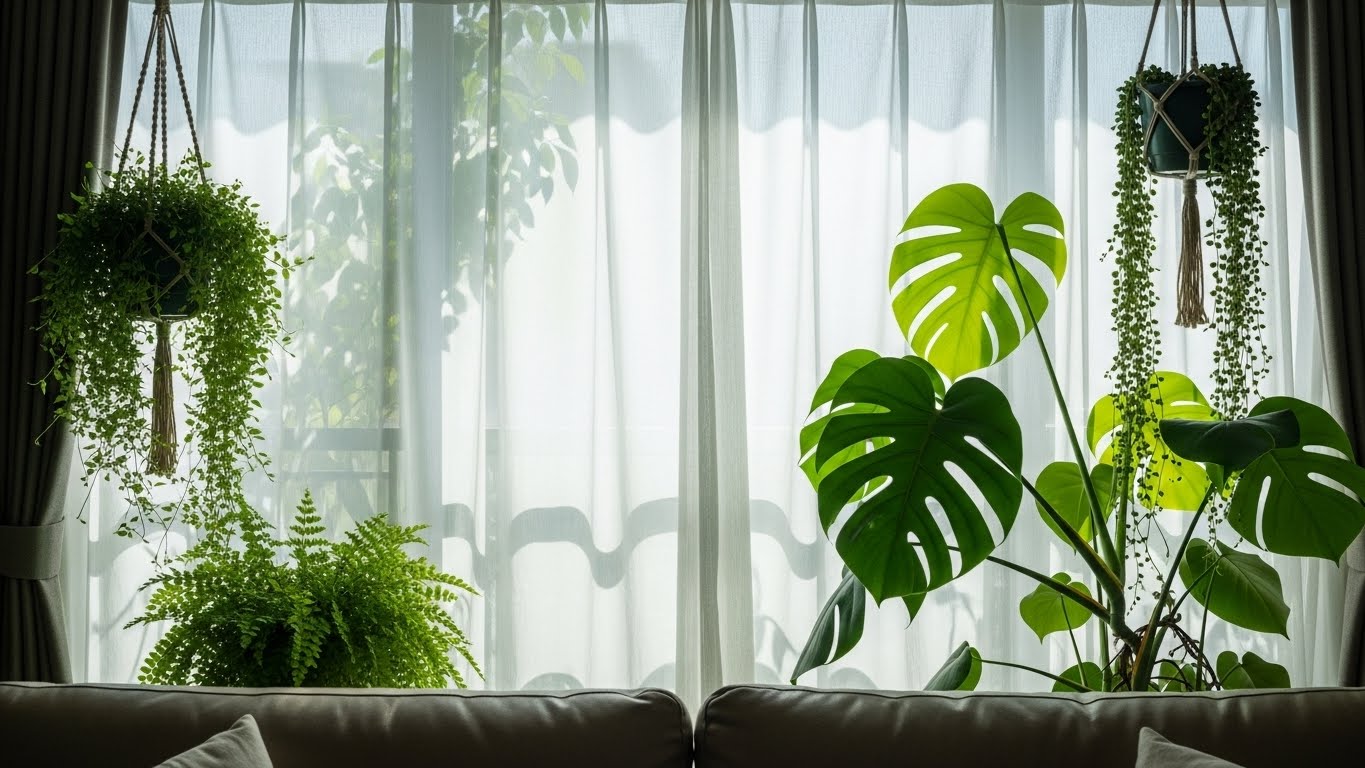
If you’re looking for sheer window plants that thrive in filtered sunlight, you can’t go wrong with options like Pothos, Peace Lily, and Snake Plant. These plants love indirect light and are easy to care for. Keep their soil consistently moist and make certain they have good drainage. Position them near windows with sheer curtains for the best light exposure. Plus, having indoor plants can boost your mood and air quality. Stick around to discover more plant care tips!
Best Plants for Filtered Sunlight
💡 If you’re looking to enhance your indoor garden with vibrant colors, this article is a must-read.
➜ Explore advanced methods
When you’re looking to brighten up your space with plants that thrive in filtered sunlight, you’ll be excited to discover a variety of options that not only flourish but also add a splash of life to your home. Some of the best filtered plants include the lovely pothos, known for its heart-shaped leaves and easy-going nature, and the resilient peace lily, which blooms beautifully in lower light. If you enjoy vibrant colors, consider the calathea, with its stunning leaf patterns. Each of these plants has unique sunlight preferences, but they all love that gentle, diffused light. By choosing the right plants, you’ll create a cozy atmosphere that invites warmth and joy into your everyday life.
Care Tips for Sheer Window Plants
Taking care of your sheer window plants is essential for their health and growth, and it starts with understanding their watering needs. You’ll want to keep the soil consistently moist but not soggy, and don’t forget about fertilization—using a balanced fertilizer can give your plants the nutrients they crave. With the right care, your plants will thrive and brighten up your space beautifully!
Watering Requirements
Watering sheer window plants requires attention to detail, and getting it right can make a big difference in how well your plants thrive. You’ll want to keep an eye on moisture levels and establish a consistent watering frequency. Here’s a simple guide to help you:
Plant Type | Watering Frequency | Ideal Moisture Level |
|---|---|---|
Peace Lily | Weekly | Keep soil moist |
Spider Plant | Every 1-2 weeks | Allow top inch to dry |
Pothos | Every 1-2 weeks | Let dry slightly |
Soil and Fertilization
To guarantee your sheer window plants flourish, selecting the right soil and providing proper fertilization is just as essential as watering. Start with well-draining soil types, like a mix of potting soil and perlite, which keeps roots happy and healthy. Your plants need that airy environment to thrive, especially in filtered sunlight.
As for fertilization frequency, aim to feed your plants every four to six weeks during the growing season. A balanced liquid fertilizer works wonders, giving them the nutrients they crave. Remember, too much fertilizer can harm your plants, so stick to the recommended doses. With the right soil and careful nurturing, your sheer window plants will thrive, bringing life and joy to your space!
Popular Choices for Low-Light Areas
If you’ve got a space with limited sunlight, don’t worry—there are plenty of fantastic plants that thrive in low-light areas! From the hardy snake plant to the lush pothos, these green companions not only survive but can also enhance your room’s aesthetic with their vibrant foliage. Let’s explore the best options, how to care for them, and the beautiful benefits they bring to your home!
Best Low-Light Plants
When you think about bringing plants into your space, you might worry that low light will be a dealbreaker, but fear not! Many beautiful plants thrive in low-light environments, showcasing their incredible adaptability. Plus, there are fantastic low light benefits, like improved air quality and a cozy atmosphere. Here are some popular choices you’ll love:
- Snake Plant: With its striking, upright leaves, it’s nearly indestructible.
- Pothos: This trailing beauty comes in various colors and can grow in almost any lighting.
- ZZ Plant: Known for its glossy leaves, it’s perfect for those who forget to water.
These low-light champions will brighten your home and your mood, making it feel more inviting and alive!
Care Tips for Growth
💡 Compact plants can be a great addition to your space, especially in bright areas.
➜ Discover proven techniques
Caring for your low-light plants can be easy and rewarding, especially when you know a few key tips to help them thrive. Start with proper plant placement; keep them away from harsh direct sunlight but close to sheer windows for that lovely filtered light. Check the light intensity regularly, as too little can stunt growth, while too much can scorch leaves. Water your plants only when the top inch of soil is dry, as overwatering is a common mistake. Remember to dust the leaves occasionally to help them absorb light better. Finally, don’t be afraid to rotate your plants every few weeks to guarantee even growth. With these simple tips, you’ll nurture a healthy, vibrant indoor garden!
Aesthetic Benefits of Foliage
The beauty of low-light plants goes beyond just their green leaves; they can transform your space into a vibrant oasis, making any room feel more inviting. The aesthetic appeal of these plants lies in their stunning foliage texture, providing depth and interest even in dim lighting.
Consider adding these popular low-light plants to your home:
- Snake Plant: Its upright leaves add a striking vertical element.
- Pothos: The trailing vines create a lush, cascading effect.
- ZZ Plant: Glossy leaves bring a touch of elegance to any corner.
With their unique shapes and colors, these plants not only brighten your space but also enhance your mood, making your home feel like a personal sanctuary.
How to Enhance Indoor Light Conditions
To make your indoor plants thrive, you’ll need to guarantee they get the right amount of light. Start by using light enhancing techniques, like strategically placing your plants near windows that receive filtered sunlight. If your windows have heavy curtains, consider switching to sheer window treatments that allow more light to stream in while still providing some privacy. You might also want to rotate your plants regularly, ensuring all sides get equal exposure. Reflective surfaces, like mirrors or light-colored walls, can help bounce light around the room, giving your greenery a boost. Finally, don’t forget to observe your plants closely; they’ll let you know if they’re getting just the right amount of light by their growth and health!
Benefits of Indoor Plants
Indoor plants offer a treasure trove of benefits that go beyond just looking pretty in your home. They can greatly enhance your health and emotional well-being, creating a more vibrant space. Here are a few perks you’ll love:
- Improved air quality: Plants naturally filter out toxins, making the air you breathe cleaner and fresher.
- Stress relief: Being around greenery can lower stress levels, helping you feel more relaxed and at ease.
- Mood booster: The presence of plants can elevate your mood, making your home feel more inviting and cheerful.
Creative Ways to Display Your Plants
Finding unique ways to display your plants can transform any space into a lively, green oasis. Start by creating an eye-catching plant arrangement on a windowsill or shelf, using various heights and sizes to add dimension. Pair your plants with decorative pots that reflect your style—think vibrant colors or earthy tones. Hanging planters can also make a bold statement; they draw the eye upward and save space. For a cozy nook, consider a tiered plant stand, allowing you to showcase multiple plants together. Don’t forget to group your plants based on their light needs; this not only helps them thrive but also creates a beautiful, harmonious display. With a little creativity, your plants will shine!
Troubleshooting Common Plant Problems
Have you ever wondered why your beloved plants seem to struggle despite your best efforts? Don’t worry; you’re not alone! Let’s tackle some common plant problems together, focusing on plant diseases and pest management.
Here are a few tips to get you started:
- Inspect Regularly: Check your plants for any signs of wilting or discoloration. Early detection can save them!
- Control Pests: If you spot pests, try using insecticidal soap or neem oil. These natural solutions are often effective without harming your plants.
- Avoid Overwatering: Too much water can lead to root rot, a common plant disease. Always verify your pots have drainage holes.
Conclusion
In the world of indoor gardening, remember the adage, “Where there’s a will, there’s a way!” With the right plants that thrive in filtered sunlight, you can easily transform your space into a vibrant oasis. By following the care tips and enhancing your indoor light conditions, you’ll create a flourishing environment for your green friends. So go ahead, embrace your plant journey and enjoy the many benefits they bring to your home. Happy planting!
💡 Not all plants thrive in bright light; some prefer low-light conditions.
➜ Master this approach


