
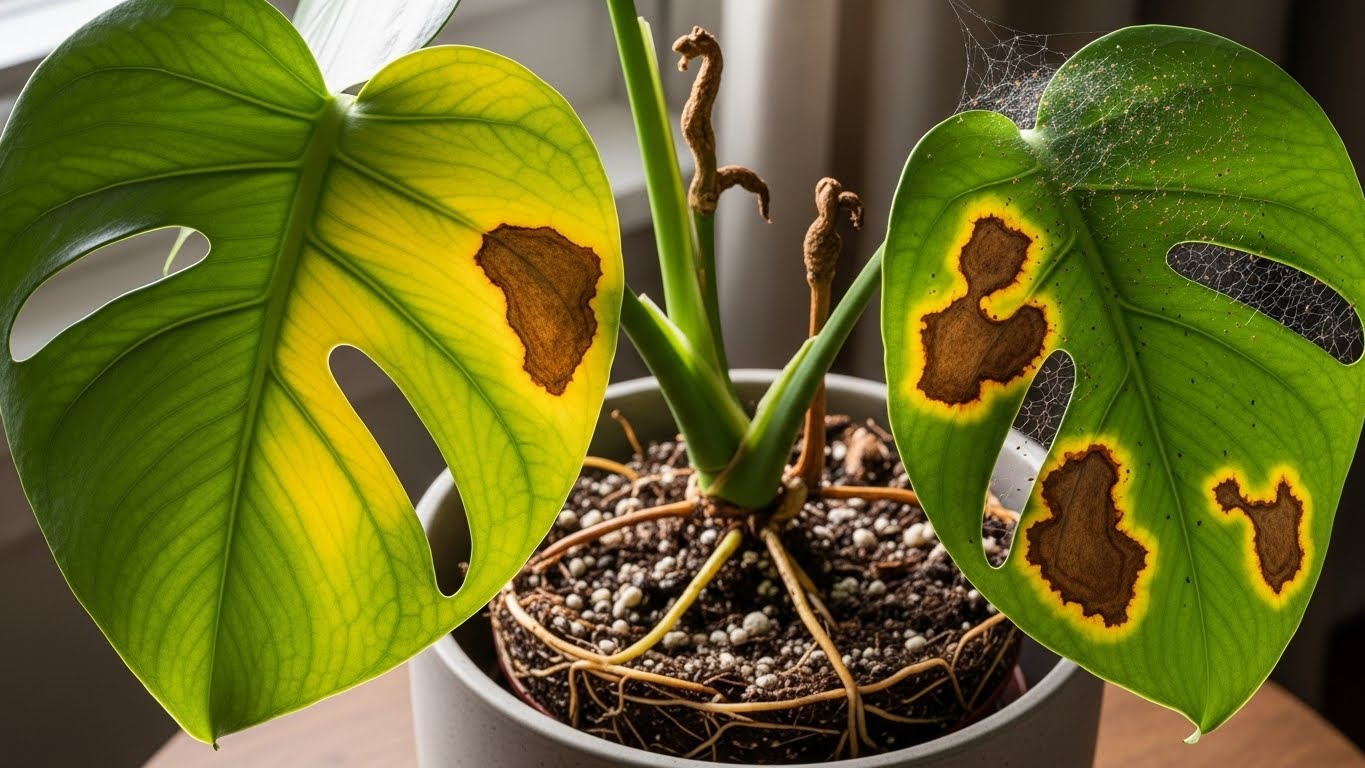
Monstera plants can face several common problems. Yellowing leaves often mean you need more nutrients or light, while stunted growth signals insufficient sunlight. Root rot can happen from overwatering, so let the soil dry out before watering again. Watch for pests like aphids that might appear and treat them promptly to keep your plant safe. Finally, browning leaves may indicate overwatering or low humidity. By knowing these signs, you can keep your Monstera thriving and discover even more tips!
Key Takeaways
💡 If you’re facing issues with your Monstera, understanding its care is crucial.
➜ Discover proven techniques
- Yellowing leaves often indicate nutrient deficiency; consider fertilizing and ensuring proper light exposure.
- Stunted growth can be due to inadequate light; provide bright, indirect sunlight and refresh soil nutrients.
- Root rot results from overwatering; ensure soil is damp, not soggy, and use well-draining soil.
- Pest infestations may occur after root rot; use sprays or alcohol wipes for treatment and isolate affected plants.
- Leaf browning can indicate overwatering or low humidity; check soil moisture and increase humidity if needed.
Yellowing Leaves
When you notice your Monstera’s leaves turning yellow, it can feel a bit alarming, like spotting a warning sign on a fun adventure. But don’t panic! This yellowing often hints at a nutrient deficiency, especially nitrogen. Your plant might be craving a little extra love in the form of fertilizer. Also, consider your Monstera’s light exposure; too much direct sunlight can scorch those beautiful leaves, while too little light can lead to that sad yellow hue. Observe the spot where your plant lives, and adjust accordingly. A cozy corner with bright, indirect light is ideal. Additionally, be mindful of your Monstera’s light intensity targets, as insufficient light can exacerbate yellowing. With some attention to its needs, your Monstera will be back to its vibrant self in no time, thriving and ready to grow!
Stunted Growth
Stunted growth in your Monstera can be frustrating, especially when you’re keenly awaiting those stunning, big leaves to fill your space. If your plant seems to be slowing down, it might not be getting enough light. Monstera loves bright, indirect sunlight, so try moving it closer to a window.
Another sneaky culprit could be nutrient deficiencies. If you haven’t fertilized recently, consider giving your plant a balanced fertilizer to boost its growth. Pay attention to the soil too; it might need a refresh to guarantee your Monstera has the nutrients it craves. By adjusting the light requirements and checking for nutrients, you’ll help your Monstera flourish, bringing you closer to that lush, tropical vibe you desire!
Root Rot
Although your Monstera might seem like a resilient plant, it can fall victim to root rot if it’s overwatered or sitting in soggy soil for too long. If you notice yellowing leaves or a mushy smell, it’s time to investigate. Start by checking the soil moisture; it should be damp, not waterlogged. To combat root rot, consider drainage solutions like adding perlite or using a pot with drainage holes. If the roots are brown and mushy, gently remove your plant from its pot, trim the affected roots, and repot it in fresh, well-draining soil. By keeping an eye on watering habits and ensuring proper drainage, you can help your Monstera thrive and avoid this common issue.
💡 Yellowing leaves can be a common issue for Monstera owners.
➜ Get the step-by-step guide
Pest Infestations
Pest infestations can sneak up on even the healthiest Monstera, especially after dealing with issues like root rot. If you notice tiny pests, don’t panic; you can tackle them! Here’s how to manage common pests:
Pest Type | Control Method | Treatment Frequency |
|---|---|---|
Aphids | Aphid control sprays | Every 7-10 days |
Spider Mites | Spider mite treatment | Every 5-7 days |
Mealybugs | Alcohol wipes | As needed |
Start by isolating your plant to prevent spread. Then, use the appropriate control methods listed above. Remember, consistency is key! Keep an eye on your Monstera, and with a little care, you’ll have a thriving plant once again.
Leaf Browning
Leaf browning is a common issue that can affect your Monstera, and it often signals that something’s not quite right. You might notice those brown tips or edges, which can stem from overwatering issues or low humidity levels. If the soil stays soggy for too long, your plant’s roots can suffocate, leading to leaf damage. On the flip side, if the air around your Monstera is too dry, it can struggle to keep its leaves healthy and vibrant.
To fix this, check your watering routine: let the top inch of soil dry out before watering again. Also, consider boosting humidity with a humidifier or placing a tray of water nearby. Your Monstera will thank you with lush, green leaves!
Conclusion
To sum up, caring for your Monstera can be a rewarding adventure, but it comes with its challenges. Did you know that about 80% of houseplant owners face issues like yellowing leaves or pests? By recognizing the signs of distress and taking action, you can keep your Monstera healthy and thriving. Remember, a little knowledge goes a long way—so don’t hesitate to tackle any problems that come your way. Happy planting!
💡 Dealing with brown edges on your Monstera leaves? You’re not alone.
➜ See how to implement this


