
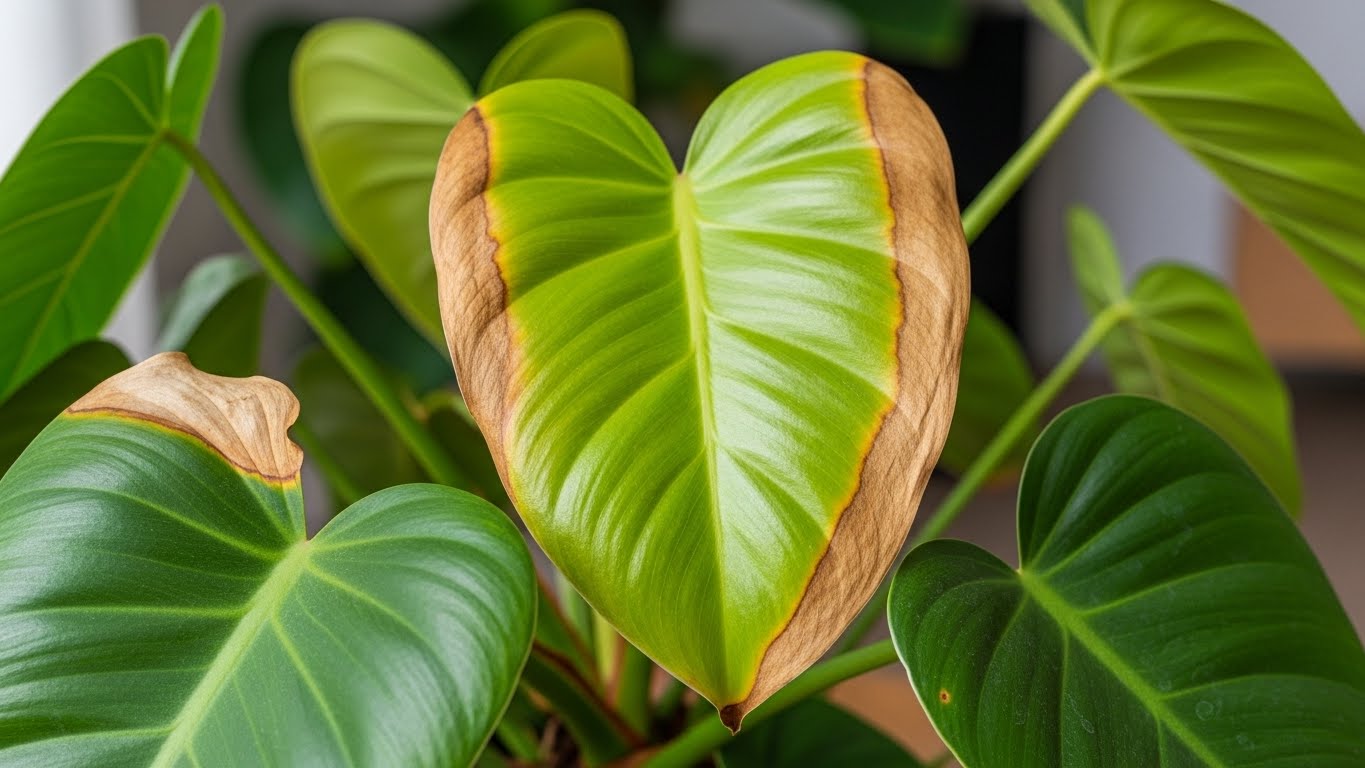
If you notice brown leaf tips on your Philodendron, don’t worry—it’s a common issue! This can happen due to low humidity, improper watering, or nutrient deficiencies. Make certain you’re not underwatering or overwatering; check the soil moisture. Increasing humidity with trays of water and pebbles or misting can help. Also, inspect for pests like spider mites and guarantee your plant gets just the right amount of sunlight. Want to discover more techniques for plant care?
Key Takeaways
- Check humidity levels; low humidity can cause brown leaf tips on your philodendron.
- Ensure proper watering; underwatering leads to dry, crispy tips while overwatering causes yellowing leaves.
- Inspect for pests like spider mites or aphids, which can stress the plant and lead to browning.
- Provide balanced fertilization, focusing on key nutrients like nitrogen, potassium, and phosphorus to prevent deficiencies.
- Regularly observe leaf conditions; vibrant leaves indicate good care, while brown tips signal the need for adjustments.
Understanding the Causes of Brown Leaf Tips
When you notice brown leaf tips on your philodendron, it can be a bit alarming, but don’t worry—understanding the causes can help you bring your plant back to health! Leaf discoloration causes can range from environmental factors, like low humidity, to nutrient deficiencies. If your plant isn’t getting enough nitrogen, for instance, it may show signs of stress, including those pesky brown tips. Also, check for pest infestations, as these little critters can be sneaky plant health indicators that something’s off. By paying attention to these signs, you can create a nurturing environment for your philodendron, ensuring it thrives. Remember, understanding your plant’s needs is the first step toward a lush, green companion!
Improper Watering Practices
Improper watering practices can quickly turn your vibrant philodendron into a sad sight, so it’s essential to get it right! When you underwater your plant, you might notice dry, crispy leaf tips—these are underwatering symptoms that signal your philodendron needs more love. On the flip side, overwatering signs like yellowing leaves or a mushy stem indicate you’re giving too much water, suffocating those roots. To find the sweet spot, check the top inch of soil; if it’s dry, it’s time to water. If it’s still moist, hold off a bit longer. Remember, balance is key—your philodendron thrives when you listen to its needs, and soon it’ll reward you with lush, healthy foliage!
Low Humidity Levels
Low humidity levels can be a sneaky culprit behind those brown tips on your philodendron’s leaves. These tropical beauties thrive in moist environments, so when the air gets dry, they can start showing signs of stress. To help your plant breathe easier, consider using humidity trays filled with water and pebbles. This can create a little microclimate that keeps the air around your plant more humid. You can also try misting your plants regularly, giving them a revitalizing shower that boosts moisture levels. Just remember, it’s best to mist in the morning, so the leaves dry by evening. With a little extra care, your philodendron will thank you with lush, vibrant leaves.
Nutrient Deficiencies
Nutrient deficiencies can sneak up on your philodendron, causing those pesky brown tips to appear even when you’ve got the humidity just right. To keep your plant thriving, it’s essential to maintain a proper nutrient balance. When you notice browning, check if it’s missing key nutrients like nitrogen, potassium, or phosphorus. Different fertilizer types can help address these issues. Liquid fertilizers are great for quick absorption, while slow-release options provide a steady supply over time. Make sure to follow the recommended dosage, as over-fertilizing can lead to more problems. Regularly assess your plant’s needs and adjust your feeding routine accordingly, ensuring your philodendron stays healthy, happy, and free of those annoying brown tips.
Pest Infestations
When you notice brown leaf tips on your Philodendron, it might not just be a sign of nutrient deficiencies—pest infestations could be the culprit too! Common pests like spider mites and aphids can wreak havoc on your plant’s health, so it’s important to identify them quickly. In the next section, we’ll explore how to spot these pests and the best treatment and prevention methods to keep your Philodendron thriving.
Common Pests Identified
Pests can sneak onto your Philodendron, causing brown leaf tips and other distressing signs, so it’s important to keep an eye out for these unwanted guests. Common pests include spider mites, aphids, and mealybugs. For effective pest identification, check the undersides of leaves and stems for tiny webs, sticky residue, or fuzzy white patches. These critters can sap your plant’s energy, leading to those frustrating brown tips. Understanding how to spot these pests early is essential for successful pest management. Regularly inspect your plant and keep it clean to help prevent infestations. By staying vigilant, you can protect your Philodendron and keep it happy and healthy, ensuring it thrives in your home.
Treatment and Prevention Methods
To keep your Philodendron thriving and free from pests, you’ll want to implement a few effective treatment and prevention methods. First, regularly inspect your plant for any signs of pests. If you spot any, try using insecticidal soap or neem oil to treat the infestation. Always follow the instructions on the product label. Next, maintain consistent plant care routines, like watering properly and providing adequate humidity, which can help reduce leaf discoloration causes. Additionally, consider isolating new plants before introducing them to your collection to prevent pests from spreading. Keeping your plant clean by gently wiping the leaves with a damp cloth can also deter unwanted visitors, ensuring your Philodendron stays healthy and vibrant.
Temperature Stress
Temperature stress can sneak up on your philodendron, especially if you don’t pay attention to its environment. Sudden temperature fluctuations can cause your plant to react poorly, leading to those dreaded brown leaf tips. Keep an eye on the area where your philodendron lives; it shouldn’t be near cold drafts from windows or doors, as those chilly breezes can shock it. Ideally, you want to maintain a warm, stable environment for your plant to thrive. If you notice those tips turning brown, it’s a sign that your philodendron isn’t happy with the conditions. By ensuring a consistent temperature, you’ll help your beloved plant flourish and keep those beautiful leaves healthy and vibrant!
Overexposure to Sunlight
Overexposure to sunlight can be just as harmful to your philodendron as those chilly drafts you want to avoid. If your plant gets too much light intensity, it can lead to leaf burn, turning those lovely green leaves into sad, crispy edges. You’ll want to find that perfect spot where your philodendron thrives, usually bright, indirect light is ideal. If you notice brown tips on the leaves, it’s a sign your plant’s had enough sun. To help it recover, consider moving it a few feet away from the window or adding a sheer curtain to filter the light. Remember, your philodendron craves love and care, and finding that balance will keep its leaves lush and vibrant.
Soil Quality and Drainage
Soil quality and drainage play an essential role in keeping your philodendron healthy and happy. The right soil mix helps maintain an ideal soil pH, which is vital for nutrient absorption. You’ll want a mix that retains moisture but drains well to prevent root rot. Incorporating organic matter, like compost, not only enriches the soil but also improves its structure, allowing air and water to circulate freely. When your philodendron’s roots have room to breathe, they’ll thrive! Check your potting mix regularly; if it’s compacted or dry, it might be time for a refresh. Remember, a well-draining soil mix is your philodendron’s best friend, keeping those brown leaf tips at bay while promoting lush growth.
Corrective Measures and Care Tips
To keep your Philodendron healthy and vibrant, adjusting your watering schedule is key, along with boosting humidity levels. You’ll want to check if you’re watering too much or too little, as both can lead to those pesky brown tips. By making a few simple changes, like misting the leaves or using a humidifier, you can help your plant thrive!
Adjust Watering Schedule
When you notice brown leaf tips on your Philodendron, adjusting your watering schedule can make a significant difference in its health. Start by checking your watering frequency; too much or too little water can stress your plant. Aim for a balance that promotes moisture retention in the soil without drowning the roots. A good rule of thumb is to water when the top inch of soil feels dry to the touch. Remember, Philodendrons prefer their soil to dry out a bit between waterings. Keep an eye on the leaves—if they start to perk up, you’re on the right track! With a little tweak to your routine, your plant will thank you with lush, green foliage.
Improve Humidity Levels
Improving humidity levels can be a game-changer for your Philodendron, especially since these tropical plants thrive in moist environments. To boost humidity, consider using humidity trays filled with water and pebbles; place your pot on top of the tray to create a mini rainforest effect. Another simple method is misting plants regularly; just spray water on the leaves in the morning or evening. This helps keep the air around your Philodendron nice and humid. Remember, maintaining humidity not only prevents brown leaf tips but also promotes overall plant health. With a little effort, you’ll see your Philodendron flourish, showcasing vibrant leaves that’ll make you smile every day. Embrace these tips, and watch your plant thrive!
Conclusion
By caring for your philodendron like a nurturing gardener tending to a delicate bloom, you can transform those brown leaf tips back into vibrant green. Remember, each leaf tells a story, reflecting its environment and care. By addressing watering habits, humidity levels, and potential pests, you’re not just reviving a plant; you’re cultivating a thriving relationship with nature. So get ready to watch your philodendron flourish, turning those tips from brown to bright, just like a sunrise after a storm!


