
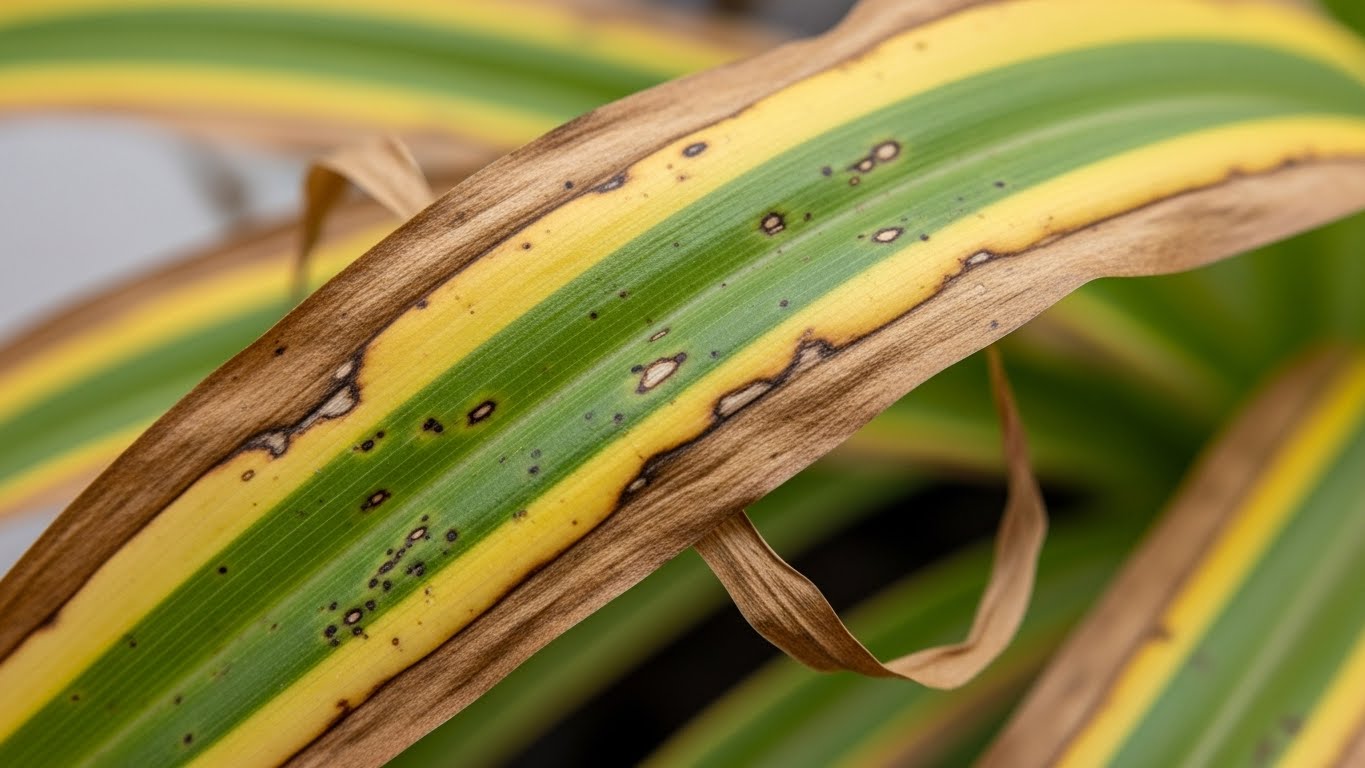
If your spider plant’s leaves are curling or fading, it’s time to investigate. Check your watering habits; too much or too little can cause issues. Make certain it’s getting the right light—not too bright and not too dim. Temperature matters too, ideally between 65°F and 75°F. Don’t forget humidity and pest checks, as spider mites or mealybugs could be lurking. Keep the soil healthy and nutrient-rich. Want to know more about how to care for your plant?
Key Takeaways
- Check light exposure; curling leaves may indicate too much light while fading suggests insufficient light.
- Maintain ideal temperature between 65°F to 75°F to prevent stress on the plant.
- Ensure well-draining soil; overwatering can lead to yellowing leaves and root issues.
- Monitor for pests like spider mites and aphids, as they can sap energy and affect leaf health.
- Water less frequently; allow the top inch of soil to dry out before watering again for optimal growth.
Understanding Leaf Curling and Fading
When you notice your spider plant’s leaves curling or fading, it can be a bit alarming, but don’t worry—understanding the reasons behind these changes can help you get your plant back on track. Leaf discoloration causes often stem from several factors, so let’s explore! First, check the light levels; too much or too little can stress your plant. Also, consider the temperature—spider plants love warmth but can suffer in extreme heat or cold. Nutrient imbalances might also play a role, affecting spider plant health. Finally, watch out for pests; they can sap your plant’s energy. Additionally, ensure that you are providing well-draining soil, as poor soil conditions can lead to root problems that affect leaf health. By identifying these issues, you can guarantee your spider plant thrives and brings joy to your space!
Watering Practices: Finding the Right Balance
Watering your spider plant correctly is essential, as the right balance can mean the difference between a thriving green companion and a struggling one. You need to watch for overwatering signs, like yellowing leaves or a soggy base. If you notice these, it’s time to reassess your watering routine. Make sure your pot has good soil drainage, allowing excess water to escape. A good rule of thumb is to let the top inch of soil dry out before watering again. Remember, spider plants prefer a bit of neglect to constant moisture! By finding the right balance, you’ll help your plant flourish, keeping those leaves vibrant and healthy. Happy watering!
Light Requirements: Too Much or Too Little?
How much light does your spider plant really need? Finding the right balance is essential for keeping those leaves vibrant and healthy. Too much or too little light can lead to curling or fading leaves, so pay attention to these key factors:
Finding the right light balance is crucial for vibrant spider plant leaves; too much or too little can lead to curling or fading.
- Light Types: Spider plants thrive in bright, indirect light but can tolerate low light. Direct sunlight may scorch their leaves.
- Light Duration: Aim for about 12-14 hours of light each day, whether from natural sources or grow lights.
- Leaf Signs: Watch for signs! Curling leaves often indicate too much light, while fading colors suggest insufficient exposure.
Temperature and Humidity: Creating an Ideal Environment
To keep your spider plant thriving, you need to pay attention to the temperature and humidity levels in its environment. Ideally, your plant loves temperatures between 65°F and 75°F, and it thrives in humidity levels around 40% to 60%. By creating this cozy atmosphere, you’ll help your spider plant grow strong and vibrant!
Optimal Temperature Range
Creating a comfortable environment for your spider plant is essential, especially when it comes to temperature. Maintaining the right temperature will help your plant thrive, avoiding issues like curling or fading leaves. Aim for a cozy range of 65°F to 75°F (18°C to 24°C) to keep your plant happy.
- Protect your spider plant from temperature extremes.
- Be mindful of seasonal fluctuations, as indoor temperatures can change.
- Keep your plant away from drafts or direct heat sources.
Humidity Levels Importance
While maintaining an ideal temperature is essential for your spider plant, humidity levels also play a significant role in its health and happiness. If the air in your home is too dry, you might notice those lovely leaves curling or fading. To keep your plant thriving, consider using humidity measurement techniques like hygrometers to check the moisture in the air. Once you know the levels, you can employ humidity control methods such as misting your plant or placing a humidifier nearby. Remember, spider plants love humidity, ideally around 40-60%. By creating the right environment, you’ll not only enhance your plant’s appearance but also help it flourish, bringing a little more joy into your space.
Pest Problems: Identifying and Treating Infestations
When it comes to keeping your spider plant healthy, pest problems can be a real headache. You might notice tiny bugs or webbing on your plant, which can signal an infestation. Let’s explore the common pests that could be lurking around and the treatment options you can use to keep your plant thriving.
Common Pests Overview
Spider plants are generally hardy and resilient, but they can fall victim to a variety of common pests that may cause distress. Recognizing these pests early can save your plant from further damage. Here are some common spider pests to watch out for:
- Spider Mites: Tiny, almost invisible, and can cause yellowing leaves.
- Aphids: Small, soft-bodied insects that suck sap, leading to curling leaves.
- Mealybugs: White, cotton-like pests that cluster on stems and leaf joints.
To keep your spider plant thriving, consider these pest prevention tips: regularly check for signs of infestations, maintain proper watering and humidity levels, and guarantee good air circulation. With a little vigilance, you can keep your spider plant healthy and happy!
Treatment Options Available
Identifying pests on your spider plant is just the first step; treating those infestations effectively is where the real action happens! Start with a common treatment like insecticidal soap or neem oil. These natural options not only target the pests but also help keep your plant healthy. Spray the affected leaves, making sure to cover the undersides where pests like to hide.
After treatment, keep an eye on your plant for signs of leaf recovery. You may notice the leaves perking up and regaining their vibrant color. Don’t forget to regularly check for any new infestations, as prevention is key. With a little care and attention, your spider plant will bounce back stronger than ever!
Soil Quality and Fertilization: Nutrient Needs
To guarantee your spider plant thrives, it’s essential to pay attention to the quality of its soil and the nutrients it receives. Poor soil can lead to nutrient deficiency, causing your plant’s leaves to curl or fade. Here’s what to take into account:
- Soil pH: Aim for a slightly acidic to neutral pH (6.0-7.0) for ideal growth.
- Nutrient Balance: Use a balanced fertilizer during the growing season to keep your spider plant nourished.
- Organic Matter: Incorporate compost or well-rotted manure to enrich the soil and improve drainage.
Repotting: When and How to Refresh Your Spider Plant
Keeping your spider plant healthy goes beyond just soil quality and nutrients; repotting plays a crucial role in its overall growth and vigor. You should consider repotting every 1-2 years or when you notice it outgrowing its pot. Choose a well-draining potting mix with good aeration for the best soil selection.
When you’re ready to repot, gently remove the plant from its current pot, loosening the root ball if needed. Place it in a new pot that’s slightly larger, and fill in with fresh soil. Water it well after repotting to help settle the soil. By following this repotting frequency and taking care with your soil selection, you’ll guarantee your spider plant thrives and continues to flourish.
Conclusion
To sum up, keeping your spider plant healthy is like walking a tightrope—you need balance in care! By understanding the reasons behind leaf curling and fading, you can adjust your watering, lighting, and environment to create the perfect home for your plant. Don’t forget to check for pests and refresh the soil when needed. With a little attention, your spider plant will thrive, showcasing its beautiful, vibrant leaves for everyone to admire!


