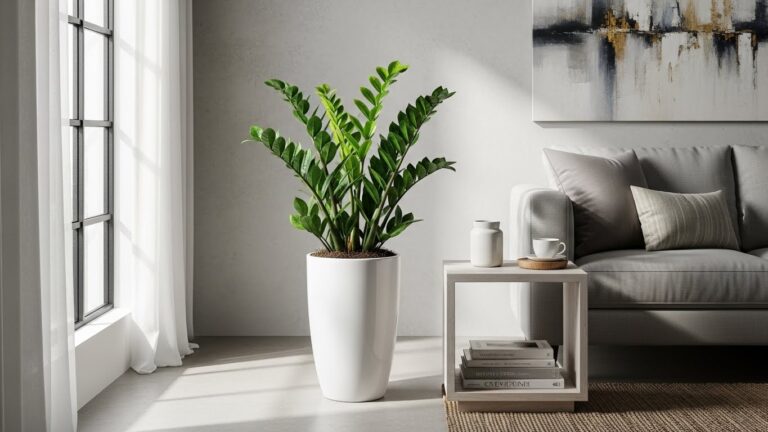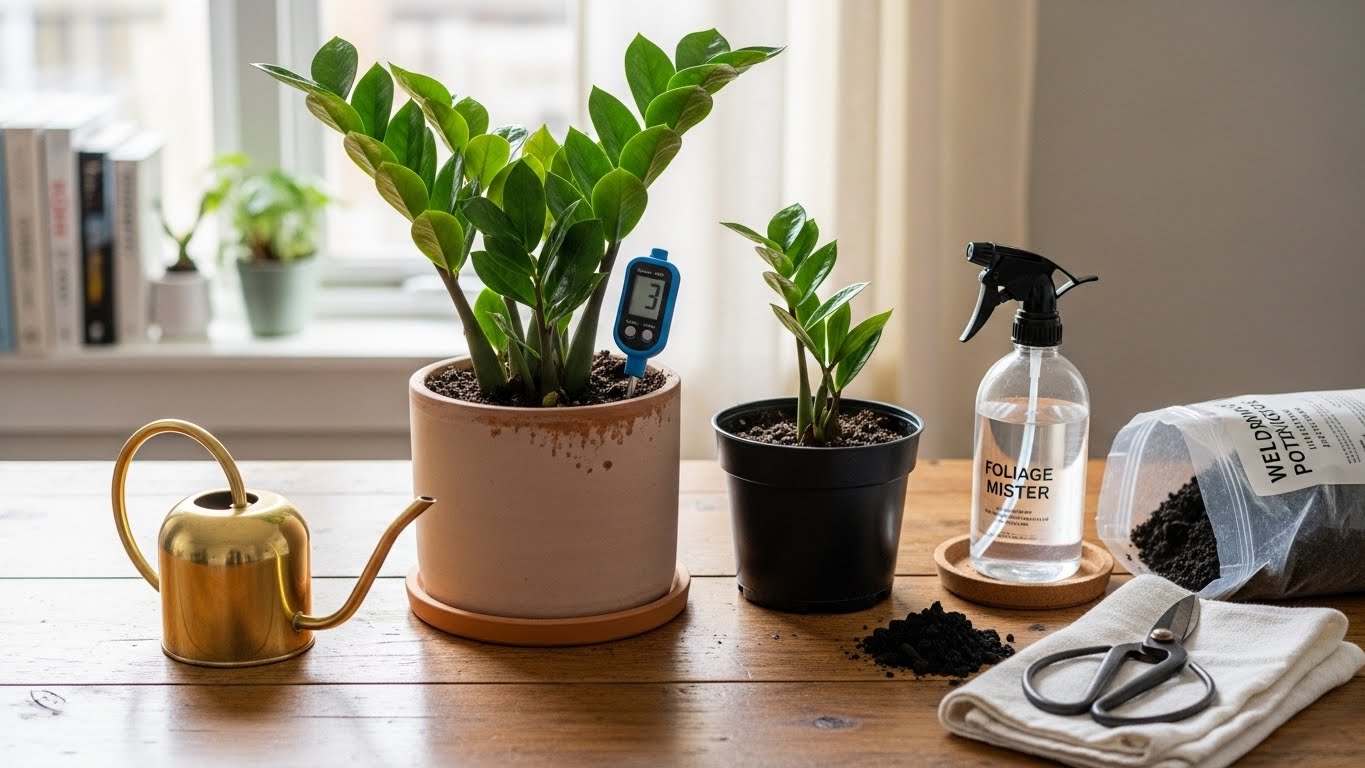
The ZZ plant loves low light but thrives in bright, indirect sunlight too. Keep it warm, between 60°F and 75°F, and water it when the top 2 inches of soil are dry—usually every 2-3 weeks in spring and summer. Use well-draining soil with a mix of potting soil and perlite. Avoid soggy soil to prevent root rot and watch for signs like yellow leaves from overwatering or drooping from underwatering. Keep going to uncover more care tips!
Key Takeaways
- ZZ plants thrive in low light and bright, indirect sunlight; avoid direct sunlight to prevent leaf scorch.
- Water when the top 2 inches of soil are dry; adjust frequency to every 2-3 weeks in spring/summer.
- Use well-draining soil, mixing potting mix with perlite and sand to prevent root rot.
- Maintain humidity by misting occasionally or grouping plants, but ZZ plants can tolerate lower humidity levels.
- Regularly prune yellowing leaves and leggy stems to promote healthy growth and maintain shape.
Overview of the ZZ Plant
The ZZ plant, scientifically known as Zamioculcas zamiifolia, is a popular choice for houseplant lovers, especially if you’re looking for something that’s both low-maintenance and visually appealing. This hardy plant thrives in various conditions, making it perfect for beginners or busy individuals. One of the standout ZZ plant benefits is its ability to purify the air, helping you breathe easier in your space. Plus, its glossy, dark green leaves bring a touch of elegance to any room. The ZZ plant also carries significant symbolism; many believe it represents prosperity and good fortune, making it a thoughtful gift for friends or family. With its beauty and positive vibes, the ZZ plant is sure to brighten your day! Furthermore, its low maintenance requirements make it an ideal choice for those who may not have a green thumb.
Ideal Lighting Conditions
When it comes to lighting, ZZ plants thrive in a range of conditions, making them incredibly adaptable to your home or office. Their unique nature means you can enjoy the ZZ plant benefits without worrying too much about light. Here’s what you need to know:
ZZ plants are adaptable and thrive in various lighting conditions, making them perfect for any space.
- Low Light: ZZ plants can survive in dim spaces, perfect for cozy corners.
- Indirect Sunlight: They flourish in bright, indirect light, which keeps them healthy.
- Avoid Direct Sun: Too much direct sunlight can scorch their leaves, so be cautious.
- Fluorescent Light: ZZ plant varieties even do well under fluorescent lights, making them great for offices.
With these lighting tips, you’ll guarantee your ZZ plant stays vibrant and thriving!
Watering Requirements
When it comes to ZZ plants, getting the watering right is essential for keeping your green friend happy and healthy. You’ll want to know how often to water, watch for signs of overwatering, and learn the best techniques to do it. Let’s explore these important tips to guarantee your ZZ plant thrives!
Watering Frequency Guidelines
Caring for a ZZ plant is easier than you might think, especially when it comes to watering! To keep your plant thriving, follow these simple watering frequency guidelines:
- Check the soil: Use your finger or a moisture meter to gauge soil dryness.
- Water timing: Water your ZZ plant when the top 2 inches of soil feel dry.
- Seasonal adjustments: In the growing season (spring and summer), water every 2-3 weeks. In fall and winter, reduce to every 3-4 weeks.
- Avoid overwatering: It’s better to underwater than overwater; ZZ plants are drought-tolerant!
Signs of Overwatering
Overwatering can sneak up on you, especially when you’re following the watering frequency guidelines! One of the first signs you might notice is the appearance of yellow leaves. Instead of that vibrant green, your plant’s leaves may start to wilt or drop, indicating trouble. If you find yourself feeling worried about your ZZ plant, check the soil. If it’s constantly soggy, it could lead to root rot, which can be fatal for your beloved plant. To rescue it, let the soil dry out completely before watering again. Remember, it’s better to underwater than to overdo it! Keeping a close eye on your plant will help you maintain its health and happiness.
Best Watering Techniques
To keep your ZZ plant thriving, it’s essential to master the best watering techniques that suit its unique needs. This plant loves to be a bit dry, so you’ll want to strike the right balance. Here are some effective moisture monitoring tips:
- Check the Soil: Stick your finger about an inch into the soil; if it’s dry, it’s time to water.
- Water Deeply: When you do water, soak the soil thoroughly until it drains from the bottom.
- Avoid Overwatering: Let the plant dry out completely between waterings to prevent root rot.
- Seasonal Adjustments: Water less in winter as the plant enters dormancy.
Soil Preferences
When choosing the right soil for your ZZ plant, it’s important to remember that this hardy houseplant thrives in well-draining conditions. The ideal soil composition includes a mix that promotes drainage while retaining some moisture. You’ll want to find a blend that works for your plant’s drainage requirements.
Here’s a helpful breakdown:
Component | Purpose |
|---|---|
Potting Mix | Base for soil composition |
Perlite | Enhances drainage |
Sand | Improves aeration |
Orchid Bark | Adds texture and drainage |
Worm Castings | Provides nutrients |
Using this mix will help your ZZ plant flourish, keeping it healthy and happy in its home. Remember, a well-draining soil is key to preventing root rot!
Potting and Repotting Tips
When it comes to potting and repotting your ZZ plant, picking the right pot is key to its growth and happiness. You’ll want to guarantee it has enough room to spread its roots while also providing good drainage. Let’s also talk about how often you should repot to keep your ZZ thriving, so you can enjoy its lush greenery for years to come!
Choosing the Right Pot
Choosing the right pot for your ZZ plant can make all the difference in its growth and health, and it’s important to contemplate a few key factors before making a decision. Here are some tips to guide you:
- Pot Size: Choose a pot that’s one size larger than the current one to prevent overpotting.
- Drainage Holes: Confirm your pot has drainage holes to allow excess water to escape, preventing root rot.
- Material: Consider breathable materials like terracotta, which help regulate moisture.
- Style: Pick a pot that fits your home decor, as it’ll be a lovely addition to your space.
Repotting Frequency Guidelines
Repotting your ZZ plant isn’t just a routine chore; it’s essential for keeping your green friend healthy and thriving. You should consider repotting every 2-3 years or when you notice certain repotting signs, like roots poking out of the drainage holes or slow growth. These signs mean it’s time for a new home!
When you repot, use gentle repotting techniques to avoid damaging those precious roots. Choose a pot that’s one size larger, and always use well-draining soil. After repotting, give your ZZ plant a little TLC by watering it lightly and placing it in a cozy spot. This will help it settle in and flourish. With the right care, your ZZ plant will continue to brighten your space!
Fertilizing the ZZ Plant
Fertilizing the ZZ plant can greatly enhance its growth and overall health, especially during the growing season, which typically runs from spring to fall. To make the most of your fertilizer, keep an eye on nutrient timing, and choose the right fertilizer types. Here’s a simple guide to help you:
- Choose a balanced liquid fertilizer (like a 20-20-20 formula).
- Dilute it to half strength to avoid over-fertilizing.
- Apply every 4-6 weeks during the growing season.
- Skip fertilizing in winter, as the plant rests.
Temperature and Humidity Needs
When it comes to keeping your ZZ plant happy, temperature and humidity play a big role in its overall health. Ideally, you should maintain a warm environment between 65°F and 85°F, and the plant can handle lower humidity levels quite well. As the seasons change, it’s important to make adjustments to guarantee your ZZ plant thrives year-round, so let’s explore what that looks like!
Ideal Temperature Range
The ZZ plant thrives best in temperatures between 65°F and 75°F (18°C to 24°C), making it a perfect choice for indoor environments. To keep your ZZ plant happy, remember these ideal temperature tips:
- Avoid Temperature Extremes: Keep it away from drafts or heating vents.
- Consistent Warmth: Try to maintain a steady temperature; fluctuations can stress the plant.
- Watch for Cold: Anything below 50°F (10°C) can cause problems, so keep it cozy.
- Indoor Comfort: Your home usually provides the right environment, but double-check if your space feels warm and inviting.
Humidity Tolerance Levels
While ZZ plants are known for their adaptability, they do have some preferences when it comes to humidity levels. Ideally, they thrive in moderate humidity, but they can tolerate lower levels, making them perfect for various indoor environments. If your home has dry air, don’t worry—just be mindful of the humidity sources around your plant. You can place a humidifier nearby, mist the leaves occasionally, or group your ZZ plant with other greenery to create a little microclimate. Remember, while they can handle drier conditions, a bit of extra humidity can keep your plant looking lush and vibrant. So, take a moment to check those humidity levels and give your ZZ plant the best chance to shine!
Seasonal Temperature Adjustments
ZZ plants not only thrive in various humidity levels but also appreciate a stable temperature range throughout the year. To help your ZZ plant adjust to seasonal temperature fluctuations, keep these tips in mind:
- Ideal Temperature: Maintain between 60°F to 75°F (15°C to 24°C).
- Avoid Drafts: Keep your plant away from cold drafts or heating vents.
- Seasonal Adjustments: When winter arrives, consider moving your ZZ plant closer to a light source, as it may need a bit more warmth.
- Humidity: While ZZ plants are tough, they still enjoy a slight boost in humidity during colder months.
Common Pests and Diseases
Caring for your ZZ plant means keeping an eye out for common pests and diseases that can sneak in and cause trouble. Regular pest identification is key; look for signs like sticky residue or discolored leaves, which could indicate aphids or mealybugs. Don’t fret, though! You can often wipe these pests away with a damp cloth or insecticidal soap. For disease prevention, make sure your plant isn’t sitting in soggy soil, as this can lead to root rot. Always check the leaves for any unusual spots or wilting. By staying vigilant and nurturing your ZZ plant with healthy habits, you can keep it thriving and beautiful, creating a cozy environment for both you and your leafy friend.
Pruning and Maintenance
Pruning your ZZ plant is a straightforward way to keep it looking its best and encourage healthy growth. By using the right pruning techniques, you can help your plant thrive. Here are some maintenance tips to bear in mind:
- Remove Yellowing Leaves: Snip off any leaves that have turned yellow, as they can drain energy from the healthy parts.
- Trim Leggy Stems: If your plant starts growing unevenly, cut back the longer stems to promote a balanced shape.
- Shape the Plant: Regularly prune to maintain the desired shape, ensuring it fits well in your space.
- Use Clean Tools: Always use sharp, clean scissors to prevent any potential harm to your plant.
These simple steps will keep your ZZ plant vibrant and healthy!
Signs of Overwatering
Recognizing the signs of overwatering is essential for keeping your plant healthy, especially since too much water can lead to serious problems. One of the first things you might notice is leaf yellowing; when the leaves start to turn yellow, it’s often a cry for help. You might also see them drooping, which can be misleading since it sometimes looks like they need water. Additionally, if your ZZ plant’s roots sit in soggy soil for too long, they can develop root rot, a condition that threatens the plant’s life. To keep your ZZ plant thriving, be mindful of how often you’re watering and guarantee its pot has good drainage. Your plant will thank you!
Signs of Underwatering
When your ZZ plant starts to show signs of distress, it might just be thirsty! Recognizing these signs early can help you get your plant back on track. Here are some common indicators of underwatering:
- Dry leaf tips – When the tips of the leaves turn brown and crispy, it’s a clear signal that your plant needs more water.
- Wilting stems – If the stems are drooping or looking limp, your ZZ plant is begging for hydration.
- Yellowing leaves – As the plant struggles, you might notice leaves turning yellow.
- Leaf drop – If your ZZ plant starts shedding leaves, it’s time to check its water level.
Keep an eye on these signs, and your ZZ will thrive with your love and attention!
ZZ Plant Propagation Methods
ZZ plants are not just easy to care for; they’re also a blast to propagate! You can use two main methods: leaf division and stem cuttings. Both techniques are simple and rewarding, allowing you to expand your green family.
Here’s a quick comparison of the two methods:
Propagation Method | Description |
|---|---|
Leaf Division | Cut a healthy leaf into sections, plant them in soil, and watch them grow! |
Stem Cuttings | Snip a stem just below a leaf, allow it to callous, then place it in soil. |
With a little patience, you’ll see new growth in no time. So, grab your tools and start propagating; your ZZ plant journey is just getting started!
Troubleshooting Common Issues
Even the hardiest plants can face challenges, and your ZZ plant is no exception! If you’re noticing some unusual signs, it’s time to troubleshoot. Here are common issues you might encounter:
- ZZ plant leaf drops: This may indicate overwatering or sudden temperature changes.
- ZZ plant discoloration: Yellowing leaves often signal root rot; check for soggy soil.
- ZZ plant pests: Look out for mealybugs or spider mites that can invade your plant.
- ZZ plant growth issues: If your ZZ plant isn’t growing, it might need more light or nutrients.
Conclusion
In the garden of life, the ZZ plant stands tall, a resilient hero thriving in any light. By giving it just the right amount of water and cozy soil, you’ll help it flourish like a mighty tree in a gentle breeze. Remember, a little care goes a long way—watch for the signs of distress, and your plant will reward you with its vibrant green presence. With these tips, you’re ready to commence your ZZ plant adventure!