
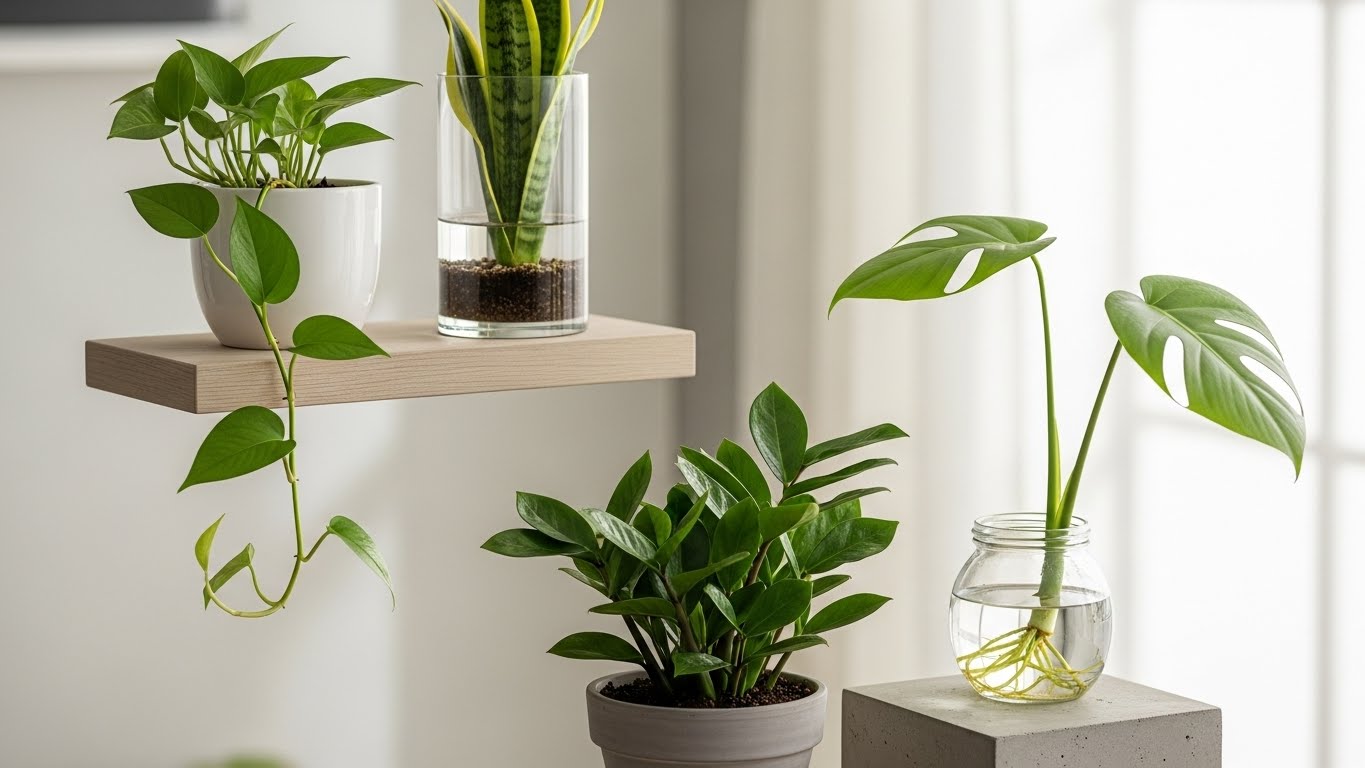
Low-maintenance plants are your gardening best friends! They thrive with little care, needing less watering, fewer fertilizers, and minimal pruning. These plants are tough, handling heat and drought like champs. They also bounce back after tough conditions, making your garden vibrant without the hassle. Plus, they usually adapt to different environments and are resistant to pests and diseases. Want to know how to pick the right low-maintenance plants for your space? There’s more to explore!
Defining Low-Maintenance Plants
When you think about gardening, you might imagine long hours spent weeding, watering, and worrying over your plants, but low-maintenance plants change that picture entirely! These special plants have unique characteristics that make them easier to care for, letting you enjoy your garden without the constant fuss. You’ll find that low-maintenance plants often require less watering, fewer fertilizers, and minimal pruning.
Some common traits include drought tolerance, pest resistance, and the ability to thrive in various conditions. By understanding these plant characteristics, you can select the right ones for your space, ensuring you find a perfect match for your lifestyle. Embrace the joy of gardening with plants that fit your busy schedule and bring beauty to your surroundings effortlessly!
Hardiness and Resilience
Hardiness and resilience are key traits that make low-maintenance plants a fantastic choice for any garden. When you look for these plants, you want to take into account hardiness factors like climate adaptability and disease resistance. These plants can withstand tough conditions, whether it’s scorching heat, chilly temperatures, or unexpected droughts.
Resilience traits come into play as well, showing how well a plant bounces back after stress. Imagine a plant that can shrug off a little neglect or recover from minor pests! This ability not only saves you time but also guarantees your garden stays vibrant. So, when selecting plants, remember that those with strong hardiness and resilience traits will make your gardening experience much more enjoyable and less demanding.
Adaptability to Various Environments
When you choose low-maintenance plants, their adaptability to various environments makes them perfect for any garden or space. These plants can handle temperature changes, thrive in different light conditions, and grow in various soil types, which means you won’t have to worry too much about the specifics. By selecting plants that can adjust to their surroundings, you’ll create a vibrant and hassle-free landscape that looks great year-round!
Tolerance to Temperature Fluctuations
Plants that can thrive despite changing temperatures are not just resilient; they’re often the best choice for gardens that experience a wide range of weather conditions. When you choose plants capable of withstanding temperature extremes and seasonal shifts, you’re making your gardening experience easier and more enjoyable.
Here are some benefits of these adaptable plants:
- They can handle unexpected frosts or heatwaves.
- You won’t need to worry about constant temperature monitoring.
- They require less fuss during seasonal changes.
- They can flourish in various environments, from sunny spots to shady corners.
- You can enjoy a vibrant garden year-round with minimal effort.
Light Requirements Flexibility
While many gardens are blessed with sunny spots, not every plant thrives in bright light, and that’s where light requirements flexibility comes into play. Some plants can adapt beautifully to varying light intensities, making them perfect for those tricky corners of your home or garden. For instance, shade-loving plants like ferns can flourish in low natural light, while others, like succulents, bask in full sun. By choosing plants that tolerate different light conditions, you’ll enjoy a vibrant garden with minimal fuss. Plus, you won’t have to worry about constantly moving them around to catch the sun. Embrace the beauty of adaptable plants, and let your garden shine, no matter the light situation!
Soil Adaptability and Composition
How can soil adaptability enhance your gardening experience? When you choose low-maintenance plants, their ability to thrive in various soil types can make your life so much easier. These resilient plants can handle everything from sandy soils to clay, ensuring they get the nutrients they need without extra fuss. With good nutrient retention, they flourish effortlessly, allowing you to spend more time enjoying your garden.
- Versatile Soil Types: Thrive in diverse conditions.
- Less Frequent Watering: Efficient moisture use.
- Natural Fertility: Requires fewer fertilizers.
- Improved Growth: Robust development across environments.
- Diverse Plant Options: Choose from a wide range of species.
Minimal Watering Requirements
When you choose low-maintenance plants, you’ll discover many that thrive with minimal watering. Drought-resistant species not only survive but flourish even in dry conditions, making them perfect for busy gardeners. Plus, by using efficient watering techniques, you can keep your plants healthy without spending too much time on upkeep.
Drought-Resistant Species
Drought-resistant species are a fantastic choice for anyone looking to maintain a beautiful garden with minimal watering, especially in areas where water is scarce. By incorporating these drought-resistant varieties, you’ll enjoy the many xeriscaping benefits, making your garden thrive without constant attention.
- Low water needs: These plants require considerably less moisture.
- Diverse options: From succulents to native grasses, there’s plenty to choose from.
- Reduced maintenance: Spend less time watering and more time enjoying your garden.
- Environmental impact: Conserve water and help the planet.
- Year-round appeal: Many drought-resistant plants offer beauty in every season.
Embrace these hardy beauties, and you’ll discover how effortless gardening can truly be!
Efficient Watering Techniques
While you might think watering your garden is a time-consuming chore, there are efficient techniques that can help you minimize effort and maximize plant health. Automatic irrigation systems are a game-changer for busy gardeners like you. They deliver water directly to the roots, reducing waste and ensuring consistent moisture retention.
Here’s a quick overview of effective watering methods:
Technique | Benefits |
|---|---|
Drip Irrigation | Saves water, encourages deep roots |
Mulching | Increases moisture retention, reduces weeds |
Soaker Hoses | Efficient, evenly disperses water |
Low Pruning and Grooming Needs
Even if you love gardening, the thought of constant pruning and grooming can feel overwhelming. Thankfully, low-maintenance plants often come with low pruning and grooming needs, allowing you to enjoy your garden without the hassle. Many of these plants are self-cleaning varieties, shedding old leaves naturally, which makes your life easier. Plus, they tend to have seasonal growth patterns, meaning you won’t have to trim them back frequently.
Here are some benefits of choosing low-pruning plants:
- Less time spent on maintenance
- More energy for enjoying your garden
- A tidier look without your effort
- Healthier plants that thrive on their own
- More time for other hobbies you love
Embrace the beauty of simplicity!
Pest and Disease Resistance
When you choose low-maintenance plants for your garden, you’re not just saving time; you’re also selecting varieties that are known for their impressive pest and disease resistance. These plants often exhibit fantastic pest tolerance and robust disease resistance, allowing you to enjoy a garden that thrives with minimal intervention. Here’s a glimpse of some popular options:
Plant Type | Pest and Disease Resistance |
|---|---|
Lavender | High pest tolerance |
Daylilies | Excellent disease resistance |
Sedum | Very resilient to pests |
Coneflower | Strong against common diseases |
Black-eyed Susan | Robust pest tolerance |
Choosing the Right Low-Maintenance Plants for Your Space
Choosing the right low-maintenance plants for your space can turn your garden into a vibrant oasis with minimal effort. Start by considering your environment—sunlight, soil, and climate play big roles in plant selection. Here are some maintenance tips to help you choose wisely:
Selecting low-maintenance plants tailored to your environment can effortlessly enhance your garden’s beauty.
- Succulents: Perfect for sunny spots, they thrive with little water.
- Ornamental Grasses: Add movement and color with minimal care.
- Perennials: Once established, they come back year after year.
- Herbs: They’re useful in the kitchen and easy to grow.
- Native Plants: Adapted to your region, they require less water and care.
With these tips, you’ll find the perfect low-maintenance plants that not only beautify your space but also fit your lifestyle!
Conclusion
In conclusion, low-maintenance plants are perfect for anyone looking to add greenery without all the extra work. Did you know that around 50% of plant owners struggle with keeping their plants alive? By choosing hardy, resilient species that adapt well to their environment, you can become part of the success story! So go ahead, explore your options, and find the right low-maintenance plants for your space. You’ll enjoy the beauty of nature with less hassle!


