
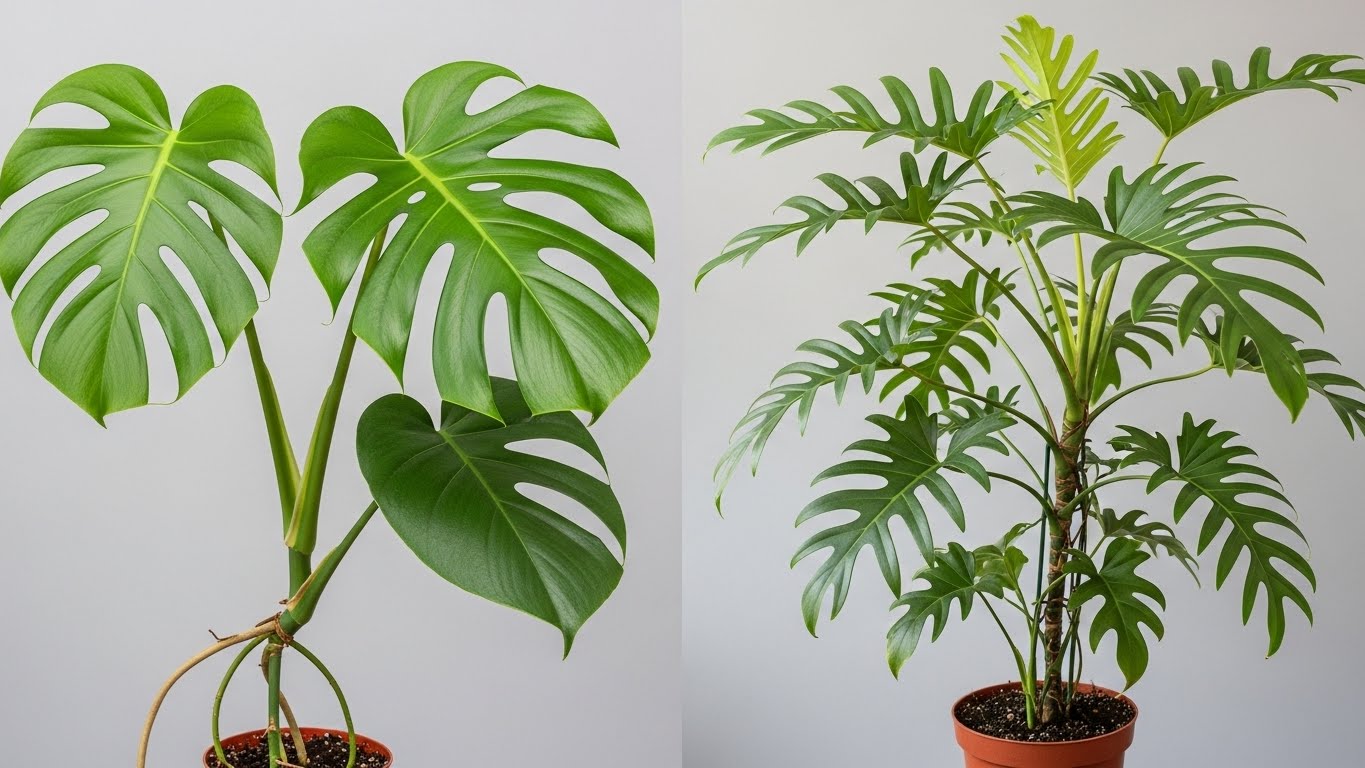
Monstera and Split-Leaf Philodendron may look similar, but they have key differences! Monstera features larger leaves with deep splits and holes, while Split-Leaf has glossy, lobed leaves that are typically smaller. Monstera grows tall and climbing, perfect for spacious areas, whereas Split-Leaf stays bushy and works well in smaller spaces. Both love bright, indirect light and need well-draining soil, but they also require consistent watering and humidity. Stick around to uncover more fascinating details about these plants!
Key Takeaways
💡 If you’re looking to deepen your understanding of Monstera care, this guide is a must-read.
➜ Discover proven techniques
- Monstera leaves are larger with deep splits and holes, while Split-Leaf Philodendron has smaller, rounded lobes and broader leaves.
- Monstera can grow up to 10 feet tall, whereas Split-Leaf Philodendron typically reaches heights of 3 to 6 feet.
- Both plants thrive in bright, indirect light but can tolerate lower light conditions, avoiding excessive direct sunlight.
- Monstera prefers well-draining potting mixes with good aeration, while Split-Leaf Philodendron enjoys similar soil but is more tolerant of varying conditions.
- Common pests for both include aphids and spider mites; early detection is crucial for effective management and prevention of root rot.
Overview of Monstera
Monstera, often called the “Swiss cheese plant,” is a popular houseplant known for its striking, large leaves that feature unique holes and splits. You might be surprised to learn that there are several monstera varieties, each with its own charm. The Monstera deliciosa is the most common, boasting those iconic leaves, while the Monstera adansonii offers a more delicate look with smaller holes.
Caring for your monstera isn’t too tricky. It loves bright, indirect sunlight and prefers to dry out a bit between waterings. Regularly dusting its leaves helps keep it healthy and vibrant. Fenestrated leaves are a hallmark of a mature Monstera and play a crucial role in maximizing light capture. With a little attention and love, your monstera can thrive, adding a touch of tropical flair to your space. Enjoy the beauty it brings!
Overview of Split-Leaf Philodendron
The Split-Leaf Philodendron, often mistaken for Monstera, has its own unique charm and characteristics that make it a great addition to any plant collection. You’ll notice its large, glossy leaves with deep lobes, which not only look stunning but also help it thrive in various growing conditions, from bright indirect light to lower light settings. Understanding its specific needs can help you keep this vibrant plant happy and healthy in your home!
Plant Characteristics
When you first encounter the Split-Leaf Philodendron, you might be struck by its large, glossy leaves that seem to almost dance in the light. These vibrant leaves are deeply lobed, giving them a unique shape that sets them apart from many houseplants. As you explore its characteristics, you’ll notice the significant foliage differences between this plant and others, like the Monstera. Regarding plant care, the Split-Leaf Philodendron thrives with moderate watering and enjoys a warm, humid environment. Its lush greenery can transform any space into a tropical oasis, making it a popular choice for plant lovers. With the right attention, this stunning plant will flourish and bring joy to your home!
Growing Conditions
To guarantee your Split-Leaf Philodendron thrives, you’ll need to create the right growing conditions that mimic its native tropical environment. Start with an ideal temperature between 65°F and 80°F; it’s vital for your plant’s growth. Make sure it’s placed in a spot with bright, indirect light—too much direct sun can scorch its leaves.
Humidity levels play a big role too. Aim for around 50-70% humidity, which you can achieve by misting the leaves or using a humidifier. Don’t forget to water regularly, letting the top inch of soil dry out between waterings. With these conditions in place, your Split-Leaf Philodendron will flourish, rewarding you with its stunning, lush foliage!
Leaf Shape and Structure
When you compare the leaf shapes of the Monstera and Split-Leaf Philodendron, you’ll notice some key differences that make each plant unique. The Monstera boasts larger, more dramatic leaves with deep splits and holes, while the Split-Leaf Philodendron features smaller, more rounded lobes that give it a different look. Understanding these variations not only helps you appreciate each plant’s beauty but also aids in identifying them in gardens or stores!
Leaf Size Comparison
In the world of houseplants, few features stand out like the leaves of the Monstera and the Split-Leaf Philodendron. When you do a size comparison, you’ll notice that Monstera leaves can grow impressively large, often reaching up to 3 feet long and 2 feet wide! In contrast, the Split-Leaf Philodendron’s leaf dimensions are typically smaller, ranging from 12 to 18 inches long. Both plants showcase stunning, lush greenery, but the size difference can dramatically affect the look of your space. If you’re aiming for a bold statement, the Monstera’s larger leaves will certainly grab attention. Meanwhile, the Split-Leaf Philodendron offers a more compact vibe, perfect for cozy corners. Choose based on the atmosphere you want to create!
Cut and Shape Differences
The unique shapes of Monstera and Split-Leaf Philodendron leaves tell a fascinating story about their differences. You’ll notice that Monstera leaves have deep cuts and holes, creating an eye-catching, almost playful leaf shape. These distinctive leaf cuts help the plant thrive in its natural habitat by allowing sunlight to filter through. On the other hand, the Split-Leaf Philodendron features broader leaves with fewer, shallower cuts, giving it a smoother and more classic look. While both plants are stunning, the leaf shape and cut really set them apart. When you care for these beauties, pay attention to their unique characteristics, and you’ll appreciate how each leaf tells its own story. Choose your favorite and let it shine!
Growth Habits and Size
Understanding the growth habits and size of Monstera and Split-Leaf Philodendron can help you choose the right plant for your space. Both have unique growth patterns and size variations that can complement your home beautifully.
Here’s a quick comparison:
Plant | Growth Patterns | Size Variations |
|---|---|---|
Monstera | Climbing and spreading | Up to 10 feet tall |
Split-Leaf Philodendron | Upright and bushy | 3 to 6 feet tall |
Monstera leaves | Large, perforated | 1 to 3 feet wide |
Split-Leaf leaves | Heart-shaped, lobed | 1 to 2 feet wide |
Ideal for | Large spaces | Smaller rooms |
With this information, you can find the perfect match for your living area!
Light Requirements
When it comes to light requirements, both the Monstera and Split-Leaf Philodendron have their own preferences that can make or break their growth. You’ll want to provide bright, indirect light for the best results, but don’t worry—both plants can tolerate lower light conditions too. Understanding these light needs helps you keep your leafy friends thriving and happy in your home!
💡 Understanding how to encourage leaf splits can enhance your Monstera’s beauty.
➜ Master this approach
Ideal Light Conditions
Finding the right light for your plants can make a huge difference in how they grow and thrive! Both Monstera and Split-Leaf Philodendron love bright, indirect light, so placing them near a window where they can soak up some natural sunlight is ideal. If you use indoor lighting, opt for full-spectrum bulbs, as they mimic sunlight and promote healthy growth. Remember, too much direct sunlight can scorch their leaves, while too little can stunt their growth. Aim for a balance—bright, filtered light is the sweet spot! By creating the perfect lighting conditions, you’ll help your plants flourish, showcasing their gorgeous foliage and keeping them vibrant and happy. Your plants will thank you for it!
💡 If you’re intrigued by the unique beauty of variegated Monsteras, this article offers specialized care tips.
➜ Explore advanced methods
Tolerance to Low Light
Both Monstera and Split-Leaf Philodendron can handle low light situations better than many other houseplants, which makes them great choices for spots in your home that don’t get a lot of sunlight. Their impressive low light tolerance and shade adaptability allow them to thrive even in dim conditions. This means you can enjoy their lush foliage without worrying about finding the perfect sunny spot.
Here’s a quick comparison to help you decide:
Plant Type | Low Light Tolerance |
|---|---|
Monstera | Good |
Split-Leaf Philodendron | Excellent |
Care Tips | Rotate occasionally |
With either plant, you’ll fill your space with greenery, adding a touch of nature to your cozy corners.
Watering and Humidity Needs
Understanding the watering and humidity needs of your Monstera and Split-Leaf Philodendron can make all the difference in keeping these plants healthy and thriving. Both plants enjoy a consistent watering frequency—typically once every week or so—but it’s essential to check the soil first. If it’s still damp, wait a few days before watering again.
In terms of humidity levels, these tropical beauties love moisture! Aim for a humidity level around 60% or higher. You can achieve this by misting them regularly, using a pebble tray, or placing a humidifier nearby. By paying attention to their watering and humidity needs, you’re setting the stage for your plants to flourish, bringing vibrant life to your space!
Soil Preferences
When it comes to soil preferences, both Monstera and Split-Leaf Philodendron thrive in well-draining potting mixes that allow their roots to breathe. You’ll want a soil composition that includes ingredients like peat, perlite, and orchid bark. This combination guarantees good aeration and moisture retention, which are essential for healthy growth.
While these plants enjoy some moisture, be careful not to overwater them, as soggy roots can lead to trouble! A mix that holds just the right amount of moisture helps them flourish without drowning. Remember, your goal is to create an environment where they can stretch out their roots comfortably. With the right soil, you’ll be well on your way to nurturing beautiful, vibrant plants that bring joy to your space!
Common Pests and Diseases
Caring for your Monstera or Split-Leaf Philodendron means keeping an eye out for common pests and diseases that can sneak up on your plants. Aphids, spider mites, and mealybugs are just a few pests that love to munch on your greenery. Regular inspections can help you catch these little invaders early. For effective pest management, you can use insecticidal soap or neem oil.
As for diseases, root rot is a common issue, often caused by overwatering. Make certain your pot has proper drainage to promote disease prevention. If you spot yellowing leaves, it might be time to check your watering routine. By staying vigilant and proactive, you can keep your Monstera or Split-Leaf Philodendron thriving and healthy!
Propagation Techniques
Propagation techniques for your Monstera or Split-Leaf Philodendron can be a fun and rewarding process, especially since these plants are known for their ability to grow new roots and shoots quite easily. One popular method is node propagation, where you take a cutting that includes a node—this part is essential for new growth. You can also use leaf cuttings, but make sure they have nodes for the best results. Here’s a quick comparison:
Method | Best For | Time to Root |
|---|---|---|
Node Propagation | Strong growth | 2-6 weeks |
Leaf Cuttings | Decorative uses | 4-8 weeks |
Water Propagation | Easy monitoring | 2-3 weeks |
Soil Propagation | Natural growth | 4-6 weeks |
Air Layering | Large plants | 6-12 weeks |
Happy propagating!
Aesthetic and Decorative Uses
Adding a Monstera or Split-Leaf Philodendron to your space can transform any room into a vibrant oasis, as these plants are not just beautiful but also incredibly versatile in their decorative uses. Their aesthetic appeal and decorative versatility make them perfect for various settings. You can easily enhance your home with these green beauties by considering:
Transform your space into a vibrant oasis with the versatile beauty of Monstera and Split-Leaf Philodendron.
- Statement pieces: Use larger plants to anchor a room or fill empty corners.
- Table displays: Small pots can brighten up your coffee table or desk.
- Hanging planters: Create a cascading effect to draw the eye upward and add dimension.
With their lush leaves and striking shapes, both plants invite a sense of nature indoors, making your space feel cozy and inviting. Embrace their charm!
Conclusion
In the battle of Monstera versus Split-Leaf Philodendron, you can’t judge a plant by its leaves alone. While both bring unique beauty to your space, they have different care needs and appearances. Whether you’re drawn to the dramatic splits of the Split-Leaf Philodendron or the iconic holes of the Monstera, understanding their differences helps you choose the right one for your home. So, pick your favorite and watch it thrive in your care!
💡 Proper fertilization is key to a healthy Monstera, and this guide provides essential tips.
➜ Get the step-by-step guide


