
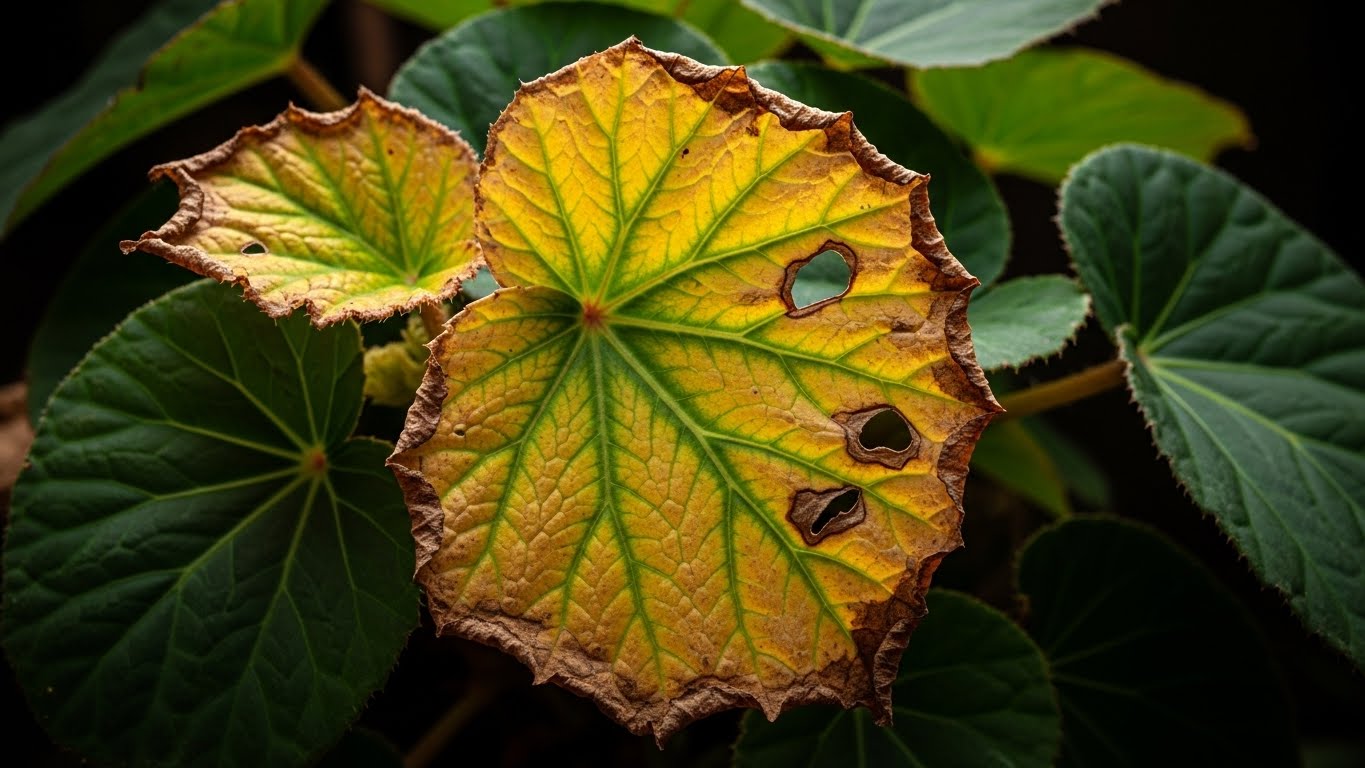
If your begonia’s leaves curl, yellow, or drop, it’s a clear sign something’s off. Common causes include overwatering, underwatering, poor lighting, or pests. Keep an eye out for yellowing leaves, which often point to nutrient deficiencies. Make sure your begonia has well-draining soil and stays in a stable environment. Humidity levels also matter! With the right care and a few adjustments, you can help revive your plant. Discover more tips for keeping your begonia healthy!
Key Takeaways
💡 Avoiding common pitfalls is crucial for maintathisng healthy begonias.
➜ Discover proven techniques
- Leaf curling may indicate insufficient water, excessive sunlight, or pest infestations hiding in the leaf folds.
- Yellowing leaves often result from nutrient deficiencies, overwatering, or poor soil quality affecting nutrient absorption.
- Leaf drop can be caused by improper watering, temperature fluctuations, or overcrowding impacting the plant’s health.
- Maintaining stable temperatures, adequate humidity, and well-draining soil is essential for preventing stress in begonias.
- Regularly inspect for pests and monitor soil moisture to address issues early and promote healthy growth.
Understanding Begonia Leaf Curl
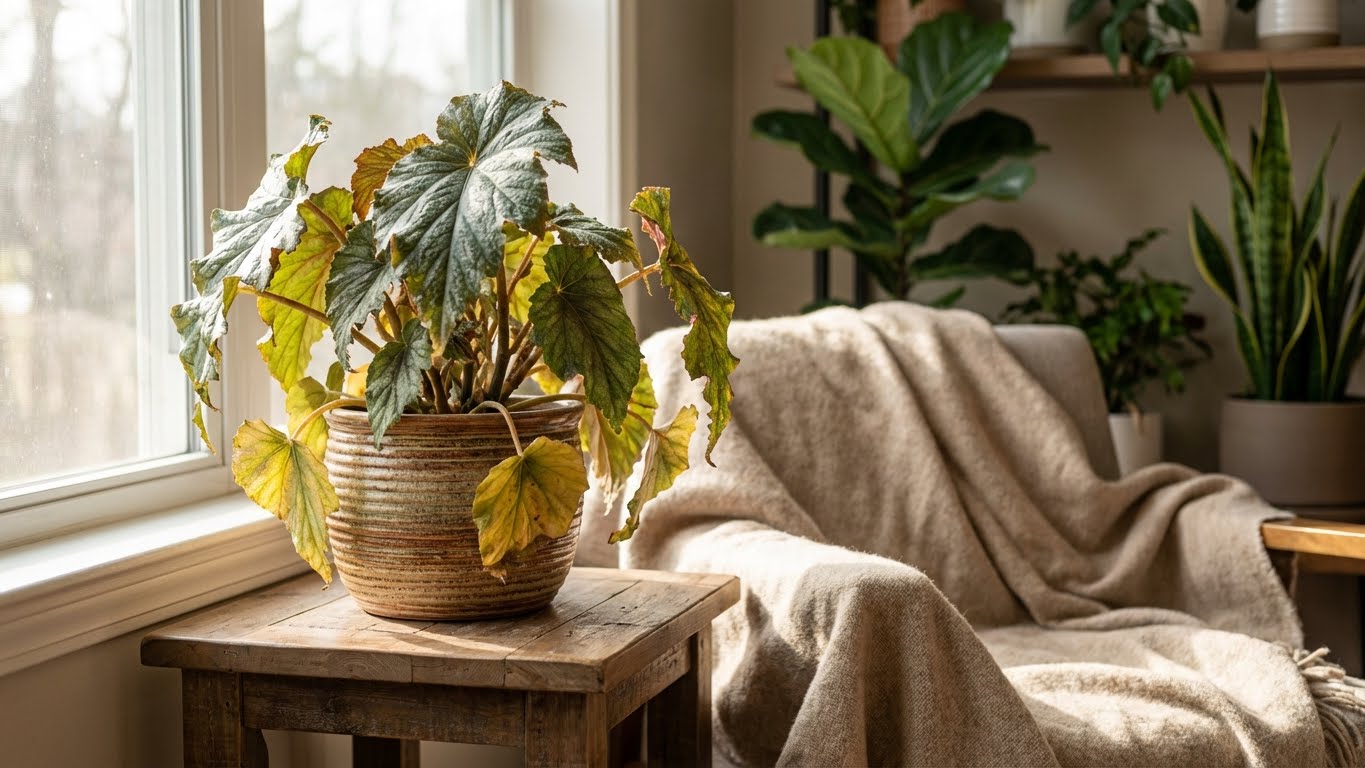
When you notice your begonia leaves curling, it can be both puzzling and concerning, especially since these vibrant plants are known for their stunning foliage. The unique leaf structure plays a significant role in their health, as each leaf pattern contributes to how the plant absorbs light and moisture. Curling leaves often signal that something’s amiss. Maybe it’s a lack of water or too much direct sunlight, both of which can stress the plant. You might even find that pests are hiding in those beautiful folds! Keep an eye on your begonias, and observe any changes in their leaf patterns. Addressing these issues promptly helps guarantee your plant stays happy and vibrant, showcasing its true beauty. Additionally, ensuring proper light requirements is essential to prevent stress and maintain leaf health.
Common Causes of Yellowing Leaves
When you notice your begonia’s leaves turning yellow, it’s time to investigate what might be going wrong. Often, this color change can signal nutrient deficiencies, over or underwatering, or even pest infestations. Let’s explore these common causes so you can get your plant back to its vibrant self!
Nutrient Deficiency Issues
Nutrient deficiencies can sneak up on your begonia leaves, turning them from vibrant green to an alarming shade of yellow. If you notice this change, it might be time to check the soil quality. Poor soil can hinder nutrient absorption, leaving your plant craving essential vitamins and minerals.
Common culprits include nitrogen, magnesium, and iron deficiencies. When your begonia lacks these nutrients, you’ll see yellowing leaves, especially in the older ones. To remedy this, consider using a balanced fertilizer or enriching your soil with organic matter. Regularly testing your soil can help you understand what your begonia needs, ensuring it stays healthy and happy. A little care goes a long way in preventing those yellow leaves!
Overwatering or Underwatering
Overwatering or underwatering your begonia can lead to a dramatic change in its leaf color, often resulting in that dreaded yellowing. To keep your plant happy, you must find the right water balance. If you give it too much water, the roots can suffocate, leading to yellow leaves. On the flip side, not enough water can stress your begonia, causing it to droop and lose its vibrant color.
Make sure the pot has drainage holes to help with moisture retention, and check the soil regularly. Stick your finger in the dirt; if it’s dry an inch down, it’s time to water. Finding that perfect balance will keep your begonia thriving and colorful!
Pest Infestation Signs
Have you ever noticed your begonia’s leaves turning yellow and wondered what could be causing it? One common culprit might be pest infestations. Identifying pests early is key to controlling pest populations and saving your precious plant. Here are some signs to watch for:
- Sticky residue: If you notice a sticky film on your leaves, it could be honeydew from aphids or mealybugs.
- Webbing: Tiny webs between the leaves? That’s a sign of spider mites.
- Discoloration: Yellow spots or patches can indicate pest damage or diseases.
- Visible pests: Sometimes, you’ll see the pests themselves, so use pest identification methods to figure out what you’re dealing with.
Stay vigilant, and your begonia will thrive!
Factors Leading to Leaf Drop
When you notice your begonia’s leaves dropping, it can be a puzzling and concerning sight. Understanding the factors leading to leaf drop is essential for maintaining leaf health and ensuring your plant thrives. One major reason could be improper watering; either too much or too little can stress your begonia. Additionally, sudden changes in temperature or humidity can shock your plant, causing those precious leaves to fall. Remember, stress from overcrowding can also impact its liveliness. Regularly checking your plant’s environment and practicing good plant care techniques, like pruning, can help prevent leaf drop. By paying close attention to these factors, you can keep your begonia happy and healthy, ensuring its beautiful leaves stay vibrant.
Environmental Stressors Impacting Begonias
Environmental stressors can greatly impact the health of your begonias, making it vital for you to recognize and address them. Here are some key factors to keep in mind:
- Light Exposure: Confirm your begonias get the right amount of sunlight. Too much direct light can scorch their leaves, while too little can cause them to weaken.
- Soil Type: Use well-draining soil to prevent root rot. Begonias thrive in a mix that retains moisture but allows excess water to escape.
- Temperature: Keep them in a stable environment, ideally between 60-75°F, to avoid stress.
- Humidity: These plants love humidity, so consider misting them or placing them near a humidifier to keep their leaves healthy.
Watering Issues: Overwatering vs. Underwatering
When it comes to watering your begonias, getting it just right can be tricky! You might notice some telltale signs if you’re overwatering or underwatering your plants, which can lead to unhappy leaves. Let’s explore the symptoms of both and discover the best watering techniques to keep your begonias thriving!
💡 Understanding leaf diseases can help you keep your begonias healthy.
➜ Learn the complete strategy
Signs of Overwatering
Have you ever noticed your Begonia’s leaves looking a little sad and droopy? This could be a sign of overwatering. When you give your Begonia too much water, it can struggle with root rot, making it hard for the plant to absorb nutrients. To help you spot the signs of overwatering, keep an eye out for these:
💡 Proper fertilization is key to vibrant and healthy leaves.
➜ Get the step-by-step guide
- Leaves turning yellow or brown.
- Soil that feels constantly wet or soggy.
- Wilting leaves despite wet soil moisture.
- A musty smell coming from the soil.
If you notice any of these symptoms, it’s time to reassess your watering routine. Remember, your Begonia thrives with just the right amount of love and care!
Signs of Underwatering
While overwatering can lead to serious issues for your Begonia, underwatering can be just as problematic, leaving your plant in a state of distress. If you notice your Begonia’s leaves curling, turning yellow, or dropping, it might be crying out for water. Dry soil is a clear indicator that your plant isn’t getting enough hydration. When soil lacks moisture, it affects the Begonia’s water retention, making it unable to thrive. Keep an eye out for wilting leaves or a droopy appearance, as these are signs that your plant needs a drink. Remember, a little attention can go a long way, ensuring your Begonia stays healthy and vibrant, ready to brighten your space with its beautiful foliage.
Proper Watering Techniques
How can you guarantee your Begonia gets just the right amount of water? It’s all about mastering the balance between watering frequency and moisture levels. Here’s how to do it:
- Check the soil: Stick your finger about an inch into the soil. If it’s dry, it’s time to water.
- Water thoroughly: When you do water, soak the soil until water drains from the bottom. This assures the roots drink deeply.
- Adjust based on the season: Your Begonia may need more water during warmer months and less in winter.
- Use pots with drainage: Proper drainage prevents water from pooling, which can lead to overwatering.
Nutrient Deficiencies and Their Effects
When you notice your begonia leaves starting to look a bit off, it could be a sign that your plant isn’t getting the nutrients it needs. Nutrient imbalances often arise from poor soil quality, which can lead to yellowing, curling, or even dropping leaves. Each nutrient plays a crucial role in your begonia’s health; for example, a lack of nitrogen can cause stunted growth and pale leaves, while insufficient potassium might lead to weak stems. To keep your plant thriving, check the soil’s nutrient content regularly, and consider using a balanced fertilizer. By ensuring your begonia gets the right nutrients, you’ll help it flourish, bringing joy and beauty to your space. Don’t let nutrient issues hold your plant back!
Pest Infestations to Watch For
Have you ever noticed tiny, unfamiliar creatures crawling on your begonia leaves? These pests can wreak havoc on your beloved plant. Effective pest management starts with knowing what to look for. Here are four common pests to watch for:
Keep an eye out for tiny pests on your begonia, as they can seriously impact your plant’s health.
- Aphids: These small, green insects suck sap, causing leaves to curl and yellow.
- Spider Mites: Look for tiny webs on leaves; they thrive in dry conditions.
- Mealybugs: These cottony bugs cluster in leaf joints, weakening your plant.
- Whiteflies: These small, white insects fly up when you disturb the plant.
Implementing preventive measures like regular inspections and keeping your plant’s environment healthy can help you catch these pests early. Stay vigilant, and your begonia will thrive!
The Role of Humidity in Leaf Health
Understanding the importance of humidity is key to keeping your begonia’s leaves healthy and vibrant. Begonias thrive in environments where humidity levels are high, ideally between 50-70%. When humidity drops, your plant may struggle to maintain adequate leaf moisture, leading to curled or yellowing leaves. Low humidity can cause the leaves to lose water faster than they can absorb it, resulting in stress. You might notice your begonia’s leaves drooping or even dropping off entirely! To guarantee your plant stays happy, consider using a humidifier or placing a tray of water nearby. Remember, your begonia’s health is a reflection of its environment, so nurturing that humidity will help keep its leaves looking lush and beautiful.
Tips for Reviving a Struggling Begonia
Reviving a struggling begonia can feel like a challenge, but with the right approach, you can bring your plant back to life! Here are some tips to help you with your plant care and leaf maintenance:
Reviving a struggling begonia is possible with the right care and attention. Follow these tips to restore its health!
- Check the soil: Confirm it’s not too dry or soggy; the right moisture is key.
- Adjust light: Place your begonia in bright, indirect sunlight to boost its energy.
- Increase humidity: Use a humidifier or pebble tray to create a cozy atmosphere for your plant.
- Prune damaged leaves: Snip away any yellow or curled leaves to promote new growth.
Conclusion
To sum up, keeping your begonia happy and healthy is like being a superhero for your plant! By understanding the causes behind curling, yellowing, or dropping leaves, you can swoop in with the right solutions. Whether it’s adjusting watering habits, boosting nutrients, or tackling pests, your actions can transform a struggling begonia into a vibrant beauty. So, roll up your sleeves and give your green companion the care it deserves, turning potential plant drama into a flourishing success story!
💡 Choosing the right variety can enhance your indoor space and prevent common issues.
➜ Explore advanced methods


