
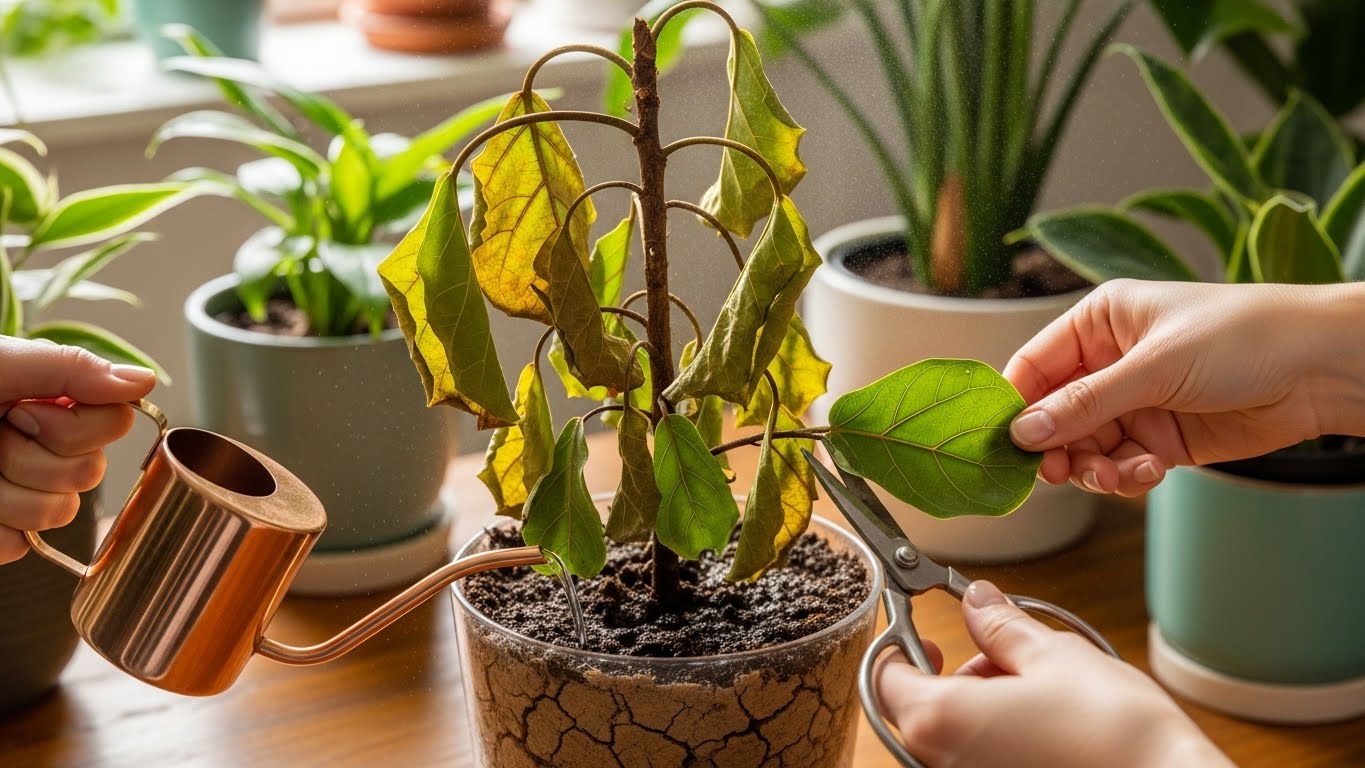
To rescue a sad grocery store plant, first assess its condition by checking for wilting, discoloration, and pests. Give it a cozy spot with the right light and temperature while avoiding drafts. Water only when the soil is dry an inch down, and look for drainage holes to prevent soggy roots. Keep an eye on any pests and establish a regular care routine, like dusting leaves and fertilizing monthly. Exciting details follow to help make your plant thrive!
Assessing the Plant’s Condition
💡 If your grocery store plant is showing signs of distress, understanding root rot is crucial for its recovery.
➜ Discover proven techniques
When you first spot a plant at the grocery store, you might wonder, “Is this one worth saving?” Evaluating the plant’s condition is essential before you decide to rescue it. Start with a visual inspection—check the leaves for discoloration, wilting, or spots, as these can signal poor plant health. Look for signs of pests, like tiny holes or webbing, which could indicate a bigger problem. Examine the stems; they should feel firm, not mushy. Roots are important too! If you can, gently pull the plant from its pot and see if the roots are healthy and white, not brown and mushy. A little attention to these details can help you determine if this plant deserves a second chance in your home.
Choosing the Right Location
💡 Understanding the reasons behind plant decline can help you make better choices and rescue your current plants.
➜ Learn the complete strategy
When you’re picking the perfect spot for your rescued grocery store plant, think about how much natural light it’ll get. You’ll want to find a place that balances warmth without too many temperature swings, so it stays cozy and happy. Plus, keeping your plant away from high traffic areas helps prevent accidental bumps and knocks that could stress it out.
Assess Natural Light Availability
To help your grocery store plant thrive, you need to assess natural light availability, as the right spot can make all the difference in its health. Start by observing the light intensity in your home—some plants love bright, direct sunlight, while others prefer a shadier spot. Take note of how long the sun shines on each potential location; this is the light duration. If your plant craves more light, consider moving it closer to a window or choosing a brighter room. Conversely, if it’s getting too much sun, look for a cozy corner with filtered light. Finding the perfect balance between light intensity and light duration will set your plant on the path to happiness and growth!
Consider Temperature Fluctuations
Choosing the right spot for your grocery store plant isn’t just about light; temperature fluctuations play an essential role in your plant’s well-being too. You need to be aware of temperature extremes caused by indoor heating and air conditioning. During seasonal changes, these shifts can stress your plant if it’s too close to drafty windows or outside conditions. Ideally, you want to find a cozy nook where your plant can thrive without sudden chills or heat blasts. Keep an eye on humidity levels too, as dry air can further complicate things. By ensuring a stable temperature, you’ll help your plant feel comfortable, allowing it to grow healthy and strong. Your careful attention can make all the difference!
Avoid High Traffic Areas
Finding the perfect spot for your grocery store plant means steering clear of high traffic areas, as constant movement can disrupt its growth. Your plant needs a peaceful environment to thrive, free from stress factors like noise and jostling. Consider these tips:
- Choose a corner: A quieter spot can help your plant feel secure and comfortable.
- Avoid doorways: People coming and going can create an unstable atmosphere.
- Look for natural light: Make sure it gets the sunlight it craves without being in the way.
- Think about temperature: High traffic areas can lead to temperature fluctuations, which aren’t ideal.
Repotting: When and How
Repotting your grocery store plant can be a game changer for its health and growth, especially if it’s outgrown its original container. You should consider repotting when roots start poking out of the drainage holes or if the plant seems stunted. Gather your repotting materials—fresh potting soil, a new pot, and possibly some fertilizer. Aim to repot every 1-2 years, but if you notice rapid growth, you might need to do it more often. When repotting, gently remove the plant from its old pot, loosen any tightly bound roots, and place it in the new pot with fresh soil. Water it well afterward to settle the soil. Your plant will thank you for this loving care!
Proper Watering Techniques
When it comes to keeping your rescued grocery store plant happy, proper watering is key. Start by checking the soil moisture; if it feels dry an inch below the surface, it’s time to water. Remember, a consistent watering schedule helps your plant thrive, so keep an eye on it to find the right frequency!
Assess Soil Moisture
Evaluating soil moisture is like being a detective for your plant’s needs, and it’s essential for keeping it healthy. When you check the moisture level, consider the soil texture, as that affects how well it retains moisture. Here are some tips to help you assess soil moisture effectively:
- Stick your finger in the soil about an inch deep to feel for dampness.
- Observe the color of the soil; darker shades usually indicate moisture.
- Check the pot weight; a heavier pot means more moisture is present.
- Use a moisture meter if you’re unsure, as it provides an accurate reading.
Watering Frequency Guidelines
Once you’ve assessed the soil moisture, it’s time to focus on how often you should water your grocery store plant. Generally, you’ll want to water every 1-2 weeks, depending on the plant type and environmental conditions. Use these watering techniques: water thoroughly until it drains from the bottom, ensuring good moisture retention in the soil. Keep an eye on the top inch of soil; if it’s dry, it’s time to hydrate your green friend! Remember, overwatering can be just as harmful, so make sure the pot has drainage holes. By learning the right balance, you’ll help your plant thrive, turning that sad little sprout into a vibrant addition to your home. Happy watering!
Identifying Pests and Diseases
How can you tell if your grocery store plant is suffering from pests or diseases? Start by observing closely. Signs of trouble can appear quite subtly, but once you spot them, you can take action. Here are some key indicators to look for:
- Sticky residue on leaves, often from aphids.
- Discoloration or yellowing leaves, which may indicate disease symptoms.
- Wilting or drooping, even with proper watering.
- Visible pests like spider mites or mealybugs.
Understanding pest identification and recognizing disease symptoms is vital for your plant’s recovery. If you notice these signs, don’t fret! With a little care and attention, you can bring your plant back to health and happiness.
Pruning for Health
When it comes to pruning your grocery store plant, the first step is evaluating its condition. You’ll want to look for any dead or damaged leaves and stems that could be draining energy from the healthy parts of the plant. Once you identify what needs to go, using proper pruning techniques will help your plant thrive and flourish in its new home.
Assessing Plant Condition
Is your grocery store plant looking a bit worse for wear? Don’t worry; you can help it bounce back! Start with a visual inspection to assess its condition. Check for signs of distress, as this will guide your care. Here are some key indicators to look for:
- Yellowing leaves: This might indicate overwatering or nutrient deficiency.
- Wilting: A sign that your plant needs more water or humidity.
- Pests: Look closely for any tiny bugs or webbing on leaves.
- Brown tips: These can signal underwatering or low humidity.
Proper Pruning Techniques
Pruning your grocery store plant can feel a bit intimidating, but it’s a powerful tool for helping your plant thrive. Start by gathering sharp scissors or pruning shears; clean cuts promote plant health. Look for dead or yellowing leaves—these are signs your plant needs some love. Cut them off at the base, just above a leaf node. This encourages new growth and lets your plant focus its energy on healthier parts.
💡 Brown leaves can be a sign of various problems; knowing how to address them can save your plant.
➜ Get the step-by-step guide
When pruning, remember to be gentle; plants are sensitive. You can also trim back leggy stems to encourage bushier growth. Use these pruning techniques regularly, and you’ll see how your plant transforms over time. With a little patience, you’re nurturing a vibrant friend!
Fertilizing: What Your Plant Needs
💡 Proper watering is key to reviving a sad plant; avoid common mistakes to ensure its health.
➜ Explore advanced methods
Fertilizing your grocery store plant is like giving it a nutritious meal that helps it grow strong and vibrant. You want to make sure your plant gets the right nutrients, especially if it’s showing signs of stress. Consider these tips:
- Use organic fertilizers for a natural boost.
- Opt for slow release options to provide a steady supply of nutrition.
- Watch for nutrient deficiencies, like yellowing leaves, which can signal a need for more food.
- Make seasonal adjustments in your fertilizing routine to match your plant’s changing needs.
Adjusting Light Exposure
To help your grocery store plant thrive, you need to assess its current light conditions. Take a good look at where it’s sitting—does it get bright sunlight or is it mostly in the shade? Once you know what it’s working with, you can start adjusting its light exposure gradually, giving it the best chance to flourish.
Assess Current Light Conditions
How can you tell if your grocery store plant is getting the right amount of light? Start by observing its leaves and growth pattern! You want to guarantee it receives the right light intensity and duration. Here are a few signs to look for:
- Yellowing leaves: Indicates too much direct light or not enough light.
- Leggy growth: If your plant stretches toward the light, it’s craving more!
- Faded colors: Dull leaves can signal insufficient light.
- Rapid growth: This might mean it’s getting just the right amount of light.
Adjusting its light exposure can make all the difference. By evaluating these conditions, you’re one step closer to reviving your grocery store plant and helping it thrive!
Gradual Light Adjustment Techniques
When you notice your grocery store plant struggling with light conditions, it’s essential to adjust its exposure gradually rather than making sudden changes. Start by placing your plant in a spot with indirect light for a week or so. This is one of the best light acclimatization methods! After that, slowly move it to a brighter location, giving it a few days to adapt at each step. Use gradual exposure techniques by shifting it a few inches closer to the light every few days. Monitor how your plant responds, and if it shows signs of stress, take a step back! Remember, patience is key. With time and care, your plant will thrive in its new light environment.
Creating a Humidity-Friendly Environment
Creating a humidity-friendly environment can make all the difference for a struggling grocery store plant, as many plants thrive in damp conditions that mimic their natural habitats. Here are some simple ways to boost indoor humidity:
- Use misting techniques to lightly mist your plant’s leaves.
- Set up humidity trays with water to create moisture in the air.
- Add pebble trays under pots, allowing water to evaporate around your plant.
- Try group planting, placing several plants together to increase room humidity.
With the right plant placement, like near a humidifier or in a bathroom, you can improve indoor humidity. Don’t forget to check humidity monitors to guarantee your plant’s getting the moisture it craves!
Monitoring Temperature Changes
While you might not think about it often, keeping an eye on your grocery store plant’s temperature can be just as essential as monitoring its humidity. Temperature monitoring helps you understand how climate impacts your plant’s health. Plants thrive within specific temperature ranges, so let’s look at some key points to keep in mind:
Temperature Range | Climate Impact |
|---|---|
60°F to 75°F | Ideal for most houseplants |
75°F to 85°F | Good for tropical plants |
Below 50°F | Potential stress for plants |
Understanding Plant Specific Needs
Knowing the right temperature for your grocery store plant is just the beginning; understanding its specific needs is where the real magic happens. Each plant has its own set of preferences and requirements, and getting to know them can transform your plant’s health.
- Light: Some love bright spots, while others prefer shade.
- Watering: Check if your plant likes moist soil or prefers to dry out.
- Humidity: Certain species thrive in humid environments, while others are more tolerant of dry air.
- Nutrients: Different plants have unique dietary needs, so find the right fertilizer.
Establishing a Care Routine
Establishing a care routine for your grocery store plant is essential if you want it to thrive in your home. Start by creating a simple plant care checklist to keep track of your nurturing habits. This way, you won’t forget to water or fertilize your new friend.
Task | Frequency |
|---|---|
Watering | Weekly |
Fertilizing | Monthly |
Dusting Leaves | Bi-weekly |
Encouraging New Growth
To encourage new growth in your grocery store plant, it’s important to create an environment that promotes healthy development. You want to focus on new growth strategies that foster resilience and vibrancy. Here are some tips to get you started:
- Provide adequate sunlight: Place your plant in a bright spot but avoid direct harsh rays.
- Water thoughtfully: Keep the soil moist but not soggy; overwatering can lead to root rot.
- Fertilize gently: Use a balanced fertilizer every few weeks to give your plant the nutrients it craves.
- Prune wisely: Trim away dead or yellowing leaves to encourage fresh growth.
Recognizing Signs of Improvement
Recognizing the signs of improvement in your grocery store plant can be incredibly rewarding, as it shows that your care is paying off. Look for growth indicators like new leaves sprouting or thicker stems, which signal plant resilience. You might notice that the color of the leaves becomes more vibrant, indicating that your plant is soaking up nutrients effectively. Pay attention to the overall posture of your plant; it should appear perkier and more vibrant. If you see these changes, it’s a clear sign that your nurturing efforts are making a difference. Remember, even small improvements mean a lot! Celebrate these moments, as they can inspire you to keep going on this green-thumb journey.
Sharing Your Success Story
It’s amazing how sharing your success story can inspire not only yourself but also others who are on a similar journey with their plants. Your plant transformations can ignite hope and motivation in fellow plant lovers, showing them what’s possible.
Consider sharing:
- Photos of your plant’s before and after stages
- Tips that worked for your specific plant type
- Challenges you faced and how you overcame them
- Encouragement for others to keep trying, even when it’s tough
Conclusion
With a little TLC and patience, you can turn that sad grocery store plant into a thriving beauty. Remember, it’s not all about having a green thumb; even beginners can make a difference! By following these steps, you’re not just bringing a plant back to life, you’re also learning valuable skills along the way. So, roll up your sleeves, get your hands dirty, and watch your plant flourish—after all, every cloud has a silver lining!
💡 Repotting can be a delicate process, especially for sad plants that need extra care.
➜ Master this approach


