
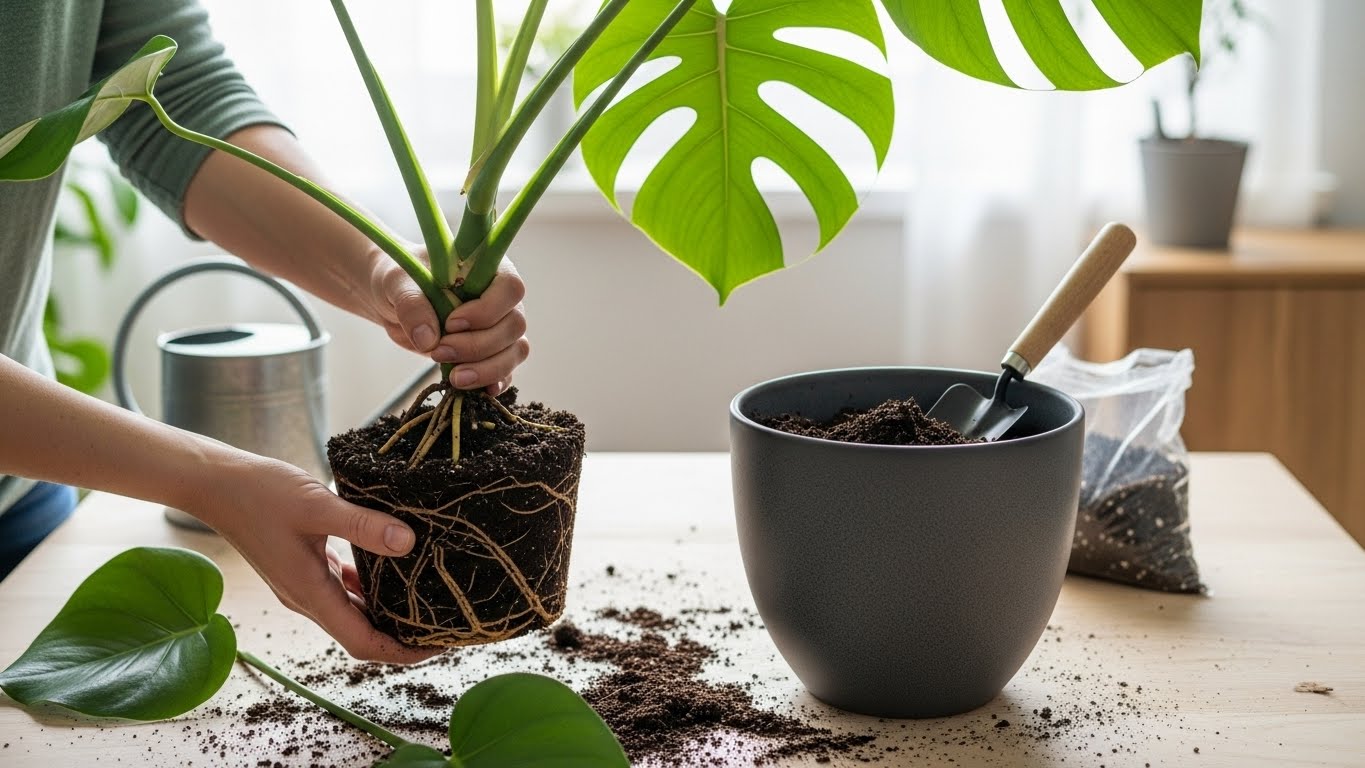
Repotting your Monstera plant is best done in spring or summer when it’s growing strong. Look for signs like roots poking out of the pot or yellowing leaves. Choose a pot that’s about 2 inches wider, and make sure it has drainage holes. Remove the plant gently, loosen any tangled roots, and fill it with fresh potting mix. After repotting, water thoroughly and avoid fertilizing right away—let’s keep your Monstera thriving and learn how to care for it next!
Key Takeaways
💡 Choosing the right soil mix is crucial for your Monstera’s health.
➜ Discover proven techniques
- Repot your Monstera in spring or summer when it is actively growing for optimal recovery.
- Look for signs like roots poking out of drainage holes or yellowing leaves to determine repotting needs.
- Choose a pot that is about 2 inches wider in diameter to allow for healthy root growth.
- Gently loosen any tightly bound roots and add fresh potting mix to the new pot during repotting.
- Water thoroughly after repotting and monitor for signs of stress or new growth.
Understanding the Monstera Plant
When you think about houseplants, the Monstera plant often stands out due to its unique, split leaves and impressive growth. This tropical beauty isn’t just a pretty face; it’s a delight to care for too! Monstera care involves ensuring it gets bright, indirect sunlight and regular watering—just enough to keep the soil moist but not soggy. If you’re excited about expanding your plant family, Monstera propagation is a fun and rewarding process. You can easily propagate your Monstera by taking a cutting with a node and placing it in water or soil. Watching your cuttings develop roots is incredibly satisfying, and it’s a great way to share the love of this stunning plant with friends! Providing a support structure can enhance the growth of larger, fenestrated leaves, showcasing the plant’s natural beauty.
Signs Your Monstera Needs Repotting
You might notice your Monstera showing some signs that it’s ready for a new home! If the roots are poking out of the drainage holes or you see soil that looks compacted and dry, it’s time to take action. Keeping an eye on these clues will help guarantee your plant stays healthy and happy!
Root Bound Indicators
Even though your Monstera might look healthy, there are several signs that can indicate it’s feeling cramped in its pot, and recognizing these root-bound indicators is essential for its growth. First, check for overflowing roots at the drainage holes; if you see them peeking out, it’s time for a larger pot. Second, if the roots are tightly coiled around each other, they’re struggling for space, which can stunt growth. You might also notice slower growth or yellowing leaves, which are signs that pot sizing isn’t right. Finally, if your Monstera dries out quickly after watering, it could mean the roots are packed in tightly, hindering their ability to absorb moisture. Keep an eye out for these signs!
Soil Degradation Signs
Soil quality plays a significant role in your Monstera’s overall health, and recognizing the signs of soil degradation can help you determine when it’s time to repot. Here are a few key indicators:
Signs of Soil Degradation | What to Look For |
|---|---|
Low Soil pH | Acidic soil can harm roots. |
Poor Moisture Retention | Soil dries out too quickly. |
Compacted Soil | Hard, dense soil restricts growth. |
Unpleasant Odors | Signs of rot or decay present. |
If you notice any of these signs, it’s likely time for a repot. Fresh soil not only improves pH balance but also enhances moisture retention, giving your Monstera the healthy environment it deserves.
Ideal Time for Repotting
When it comes to repotting your Monstera, timing is everything! You’ll want to evaluate seasonal growth patterns, especially spring and summer when your plant is most active. Keep an eye out for signs of root bound or soil nutrient depletion, as these will guide you in making the right choice for when to give your plant a fresh start.
Seasonal Growth Patterns
Understanding the seasonal growth patterns of your Monstera plant is essential for determining the ideal time to repot it. Typically, your Monstera thrives during the warmer months, showing lively growth and vibrant new leaves. This is the perfect time to think about repotting, as the plant is actively seeking more space and nutrients. In contrast, during plant dormancy in the colder months, growth slows down considerably. Repotting during this time can stress your Monstera, so it’s best to wait until spring or early summer. By syncing your repotting efforts with its seasonal growth, you’ll guarantee your plant stays healthy and happy, ready to flourish in its new home. Remember, timing is everything!
Signs of Root Bound
Recognizing the signs of a root-bound Monstera is essential for deciding when to repot your beloved plant. If you notice that the root growth is pushing through the drainage holes or circling tightly around the edges of the pot, it’s a clear indicator that your plant is outgrowing its home. Another telltale sign is if the pot size seems small compared to the lush foliage—if the leaves are drooping despite proper care, it may be time for a change. Additionally, if your Monstera is producing smaller leaves than usual, it’s likely struggling for space. Keeping an eye on these signs will help you maintain a happy, healthy Monstera, ensuring it thrives for years to come!
Soil Nutrient Depletion
After checking for signs of a root-bound Monstera, the next thing to contemplate is the condition of its soil. Over time, your plant’s soil can lose essential nutrients, making it harder for your Monstera to thrive. To guarantee proper nutrient replenishment, consider doing a soil test. This will help you determine if your soil’s nutrient levels are low, signaling that it’s time to repot. If you notice yellowing leaves or stunted growth, those can be clues that your Monstera needs fresh soil. Repotting not only refreshes the nutrients but also gives your plant more space to grow. Remember, keeping an eye on soil health is key to a happy, flourishing Monstera!
Choosing the Right Pot
When it comes to repotting your Monstera plant, choosing the right pot is essential for its health and growth. You’ll want to look for a pot made from breathable materials like terracotta or ceramic, as these help prevent root rot and allow moisture to escape. When considering pot size, opt for one that’s 1-2 inches larger in diameter than the current pot; this gives your Monstera room to grow without overwhelming it. A pot that’s too big can lead to excess moisture retention, which isn’t ideal for your plant. Remember, the right pot not only enhances your Monstera’s appearance but also supports its overall well-being, so take your time deciding! You and your plant deserve the best!
Selecting the Best Soil Mix
Selecting the right pot for your Monstera is just the beginning; the soil mix you choose plays a key role in its growth too. A well-balanced soil composition is essential for your plant’s health. You’ll want a mix that promotes good drainage while also retaining some moisture. Consider using a blend of potting soil, perlite, and orchid bark. This combination encourages aeration, preventing root rot, and helps your Monstera thrive. The perlite boosts drainage, while orchid bark adds structure and moisture retention. Remember, your Monstera loves a bit of humidity, so finding that perfect balance will keep it happy and vibrant. With the right soil mix, you’re setting your Monstera up for success!
Preparing Your Monstera for Repotting
Preparing your Monstera for repotting is an exciting step that can greatly enhance its growth and health. To start, gather your repotting tools, like a clean pot, fresh soil, and pruning shears. This will help guarantee a smooth process. Before you plunge in, gently inspect your Monstera for any signs of pests or disease, as plant health is essential. If you spot any issues, address them before repotting. Make sure the new pot is slightly larger than the current one to give your plant room to grow. Water your Monstera a day before repotting; this helps reduce stress on the roots. By preparing thoughtfully, you’re setting the stage for a thriving, vibrant Monstera in its new home!
How to Remove Your Monstera From Its Current Pot
Now that you’ve prepped your Monstera, it’s time to focus on getting it out of its current pot. Start by checking if the pot size suits your plant’s needs, then gently loosen the soil around the edges. Once you’ve done that, you can carefully pull your Monstera out without causing harm to its roots.
Assessing Pot Size
When you’re ready to repot your Monstera, evaluating the pot size is essential for its health and growth. First, check if the roots are snug against the pot’s walls, which can hinder plant growth. A pot that’s too small can restrict root development, while one that’s too large might retain excess moisture, leading to root rot. Ideally, choose a pot that’s one size bigger—about 2 inches wider in diameter. This allows your Monstera to spread its roots comfortably while also providing enough soil for nutrients. Remember, you want your plant to thrive, so finding that perfect balance is key. Assess the pot size carefully, and your Monstera will reward you with lush, vibrant leaves!
Loosening Soil Boundaries
💡 Selecting the right pot size is vital for your Monstera’s development.
➜ Get the step-by-step guide
To successfully remove your Monstera from its current pot, start by gently loosening the soil boundaries that hold it in place. This step is essential for healthy soil aeration techniques, which will help your plant breathe and thrive. Here’s how to do it effectively:
- Use a chopstick or a similar tool to poke around the edges.
- Tap the pot gently to loosen the soil.
- Run your fingers along the inner walls of the pot.
- Check for roots that might be stuck, and gently tease them away.
- Make sure the soil is moist enough to retain some moisture while still allowing airflow.
Gently Pulling Plant Out
💡 Fertilization plays a significant role in your plant’s recovery after repotting.
➜ Master this approach
Gently grasp the base of your Monstera plant and prepare to coax it out of its pot with care. To begin the gentle extraction, tilt the pot on its side, allowing gravity to aid you. Hold the base firmly but gently, and gently pull upward, feeling for any resistance. If it’s stubborn, you may need to wiggle it slightly, but avoid using excessive force. Remember, plant handling is all about being kind and patient. Once it releases, cradle your Monstera with both hands, making sure not to damage the roots. Take a moment to admire its beauty before placing it into its new home. You’re not just repotting; you’re nurturing its growth!
Inspecting the Roots
Inspecting the roots of your Monstera plant is an essential step in the repotting process, as it helps you assure the plant stays healthy and happy. You want to confirm root health and examine the root structure for any signs of issues. Here’s what to look for:
Inspecting your Monstera’s roots is crucial for ensuring its health during repotting. Look for signs of vitality and potential issues.
- Color: Healthy roots are typically white or light tan.
- Texture: They should feel firm, not mushy or dry.
- Growth: Check for new roots indicating the plant is thriving.
- Entanglement: Look for roots circling the pot, which may indicate it’s time for a bigger home.
- Pests: Watch for any unwanted visitors that could harm your plant.
Trimming Damaged Roots
Trimming damaged roots is an essential step in keeping your Monstera plant healthy and vibrant. When you spot roots that are brown, mushy, or shriveled, it’s time to act. Start by using clean, sharp scissors for precision. Carefully remove any unhealthy roots, focusing on those that detract from root health. Remember, your goal is to encourage new growth and a stronger plant!
Employing proper trimming techniques is imperative. Cut back to healthy tissue, ensuring you don’t trim too much at once. After you’ve finished, give your Monstera a little TLC—water it gently to help it recover. With each careful snip, you’re fostering a thriving environment, so don’t hesitate to nurture your plant with love and attention!
Placing Your Monstera in the New Pot
Once you’ve prepped your Monstera for repotting, it’s time to place it in its new pot! Start by gently lifting your plant and positioning it in the center of the new container. You want to guarantee pot stability, so use these placement techniques:
Gently center your Monstera in its new pot, ensuring stability and proper alignment for optimal growth.
- Make sure the root ball is slightly below the rim.
- Align the plant’s leaves with the pot opening for a natural look.
- Check the drainage holes to avoid waterlogged roots.
- Hold the plant steady while you add soil around it.
- Give it a gentle shake to settle the roots.
Filling in With Soil
Now that your Monstera is snug in its new pot, it’s time to fill in with soil! Choosing the right soil mix is essential for your plant’s health, so make sure it’s well-draining and rich in nutrients. Once you’ve got the perfect blend, you’ll want to level it properly around the roots to give your Monstera a solid foundation to thrive.
Choosing the Right Soil
Choosing the right soil for your Monstera plant is essential, as it directly impacts its growth and health. You want a mixture that meets its drainage requirements while providing adequate nutrients. An ideal soil composition often includes:
- Coconut coir for moisture retention
- Perlite to enhance drainage
- Orchid bark for aeration
- Worm castings for organic nutrients
- Peat moss to improve soil structure
This blend helps keep your Monstera happy and thriving. Remember, good drainage is vital to prevent root rot, so look for a soil that balances moisture retention and aeration. By choosing the right soil, you’re setting your Monstera up for a long and vibrant life, so don’t rush this important step!
Proper Soil Leveling
When you’re ready to fill in with soil, it’s important to verify that your Monstera’s roots have enough space to breathe and grow. Start by gently adding your chosen soil composition around the roots, making sure not to pack it too tightly. This allows air pockets to form, which is essential for healthy root development. You want to ascertain that your Monstera can access moisture retention without sitting in waterlogged soil. As you fill in, keep an eye on the soil level—aim for about an inch below the pot’s rim. This space gives you room for watering without spilling. Finally, lightly pat the soil down to settle it, but avoid compacting it too much. Your plant will thrive!
Watering After Repotting
After you’ve repotted your Monstera plant, it’s essential to get the watering just right to help it adjust to its new home. Proper watering guarantees your plant thrives while maintaining the right moisture retention.
- Water lightly right after repotting.
- Check drainage; excess water can harm roots.
- Adjust your watering frequency based on the season.
- Aim for the soil to be slightly moist, not soggy.
- Use a moisture meter for accurate readings.
Caring for Your Monstera Post-Repotting
Caring for your Monstera plant after repotting is essential, as it helps the plant adjust and thrive in its new environment. The first thing you’ll want to do is provide gentle care during this shift. Keep your Monstera in a warm, bright spot but avoid direct sunlight, which can stress it further. During this post-repotting care phase, water only when the top inch of soil feels dry, allowing the roots to breathe and recover. It’s also important to avoid fertilizing right away; give your plant time to settle in. Monitor its leaves for any signs of stress recovery or new growth, and enjoy the journey as your Monstera blossoms in its new home!
Common Mistakes to Avoid
Repotting your Monstera can be a thrilling experience, but it’s easy to make mistakes that can hinder your plant’s growth. To keep your Monstera thriving, watch out for these common pitfalls:
- Overwatering issues: Always check if the soil is dry before watering again.
- Pest infestations: Inspect your plant regularly to catch any bugs early.
- Inadequate lighting: Make sure your Monstera gets the right amount of light for healthy growth.
- Poor drainage: Use pots with holes to prevent water from sitting at the bottom.
- Inappropriate potting: Choose a pot that’s just slightly larger than the current one to avoid overwhelming the roots.
Avoiding these mistakes will help your Monstera flourish and thrive in its new home!
Monitoring Your Monstera’s Progress
Once you’ve repotted your Monstera, the real fun begins as you start monitoring its progress. You’ll want to keep a close eye on its growth and overall health. Check the leaves regularly; if they’re lush and vibrant, that’s a good sign! Take notes on how quickly new growth appears and monitor any changes in color or texture. You can even set a schedule to track health, like watering and fertilizing times, ensuring your Monstera gets the care it needs. Remember, every plant is unique, so celebrate the little victories along the way! By tracking these details, you’re not just nurturing a plant; you’re building a bond with your Monstera that’ll flourish beautifully over time.
Conclusion
In conclusion, successfully repotting your Monstera can lead to a happier, healthier plant. Make sure you monitor its needs, pick the perfect pot, and use the right soil mix. With proper care and attention, your Monstera will thrive and showcase its striking leaves. So, don’t delay—delight in the process of repotting and watch your plant flourish! Remember, a little love goes a long way in keeping your Monstera magnificent and growing!
💡 Understanding the differences between similar plants can enhance your care techniques.
➜ Explore advanced methods


